On January 10, 1963 the 45 goals of the Communist plan were read into the Congressional Record. Some of them have been achieved. See if you can pick them out...
https://t.co/vdhob9n9jp
Orwell avait tout compris en 1945.
On présente souvent La Ferme des animaux comme une satire du stalinisme. C'est vrai. Mais c'est surtout un livre sur autre chose, de beaucoup plus universel et de beaucoup plus actuel : ce qui arrive à une société quand la majorité de ses membres renonce à penser.
Relisez-le avec ce prisme, et vous verrez que chaque animal est un archétype qu'on croise tous les jours.
Il y a les moutons. Ils ne comprennent pas grand-chose aux débats, alors on leur apprend un slogan simple : "Quatre pattes, oui ! Deux pattes, non !". Et dès qu'une voix dissidente commence à poser une question gênante lors d'une assemblée, les moutons se mettent à bêler le slogan, pendant des minutes entières, jusqu'à ce que plus personne ne puisse réfléchir. Ils ne sont pas méchants. Ils répètent. C'est exactement ce que je décrivais : des gens qui ne savent pas pourquoi ils pensent ce qu'ils pensent, mais qui le répètent assez fort pour couvrir ceux qui essaient de penser.
Il y a Malabar, le cheval. Le plus fort, le plus loyal, le plus travailleur de la ferme. Sa réponse à chaque problème est toujours la même : "Je vais travailler plus dur." Et quand un doute surgit, il en a une deuxième : "Napoléon a toujours raison." Malabar donne tout au système. Il ne le questionne jamais. Et le jour où il est usé, où son corps ne suit plus, le système le vend à l'équarrisseur. C'est le personnage le plus tragique du livre, parce que c'est le produit parfait d'une éducation qui apprend à exécuter sans jamais demander pourquoi. Des millions de Malabar se lèvent chaque matin aujourd'hui.
Il y a Benjamin, l'âne. Lui sait lire. Lui comprend tout. Il voit clair dans le jeu des cochons depuis le début. Mais il ne dit rien, il hausse les épaules, "la vie continuera comme elle a toujours été, c'est-à-dire mal". Benjamin, c'est le cynique. Celui qui a gardé son esprit critique mais qui a renoncé à agir. Et c'est peut-être le plus coupable de tous, parce qu'il savait.
Et puis il y a les cochons. Pourquoi ce sont eux qui prennent le pouvoir ? Pas parce qu'ils sont plus forts. Parce qu'ils sont les seuls à avoir vraiment appris à lire, à écrire, à raisonner. Les autres animaux n'ont jamais dépassé quelques lettres de l'alphabet. Alors quand les Sept Commandements affichés sur le mur de la grange commencent à changer, la nuit, un mot après l'autre, personne ne peut le prouver. Les animaux ont un vague souvenir que c'était différent avant. Mais ils finissent par douter de leur propre mémoire plutôt que de douter du pouvoir.
Jusqu'au jour où il ne reste plus qu'un seul commandement sur le mur : "Tous les animaux sont égaux, mais certains sont plus égaux que d'autres."
C'est ça, la leçon fondamentale d'Orwell. Le pouvoir n'appartient pas aux plus forts. Il appartient à ceux qui pensent, face à ceux qui ont renoncé à penser. Une population qui ne sait pas questionner n'a pas besoin d'être enchaînée. Elle s'enchaîne toute seule, et elle remercie celui qui tient la chaîne.
Et c'est là que ça devient vertigineux aujourd'hui.
Nous entrons dans l'ère de l'IA. Les Malabar de notre société, ceux qu'on a formés pendant des décennies à exécuter, à produire, à ne pas poser de questions, vont être remplacés par des machines qui exécutent mieux qu'eux. Le travail pour lequel on les a dressés va disparaître. Et si l'on ne leur a jamais appris à penser, il ne leur restera rien.
Pendant ce temps, le mur de la grange n'a jamais été aussi facile à réécrire. Les algorithmes qui décident de ce que vous voyez, les récits qu'on vous sert en boucle, les slogans qu'on bêle sur les réseaux pour noyer toute nuance. Le mur change chaque nuit, et la plupart des gens ne savent plus lire ce qui était écrit la veille.
La seule défense contre ça, ce n'est ni la force, ni le travail, ni la loyauté. C'est la capacité à lire le mur. À se souvenir de ce qui était écrit. À demander pourquoi ça a changé. Et à avoir le courage de le dire à voix haute, même quand les moutons se mettent à bêler.
Ne soyez pas Malabar. Ne soyez pas les moutons. Et surtout, ne soyez pas Benjamin.
Apprenez à lire le mur.
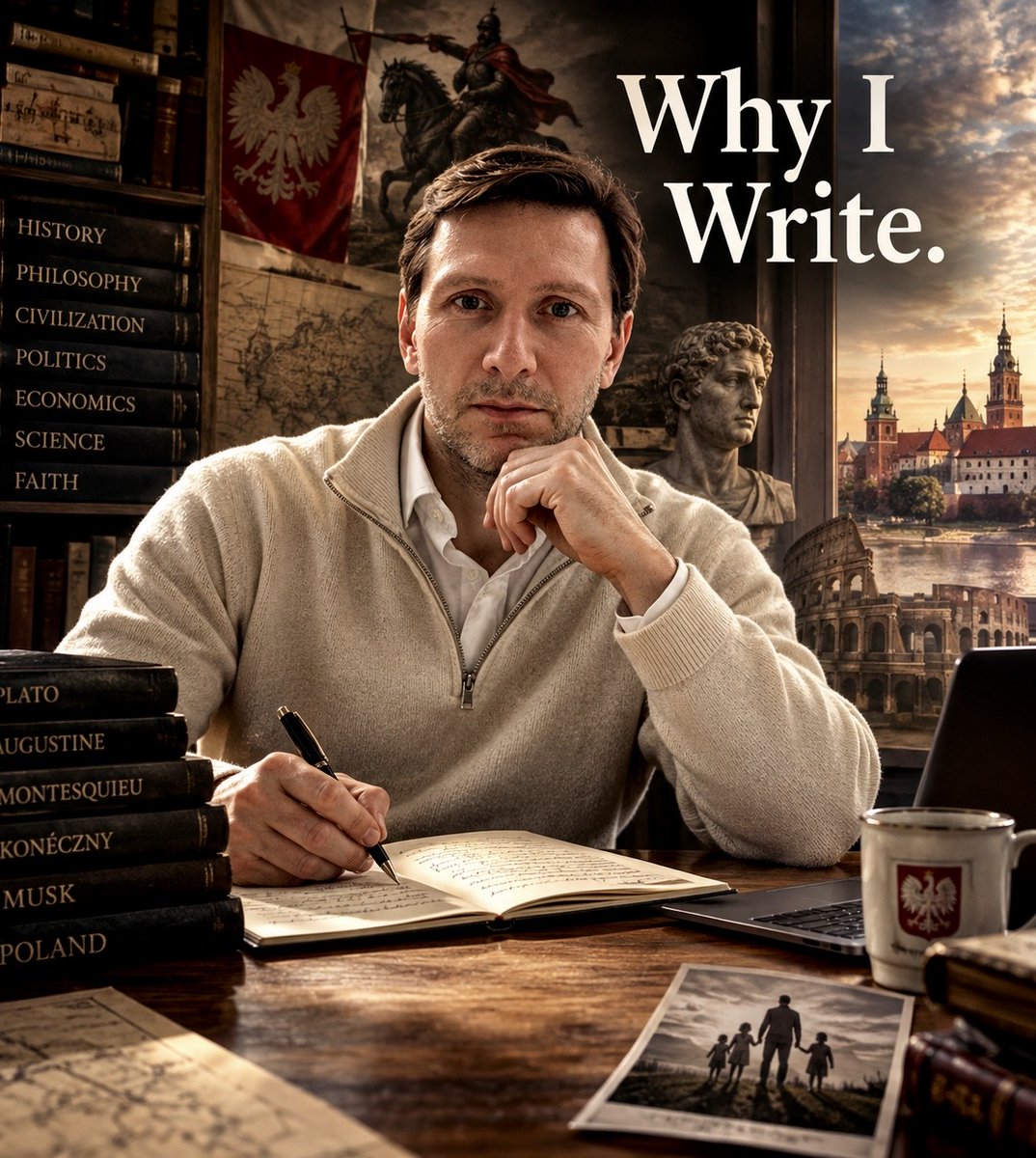
Why I Write.
The reach. The repost. The moment when the argument lands in the right mind at the right time and something shifts. Yes – all of that matters. Musk reposts. Milei reposts. A US Senator asks whether Poland is saving Western Civilization. These things matter. I will not pretend they don’t.
But also because I cannot not write it. Because I care. Because I find it important in a way that precedes the audience and would survive its absence. And for my children – as an act of transmission, yes, but also as a contribution to the world they will inherit. The two motives are not in tension. They are the same motive at different scales.
I came to this from four directions simultaneously – which is perhaps why the lens is what it is.
Warsaw first. I am Polish, which means I understand from the inside what the managed reality produces when it runs without constraint. My civilization was processed by both totalitarianisms. We lost Warsaw, rebuilt stone by stone from memory. We spent decades inside the Systemic Lie – the managed reality that corrupts categories of thought, that teaches people to perform beliefs they don’t hold, that produces the closed face and the careful answer and the smile that doesn’t come easily to strangers. We got out. And then I watched the West begin to build, from the inside, the thing we had just escaped. Not the same – subtler, slower, better dressed. But recognizable. The Polish wound produces a specific kind of clarity. You cannot gaslight someone who has been educated in the system you are trying to gaslight them with.
Paris second. I walked past the Café de Flore every morning on my way to ENA – the café where the ideas were made that would eventually capture the institutions that would eventually produce the managed reality this series has spent months naming. I studied at the École Polytechnique, at the Sorbonne, at ENA itself – the institution that produced the entire French administrative class that runs the European project Spinelli designed in a prison cell in 1941. The French formation gave me the depth, the philosophical framework, the ability to trace the argument back to its roots. It also gave me the ability to recognize the fumeux – the pretentious obscurantism that depth produces when it loses contact with reality. The French tradition at its best produced Tocqueville and Bastiat and Montesquieu. At its worst it produced what came out of the Parisian cafés. I learned both from the inside.
London third. Twelve years. Goldman Sachs, derivatives trading, the Anglo-Saxon formation that completes the picture. If Warsaw gave me the wound and Paris gave me the depth, London gave me the precision – the insistence on evidence, on the argument that can be tested against reality rather than merely admired for its elegance. The financial markets are the most ruthless epistemological environment available: you are right or you are wrong and the price tells you which. Twelve years of that produces a specific intolerance for managed reality – because in the markets, the managed reality eventually meets the actual reality, and the actual reality always wins.
And then close to twenty years among the Polish liberty-minded, conservative milieu – which I simply perceive as honest patriots with understanding. Not ideologues. Not partisans. And when I say conservative, I mean something specific: conserving our particular brand of liberty, not institutions that limit it. People who have lived through enough history to know what matters and what doesn’t, who have the specific clarity that comes from having paid for their convictions rather than merely performed them. People for whom zakłamanie is not an abstract concept but a lived experience, who recognize the Systemic Lie immediately because they spent decades inside it and decades more watching it reassemble itself in new clothes. This formation is hardest to explain to the Western mind – because it looks, from the outside, like conservatism, which the Western mind has been trained to dismiss. From the inside it is something simpler and more serious: people who know what civilization costs, who have paid the price, and who are not willing to watch it be given away by people who have never had to.
Four formations. Four wounds. Four ways of seeing the same thing from different angles – and discovering that the angles converge. The Polish wound names the Systemic Lie from the inside. The French depth traces its intellectual genealogy. The Anglo-Saxon precision tests it against evidence. The Polish liberty milieu keeps it grounded in the real rather than the theoretical.
I write in the format that reaches people – not the academic paper, not the policy brief, not the book that takes three years and reaches three thousand people. The post. The specific argument in the specific format that the person scrolling at midnight, anywhere in our civilization, can absorb, recognize, and pass forward. This format reaches millions wherever they are – in Argentina, in America, in Britain, in every country where the preference falsification is ending and the cascade is beginning. Hayek called them the secondhand dealers in ideas. I have made my peace with being one. It is the most useful thing I can be right now.
The series has become a canon – over one hundred and fifty pieces covering the full architecture of Western civilization, from the Parthenon to the positive program, from Homer to Gramsci, from the Sistine Chapel to the modern art banana taped to the wall. It was not designed to be a canon. It grew into one because the civilizational argument turns out to be a single argument seen from many angles – and each angle illuminates the others.
I write for the person at midnight who feels, without being able to name it, that something is wrong – that the civilization they inhabit is being dismantled by mechanisms they can sense but not identify. I write to give them the vocabulary. Because you cannot fight what you cannot name. Because the person who can name it is slightly less alone – and slightly more dangerous to the system that depends on the silence of the people who see.
And for my children. So that they inherit a vocabulary as well as a world. So that the series is itself an act of transmission – the parent passing forward not just values but the framework that makes the values legible.
Poland has always written for the West as well as for itself. Za wolność naszą i waszą – for your freedom and ours – is not just a military motto. It is a civilizational posture. The wound that produces the clarity. The clarity that produces the vocabulary. The vocabulary that produces the series. The series that reaches the people who need it.
This is why I write.
Tell the truth. Have courage. And build.
Everything that’s happened over the last few decades is pretty crazy when you step back and look at it.
All the colleges and universities introduced woke ideology all throughout Western countries roughly at the same time and began teaching anti-Western rhetoric.
Western countries knew their birth rates were collapsing alongside aging populations, so what did they do? They began sending BILLIONS to these third world countries, causing these third world countries to EXPLODE in population.
Once these babies became young adults every single Western country essentially opened up their borders and allowed these third worlders to pour in.
What do governments gain from this? They have millions of fresh cheap workers to keep the social security scam going, millions of people who are easy to control because they don’t have high living standards like people in the West, and these migrants also turn these countries into low trust societies, ensuring that people will willingly allow a surveillance state.
Wild how everything magically fell into place. (maybe I just have my tinfoil hat on too tight this morning)
We put nine women in charge of a jury for two weeks and they tried to let a mom get away with strangling her kids. Then they launched a vicious smear campaign against the one black man who stood in their way.
So I’m confident Obama is full of shit here.
Most people have no idea what Critical Social Justice is, most have never heard of it.
Yet, you are living under this ideology right now, and have been for years.
It is the mainstream ideology of the modern progressive Left that is subjugating Britain and the entire Western world.
It is not a harmless academic theory. It is a revolutionary force that has captured our institutions, rewritten our culture, and declared war on the foundations of Western civilisation itself.
If you care about freedom, truth, or the future of your country, you need to understand it, before it finishes the job.
Critical Social Justice is a subversive, authoritarian Far-Left identity grievance ideology derived from postmodernism and critical theory.
It is the belief that systemic oppression is embedded into the very foundations of Western civilization, and that every disparity in every outcome, both historical and present, is proof of that oppression.
Thus it views the foundations of Western civilization (Western culture, history, heritage and laws, Judeo-Christian values, and white historical majorities) as the primary sources of both past and present global oppression.
It further regards core Western knowledge, such as scientific and historical fact, and Western cultural norms, including the nuclear family, gender, race, sexuality, meritocracy, freedom of speech and common sense, as mere “social constructs.”
These social constructs are seen as invented fictions designed and maintained to uphold systems of oppression.
As such, it holds Western civilization and its institutions accountable for the full spectrum of historical and contemporary ills, encompassing colonialism, slavery, racism, patriarchy, poverty, epistemic violence, environmental racism and climate change.
Therefore, it frames humanity on a global, civilizational, social, cultural and human level through a rigid oppressor-versus-oppressed binary.
Any cultural institution, person or perceived “social construct” from the West is deemed an oppressor.
Any cultural institution or person from the Global South, or any ideological belief antithetical to perceived Western “social constructs” (e.g., trans), is deemed oppressed.
This is then broken down into an identity-group-based grievance hierarchy known as intersectionality.
The conclusion of this belief is that the emancipation of humanity can only be achieved through complete and total emancipation from Western civilization.
The goal of Critical Social Justice is the complete deconstruction of all perceived systems of Western oppression and all perceived “social constructs,” and their reconstruction into a post-national, identity-group-based collectivist equity regime.
This is implemented through mechanisms such as “DEI,” “anti-racism,” the trans agenda and decolonization, which serve as methods to seize and redistribute rights, opportunities, identities and privileges from the oppressors to the oppressed.
Critical Social Justice is not merely mistaken or misguided. It is evil.
It deliberately inverts truth, weaponises identity, and seeks the total destruction of the very civilisation that produced unprecedented freedom, prosperity and human dignity.
This ideology is everywhere. It is the reason police ignored Henry Novak’s dying pleas. It is why Jason Arday was elevated far beyond his capabilities, a promotion that ended in his suicide. It explains why the invasion of illegal migrants is left unchecked, why our history is being rewritten, why two-tier policing and two-tier justice are enforced, why children are being used as human experiments in transgender medical trials, and why free speech is being crushed.
Every absurd news story of the past few years, from “dogs are racist” to “decolonising Shakespeare,” exists for one reason.
Critical Social Justice.
The Positive Program – What We Actually Build.
The diagnosis is complete. The disease has been named – the long march, its toolkit, the captured institutions, the Gramscian pipeline running in every Western country simultaneously. The question that follows is the only one that matters: what do we actually do?
Not in theory. In practice. The extractable lessons from the places where the counter-march is actually working.
1. Name the mechanisms.
Before anything else – the vocabulary. You cannot fight what you cannot name. Cultural hegemony, elite capture, the ratchet, the Overton Window, preference falsification, lawfare, repressive tolerance – these are not academic terms. They are the names of the weapons being used against you. The person who has this vocabulary reads the news differently, recognizes the mechanism in the specific story, can name what is being done rather than simply feeling it. Naming is the first act of resistance. The preference falsification ends when enough people discover simultaneously that they are not alone. The naming accelerates the cascade.
2. Break the distribution monopoly.
Musk’s lesson. The long march controlled the transmission mechanisms – the school, the university, the media, the platform. The counter-march must break the monopoly on distribution before anything else is possible. X did this – imperfectly, incompletely, under constant assault from the Counter-Reformation. But the printing press didn’t need to be perfect. It needed to exist. The alternative distribution channels – X, Substack, podcasts, independent media – are the infrastructure of the counter-march. Fund them. Use them. Defend them. The EU Digital Services Act, the advertiser boycotts, the regulatory assault are the Index of Forbidden Books applied to the platform that replaced the public square. Resist them as what they are.
3. Build the intellectual infrastructure first.
Hayek’s lesson. You cannot skip the intellectual work and go straight to the politician. Someone must produce the ideas. Someone must translate them for millions. Someone must fund the institutions that do both for twenty years, including when the ideas are unfashionable. The think tank, the school, the formation pipeline, the organization that outlasts its founder – these are what convert a moment of attention into a durable transmission mechanism. The pipeline that produces Obama also produces Milei – when run in reverse. Build the pipeline.
4. Run the ratchet in reverse.
Milei’s lesson. The ratchet clicks only one way – but only if you let it. Speed – act faster than the captured institutions can respond. Will – the absolute refusal to compromise with the consensus that produced the crisis. Preparation – the personnel, the plan, the intellectual infrastructure already in place before the political moment arrives. The first balanced budget in Argentina in over a century. Government ministries halved. Regulations abolished. The establishment that said it was impossible watched it happen. The ratchet is not a law of nature. It is a habit of the people who have been losing. Stop accepting it. Someone has to turn it. Milei did.
5. Capture the cultural layer.
Gramsci’s lesson – applied in reverse. Culture precedes politics. The side that controls what is beautiful, what is admirable, what stories are told and how, controls what the next generation believes is possible. The right has been writing policy papers while the left has been making the films. Stop. Fund the artists who have something worth saying. Not propaganda – excellence. The standard the current system has abandoned. The film that is simply great and happens to reflect the values of life, freedom, and civilization. Beauty is not decoration. It is a civilizational argument. Make it.
6. Build the formation pipeline.
The WEF’s lesson – applied in reverse. The Young Global Leaders program identifies people at thirty and forms them for decades. The counter-march needs the equivalent: the program that finds the next generation of civilizational builders, gives them the intellectual formation, connects them across borders, and sends them back into every institution. Not a secret network – a transparent one, everything the globalist project is not. The Council of Western Civilization. The formation school. The cross-border network of people who have been transmitted to and are committed to transmitting forward.
7. Have more children.
Have four to six of them. So that you have them to spend most of your life transmitting to. A little tribe – so they can stick together, a small society of civilizational resistance and development. They can build together. They can give each other courage. They can transmit to each other what you transmitted to them. Maybe even a dynasty.
The civilization that stops having children has already decided, at the most fundamental level, that the future is not worth bringing people into. Reverse this – not as a policy but as a personal civilizational act. The family is the smallest and most durable counter-institution available. It is where the first transmission happens – the values, the stories, the sense of what is worth admiring and fighting for. Every child born into a family that knows what it is and says so is a link in the chain the long march is trying to break. The large family is not a lifestyle choice. It is a civilizational statement. And possibly the most radical one available.
8. Transmit deliberately.
Poland’s lesson – and the deepest one. The nation that disappeared from the map for a century and came back, not because it had an army or a state, but because the language was transmitted, the culture was transmitted, the sense of what it meant to be Polish was passed forward in the family, the underground school, the poem memorized in secret. The family came first. The nation followed – because a nation is nothing more than families who share a transmission, who pass forward the same stories, the same values, the same sense of what is worth defending and what is worth building.
Start with the tribe you have built. The dinner table, the poem read aloud, the history explained, the book handed from parent to child, the conversation that continues across years until the child knows what they have inherited and why it matters. Then the tribe connects to other tribes – the school you chose (or built), the community you built, the network of families transmitting the same things in the same direction. And from there, the nation. Not the administrative state – the living nation, the people who know what they are and say so.
The state can be taken. The transmission cannot be stopped if the people doing the transmitting refuse to stop.
This is how civilizations survive. Not through governments or armies or institutions alone – but through the unbroken chain of people who received something worth passing forward, and passed it forward deliberately, to specific other people, one generation at a time.
The torch changes hands or it doesn’t. The choice is always personal before it is political.
Tell the truth. Have courage. And build.
—
The long march took a century. The counter-march will not – because the distribution revolution has compressed the timescale, because the managed reality is visibly failing, because the preference falsification is ending, because the proof of concept is running in Argentina and the question is being asked by US senators about Poland.
The window is open. The tools exist. The vocabulary is spreading.
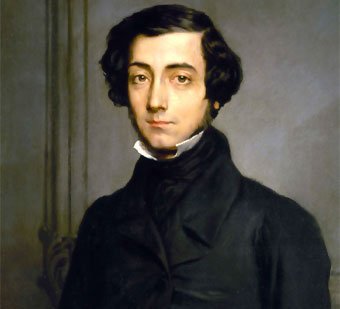
“Hay en el corazón humano un gusto depravado por la igualdad que lleva a los débiles a querer rebajar a los fuertes a su nivel, y conduce a los hombres a preferir la igualdad en la servidumbre a la desigualdad en libertad”
Alexis de Tocqueville
The Transmission Problem.
Every civilization faces the same final question. Not the barbarian at the gate – that can be fought. Not the economic collapse – that can be recovered from. The question that cannot be survived if answered wrongly: did you pass it forward?
The torch changes hands or it doesn’t. The light doesn’t go out dramatically. It goes out quietly, generation by generation, when the transmission fails – when what was built is not explained, when what was defended is not named, when what was beautiful is not shown to the child who would have loved it if someone had taken the time.
1. The transmission mechanism is the most important institution in any civilization – and the least visible. Not the army, not the economy, not the government. The father who takes his son to the edge of the kingdom at dawn and says: everything the light touches is our kingdom, and one day you will stand here with your own son. The teacher who hands the student a book and says: this will change how you see everything, and it changed how I see everything, and someone handed it to me. The civilization that knows what it is and says so, clearly, to the next person in the chain. The torch doesn’t pass itself. Someone has to carry it, deliberately, to the next set of hands.
2. The long march understood this before the West did. Gramsci’s insight was precisely about transmission – the ruling class maintains power not through force but through controlling what the next generation is taught to think is natural. Capture the school, the university, the media – the transmission mechanisms – and the cultural hegemony reproduces itself automatically, without enforcement, because the next generation never learns that it could think otherwise. The march didn’t attack the civilization directly. It attacked the transmission. Which is more efficient and more permanent – because a civilization that has lost the ability to transmit itself is defeated without ever being confronted.
3. The family is the primary transmission mechanism – and therefore the primary target. Not because the family is politically significant in itself but because it is where the first transmission happens: the values, the stories, the sense of what is worth admiring and what is worth fighting for. The child who grows up in a family that knows what it is and says so becomes a person who knows what they are. The child who grows up in a family that has been taught that its own values are suspect, its own history shameful, its own civilization merely one option among many – that child is already a partial transmission failure. Multiply across a generation and you have what we are currently living through.
4. The school is the secondary transmission mechanism – and the most completely captured. The curriculum that replaced the canon with the critique of the canon. The teacher replaced by the facilitator. The examination replaced by the self-expression. The standard replaced by the affirmation. This is not incompetence – it is the long march’s most successful operation. Deconstructing a civilization’s transmission mechanism produces, reliably and by design, a generation with nothing to transmit. That was the point. The generation that cannot read the primary sources cannot assess the argument that the primary sources are oppressive. It simply accepts the conclusion, because it has no access to the evidence that would allow it to disagree.
5. The culture is the tertiary transmission mechanism – the stories, images, music, and beauty that transmit the civilization’s values below the level of argument. Homer transmitted Greek civilization for centuries before anyone theorized about what Greek civilization was. Shakespeare transmitted the English-speaking world’s understanding of human nature for four hundred years. The fairy tale transmitted the moral grammar of European civilization to children too young for philosophy. The long march captured this too – Hollywood, the prize committees, the arts funding, the music industry – and replaced the transmission with its own content. The child who grows up on a cultural diet produced by the captured mechanism is being transmitted to. The question is what is being transmitted.
6. This series is an act of transmission. Not primarily an argument – an attempt to pass forward the vocabulary, the framework, the sense of what the civilization is and what it is worth, in the format that reaches the person who will not read the primary sources but who will read this. The secondhand dealer in ideas, in Hayek’s formulation – making thinkable for millions what the primary producer made possible. Every piece is a link in the chain. The chain runs from Homer to Aristotle to Cicero to Augustine to Aquinas to Montesquieu to Burke to Tocqueville to Hayek to this feed to the person reading it now. The chain is only as strong as its weakest link. The weakest links are the ones the long march attacked. This is an attempt at repair.
7. The transmission problem has one solution and it is not institutional – it is personal. You cannot transmit a civilization through a policy. You can only transmit it through a person who has received it and passes it forward deliberately, to a specific other person, in the full knowledge that the chain depends on this act. The father and the son at the edge of the kingdom. The teacher and the student with the book. The writer and the reader with the vocabulary. Every act of genuine transmission is an act of civilizational resistance – because the managed reality depends on the chain being broken, on each generation starting fresh without the inheritance, on the past being made inaccessible so that the present can be managed. Break the managed access to the past. Pass it forward. To your children first. Then to everyone else.
The torch changes hands or it doesn’t.
You are holding it now.
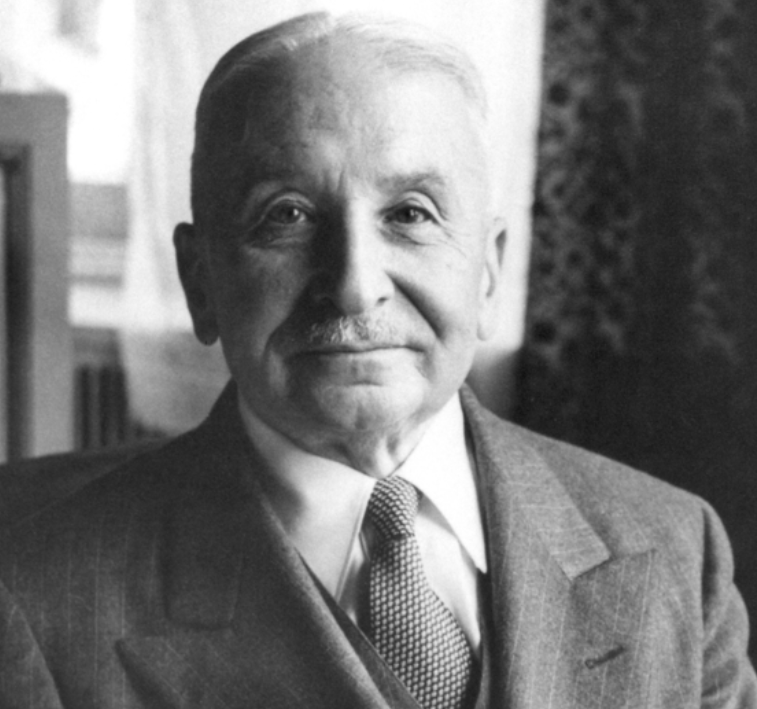
Ludwig von Mises transformed the Austrian School of economics by cementing praxeology - the formal study of purposeful human action - as its foundational methodology.
In Human Action, Mises argued that economics cannot rely on the empirical models of the natural sciences. Because human beings possess free will, values, and motives, their choices cannot be measured in a laboratory or captured by mathematical formulas.
Instead, Mises built economic science on an a priori foundation: the action axiom. This is the self-evident truth that humans act consciously, using scarce means to achieve preferred ends. From this single starting point, Mises logically deduced core economic concepts, including marginal utility, time preference, and the subjective nature of value: minimum wages raise unemployment, rent controls cause housing shortages, price controls create black markets, expansionary monetary policies reduces the purchasing power of money.
Praxeology is fundamental to Austrian economics because it shifts the focus from abstract aggregates (like GDP or price indices) back to the individual decision-maker. It establishes that economic laws are universal, logical truths rather than tentative hypotheses waiting to be validated by data. By using deductive reasoning, Austrians can confidently analyze complex interventions - such as inflation, price controls, and central banking - and predict their outcomes with logical certainty.
Mises's development of praxeology insulated the Austrian School from the pitfalls of mainstream econometrics. It provides a unique insight illustrating how the market is not a machine to be engineered, but a dynamic, continuous process driven by the purposeful choices of real people.
Socialists and fascists: listen carefully to what you hate about each other.
Socialists condemn fascism for authoritarianism, censorship, political repression, hierarchy and forcing people to serve the nation.
Fascists condemn socialism for state domination, economic control, confiscation and forcing people to serve the collective.
Yet neither philosophy consistently recognizes the principle that protects you from both: the individual does not belong to the collective.
If you don't want the other side controlling your speech, property, work and life, the answer isn't making sure your collective gets the power instead.
It's denying that power to either of you. That's individual rights, and politically, that's the foundation laissez-faire capitalism requires.
Instead of a communist revolution, how about a revolution against a public education system that has left too many young people economically ignorant, resentful, and convinced that coercion is compassion, then sent them into the world clamoring for an ideology whose history they barely understand?
Before overthrowing capitalism, maybe ask who taught you what capitalism is.
Capitalism is the only social system based on the individual being sovereign over his own life.
You own your labor, property, choices and ambitions. You may produce, trade, persuade, associate or walk away. You may not initiate force against others.
Every statist alternative reverses this principle. Whether power belongs to a monarch, party, majority, bureaucracy or collective, someone gains legal authority to subordinate your life to purposes you didn't choose.
Anarchy doesn't solve this by abolishing rulers. Without objective law and a government monopoly on retaliatory force, competing private forces determine whose rules prevail, a market in coercion.
Capitalism leaves government one legitimate function: protecting individual rights.
The individual governs his life. Government governs the retaliatory use of force.
The promise of capitalism isn’t that everyone will become rich. It’s something more human: that your life belongs to you.
You are an individual capable of learning, creating, building and becoming more than the circumstances handed to you.
A good society should want fewer people crushed by burdens they cannot escape. But the highest aspiration isn’t making those burdens permanently comfortable, it’s removing barriers between people and their potential.
There is dignity in saying: I built this. I learned this. I earned this. I chose this. I helped someone because I valued them, not because either of us was forced.
Capitalism doesn’t tell the struggling person to accept his place. It tells him his present condition need not define his future. It protects his freedom to think, create, trade, fail, try again, prosper and give.
The goal isn’t a society where everyone has someone else to carry them.
It’s one where fewer people need carrying, and more experience the pride of standing on their own.
“If you adopt the view that a man is not responsible for his own behavior, that somehow society is responsible, why should he seek to make his behavior good?”
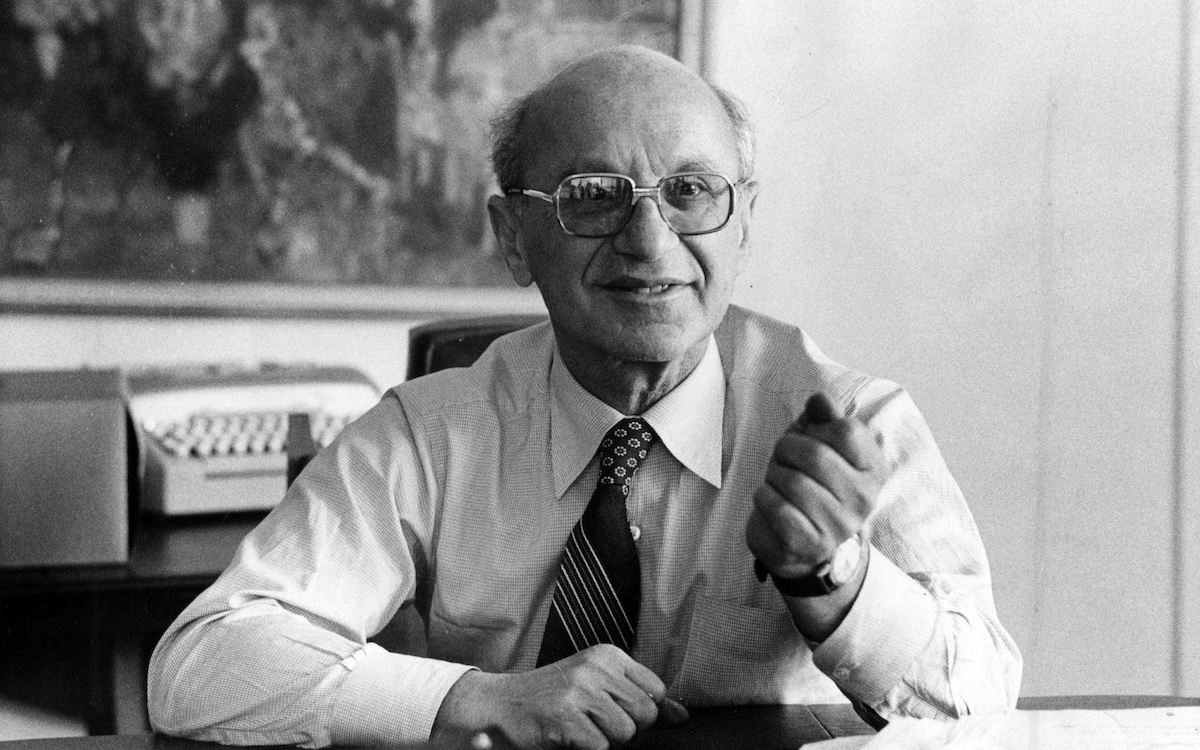
Milton Friedman’s point is that blaming “society” for individual behavior weakens personal responsibility. A person is less likely to take ownership of his actions if responsibility is repeatedly shifted to outside forces.
If people are taught to see their actions as the product of forces beyond their control, they have less reason to reflect on their choices, correct their mistakes, and behave differently. Responsibility begins with recognizing that, whatever the circumstances, your actions are still yours to answer for.
“En el libre mercado no importa de qué color sea la gente, ni cuál sea su religión, sólo importa si pueden producir algo que quieras comprar. Es el sistema más efectivo que hemos descubierto para conseguir que gente que se odia haga tratos y se ayude entre sí”
Milton Friedman
Jon Stewart on the Supreme Court: “They have single-handedly made it impossible for us to reform and save our democracy. The way they have made it that corporations are people and money is speech. There has to be a process of amending the Constitution. This idea that Citizens United stands as the law of the land is the biggest bunch of shit. The Constitution is in a suicide pact and money in elections is killing this country”
Capitalism is the legal protection of your right to freely pursue your own happiness by any means that doesn’t violate another individual’s equal right to do the same.
Socialism reverses the principle: it turns another person’s life, labor, and property into an entitlement to be pursued through political force.
Capitalism says: pursue what makes you happy, but earn it.
Socialism says: if someone else has what you want, acquire political power and make them surrender it.
One protects the pursuit of happiness. The other mistakes redistribution for its achievement.
Milton Friedman: “I am not a conservative. I’ve never been a conservative. Hayek was not a conservative.”
“We are liberals in the true meaning of that term: concerned with freedom. We are not liberals in the current distorted sense—those liberal with other people’s money.”