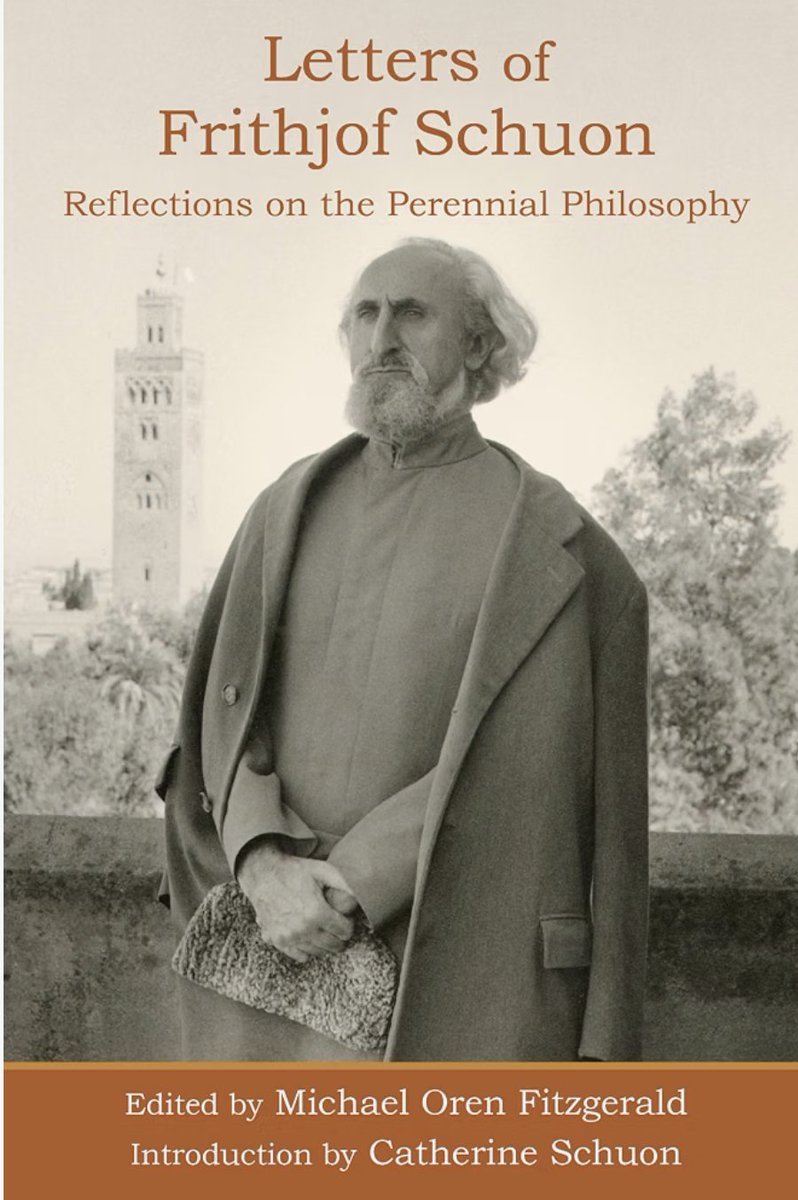
@realKalos Seriously worth reading his letters in this volume if you liked this; oddly his correspondence is better than any of his published material in my view.
@energeiologian@latinizedlogos God (the First Principle) is not Prime Matter, but neither is it Aristotle’s self-thinking mover— and funnily enough to err towards the first is probably better than the second.
“Many are the wanderings and circlings of the soul: one among imaginings, one in opinions and one before these in understanding. But only the life according to νοῦς has stability and this is the mystical harbor of the soul to which, on the one hand, the poem leads Odysseus through the great wandering of his life, and to which we too shall draw ourselves up, if we would reach salvation.” (Proclus, In Parm. Comm. 1025a.29–37)
@geolazakis For context, I entirely agree with the HF's tweet, but this is precisely because I have no belief in personal embodied immortality, which I think is both incoherent and undesirable even if it were coherent. Finitude is the canvas of human life, and death is inseparable from it.
Today, the promises of transhumanism and posthumanism are multiplying. These are ideological currents according to which, sooner or later, technology will eliminate all disease and pain, as well as aging and even death itself. Precisely because scientific progress is a supreme achievement of human intelligence, it must not be confused with a privilege reserved for millionaires seeking immortality, while entire peoples suffer from poverty and oppression. In the face of this mirage, which promotes the illusion of human beings perfected by cybernetics and biotechnology, Christian anthropology reminds us that a limitation is not a manufacturing defect, but rather the very condition of human grandeur. #ApostolicJourney #Peru #MagnificaHumanitas https://t.co/wOXDtgnSi5
Do you hope to live eternally as a human in a human body (indeed, one supernaturally augmented)? If you do, you cannot say 'Christian anthropology reminds us that a limitation is not a manufacturing defect, but rather the very condition of human grandeur' without some contradiction.
Personal embodied immortality is a desideratum central to a Christian narrative of history. The critique accordingly must be reduced to a question of method, not of object. The Christian can say only 'not in this way', not 'not this'.
Well precisely--from a Catholic perspective this should be the angle of critique. Shaking a fist at personal embodied immortality as the telos of history, however, is a self-own and fails to account for the fact that Christianity is responsible for it.
Quick thinking and multitasking—if they ever really were skills to begin with—are now obviated by AI. The time of the slow-thinking Chud, rapt in pointed concentration, has come.