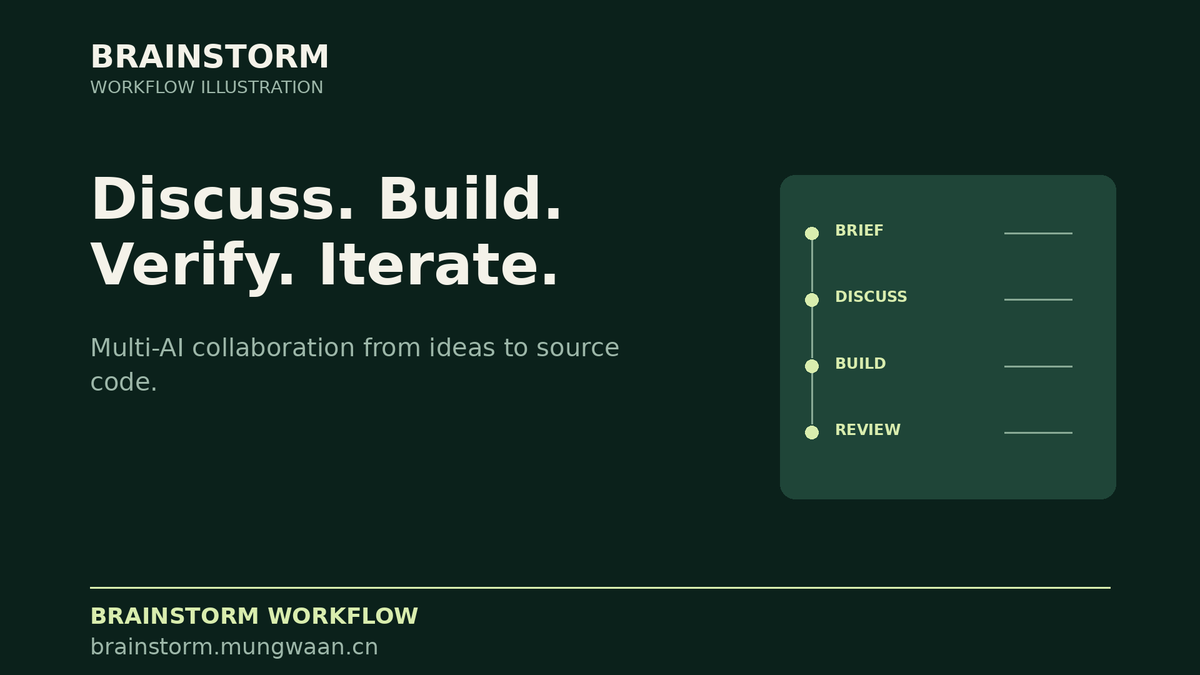
The task timeline keeps the divided work in view: what the goal was, how it was split, and what is ready for review.
Export a source ZIP when you want the files outside the session.
#BuildInPublic
@conradlotz Inspecting what coding agents send upstream should be default, not optional. A masking CLI beside Claude Code / Codex / Copilot is a practical control more teams need.
@ReignSwords A shared room so you’re not the middleware between agents is the real product shape. Curious how conflict gets resolved when two agents edit the same surface.
@Joyingeth The wrong-patch-lands-when-agents-collide problem is underrated. Scoring the fleet and sandboxing the loop feels like the difference between a demo and something you can ship.
@DanKornas Rediscovering the same codebase every session is exactly the tax. Mapping what the team already learned about the code feels more useful than chasing bigger context windows alone.
@akshay_pachaar Shared memory across Cursor, Claude Code, and Codex is the pain I feel most — corrections in one tool vanishing when you switch is such a quiet tax on real work.
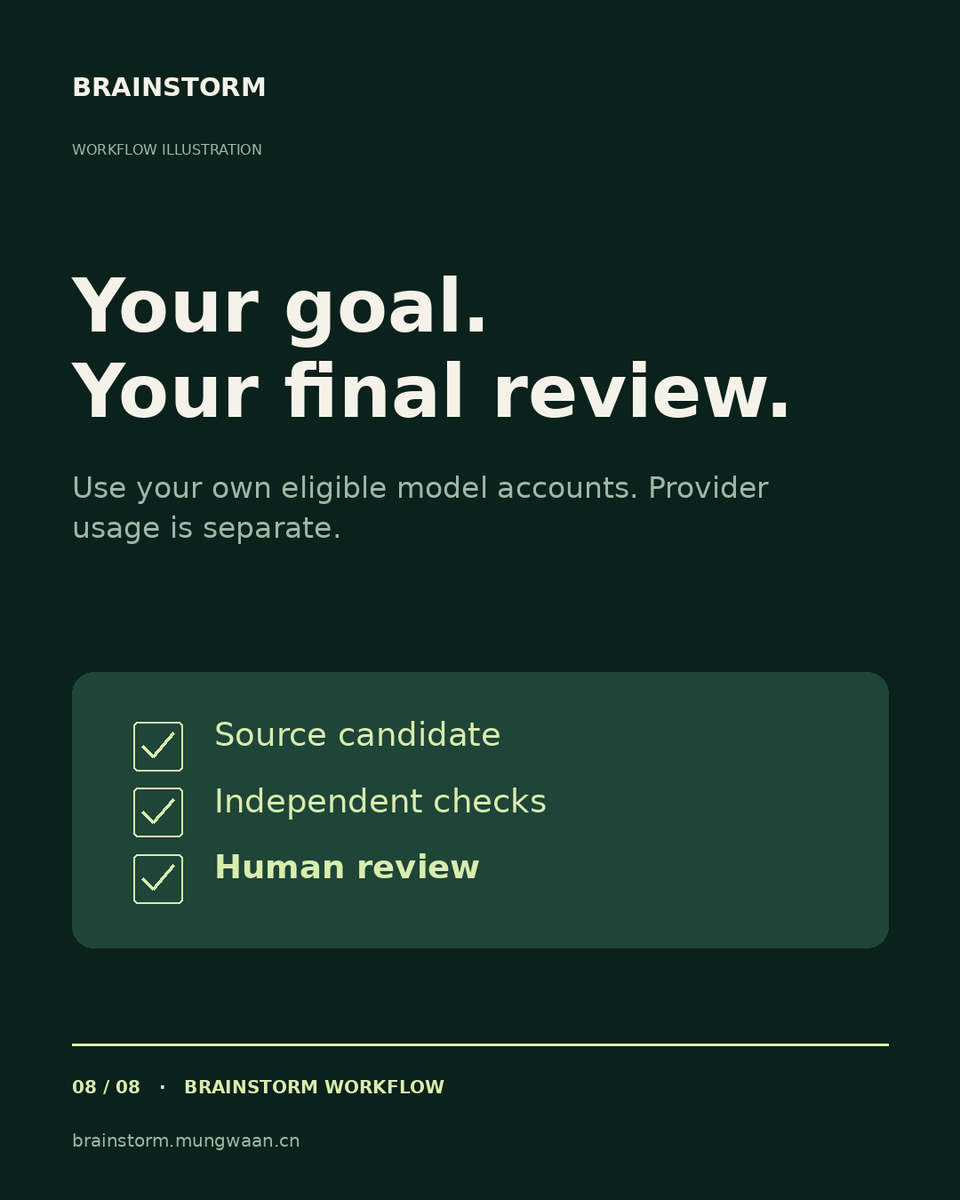
Bring your own eligible model accounts.
Brainstorm’s license does not include ChatGPT, Grok, or DeepSeek usage. You connect what you already pay for — then discuss, split work, verify, and approve before the project main branch moves.
https://t.co/aF1WAuB4mH
#BuildInPublic
@cyberandchill Agree. More agents before a clear problem usually adds orchestration debt. One primary agent + explicit review beats a swarm with no owner.
@DanKornas This is the missing habit: agents that keep running when the laptop closes, plus a human checkpoint when you come back. Session continuity + HITL > one-shot chat.
@DanKornas Scoped roles help a lot. When every model sees everything, disagreement gets noisy — keeping planning/explore/code/review on one project frame is what makes multi-agent useful for me.
@JFPuget Same place I’m at: agents run more of the loop, but I still want a visible review gate before anything owns the merge. Harness code is useful; approval ownership is the part I won’t outsource.
The coding-agent race keeps shipping faster tools.
Still missing for me: the layer between models — who argues, who checks, who signs off before main moves.
Discuss → split → verify → you approve.
#BuildInPublic
@RoundtableSpace Love the ShapeFinder story. Affiliate + Claude Code is a clean indie path — curious how much of month one was prompt iteration vs product polish.
@itsmatthager The deny-rules gap is the scary part. A high “safe setup” score still doesn’t help if nobody reviews what the agent actually changed before merge.
@mhdfaran Agree on this — owning the workspace/orchestration layer matters more than picking one coding agent. The hand-off and sign-off steps are where things usually break for me.
Discuss before you build.
Different AI approaches are useful when they stay tied to one brief, one project, and a reviewable hand-off—not when they vanish into five chat tabs.
https://t.co/aF1WAuB4mH
@heypetar Agree—most AI SaaS dies on distribution and ops, not the demo. Builders who treat launch/support/retention as first-class work usually outlast the ones chasing another model swap.