51 degrees Northern latitude urban winter mornings. Testing from the southern hemisphere later this year. Building something that works wherever you live. 🌅 🤙
You aren’t designed to eat the same foods year-round.
Your mitochondria run on seasons.
Eat a banana on the 31st of December in New York & you disrupt your engines.
Here’s how eating out of season stresses your mitochondria (& how to fix it): 🧵
🍑👑💫🔆The Hidden Geometry of Diabetes 🍑👑🔆💫
How the shape of your glutes, the timing of your meals, and the light on your skin quietly orchestrate your metabolic destiny
Your gluteus maximus is more than the body’s largest muscle. It is a metabolic sentinel, a glucose sponge capable of disposing of roughly a quarter of the sugar in your bloodstream during everyday movement outdoors in the elements. For decades, clinicians judged muscle health by bulk alone. Two converging lines of research have upended that view. One shows that the shape of the glute—its subtle dips, bulges, and contours—predicts type 2 diabetes risk years before blood tests do. The other reveals that this geometry is not fixed by genes or calories alone. It is sculpted daily by the interplay of circadian rhythms, light exposure, eating windows, hormonal signaling, and mitochondrial resilience.
The story begins with muscle quality, then widens into an elegant system that links skin, brain, clocks, and mitochondria.
The First Revolution: From Mass to Marbling
A landmark 2019 review by David Scott and colleagues crystallized a bidirectional vicious cycle: sarcopenia (loss of muscle mass and function) and type 2 diabetes feed each other. In people with diabetes, intramuscular adipose tissue (IMAT)—ectopic fat lodged between and within muscle fibers—can be two to three times higher than in matched controls. This “marbling” inflames tissue, disrupts insulin signaling, and physically separates contractile machinery. Muscle becomes less a sugar sink and more a site of metabolic sabotage.
The Second Revolution: A Muscle’s Secret Topography
At the 2025 RSNA meeting, Marjola Thanaj, Louise Thomas, and their University of Westminster team presented the first large-scale 3D statistical shape analysis of the gluteus maximus, drawing on over 61,000 UK Biobank MRI scans. Instead of volume, they mapped surface deformations vertex by vertex.
Healthy, active glutes are smoothly convex. In type 2 diabetes, sex-specific distortions appear:
- Men develop inward dimples, especially in the lower quadrants—focal atrophy.
- Women show outward bulges—ectopic fat infiltration masquerading as preserved size.
These shape changes precede diagnostic hyperglycemia, correlate with frailty and osteoporosis, and are mitigated by vigorous activity that loads the hip extensors. The glute’s geometry emerges as a non-invasive biomarker, extractable from routine pelvic MRIs with deep-learning tools.
The Circadian Layer: Light Hygiene and Entrainment
Muscle shape does not exist in isolation. Modern environments flood us with artificial light at night (ALAN) while starving us of natural daylight. ALAN disrupts circadian rhythms, suppresses melatonin, alters insulin and glucose dynamics, and raises type 2 diabetes risk. Prospective studies link nighttime illuminance to higher incidence, partly through desynchronized peripheral clocks in muscle and adipose tissue.
Morning sunlight and midday UV exposure act as powerful zeitgebers. UVB reaching the skin triggers keratinocytes to upregulate p53, which drives pro-opiomelanocortin (POMC) expression. POMC is cleaved into α-MSH (which curbs appetite and boosts energy expenditure) and β-endorphin. This cutaneous signal propagates centrally, stimulating POMC neurons in the arcuate nucleus of the hypothalamus—the brain’s metabolic command center.
There, POMC neurons integrate leptin signals from adipose tissue. Leptin sensitivity, itself modulated by circadian alignment, promotes satiety, thermogenesis, and glucose disposal. Circadian disruption induces leptin resistance; proper light hygiene and entrainment restore it. Morning light strengthens amplitude of metabolic rhythms, improving insulin sensitivity and fat oxidation.
1 of 2 🫀🍑🔆👑💫
>1938: Melanin identified as photoprotective
>1974: shown to absorb broad-spectrum electromagnetic radiation
>1984: confirmed as an amorphous semiconductor
>2001: proven to convert radiation into usable chemical energy
>2007: fungi at Chernobyl found using melanin to harvest gamma radiation
> gamma radiation
> the most destructive ionizing energy on earth
> melanin turned it into food
>2014: synthetic melanin patented for “novel EMF shielding applications”
>2024: paper confirms melanin outperforms every lab-made EMF shield on the planet
86 years of published science
and the medical consensus is still
AVOID THE SUN & WEAR SPF-50
>the one input your body needs to build this shield is the one thing they told you to avoid
>THEY KNEW
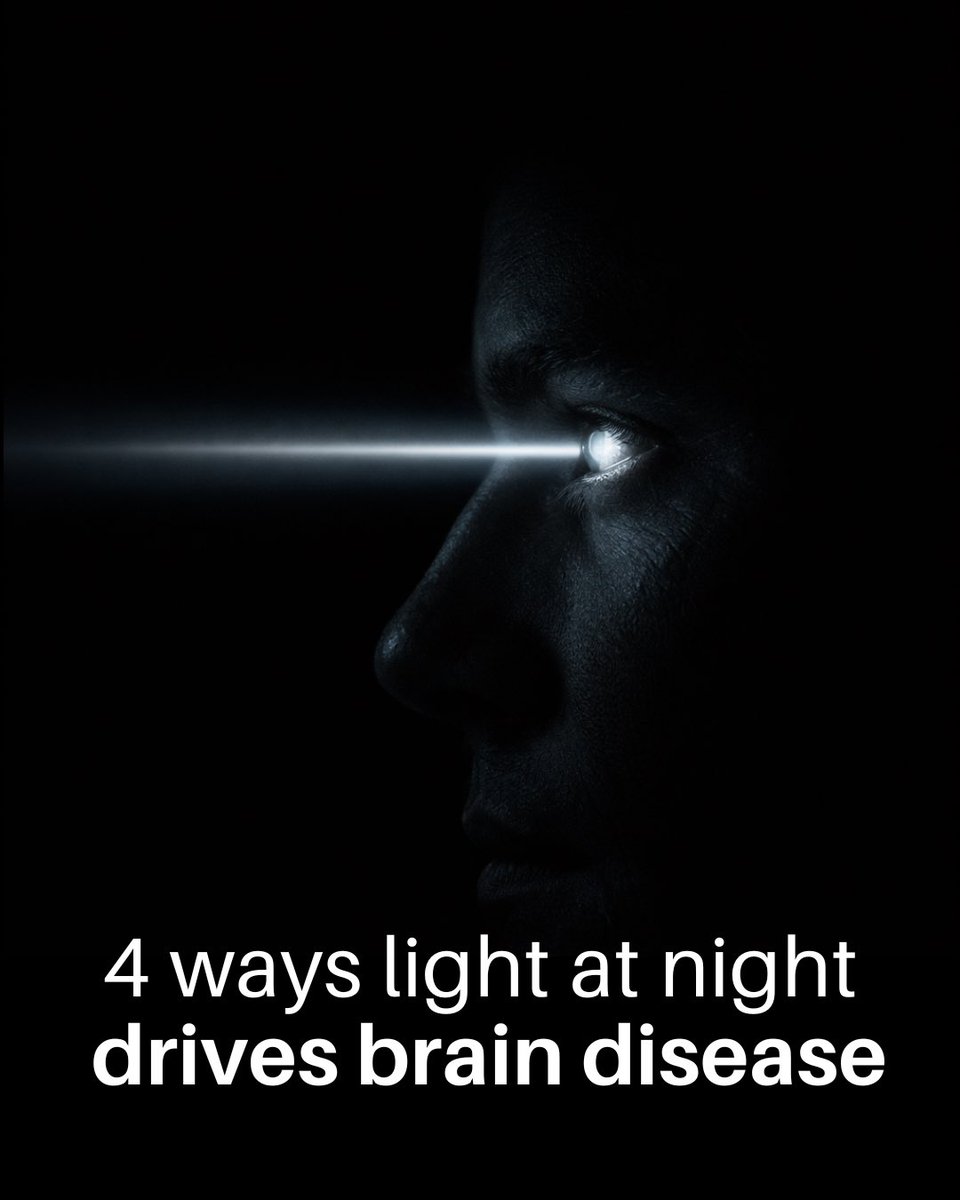
Light entering the eye does more than create vision.
It feeds directly into melanopsin pathways that project to the brain’s central clock (SCN), setting the timing of sleep, hormone release, metabolism, and cellular repair.
When light arrives at the wrong time, that signal shifts.
Circadian timing drifts.
From there, multiple downstream systems are affected:
• Sleep architecture changes, reducing slow-wave sleep associated with glymphatic clearance of beta-amyloid and tau
• Cortisol rhythms shift, altering stress regulation and emotional stability
• Dopaminergic signalling becomes dysregulated, affecting motivation and reward
• Cellular timing in vulnerable neurons breaks down, increasing metabolic and oxidative stress
These are not isolated effects.
They are connected outcomes of disrupted biological timing.
And the outcomes are not rare:
• Depression affects hundreds of millions globally
• Alzheimer’s disease is one of the leading causes of death
• Parkinson’s disease is the fastest growing neurological disorder
• Sleep disruption itself is now the norm, not the exception
Circadian disruption has been linked to neurodegenerative and psychiatric disorders.
This is not damage first.
It is mis-timing first.
And it happens quietly.
You don’t notice the signal drifting.
Only how common the consequences become.