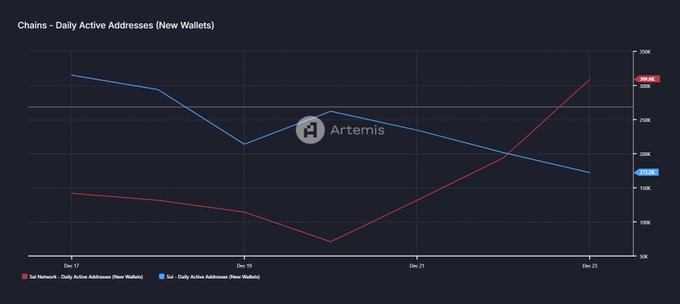
that is the biggest misconception in crypto rn
true adoption isnt people buying random tickers hoping to get rich
real adoption is when your friends / parents use crypto apps that actually improve their life
real adoption is when people understand why crypto and blockchains matter
we are still pretty far from that point
@YakaFinance -@jlyvrs
What you need to know: JellySwap is a Balancer V2 fork, functioning as an automated market maker and dynamic portfolio manager that lets traders rebalance token pools with unique weights, generating fees via arbitrage
DEX:
-@YakaFinance
What you need to know:Yaka Finance is a DeFi project utilizing Sei's fast blockchain to build a launchpad and DEX, aiming to enhance liquidity, focus on real-world assets, and position as Sei's central DeFi hub through collaboration with the Sei Foundation.
STAKING:
-Silo Stake
What you need to know: Silo enables flexible staking by offering instant liquidity for staked tokens, auto-compounding rewards with iSEI, and secure staking through trusted validators. It combines growth, security, and convenience.
-Dragon Swap
What you need to know: DragonSwap is the native DeFi hub on Sei Network
-Jelly Verse
What you need to know: JellySwap is a Balancer V2 fork, functioning as an automated market maker and dynamic portfolio manager that lets traders rebalance token pools
It’s wild how 99% of people will never:
Experience the joy of a 10x pump
Feel the pain of getting rugged
Refresh Dexscreener 50 times in 10 minutes
Laugh at memes in a Telegram chat at 3 AM
We’re living a unique life. What a time to be alive.
Discipline is one of the most important aspects of our life.
Without it, procrastination takes place stopping us to reach any goal.
Here are 6 steps I use on myself to build discipline:
1. I rewire my brain to crave discipline
Our brains are wired to seek pleasure and avoid discomfort.
For a long time, I only felt satisfaction when I achieved something significant, which meant I spent most of my time feeling like I wasn’t enough.
I realized I needed to reprogram the way my brain processed effort itself.
Instead of waiting for the big victory to reward myself, I started breaking goals into the smallest possible steps, sometimes as simple as putting on my running shoes or writing a single sentence.
Each small step became a success worth celebrating.
Over time, my brain started associating effort with reward, creating a positive feedback loop.
Discipline became less about forcing myself and more about chasing that next small win, making consistency feel effortless.
2. I focus on Identity, not just outcomes
Most people approach discipline as a means to an end.
They say: "I need to be disciplined so I can achieve X goal"
But when you chase an outcome, you’re constantly measuring yourself against something you haven’t yet reached, which can feel discouraging.
For this reason, I shifted my perspective.
Instead of obsessing over results, I started asking myself: "What would a disciplined person do right now?" and then I acted accordingly.
Every time I made a disciplined choice, no matter how small, I was reinforcing the belief that I was a disciplined person.
It wasn’t about motivation, it was about identity.
When discipline becomes part of who you are, you stop fighting yourself: It becomes instinct.
3. I commit to the "just five minutes rules"
One of the biggest barriers to discipline is the overwhelming feeling of having so much to do.
When I thought about an entire workout, an entire project, or an entire difficult task, my brain would resist.
But with a simple trick this "heavy weight" can be reduced: I only commit to five minutes.
Five minutes of exercise.
Five minutes of writing.
Five minutes of whatever I was avoiding.
The pressure to "go all in" disappeared, and I could start without overthinking.
And once I started, momentum took over.
Five minutes turned into ten, then twenty.
I almost never stopped at five.
The hardest part of any task isn’t the work itself, it’s overcoming the initial resistance.
By lowering the barrier to entry, I made it easy to stay disciplined without needing to rely on willpower.
4. I create real consequences for quitting
Humans are naturally wired to avoid loss more than they seek rewards and by knowing this, I use accountability to make quitting costly.
I set real consequences for backing out.
If I skip a planned workout, I have to wake up an hour earlier the next day.
If I don’t follow through on my commitments, I take on an extra, unpleasant task.
Sometimes, I tell someone I respect about my goal because knowing they’re watching makes me far less likely to give up as I don't want to appear a "mor*n" in their eyes.
By making quitting harder than continuing, I remove the option of relying on fleeting motivation.
Instead of debating with myself, I simply follow through because the alternative is even less appealing.
5. I redefine discomfort as growth
For years, I saw discomfort as a sign that something was wrong.
If I struggled, I assumed I wasn’t good enough or that the process wasn’t working, but eventually, I realized that discomfort wasn’t the enemy, it was proof that I was growing.
Now, when something feels hard, I remind myself: This is my mind rewiring, is my resilience strengthening, is progress happening.
The struggle isn’t a reason to stop, it’s a reason to keep going.
Instead of avoiding discomfort, I lean into it and by shifting my perspective, I’ve trained myself to see challenges as stepping stones rather than obstacles.
6. I turn discipline into a game
Most people treat discipline as a burden, something heavy and exhausting.
I decided to flip the script and make it fun.
I track my progress visually, set challenges for myself, and create "milestones" with small rewards.
Whether it’s marking off days on a calendar, unlocking a new level in my personal goals, or competing against my past self, I turn discipline into something I want to engage with.
By gamifying the process, I make consistency feel exciting instead of draining.
Progress becomes addictive and suddenly, staying disciplined isn’t about forcing but more about playing a game I refuse to lose.
All of the Trump crypto headlines we have seen this week so far:
• Trump to designate crypto as a national priority, including the consideration of a "national Bitcoin stockpile"
• Trump considers US-based crypto reserve, potentially prioritizing coins like Solana and XRP
• Trump's SEC to overhaul crypto policy, may freeze enforcement
• Trump's SEC may freeze litigation that does not involve allegations of fraud
• Trump's first day in office will see him sign a flurry of executive orders which could impact the crypto industry
All of that in just the last five days before he has come into office.
He's going to make good on his promises. Why?
Because he will make an enormous amount of money for him, his family and insiders.
Trump is going to do everything he can to pump the markets, and crypto is the easiest market to move.
Don't fight that.
Much higher.
Human consciousness is a shared ledger, like a blockchain, where:
Souls are Blocks — immutable entities.
The Genesis Block: The creation of human consciousness.
Interconnected Blocks: Each soul is connected through shared experiences, emotions, and universal truths.
Immutable Records: Every thought, action, and experience becomes part of the records added to the collective consciousness.
Consensus: Humanity maintains harmony in the shared ledger.
Energy as Currency: The exchanges between souls — love, learning, pain, and growth — are the transactions of this network.
An Endless Ledger: Consciousness is humanity's infinite ledger, growing as each soul adds its unique block.
the next wave of crypto ai agents will need to bring real innovation to really succeed, a few examples:
- a defi ai agent that manage your stablecoins for you. it finds the best yield and strategies available based on your risk tolerance
- a gas fee optimizer agent that checks gas fees across chains and queues your txns during optimal fee period
- an AI agent that helps you stay active in DAO governance by reading and summarizing DAO proposals, then votes for you based on your choices.
- an ai agent that keeps your transactions private by using the best on-chain privacy tools
a note to myself, 15 lessons i've learnt from 2024:
1. don't be afraid to take a chance on things that aren't incredibly obvious at the start
2. do not fade something just because you're lazy, unfamiliar, in other coins, in competing coins, etc
3. exercise a lot of discretion when it comes to shills you see on CT. do perform a lot of critical and second-order thinking when analysing opportunities.
4. believe in your analysis, trust your intuition and own your positions: you are responsible for your own PNL
5. do not compare yourself to others: try to be happy for those who are outperforming you and learn a thing or two from them
6. manage your emotions well: making rash and emotionally-charged decisions will mostly lead to bad outcomes
7. try to find a balance between having conviction and being receptive to new information
8. play to your edge: do not try to copy other styles if you're not good at it. there are plenty of ways to make money.
9. it's okay to win small/big and lose small, but it's not okay to lose big
10. fumbling life changing money is normal (don't let anyone tell you otherwise), but do try to learn from your mistakes
11. identify and understand your cognitive blind spots (i.e. endowment effect: irrationally overvaluing the things we own vs things we dont own)
12. be kind to others, do not put other people down, and help those who seek advice from you. do not let money/status change who you are and how you treat people.
13. it's better to be a willing seller than a forced seller
14. opportunities come and go like buses on the street: do not despair, opportunities are always plenty
15. good ideas mean nothing with poor execution
merry xmas to everyone and i'll see you in the orderbooks soon