QNet Wallet for iOS
Final preparations are underway to start testing the non-custodial post-quantum wallet for QNet Blockchain on iPhone and iPad.
Waiting for it on iOS and for testing to begin?
QNet is getting ready for iOS! 🚀 Final prep is underway to start testing its non-custodial, post-quantum wallet on iPhone and iPad. Another step forward for QNet. Who’s ready to try it? 👀
@AIQnetLab
QNet Wallet for iOS
Final preparations are underway to start testing the non-custodial post-quantum wallet for QNet Blockchain on iPhone and iPad.
Waiting for it on iOS and for testing to begin?
This is exactly why we have stayed focused on building and educating around QNET BLOCKCHAIN @AIQnetLab through every quiet period.
Attention is easy when price is moving. The real test is whether a community keeps creating, learning, and participating when momentum slows.
That’s the standard we QNETWOLVES have been holding ourselves to.
@AIQnetLab
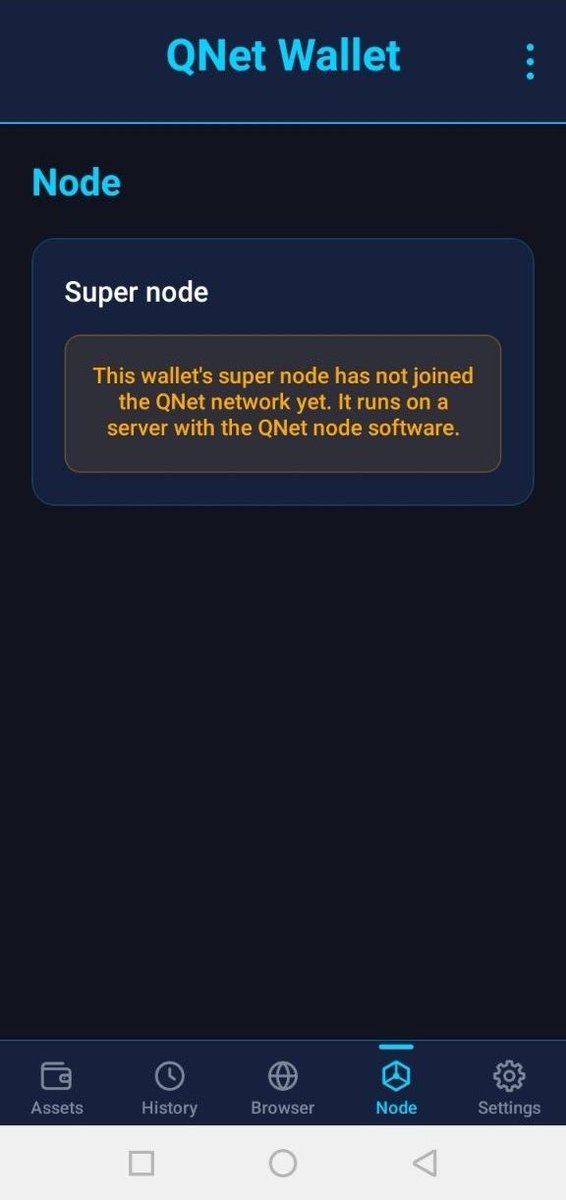
This is proof that on QNET BLOCKCHAIN, ordinary users can participate meaningfully in the network, whether by running a Light Node or a Super Node.
You don’t need to be a large institution with expensive infrastructure or enormous capital to participate. You can do it too.
Today, I successfully activated a Super Node on QNET BLOCKCHAIN. The testnet is live and working, and mainnet is approaching. Take the time to explore the network and position yourself accordingly.
1DEV CA:
4R3DPW4BY97kJRfv8J5wgTtbDpoXpRv92W957tXMpump
The QNET has you, Eon…
@blockchainchick You bought #Bitcoin seven years before @elonmusk. Those are your credentials. But what if your next opportunity to recognize a major shift in blockchain comes from looking beyond what the industry already knows?
You were early to Bitcoin. Perhaps you can also be early to the next era of blockchain: post-quantum-resistant infrastructure.
History has a way of repeating itself. As the industry begins paying closer attention to the long-term implications of quantum computing, QNET BLOCKCHAIN (@AIQnetLab) has been building around post-quantum cryptography, with ML-DSA-65 signatures integrated across transactions, consensus messages and node identity.
I’m not asking you to buy anything or take my word for it. I’m inviting you to do your own due diligence and examine the technology for yourself.
Here are a few places to start:
Architecture: How the network works and how its components fit together.
https://t.co/rP05nFzFdQ
Cryptography: ML-DSA-65 signatures, hashes and address format.
https://t.co/IgbtNJpmTr
Networking: Node communication and the post-quantum handshake.
https://t.co/5vGeQOykbM
Open-source code: https://t.co/2LHlBxByhh
Website: https://t.co/6UmHVdGdUW
If the idea resonates, welcome to the journey towards honest blockchain.
The QNet has you, Eon…
QNET BLOCKCHAIN @AIQnetLab
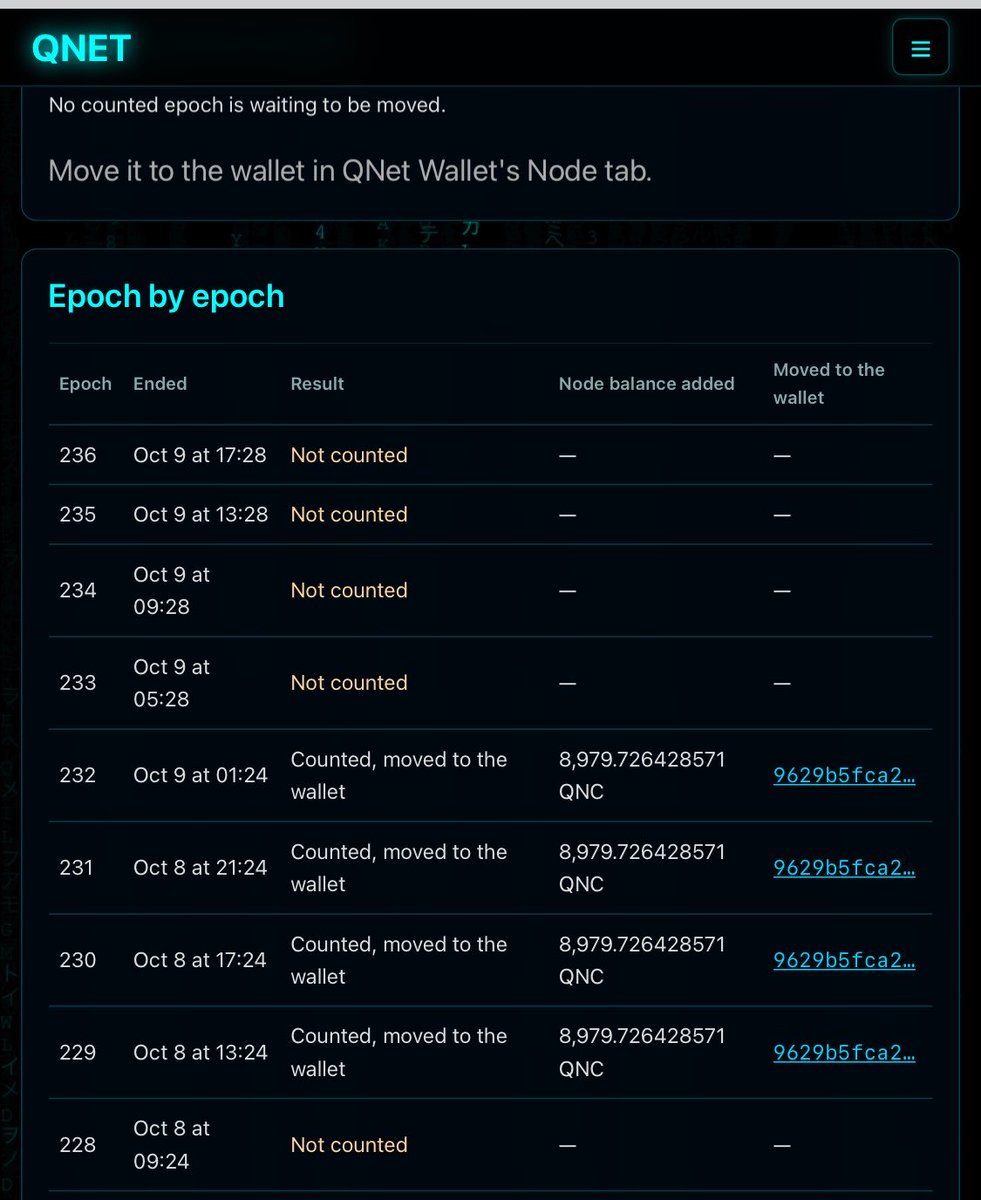
The QNet Explorer currently shows 42 active light nodes. Based on the QNC emission and the rewards per node, we can calculate the estimated number of eligible light nodes and super nodes.
Here’s the math:
251,432.34 QNC total emission
Light nodes
75% → Light nodes
251,432.34 × 75% = 188,574.255 QNC
188,574.255 ÷ 4,489.863214 ≈ 42 light nodes
Super nodes
25% → Super nodes
251,432.34 × 25% = 62,858.085 QNC
62,858.085 ÷ 8,979.726428571 ≈ 7 super nodes
Estimated total: 49 eligible nodes
42 light nodes + 7 super nodes = 49 nodes.
The numbers line up closely with the 75% light-node and 25% super-node allocation, suggesting that 42 light nodes and 7 super nodes were eligible for that particular emission.
Interesting to see how the on-chain reward figures can help us estimate network participation.
The QNet has you, Eon...
@lordwatezydseer They’re paying attention to what we’re building, even when we don’t see them watching. Stay focused, hold your conviction, and don’t lose sight of why you took your position in the first place. We’re getting closer, and the work is speaking for itself. 🐺
🧵
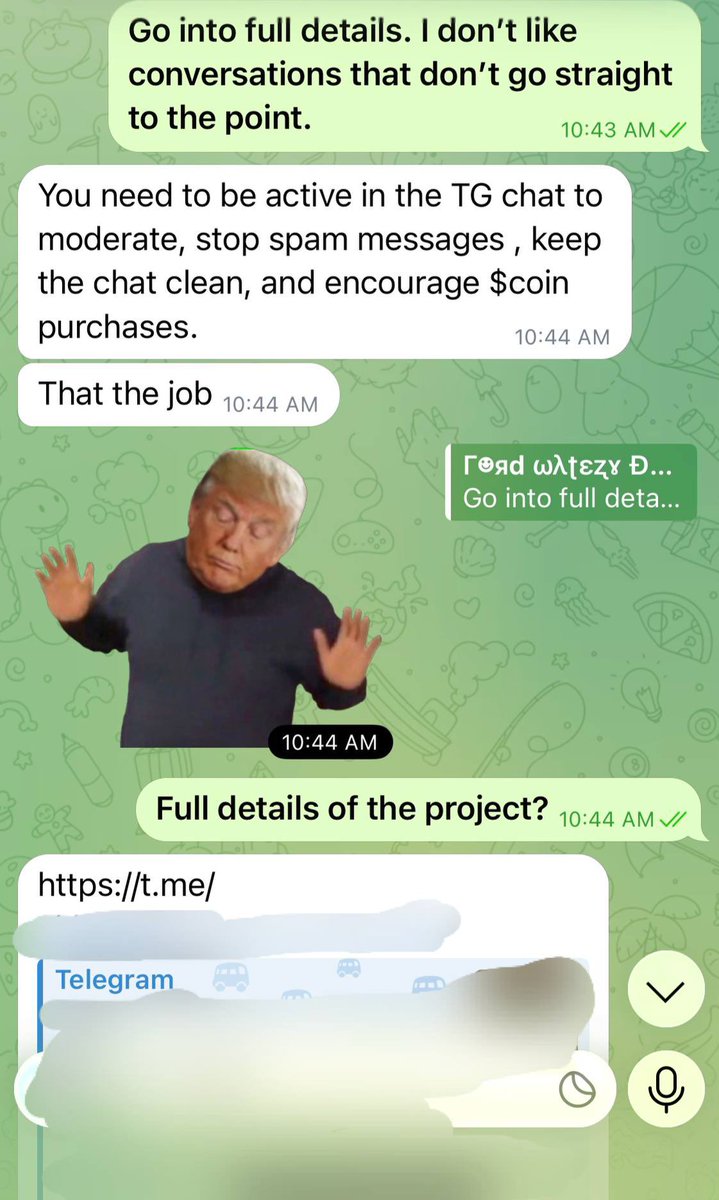
I want to share something personal with the QNET BLOCKCHAIN community, not to brag, but to make a point that I believe is important for all of us to understand.
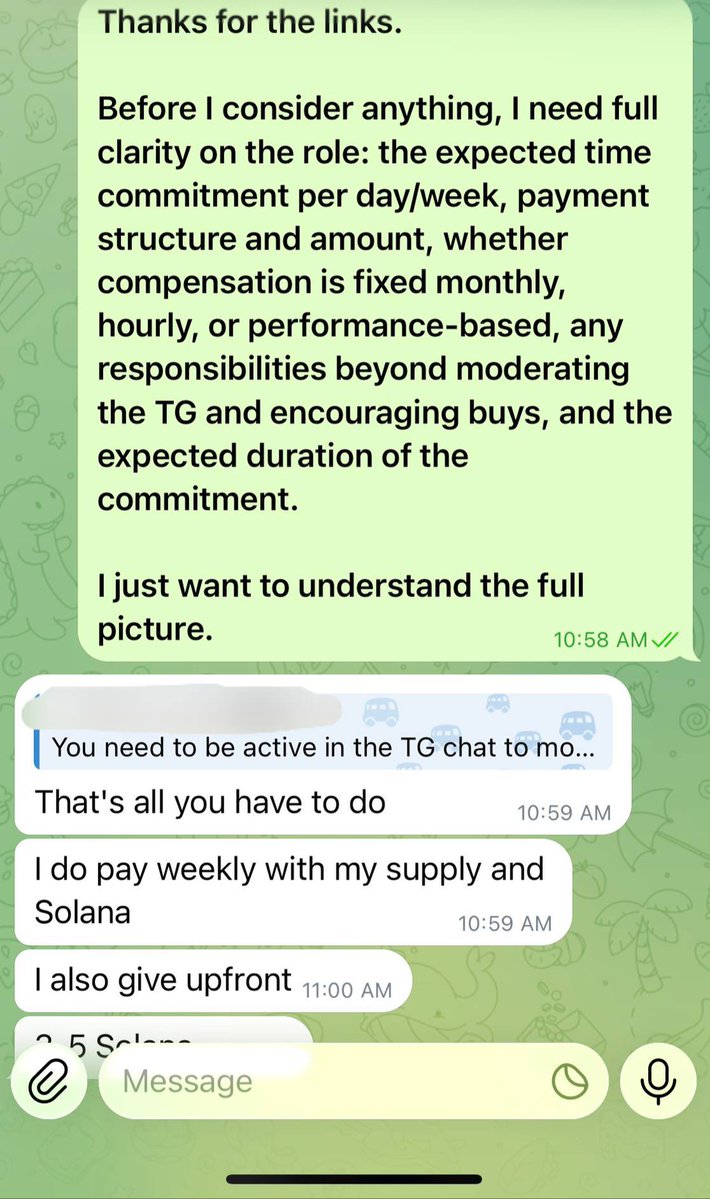
Over time, I have received several offers to help manage projects, moderate Telegram communities, build engagement, and encourage token purchases. Some offers come with peanuts, some are fair, some are genuinely reasonable, and others come with amounts that would make even a mad man think twice. Interestingly, I don’t go looking for these opportunities. They come to me, perhaps because people have been watching what I do for QNET BLOCKCHAIN @AIQnetLab and the consistency with which I show up for this community.
Some people have even approached me simply asking me to support their projects voluntarily, the same way I support QNET.
Here is the part I want you to understand. I have turned them all down.
Not because I don’t need money. I do. In fact, some of those earnings could go straight into buying more 1DEV. But I have chosen to remain focused on what we have been building for over a year now, because I believe in what is being built, and I understand why it matters.
My involvement in QNET has never been about someone paying me to believe. I have followed the development, studied the work, and formed my own conviction from what I can independently examine. I don’t need someone to tell me what to believe, and I don’t need to blindly follow anyone. My support comes from understanding the direction of the project and choosing to stand behind it.
And this is why I keep telling people to study QNET BLOCKCHAIN for themselves. If you understand what it means for ordinary people to participate in a network by running nodes, and you understand the bigger vision behind a post-quantum-resistant Layer 1, you may begin to see why I am willing to turn down opportunities that could put money in my pocket today.
This is not pride. It is a decision about where I want to put my time, energy, and commitment.
I could take a paid gig, collect my weekly payment, and do what is expected of me. There is absolutely nothing wrong with earning money for your work. But right now, my heart is in QNET. We have come too far over the past year for me to lose focus now, especially when we are getting closer to seeing more of what we have been working toward become accessible to people.
And let me make something clear: I am not sharing this to expose anyone who has approached me, to disrespect their projects, or to suggest that paid work is beneath me. It isn’t. I respect anyone willing to pay fairly for another person’s time and effort. I am simply sharing my own decision and the reason behind it.
What makes this even more interesting is that I believe the work we are doing is speaking for itself. People are noticing the consistency, the commitment, and the community being built around QNET BLOCKCHAIN. Perhaps that is why these opportunities keep finding their way to me. I cannot say for certain, but it reminds me that what we do here does not go unnoticed.
Every key pair in QNET BLOCKCHAIN derives deterministically from a BIP-39 mnemonic. The wallet address format is SHA-512 of the 1,952-byte ML-DSA-65 public key rendered with an embedded checksum. No ECDSA exists anywhere in the stack. Not in consensus. Not in transactions. Not in networking. The transport layer uses a post-quantum handshake between nodes. The five genesis nodes carry embedded ML-DSA-65 keys rather than classical keys. The consensus committee signs checkpoints with ML-DSA-65 quorum certificates. The entire chain of trust from user wallet to block finality runs through post-quantum primitives.
@WhiteWhaleLabs@blknoiz06
You’ve both shown that projects launched on https://t.co/MXllzKKOnm can scale far beyond initial expectations.
1DEV launched there, but what’s being built behind it is QNET BLOCKCHAIN (@AIQnetLab), a post-quantum-resistant Layer 1 built with ML-DSA-65, its own network, consensus, nodes and ecosystem.
Not asking for anything. Just thought the architecture might be worth a look.
Docs: https://t.co/s6dGQtHOLe
GitHub: https://t.co/Sm8MfYBriK
The QNet has you, Eon...
@Supercontraa, listen to me like you have never listened to anyone else before in this space.
Quantum resistance is not something you achieve simply by launching a coin with "quantum-resistant" in its description. It requires the underlying network architecture, cryptographic primitives, signatures, key exchange and consensus mechanisms to be designed around that threat.
QNET BLOCKCHAIN @AIQnetLab has already been building around post-quantum cryptography for over a year, including NIST-standardized FIPS 204 ML-DSA-65. The code is public and available for anyone willing to actually look.
So before making jokes about a concept you may not fully understand or have not adequately researched, take some time to look at what has already been built.
Otherwise, you may find out about QNET later and wish you had listened to me today.
The QNet has you, Eon...
@VitalikButerin latest post takes the post-quantum conversation to another level. He is now asking whether AI-accelerated mathematics could seriously weaken not only ECDSA, but also lattice-based cryptography and ML-DSA.
That deserves to be taken seriously. It also makes what QNET BLOCKCHAIN @AIQnetLab has been building even more interesting.
QNET uses ML-DSA-65, so there is no reason to pretend this conversation does not concern QNET. But focusing only on the signature algorithm misses the bigger picture.
QNET was designed as a post-quantum Layer 1 from genesis. The cryptographic foundation runs through the stack: ML-DSA-65 for transactions, consensus messages and node identity, ML-KEM-768 for post-quantum node key exchange, post-quantum authenticated networking, and ML-DSA-based quorum certificates for checkpoint finality.
The architecture goes far beyond cryptography.
QNET BLOCKCHAIN has deterministic WASM smart contracts, a public RPC API, TypeScript SDK, wallet infrastructure, explorer, Light Nodes and Super Nodes, native QRC-20 and QRC-721 standards, and the infrastructure required for developers to build actual applications and digital assets on the network.
QRC-20 gives QNET its native fungible-token standard, comparable in purpose to Ethereum’s ERC-20. QRC-721 provides the corresponding framework for unique digital assets. These are not ideas sitting in a roadmap. They are part of a complete Layer 1 architecture built around a different cryptographic foundation.
And this is where I think the industry should look beyond the immediate ECDSA versus ML-DSA debate.
If existing blockchains eventually face serious pressure to move away from cryptographic assumptions that have underpinned their infrastructure for decades, the challenge is not simply replacing a signature algorithm. Their applications, assets, smart contracts, wallets, nodes, consensus systems and developer ecosystems are all interconnected with the underlying architecture.
That makes a full migration or redesign a far bigger undertaking than changing one cryptographic primitive.
QNET is not trying to compete with those networks for the same race, users or position. It is building a different foundation.
That foundation could give existing ecosystems, developers and asset issuers another option: instead of every project having to design and assemble an entirely new post-quantum Layer 1 when the need becomes urgent, they can potentially benefit from infrastructure that has already been built around post-quantum requirements. QNET BLOCKCHAIN
This is why I see QNET as more than another blockchain competing for attention.
Its value may ultimately extend beyond its own ecosystem. A post-quantum Layer 1 can provide a foundation on which other applications, assets and blockchain ecosystems can build, connect or establish new activity without having to recreate the entire infrastructure from zero.
Vitalik is asking what blockchain infrastructure should look like if we take these cryptographic risks seriously.
QNET is already showing what that infrastructure can look like.
A live network. Open code. Native token and NFT standards. Smart contracts. Nodes. Wallets. Developer tooling. Post-quantum cryptography integrated from the foundation upward.
The industry may eventually be forced to build for this reality. QNET chose to build for it from the beginning.
CA: 4R3DPW4BY97kJRfv8J5wgTtbDpoXpRv92W957tXMpump
The QNet has you, Eon...
@MustStopMurad thesis is circulating again and most people are debating which memecoin fits. Some people think Murad is delusional for saying a memecoin could flip Bitcoin and eventually even the stock market.
I don't.
I think the more interesting question is not whether the statement sounds crazy, but whether the economics exist for something like that to actually happen.
I want to make a different argument. An economic one.
@MustStopMurad framework is essentially this: a token with strong enough cultural identity, sufficient scarcity, and a compelling enough narrative can accumulate value that transcends its original category. He’s not really arguing about memes. He’s arguing about belief systems, scarcity, and the economics of conviction.
Most people will try to fit his thesis onto existing memecoins. I want to point at something that fits the underlying economic logic in a way that almost nobody has noticed yet.
1DEV.
CA: 4R3DPW4BY97kJRfv8J5wgTtbDpoXpRv92W957tXMpump
Before you dismiss this, hear the argument.
1DEV launched on Pumpfun. It has a wolf identity behind it. It has a community that calls itself QNETWOLF. In a cultural and market sense, yes, it can be treated as a memecoin. I’m not arguing against that.
But here is what makes the economic thesis unusual.
1DEV is not just a token people hold because they believe in a narrative. It is a protocol access token. Burning it permanently, destroying it forever, is the only way to activate a node on QNET BLOCKCHAIN @AIQnetLab, a post-quantum-resistant Layer 1 blockchain built from the ground up with NIST-standardized ML-DSA-65 cryptography.
Every burn is irreversible. Every burn activates real infrastructure. And every burn reduces the supply that remains for the next person who wants to do the same thing.
This is where the economics get interesting.
Most memecoins derive their value entirely from collective belief. The moment belief weakens the floor disappears because there is no underlying mechanism creating structural demand.
1DEV has a structural demand mechanism built into it. You cannot activate a node without burning it. As long as QNET exists and people want nodes, there is a reason to acquire and burn 1DEV that exists independently of whether anyone believes in it as a cultural asset.
Now combine both.
You have a token with genuine meme culture, a recognizable community identity, and a wolf mascot that people actually use as their profile picture. And underneath that cultural layer you have a deflationary burn mechanism tied to real protocol utility on a post-quantum blockchain.
@MustStopMurad is right that the category boundaries in crypto are collapsing. A token doesn’t have to choose between being a cultural asset and being a protocol asset. Those two things can coexist and reinforce each other.
The meme layer attracts attention and builds conviction.
The protocol layer provides structural demand and irreversible scarcity.
One burn, one node. Permanent. On a blockchain that other chains will eventually have to become.
Whether 1DEV fits @MustStopMurad thesis is for you to decide. Do a simple DYOR. I have done mine, and the economics make a lot of sense to me.
Don’t just talk about a narrative without understanding what is behind it. If you tell me a memecoin can flip Bitcoin, tell me why. Show me the economics, the mechanism and the reason it could happen. Then I will do my own research.
If what I’ve just said resonates with you, welcome to the journey towards an honest blockchain that puts users first.
QNET has you. Eon has you.
This post deserves a serious response, because the concern being raised is exactly the kind of problem QNET BLOCKCHAIN @AIQnetLab was built around.
@drakefjustin is warning the blockchain industry about a possible future where ECDSA could become practically breakable much sooner than expected, whether through quantum computing or an unexpected classical mathematical breakthrough. His recommendation is for holders to move funds to addresses whose public keys remain hidden behind hashes, reducing exposure until stronger cryptography is available.
That is a reasonable defensive measure for networks built around ECDSA. But it is still a workaround.
QNET BLOCKCHAIN took a fundamentally different approach from genesis.
QNET uses ML-DSA-65, the NIST-standardized post-quantum signature scheme, rather than ECDSA. Transactions, consensus messages and node identities use ML-DSA-65. QNET node key exchange also uses ML-KEM-768 for post-quantum protection.
So the specific ECDSA key-recovery scenario being discussed here is not an attack on QNET cryptographic foundation. There is no ECDSA sitting underneath QNET waiting for a migration when the threat becomes urgent.
There is an important nuance, and I think it should be said honestly.
@drakefjustin goes further than simply warning about ECDSA. He questions structured mathematical assumptions generally and specifically mentions lattices. ML-DSA is lattice-based, so nobody should pretend that adopting a post-quantum standard makes a network mathematically invulnerable to every future discovery.
That is not the claim.
The point is that QNET chose a standardized post-quantum cryptographic foundation instead of building another network around classical elliptic-curve cryptography and hoping migration happens before the threat does.
If AI-assisted mathematics or some unexpected breakthrough seriously threatens ECDSA, Bitcoin, Ethereum and many other networks could be forced into a massive defensive migration.
QNET does not have that particular migration problem because it did not start there.
This is the difference between preparing for the post-quantum era and building with post-quantum cryptography from genesis.
Not immune to every possible future mathematical breakthrough. Nothing honestly deserves that claim.
But when the industry is being told to enter “bunker mode” because the cryptography underneath much of the ecosystem may become vulnerable, QNET is already operating on a fundamentally different cryptographic foundation.
And this isn’t just a whitepaper claim. QNET BLOCKCHAIN testnet is live, the network is running, the Android wallet is already on Google Play, and iOS is next. The code is open, the GitHub is public, and the commits are there for anyone to verify what is actually being built. Don’t take my word for it. Test it, read the code, follow the commits and judge it for yourself.
QNET is already building for the problem the industry is only beginning to seriously prepare for.
1DEV CA:
4R3DPW4BY97kJRfv8J5wgTtbDpoXpRv92W957tXMpump
The QNet has you, Eon...