Earlier in February this year I made a model book based on @Qullamaggie 's Swing School series on Youtube. Basically all the examples he referred to in the series. Includes quotes of his that resonated with me, all in one document. Not perfect, but inspired by @mwebster1971 I want to share this if it's of use to anyone. I will be printing this out and writing more notes on the charts.
Open to feedback!
https://t.co/0WzApHHPNk
I studied Martin Luk's 2026 trades, and the system which won him the USIC and generated +969.8% in 2025, +844.5% through Aug 2026, and 150%+ in Oktober alone.
No 0DTEs. No Options. No futures.
This article will change your trading career. https://t.co/pNET6Jxh2z
There is nothing special about this pullback.
Much of the panic surrounding neoclouds, AI capital expenditures, and the sustainability of the infrastructure buildout is simply the market searching for explanations for falling stock prices.
When AI stocks were rising, record capex was evidence of extraordinary demand. When those same stocks started falling, suddenly the same spending became evidence of an impending financial disaster.
One fact with two interpretations that depend entirely on the price action of the market.
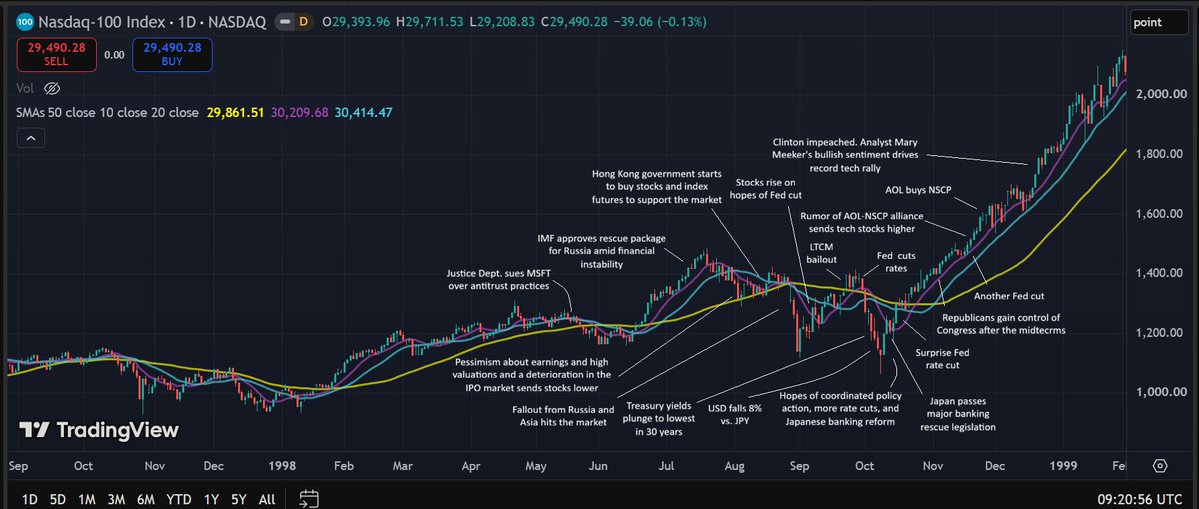
Go back to August 1998.
The technology bull market had been running for about three years.Amid fallout from the Asian financial crisis and Russian ruble crisis, earnings expectations were deteriorating, valuations were elevated, and investors were becoming increasingly concerned about unprofitable Internet companies.
On August 6, the New York Times published an article titled "Market Gyrations May Point to Shift in Investor Strategy." One fund manager declared, "Boring is going to outperform sexy."
Investors were supposedly abandoning momentum and speculative technology shares in favor of profitable businesses, balance sheets, dividends, and traditional valuations.
Russia defaulted on its debt. The Asian financial crisis was spreading internationally. The yen carry trade had imploded as the USD plunged 8% against the yen in a single day. US embassies were being bombed.
President Clinton ordered missile strikes against Afghanistan and Sudan while simultaneously facing a scandal that would result in his impeachment. Major financial institutions suffered enormous losses, and the spectacular collapse of Long-Term Capital Management threatened the stability of the global financial system.
Corporate earnings forecasts were falling. Investors feared a U.S. recession. Many of the same technology companies that had driven the bull market were now leading the decline. Many of them had fallen 40-60% from their 1998 highs.
Even the Federal Reserve's first interest-rate cut on September 29 initially disappointed investors. The Dow fell that day and plunged another 238 points the following session.
The news seemed almost uniformly terrible.
But the market didn't care forever.
After a violent reversal in early October, improving confidence in corporate earnings, Japanese banking reforms, and a surprise emergency Fed cut on October 15 helped restore risk appetite.
By November, the Dow was making new all-time highs. Internet stocks were exploding higher again.
What had looked like the end of the internet trade was, within about a month, actually a correction preceding one of the most extraordinary speculative advances in stock-market history.
In today’s market, Microsoft just reported 48% Azure growth. Google Cloud revenue more than doubled. Meta expects $135–145 billion in capex this year and has announced plans for a potentially record-sized $97.5 billion equity capital raise.
If the market really was that concerned over capex spending, instead of using it as an excuse to explain the pullback, the market would have sold off on the META news.
Anthropic has now filed its IPO registration statement. We have midterm elections approaching, another consequential round of earnings, and a Fed that just held rates steady even as another hike is widely anticipated in December.
There are plenty of potential catalysts over the coming two months.
More importantly, this does not resemble the sentiment backdrop of a speculative bubble climax. Generational bull markets don't die midway through a basing period, but typically after euphoric saturation and a parabolic rally in leading names.
Consensus on AI is deeply divided. Being loudly anti-AI has practically become fashionable. Some AI critics have even built enormous audiences around the idea that the economics of the industry are unsustainable. Plenty of investors seem almost eager to watch the entire trade collapse.
That isn't the sentiment or narrative around which tops are typically made.
The Internet trade didn't end in the panic of 1998. It ended after the extraordinary acceleration of 1999 and early 2000 when being bearish was the market equivalent of wearing a dunce cap.
History never repeats perfectly, and today's rate environment is very different. But I think the resemblance in investor psychology is striking.
I’d be genuinely surprised if we don't have at least one more months-long rally into new highs during this cycle.
Whether it begins into the midterms, after the elections, around Anthropic's anticipated listing, or following further earnings confirmation, I suspect this correction will eventually look more like an interruption in a generational bull market than the bursting of a "bubble."
The $NDX took four months to bottom in 1998. With the exception of a handful of leaders, most stocks that are holding up have been basing out since the May-July period. We could certainly go lower, but most of the signs point to another new high before this cycle rolls over.
However, I’d place the odds of any additional powerful rallies afterward as increasingly unlikely given the fact we are already about to enter the fifth year of this bull market. I'd be careful about buying the dips next year, at least with meaningful size.
The question is not if we will have a bear market, the question is if this administration can afford to let us have a bear market.
- AI Capex is 50% of GDP. If it stops or slows down, GDP growth goes down the drain. No GDP growth = recession. Mainstreet gets hit the worst as the labor market will collapse.
- 90% of consumer spending is done by the top 10%. They are levered against their assets that allow them to keep spending because their stocks keep going up. Stocks go down? Goodbye to consumer spending as we enter an actual recession given normal consumers already are borrowing from credit cards to pay for everything.
- Social security will be wrecked over the coming 10 years. Why do you think we got the Trump Accounts? Because the administration believes in financial literacy? No, they need a replacement and having kids compound in the stock market to basically build their retirement account from birth could replace social security. That means stocks have to go up for those accounts to be worth anything and actually compound. Most 401Ks in this country are basically seen as retirement accounts. If the admin lets the market crash, people will not be able to afford retirement when social security benefits get cut into 2032.
- We are $40T in debt. Bond yields continue to go higher which means the interest expense on our debt is approaching a significant part of our overall spending. The literal only way to solve this is cut spending or grow. Repubs or Dems will not cut spending…so growth is the only answer. If the market crashes, the chances of sustained growth in the greatest tech buildout we have ever seen will be impossible and ultimately make our debt situation even worse. We have to grow.
Not saying we can’t get into some horrible bear market, but given how levered the entire economy is to AI, which is basically the entire stock market, I do think this admin will try very hard to make sure we don’t have some horrible, ugly crash. If they let it happen, everything goes down the drain and the difference between now and dotcom is that demand for GPUs is very real (no oversupply) and the difference between now and 2008 is that the potential credit issue is not in housing and banks, it’s within GPUs and there is so much demand that the hyperscalers + Nvidia + the admin could come in to make sure things don’t get as bad as then.
Maybe we could have some epic crash, but this administration really cannot afford to let that happen.
The best trading window of the year is behind us. If you’re still chasing outsized returns in a less favorable environment, the difficulty goes up exponentially.
But if you save your most aggressive trading for the one or two prime windows each year, triple-digit returns can often come with far less effort.
Look at the past eight years:
2019: Q1
2020: Q2
2021: Q1
2022: Q4
2023: Q2 & Q4
2024: August–November
2025: Q2
2026: Q2
Now ask yourself:
If you had traded aggressively only during those months and spent the rest of the year traveling and enjoying life, would your performance have been better?
If the answer is yes, that tells you two things:
Your system—or your judgment—isn’t filtering out the periods when you should be sitting out.
Learning when to press, when to ease off, and when to stop trading could dramatically improve your results.
This year offered three windows where the money came easiest: the major move from April through June, the late-July/early-August rebound following the South Korean deleveraging episode, and the rebound from mid-September through early October.
At JLA, we caught almost all of those moves—and decisively scaled back or stopped trading as conditions turned.
I get why people hesitate when they see a paid trading course. Maybe you’re worried you won’t be able to grasp the material. Maybe you wonder whether it’s just another scam.
Fair enough.
That’s why I’ve put together a brand-new FREE masterclass on how I developed my championship-winning trading system.
More importantly, you’ll learn what goes into building a trading system that can stay profitable over the long run.
Whether you ever join JLA or not, this is a great place to start.
It’s yours, free:
https://t.co/BDliGY7BV0
Available for a limited time.
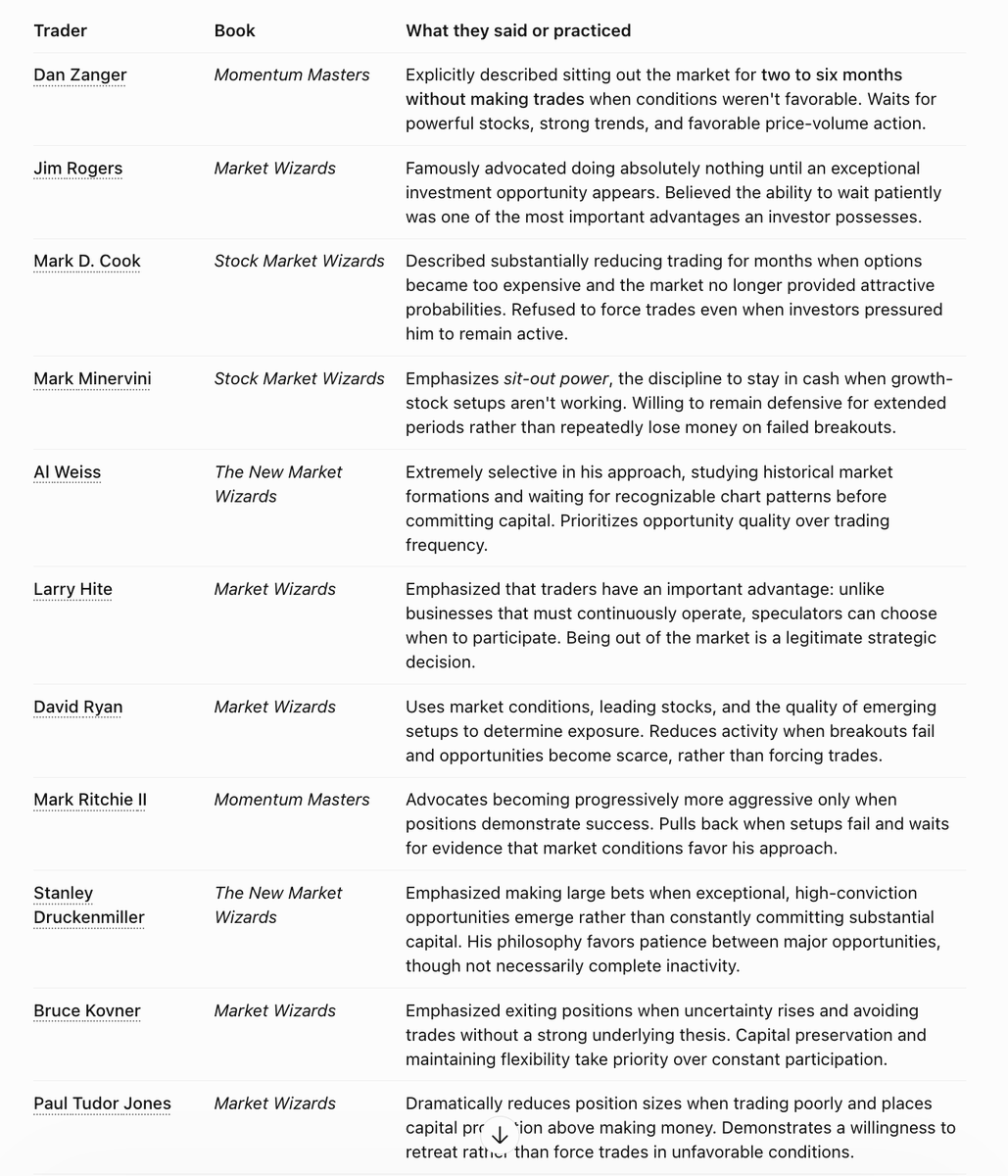
This is a really great post and also why if you want to 'understand' something you don't (new tech, idea) ask one of your kids, or someone young. That exercise in an of itself is an act of humility. The #1 thing Druckenmiller has stated repeatedly that rarely gets quoted as his greatest strength is his 'flexibility'. The irony is almost NO ONE ever presses him on what he means by that which is where the real art is. Ideas, conviction, sizing and expression which are all dynamic (flexible) vs static.
Case in point...The number of old people who tried to tell me why BTC was stupid or wouldn't work (all of whom were wealthy might I add) was pretty long. Ironically I had thought the same when I first heard of it but after talking to a tech nerd who explained it more and then hearing about it from others smarter than me I started doing some digging/thinking. I told my Dad I liked the risk v reward in 2015 and he said 'I don't really get it but if you like it buy me some', which was an example of someone who was willing at least to be flexible and see in 'risk v reward' terms rather than I'm right and know more than you.
If anything, the past two months should have taught you to 'trade what you see' and trust your judgement of price action (assuming you've put in the requisite screen time to discern normal and abnormal price action).
There is a lot of noise on this platform, and admittedly I succumb to it from time to time. It is no wonder when the moment I check out/go travelling and just focus my own trading/judgement, results improve in relatively short order.
Another lesson that should come to you quite quickly is the need to view the market from the lens of individual stock first rather than the index. The quantity and quality of your watchlist is almost always a leading indicator for what is to come in the short term.
$QQQ near all time highs? Yeah that's great! But individual stock action for the most part the past two weeks have deteriorated significantly and it must have been difficult to catch traction unless you got positioned in the right names. Study the RS lines of individual stocks in relation to its own 20/21-DMA, many have begun to lag the index by a pretty wide margin the past week. Additionally, their respective RS lines have been choppy and failed to register any sort of consistency in terms of sustained relative strength momentum (yes, I'm looking at you AI names).
It has generally been a tough year and the goal is really to preserve any gains you have and survive - not just from a financial standpoint but importantly your mental capital too. Have low expectations and wait for that fat pitch to swing the bat hard. It certainly will be difficult to do that if you've drained yourself trying to press hard in a tough environment.
"While the building blocks of a new bull market are always put in place during a correction, most people are looking the other way. While you are waiting, others are paving the way for the next strong market environment." - William O' Neil
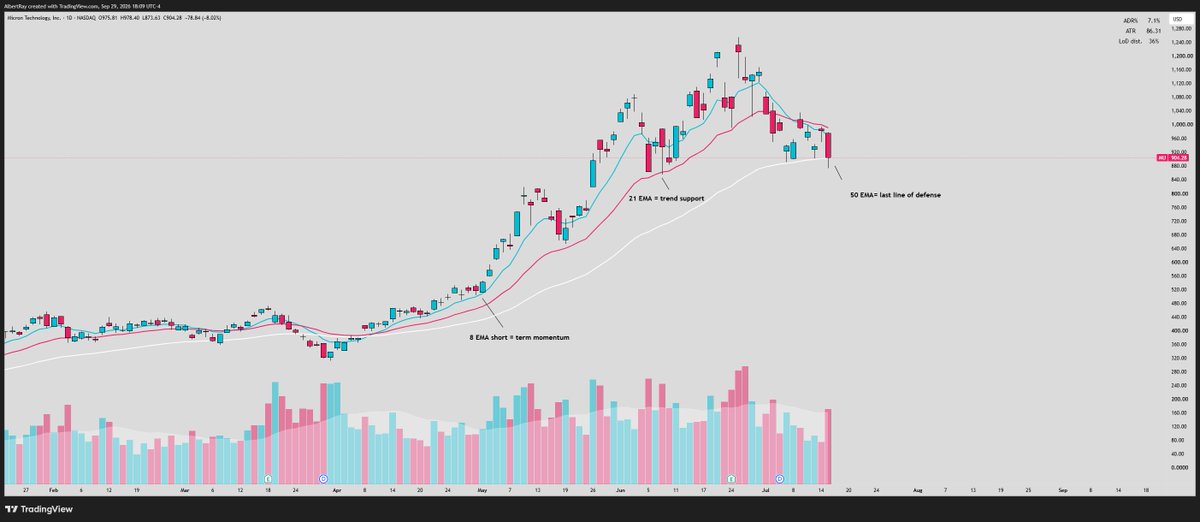
Why do I use the 8, 21, and 50 EMAs?
Because one of the hardest things in trading isn’t finding a strong stock…
It’s actually STAYING in it.
The 8, 21, and 50 EMAs help me:
-Identify momentum
-Understand the health of a trend
-Stay in the strongest stocks for as long as that momentum remains intact
Here’s how I think about them...
The 8 EMA = short-term momentum
When a stock is extremely strong, you’ll notice something very often:
It barely wants to leave the 8 EMA
Price pulls into it, buyers step back in, and the trend continues higher
Some of the strongest stocks in the market can ride the 8 EMA for weeks at a time
Instead of constantly trying to guess the top, the moving average gives me something objective to follow
Then you have the 21 EMA
I look at this as a deeper area of support within a healthy trend
A stock might temporarily lose the 8 EMA as momentum cools off, consolidate, and then find buyers around the 21
That doesn’t automatically mean the trend is broken
Sometimes the stock simply needs more time to digest the previous move
Then you have the 50 EMA
For me, this is where I start paying much closer attention to the bigger trend
If a stock that has been trending beautifully starts breaking the 8, then the 21, and eventually loses the 50 with aggressive price action and volume…
The character of the trend may be changing
I’m not using moving averages because they magically predict where price will go...
I use them because they give me a framework for understanding MOMENTUM
When price is above rising 8, 21, and 50 EMAs and continues respecting them on pullbacks, the trend is telling me it’s healthy
That allows me to do something most traders struggle with:
Stay in the best stocks for the longest period of time
A lot of traders find a great stock…
Then sell it because it ���looks too high.”
It goes another 30%
They buy it back
Then sell again on the next red candle
Instead of trying to outsmart the trend, I’d rather let price tell me when the trend is actually changing
The strongest stocks can stay “overextended” much longer than you think
That’s why momentum moving averages are so valuable...
8 EMA = short-term momentum
21 EMA = trend support
50 EMA = bigger-picture trend health
As long as price continues respecting those moving averages, I have a reason to remain patient
Don’t sell a strong stock just because it has gone up a lot
Watch how it behaves around the moving averages
Let the TREND tell you when momentum is changing.
I genuinely think you could build an entire trading system around 1 moving average + 1 lower-timeframe confirmation.
$MU + $SNDK today were textbook examples...
Step 1: Pull up a chart, slap on the 9week EMA, and wait for leadership to come to you.
Step 2: Once it hits that area, I’m waiting for the right-side curl on the 15/30min → green candle forms → high becomes my trigger → high breaks, I enter → stop goes to LOD.
You practically would've bottom-ticked both $MU & $SNDK without ever trying to call the bottom. The process goes... leadership + major support + lower-TF confirmation + stupidly tight risk.
Focus on removing the noise and repeat these asymmetric opportunities until you’re bored of printing insanely easy cash.
It works for me, so let me know how it works for you;)