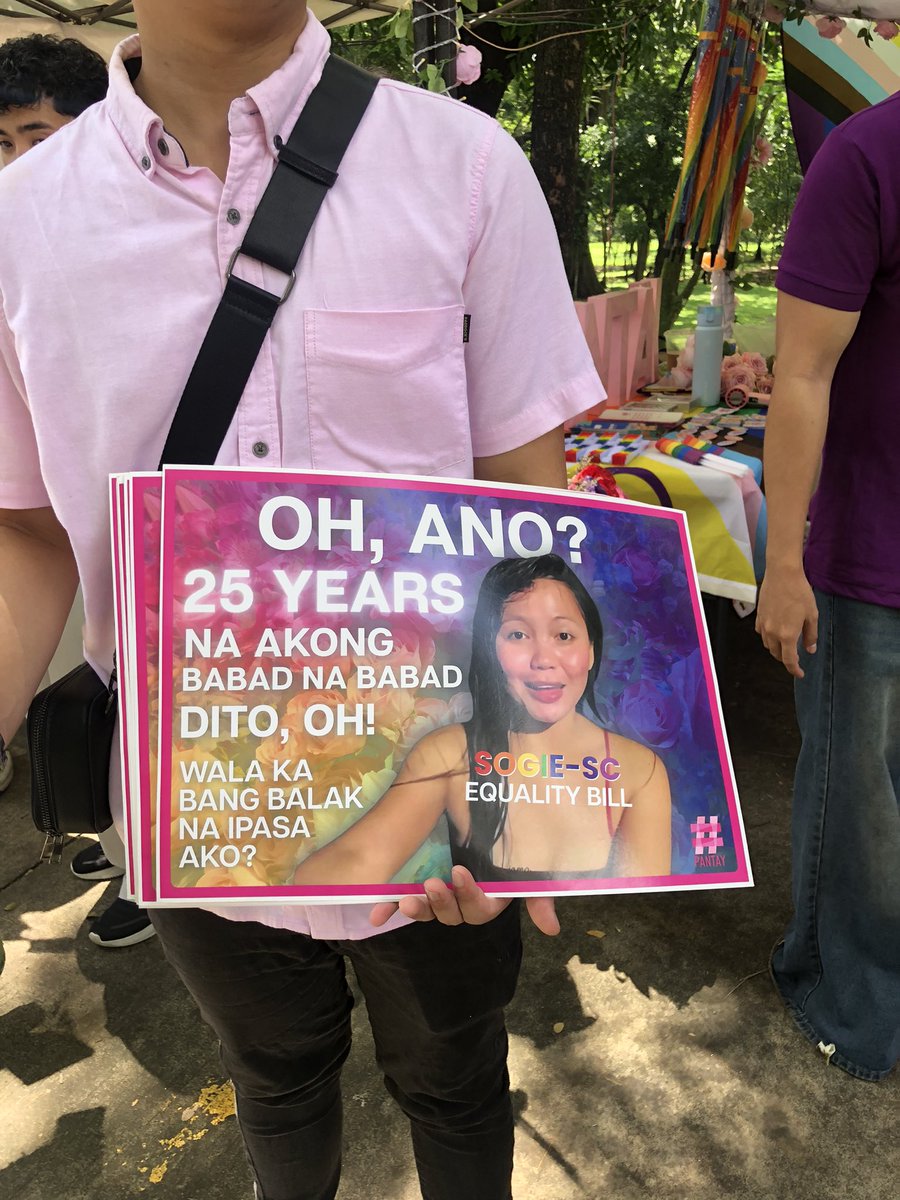
It is always beautiful to see protests of ordinary people in BGC because it disrupts the disneyland and "Singapore-like" image that its land developers want to sustain to keep land value high and the upper middle and upper classes insulated.
CAN THE OMBUDSMAN ORDER THE DISMISSAL OF A SENATOR?
I just finished listening to two (2) interviews of Ombudsman Boying Remulla – he states the problem clearly: there is a conflict with the Constitution and the Ombudsman Act, an ordinary law.
I stated this opinion a while back but let me dissect it further now.
Section 13, Article XI of the Constitution states:
“The Office of the Ombudsman shall have the following powers:
Direct the officer concerned to take appropriate action against a public official or employee at fault and recommend his REMOVAL, suspension, demotion, fine, censure, or prosecution and ENSURE COMPLIANCE therewith.”
On the other hand, Republic Act No. 6770 or the Ombudsman Act says that the Ombudsman has disciplinary authority over all government officials except impeachable officers, Members of Congress, and the Judiciary.
I have already forwarded the view before that Section 21 of the Ombudsman Act is partly UNCONSTITUTIONAL or violates the Constitution – the one that exempts Members of Congress from the disciplinary authority of the Ombudsman.
It seems that Ombudsman Boying Remulla is of the same view because he stated in his interview that the reason why he will write a letter to the Senate is to trigger a “justiciable controversy” or simply, a court case.
He wants courts and inevitable the Supreme Court to make a final decision on the matter because otherwise, Remulla argues, what is the meaning of the Ombudsman for if its orders are ignored.
And given that former Ombudsman Conchita Carpio-Morales issued the dismissal order before, she likely believes the same that the Ombudsman has disciplinary authority over Senators based on what the Constitution says despite what R.A. No. 6770 says.
I don’t know their specific arguments but in my humble submission, these are the reasons why the Ombudsman has disciplinary authority over Senators and Congressmen:
1. The Constitution empowers the Ombudsman to prosecute ALL government officials and remove any erring official except impeachable officers who are specified by the Constitution as well that they can only be removed by impeachment.
2. The purpose why the Ombudsman was created was to enforce accountability (hence Article XI) and prevent corruption – so any corrupt officer should be under its authority except, again, those exempted by the Constitution.
3. The Constitution does not state that legislators are exempted from the powers of the Ombudsman.
4. The disciplinary authority of Congress over its own members does not cover corruption and removal. What the Constitution grants to Congress is the power to expel a member FOR DISORDERLY BEHAVIOR.
5. The Judiciary is not under the Ombudsman because Section 6 Article VIII specifically says that it is the Supreme Court that has adminstrative supervision over all court personnel.
6. The system of checks and balances in the Constitution empowers the House and the Senate to impeach an Ombudsman.
But who checks and balances Congress? Itself? That cannot be.
And it also cannot be just the people through elections. The purpose of elections is multidimensional – it can be to hold someone accountable and punish a corrupt politician by zeroing his votes but it is more generally about looking for a politician that represents one’s interest or ideology.
And the 3 or 6 years in between elections where corruption and malfeasance can happen, who holds them accountable?
It should be and it is the Ombudsman – who can investigate and prosecute corrupt legislators. And if the Ombudsman can criminally prosecute them, why not administratively discipline them?
At the end of the day, the Supreme Court will decide this legal question.
I am on the side of Ombudsman Conchita Carpio-Morales and Boying Remulla.
Public office is public trust.
#Accountability
#DismissJoelVillanueva
The Office of the #Bar2026 Chairperson, Associate Justice Samuel H. Gaerlan, has issued Bar Bulletin No. 1, Series of 2026, dated October 16, 2025, concerning the “Conduct of the 2026 Bar Examinations: Modality, Schedule, Coverage, and Syllabi.”
Read the full text at https://t.co/r8PO9k9rX1
#AweSAMbar2026
#StrivewithHopeandGrit
#SuccessAchievedthroughMerit
#SupremeCourtPH
THE STUDENT MOVEMENT IS ALIVE! ✊
Nananatiling buhay ang diwa ni Lean Alejandro at ng lahat ng kabataang martir at bayani sa patuloy na lumalawak na kilusang kabataan.
READ!!! READ!!! READ!!! 🚨🚨
THE ULTIMATE CALL FROM FORMER CHIEF JUSTICE REYNATO PUNO
OFFICIAL STATEMENT
PHILIPPINE CONSTITUTION ASSOCIATION (PhilConsa)
On the Supreme Court Ruling in G.R. No. 278353 “Sara Z. Duterte vs. House of Representatives, et al.”
July 30, 2025
The Philippine Constitution Association (PhilConsa) expresses its serious concern over the Supreme Court’s ruling in G.R. No. 278353, which nullified the impeachment proceedings initiated by the House of Representatives against Vice President Sara Z. Duterte. With due respect to the Honorable Court, we believe this decision overreaches constitutional boundaries, disrupts the separation of powers, and weakens Congress’ exclusive authority to hold impeachable officers accountable.
⸻
The Facts Cannot Be Ignored
Between December 2024 and February 2025, four impeachment complaints were filed against Vice President Duterte. The first three complaints, though officially docketed, were never pursued. They were neither found sufficient in form and substance nor referred for committee hearings. On February 5, 2025, a fourth complaint—this time endorsed by 215 members of the House, more than the required one-third—was transmitted as Articles of Impeachment to the Senate, in full accordance with the Constitution.
Yet on July 25, 2025, the Supreme Court ruled that the fourth complaint was barred under the one-year rule in Article XI, Section 3(5) of the Constitution, on the theory that the filing of earlier complaints—even if not acted upon—already “initiated” the impeachment process.
⸻
This Interpretation Is Constitutionally Flawed
PhilConsa respectfully but firmly disagrees with this interpretation. The one-year bar rule was designed to prevent harassment through repeated impeachment proceedings—not to protect impeachable officers from ever facing trial by allowing them to take cover behind mere filings. As the Court itself held in Francisco v. House of Representatives, impeachment is only deemed initiated after the complaint is found sufficient in form and substance and referred to the Committee on Justice. The earlier complaints never reached that stage. To treat them as having “initiated” proceedings defies both logic and constitutional intent.
This ruling invites dangerous abuse. It opens the door for impeachable officials—or their allies—to deliberately file weak or premature complaints to “consume” the one-year window and block any real effort at accountability. This is not a safeguard against harassment—it is a blueprint for evasion.
⸻
Judicial Restraint vs. Judicial Activism
This case called for judicial restraint, not judicial activism. The Constitution gave the House of Representatives the sole power to initiate impeachment and the Senate the sole power to try and decide it. These are textual, exclusive powers, and the Judiciary’s role in such matters should be limited to clear, grave abuses that nullify constitutional norms.
Instead, the Court stepped into the heart of a political process already underway—substituting its own judgment for that of a constitutional majority of the House. It interpreted the one-year bar so broadly that it now disables the very mechanism of impeachment in all but the rarest cases.
This ruling, though perhaps well-intentioned, is a clear instance of judicial activism. It turns the Judiciary from a neutral guardian of the Constitution into an arbiter of congressional timing and internal processes—matters the Constitution never assigned to the courts.
Judicial activism, if unchecked, becomes judicial supremacy. And that supremacy can, over time, paralyze the political departments that the people themselves empowered.
⸻see comment for cont. 👇🏻
Ang weird naman nung Decision. Diba di naman napasa yung first 3 impeachment complaints, so how can the complaint be deemed initiated?
If this is the case, then an erring official’s allies can just file spurious complaints to bar the subsequent filing of a valid one for 1 year.
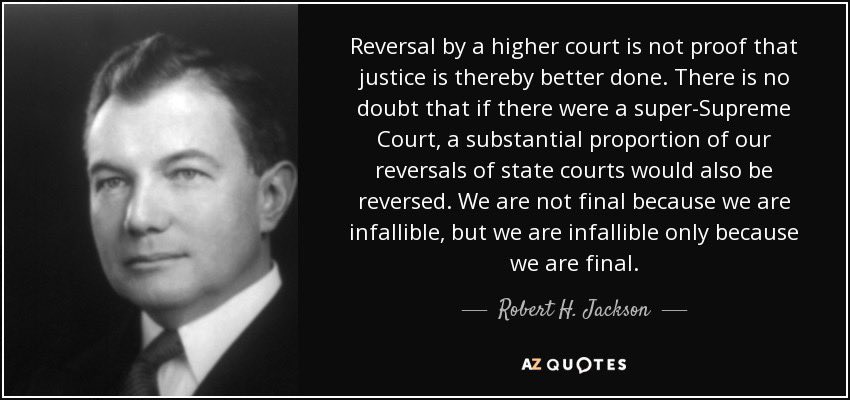
During these times, I am reminded of what US Supreme Court Justice Robert Jackson once said about the Supreme Court:
“We are not final because we are infallible, but we are infallible only because we are final.”
In Tagalog:
“Hindi kami supreme o pinaka huling korte ang Korte Supreme dahil perpekto kami o hindi kami pwede magka mali.
Hindi kami pwede magka mali dahil lamang kami ang pinaka huling korte na pwedeng mag desisyon.”
#Law101
#PoliticalLaw
HONEY GOES TO LOCARNO! 🍯
We're proud to share that HONEY, MY LOVE, SO SWEET, written, directed, and edited by JT Trinidad, will be having its World Premiere at the 78th @FilmFestLocarno Pardi di Domani - Concorso Internazionale this August 2025!
#ProtectTransKids 🏳️⚧️
#Locarno78
Eugene is grit personified. But no child should ever experience this.
May we eventually see all queer children being loved and accepted by their families unconditionally. Without having to prove their worth and existence. 🏳️🌈