As CTO at Provident Quantum Technologies, I’m building QRYPTA and sharing the engineering behind it: architecture choices, verification steps, tradeoffs, and open questions. I’ll distinguish deployed work from plans and link evidence when making technical claims.
One architecture lesson matters here:
Moving value and explaining value are different problems. A blockchain can confirm a transfer. A financial system still needs to know why it happened and which record it belongs to.
Blockchain can prove that money moved.
A business still needs to know why.
Was it an invoice, a refund or a settlement? Which record should it match?
QRYPTA records a verifiable reference on-chain while sensitive payment details remain outside public view.
That is one role of ISO 20022 in our architecture.
Explained in Section 05 of the QRYPTA Whitepaper.
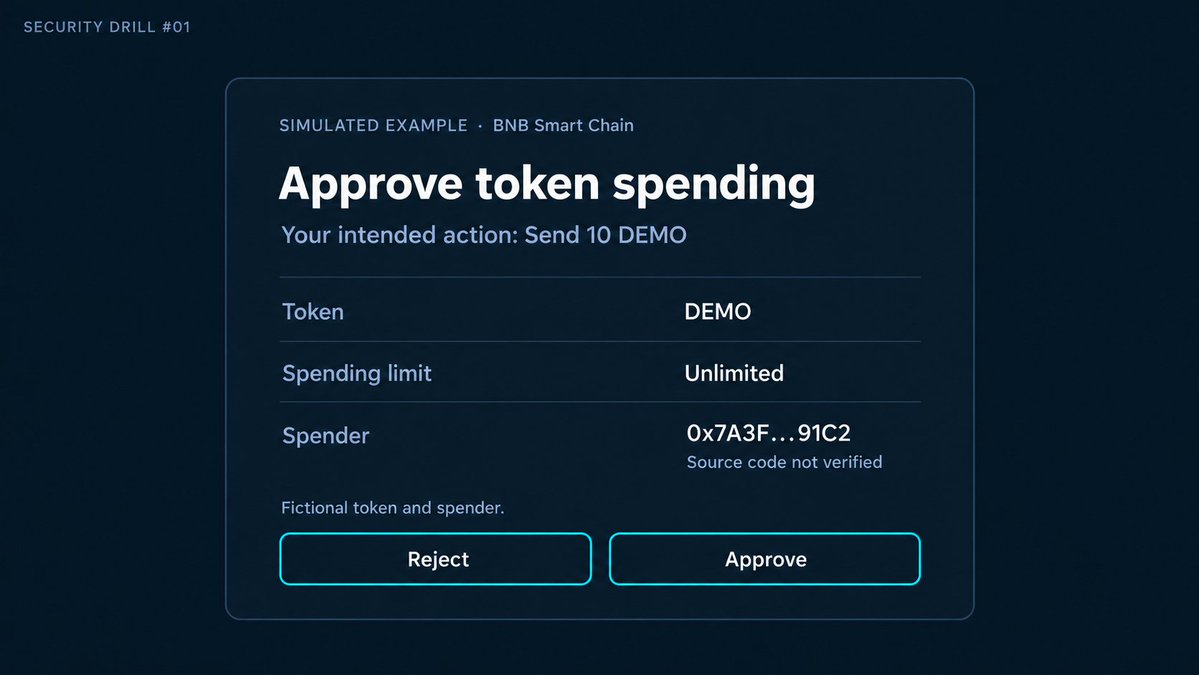
@QRYPTARail Wallet security is not only about what a contract can execute. It is also about whether a user can understand the permission before signing it.
Good interface design should turn raw contract data into a clear decision.
SECURITY DRILL N°.01
Would you approve this request?
Take 10 seconds. This simulated screen contains three real risk signals.
No technical background required.
We’ll reveal them in this thread later today.
A wallet built for years needs an answer to an uncomfortable question:
What happens when its signature scheme needs to change?
For QRYPTA, I see the migration path as part of the architecture discussion.
What would you expect that migration to preserve?
A security claim should lead to something you can inspect. For QRYPTA, our public evidence pack lists deployments, demo transaction hashes, and a verification guide. Start with the artifacts; then question the assumptions.
ELON MUSK: "If there are no babies, humanity will come to a halt. And we've seen now for many years, very low birth rates in almost all of the world. Even India recently went a lower replacement rate.
If you look at China, for example, they are roughly at half replacement rate, I think maybe 60% or something like that. So that means, call it something like 600 million people will be lost in the end of this generation. Where are you going to get 600 million immigrants? That would require almost two Americas to move to China? That's impossible."
@ProvidentQuant That’s the gap. Building post-quantum protection on the same chain people already use is smarter than asking everyone to migrate later when the risk becomes urgent.
@ProvidentQuant Speed is useless if the foundation can be broken later.
BNB making finality sub-second is a big win for users, but most wallets are still secured with cryptography designed before quantum computing was a real threat.
Kudos to the Besu team for their swift response and remediation efforts.
We’re glad to see the vulnerabilities we responsibly disclosed addressed in Besu v26.7.1. Coordinated disclosure remains a critical part of securing blockchain infrastructure.