Big kudos to Mainnet Node operators for upgrading to v23.
Most major Nodes have now been upgraded, and the protocol is expected to move to v23 soon.
This was one of the most challenging upgrades to date, as it involved multiple subsystem upgrades and optimizations that required internal data reprocessing.
Protocol 22 -> 23, Ubuntu 20 -> 24, PostgreSQL 12 -> 16
Reminder: All Mainnet nodes are required to complete the Protocol 23 upgrade by May 15, 2026 to remain connected to the network. This upgrade takes longer to complete, so please plan ahead.
Details: https://t.co/9VehO7hhj1
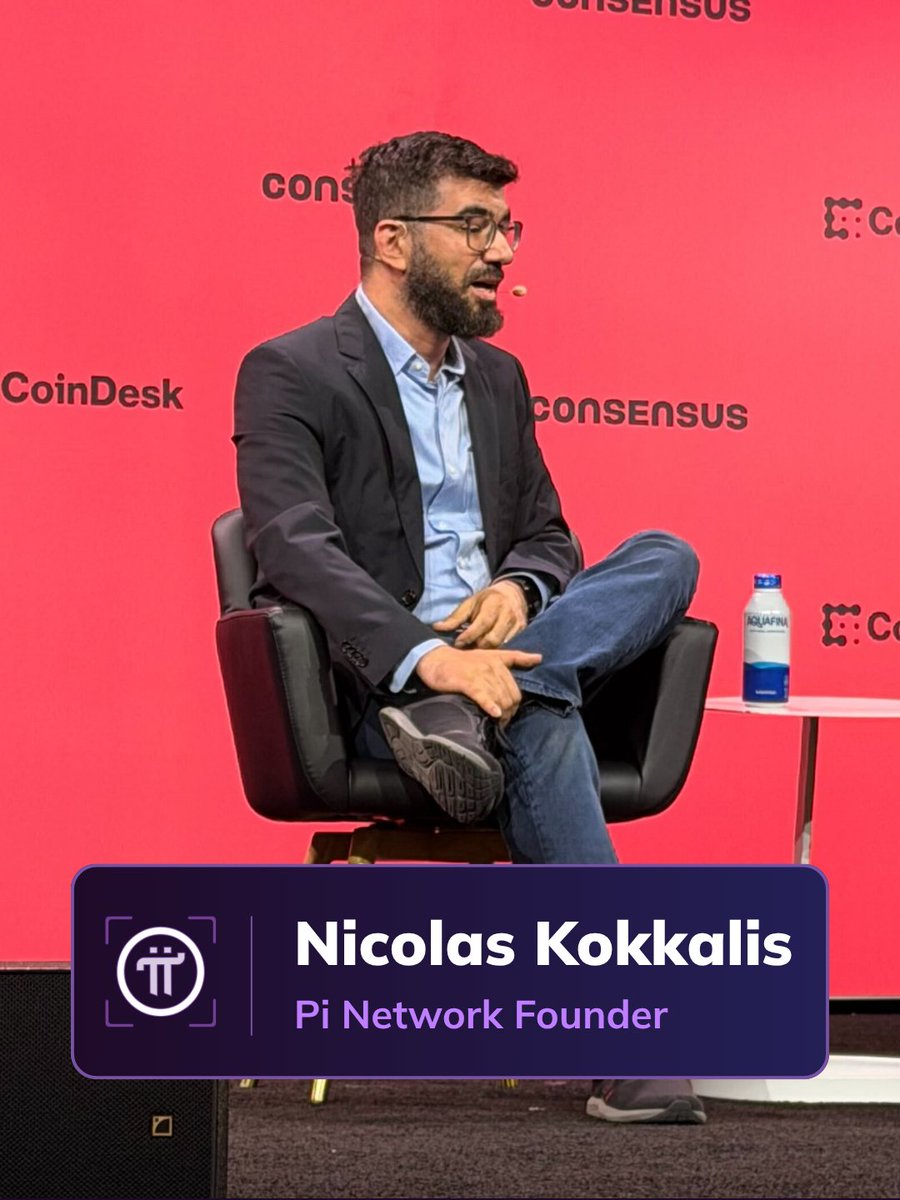
Pi Founder Nicolas Kokkalis spoke today at Consensus 2026 Miami on the panel, “How to Prove You’re Human in an AI World (Without Doxing Yourself).”
The discussion focused on one of the most urgent challenges in the AI era: how to maintain trust and verify real human identity as AI systems become capable of generating convincing bots, profiles, and interactions at scale.
Stay tuned for the full video!
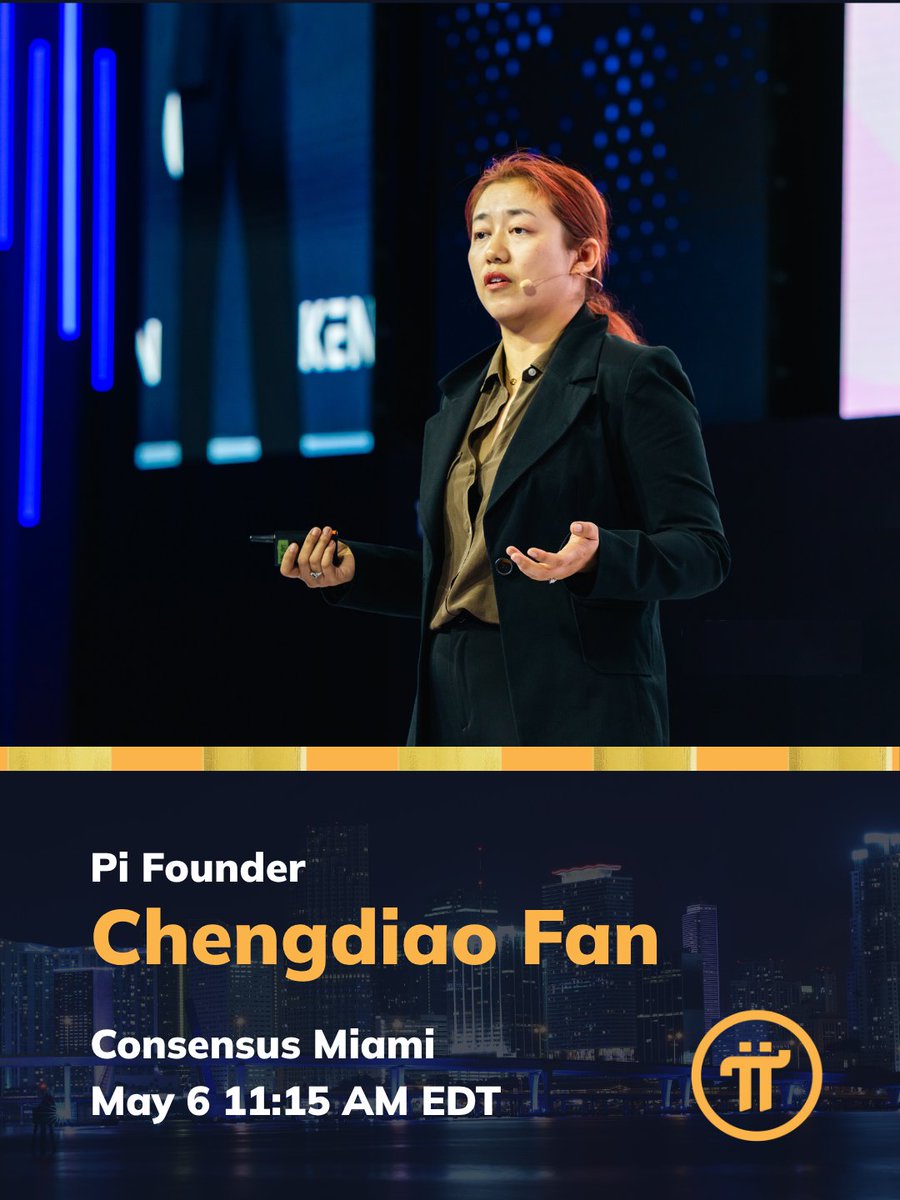
Pi Founder Chengdiao Fan spoke today at Consensus 2026 Miami in her session, “Aligning Web3, AI, and Blockchain for Utility.”
Dr. Fan shared how Pi’s blockchain infrastructure, identity verification, and a globally engaged network can support utility-driven products and businesses in the AI era.
Her talk built on a central challenge in the broader crypto industry: the frequent misalignment between token design and real innovation. While tokens in the industry have often been used primarily as capital-raising tools or quick exits, Dr. Fan discussed Pi’s approach to treat tokens as tools that can support growth, engagement, and long-term utility.
Pi’s approach to ecosystem tokens and launch mechanisms focuses on tokens for user acquisition and integrating token design into the product innovation process. By using tokens to help products acquire real users who can engage, provide feedback, and use those tokens within actual product experiences, this approach connects token design more directly to utility and product development.
More broadly, Dr. Fan’s talk invited discussion on how blockchain can help shape AI-era business models, financial literacy, ownership, and socioeconomic participation. As AI lowers the barrier to building, the focus shifts toward something harder to replicate: real users, real participation, and trusted human input at scale.
Stay tuned for the full session video!
The Pi Mainnet is upgrading to Protocol 23 – Deadline: May 15.
All Mainnet nodes are required to complete this step before the deadline to remain connected to the network. This upgrade takes longer to complete, so plan accordingly.
Details here: https://t.co/9VehO7hhj1
Most AI systems still need good human input.
Automated training can scale.
But it struggles with:
Ambiguity
Nuance
Real-world judgment
That’s why human-in-the-loop systems still matter.
Not as a fallback. But as a core layer.
The challenge isn’t whether human input is needed.
It’s how to get it:
At scale
With quality
From real people
That’s the bottleneck, and Pi Network has already built the solution: the large-scale, globally distributed workforce of identity-verified human participants already active inside the Pi ecosystem.
https://t.co/uB1vllBMJU
Consensus Miami is getting a slice of Pi!
Pi Founder Chengdiao Fan will speak at Consensus 2026 on Wednesday, May 6, from 11:15–11:35 AM EDT at the Convergence Stage.
As AI dramatically lowers the barriers to building products, competition increasingly centers on authentic data, user acquisition, and trusted human participation.
Chengdiao’s presentation will explore how Pi’s blockchain infrastructure, verified identity, and globally engaged network can support utility‑driven products and AI‑era business models.
The session presents a fresh perspective on crypto tokens not as exits, but as tools for sustainable growth and real‑world adoption.
See you all there!
What is the significance of Pi KYC, and what’s next?
Pi Founder Nicolas Kokkalis explores the importance of Pi KYC both internally and for the next stage of this initiative to treat KYC itself as a service—KYC as a platform capability.
What are Pi ecosystem tokens and what is the design thinking for ecosystem tokens on Mainnet?
Pi Founder Chengdiao Fan dives deep into Pi’s unique approach to ecosystem token design — Pi’s focus is not on tokens for their own sake, or on mechanisms and integrations in isolation, but on enabling useful, utility-driven tokens and supporting the real innovation behind them.
Learn more on the specifics of ecosystem token design here. Pioneers are encouraged to comment, discuss with other community members and share specific suggestions on specific sections.
https://t.co/TRJcKD4dwS
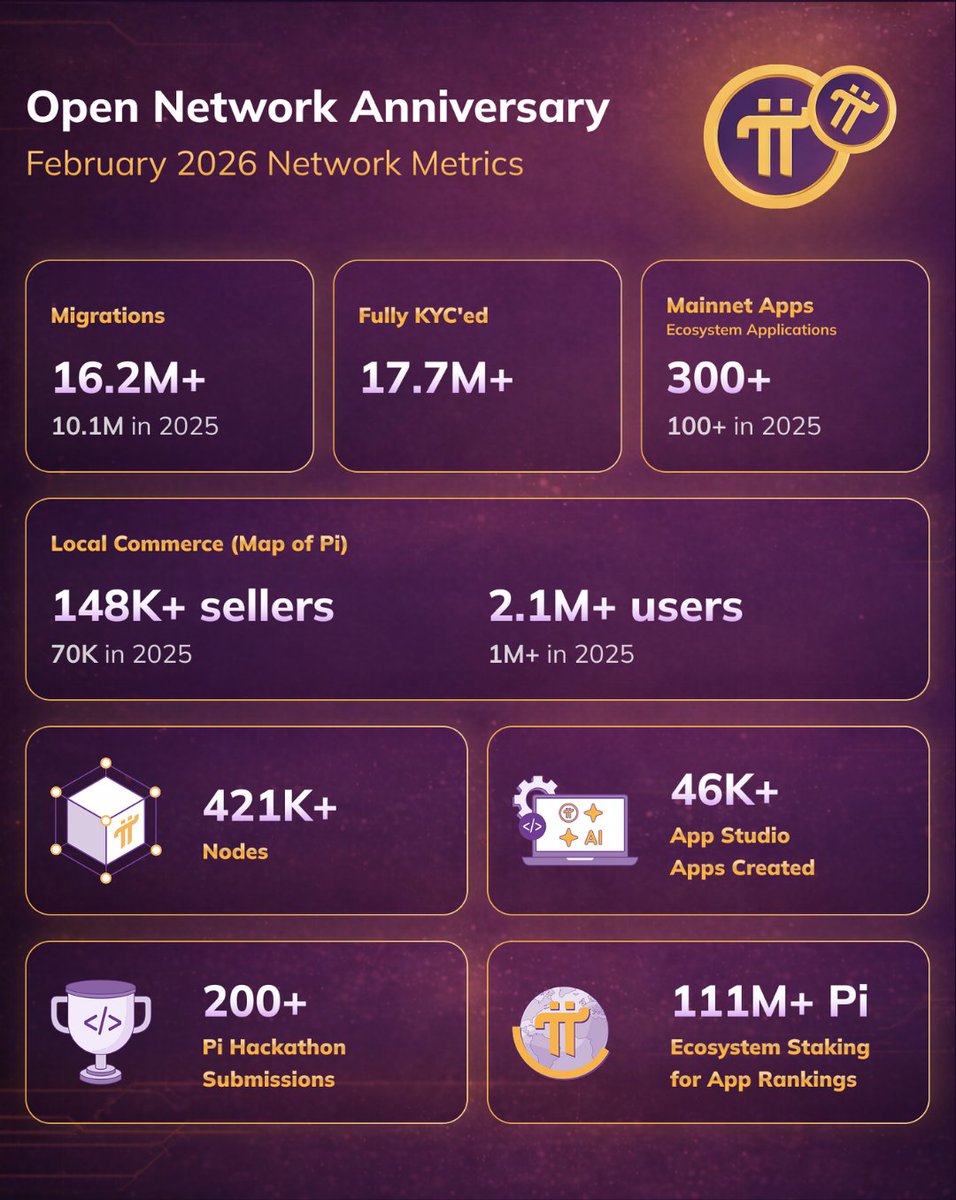
Since the launch of Open Network, Pi has continued expanding across multiple dimensions of the ecosystem—from KYC and Mainnet migrations to developer activity and overall network participation. These milestones reflect the steady progress made possible through the collective contributions of Pioneers, developers, businesses, and KYC validators around the world.
Check out some of the key ecosystem growth metrics achieved during the past year since Open Network launched!