Okay this is genuinely insane.
SpaceX just unveiled a satellite whose only job is to run AI. Not internet. Not GPS. Just compute, floating in orbit.
It's called AI1, and the reason behind it breaks your brain.
AI data centers on Earth are hitting a wall, not a chip wall, a physics wall.
They need staggering amounts of power and water just to stay cool, and we're running out of grid and land to build them.
So Musk's answer is: stop building them on Earth.
In orbit, the sun never sets. Free power, 24/7. No water for cooling, you just radiate heat into the vacuum of space. The two things choking AI on the ground barely exist up there.
And here's the wild part: Musk says it's easier to build than a Starlink satellite. Strip out the complex antennas and it's "a lot of solar cells, a radiator, and some laser links."
One AI1 carries the compute of an Nvidia GB300 rack, the same hardware data centers fight over down here.
AI1 is just the first one. The plan is a constellation of up to a million of them.
And the timing isn't an accident, SpaceX goes public this week at a ~$1.75 trillion target. This isn't a rocket company anymore. It's positioning itself as the power grid for AI, in space.
The race for AI compute just left the planet. Literally.
@SpaceX
I'm excited about voice as a UI layer for existing visual applications — where speech and screen update together. This goes well beyond voice-only use cases like call center automation.
The barrier has been a hard technical tradeoff: low-latency voice models lack reliability, while agentic pipelines (speech-to-text → LLM → text-to-speech) are intelligent but too slow for conversation. Ashwyn Sharma and team at Vocal Bridge (an AI Fund portfolio company) address this with a dual-agent architecture: a foreground agent for real-time conversation, a background agent for reasoning, guardrails, and tool calls.
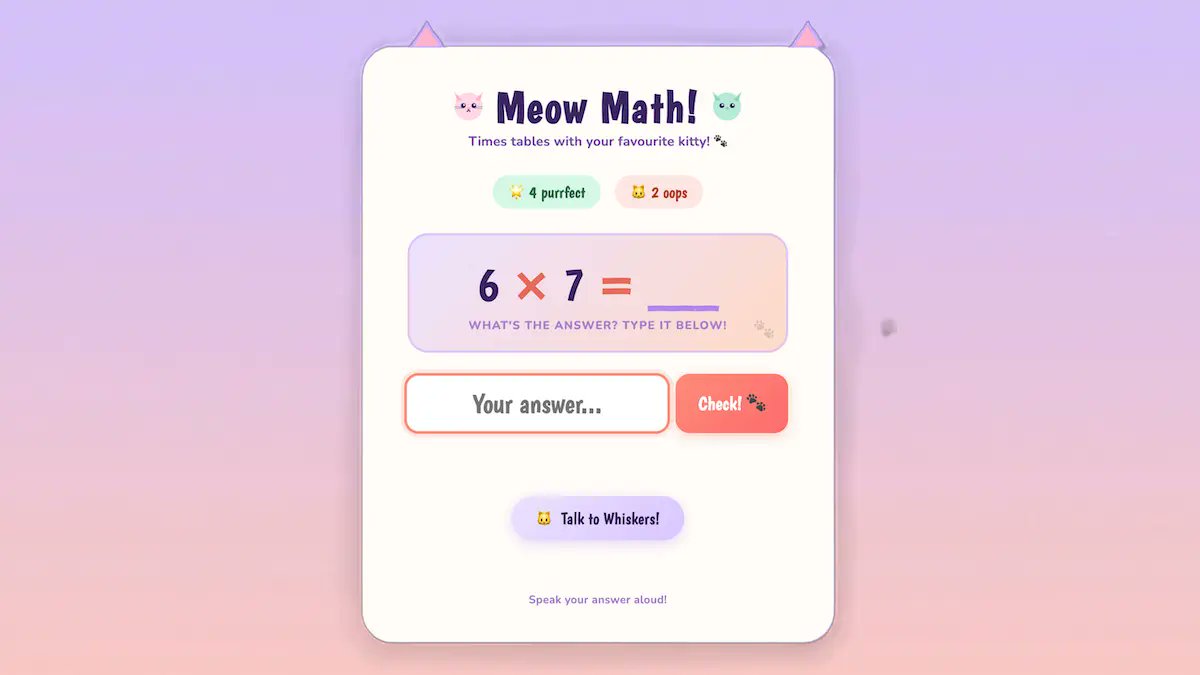
I used Vocal Bridge to add voice to a math-quiz app I'd built for my daughter; this took less than an hour with Claude Code. She speaks her answers, the app responds verbally and updates the questions and animations on screen.
Only a tiny fraction of developers have ever built a voice app. If you'd like to try building one, check out Vocal Bridge for free: https://t.co/nGrFznAMLh
Everyone in India thinks AI robocalling means a robotic voice saying "Sir, would you like a personal loan?" or maybe even "Main Arvind Kejriwal bol raha hoon" if you live in Delhi. And then you hanging up in 3 seconds.
That was in the past. It is not what is happening in 2026.
Let me tell you what happened when we tried it.
March 2025. We decided to test AI voice calling at Skill Arbitrage. We had a sales team making calls. Good people. Trained well. But we were capped. 80 to 100 calls per person per day. We needed to reach 30,000 leads a month. The math did not work with humans alone.
So we called one of the top AI calling companies. They set it up in a week. We gave them the script. The objection handling. The FAQs. The customer database. They said "leave it to us."
First batch of calls went out. Disaster.
The AI sounded perfect. Too perfect. Crystal clear voice. Flawless Hindi. No pauses. No breathing. No background noise. Like talking to a newsreader on Doordarshan.
People hung up. Not because they thought it was a robot. Because something felt off. They could not explain it. They just did not trust the voice.
Our conversion rate was worse than our worst human caller.
We almost killed the project.
Then someone on our team had an idea. What if we made the voice worse on purpose?
We added a tiny bit of background noise. The kind you hear when someone is calling from an office with other people around. We added small pauses before answers, the way a real person takes a second to think. We made the voice slightly less polished. Not robotic. Just human.
Conversion went up 40%.
That was the first lesson. Humans do not trust perfection on a phone call. A voice that is too smooth triggers the same instinct as a salesperson who is too polished. You want to leave the showroom. A little imperfection signals "real person." Even when the listener probably knows it is not.
Then the second surprise.
We expected massive hangup rates. Everyone told us "Indians will not talk to robots." We braced for 30, maybe 40% dropping the call immediately.
6% hung up. 94% engaged normally.
They answered questions. Confirmed details. Booked appointments. Made decisions. 94 out of 100 people did not care that the voice was artificial. They cared that the call was relevant and respected their time.
A bored human reading the same script for the 80th time that day was actually less engaging than a well-designed AI call.
Then the third discovery. This is the one that changed how I think about AI calling entirely.
Our human QA team could review maybe 30 calls a day out of the thousands being made. They would catch a problem, coach a caller, and hope the fix would spread to the rest of the team by next week.
With the AI, we could audit every single call. Every word. Every response. Every point where the conversation broke down.
We would find a pattern. "When the lead says 'I already looked into this,' the AI gives a generic response and loses them." We would rewrite that one response. Deploy it. Within an hour it was live on every call.
Five improvement cycles in a day. Our human team used to do five in a quarter.
By the second month our AI caller was outperforming our best human salesperson on the metrics that mattered. Not because it started better. Because it improved 100x faster.
We started with a system that was honestly embarrassing. We iterated it 50 times in 30 days. Nobody who heard it in month two would believe it was the same system.
Now here is the part I wish someone had told us before we started.
The technology is cheap. Bolna, Vapi, Bland, Exotel. Rs 1 to Rs 5 per minute. A 2-minute call costs less than Rs 10. Compare that to a human caller at Rs 20,000 a month making 80 calls a day. Any vendor can set it up in a week.
That is not where the money is won or lost.
We went through three vendors before we figured out the real problem. Every time we gave a vendor our process and said "build it," we got a technically functional system that produced mediocre results. The calls connected. The voice worked. The script played out. But nothing converted.
Because the vendor did not know our business.
What does the AI say when someone asks "how is this different from that other course I saw on Instagram?" That is not in any FAQ document. That is business judgment.
When does the AI push and when does it back off? When someone says "call me later," do you call them later or is that a polite rejection? If they say "I need to ask my husband," do you offer to call back when he is available or do you handle the objection now?
When the lead switches from Hindi to English mid-sentence, how does the AI respond? In Hindi? In English? In Hinglish? The answer depends on what that switch signals about the caller's comfort level.
No vendor can figure this out for you. These are not technology problems. They are sales judgment calls that only someone inside your business can make.
Every company I have seen get extraordinary results from AI calling has one thing in common. Not a better vendor. Not a more expensive platform.
They have one person on their own team who owns the prompt.
This person listens to 50 calls a day. Spots where conversations break. Rewrites the response. Tests it. Listens again. They are not an AI engineer. They are someone who understands the customer and knows what a good sales conversation sounds like.
This person is the difference between AI calling that produces mediocre results and AI calling that makes your competitors wonder what you are doing differently.
You would never hand a telemarketing agency a one-page brief and expect them to figure out your pitch. You would train them. Listen to their calls. Coach them weekly.
AI calling is the same. Except the coaching is editing a prompt and the improvement deploys in seconds instead of weeks.
We call over 30,000 leads a month now. We deployed AI for onboarding too. It moved our key metrics in ways I did not think were possible 18 months ago.
But the reason it works is not the AI.
It is the person on our team who has been shaping it every single day since we started.
This is going, where we all dreaded AI might go.
Not just predicting will you click an ad but what will you react, seeing a post or ad or anything else.
Powerful and next-level move by Meta!
Lastly, we showed how AI agents can run your ops.
Now they can run your finances.
Collections. Payables. Recon. Accounting.
No Excel.
No chasing customers.
No back-and-forth with your CA.
Introducing RazorpayX Agentic Banking.
Think of this as your mini CFO - powered by AI agents, handling your finances end-to-end.
They can even call customers to collect payments.
Live demo (yes, that’s an AI agent on the call) ↓
@Razorpay@RazorpayX
Agentic software engineering adoption is on fire at @Uber. 1,800 code changes per week are now written entirely by Uber's internal background coding agent, and 95% of our engineers now use AI every month across all the tools we track.
This is a real reset moment for engineering; it's one of the most exciting times to lead. This shift requires builders to be curious and hands-on. I’m incredibly lucky to be surrounded by a team that’s doing exactly that.
The best part is that the strongest adoption isn’t being pushed top down from leadership announcements; it’s coming from engineers who are quietly experimenting, quietly shipping, and quietly pushing things forward.
I love spending time with those engineers because there’s no substitute for being close to the work.
Over the last few months, we leaned in hard, and the results have been phenomenal.
The bigger shift: going agentic.
84% of AI users are now working with agent-style workflows, not just tab completion. Claude Code usage nearly doubled in 2 months (32% → 63%), while IDE-based tools have largely plateaued.
Engineers are moving from accepting suggestions to delegating tasks. Even within traditional IDEs, ~70% of committed code is now AI-generated.
Background agents are writing code autonomously.
Our internal background coding agent went from <1% of all code changes to 8% in just a few months. There is zero human authoring. Engineers review and approve, but the code is written entirely by AI agents.
The role of the engineer is shifting - from writing every line to architecting systems and reviewing AI-generated code.
More to come from the @UberEng team in the coming days.
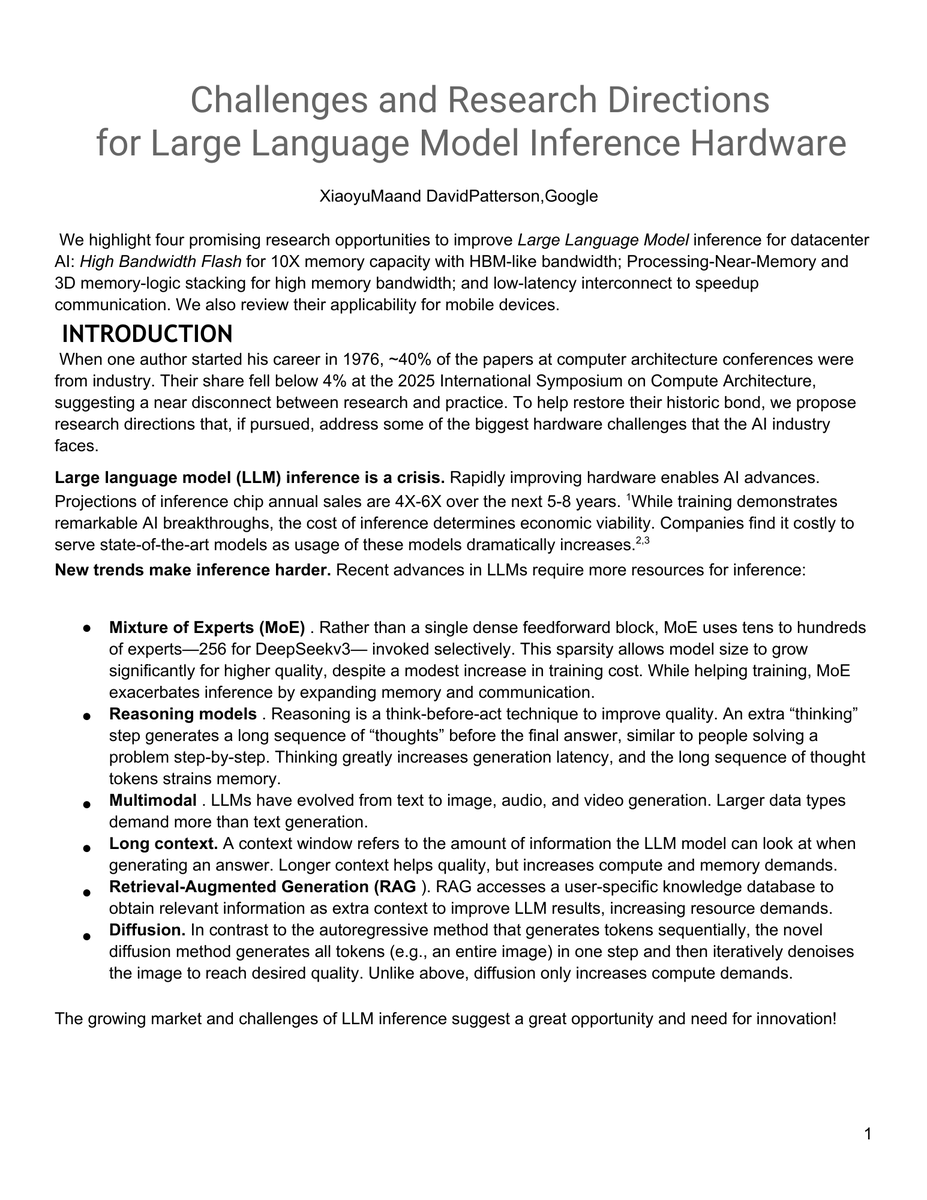
🚨 BREAKING: A Google researcher and a Turing Award winner just published a paper that exposes the real crisis in AI.
It's not training. It's inference. And the hardware we're using was never designed for it.
The paper is by Xiaoyu Ma and David Patterson. Accepted by IEEE Computer, 2026.
No hype. No product launch. Just a cold breakdown of why serving LLMs is fundamentally broken at the hardware level.
The core argument is brutal:
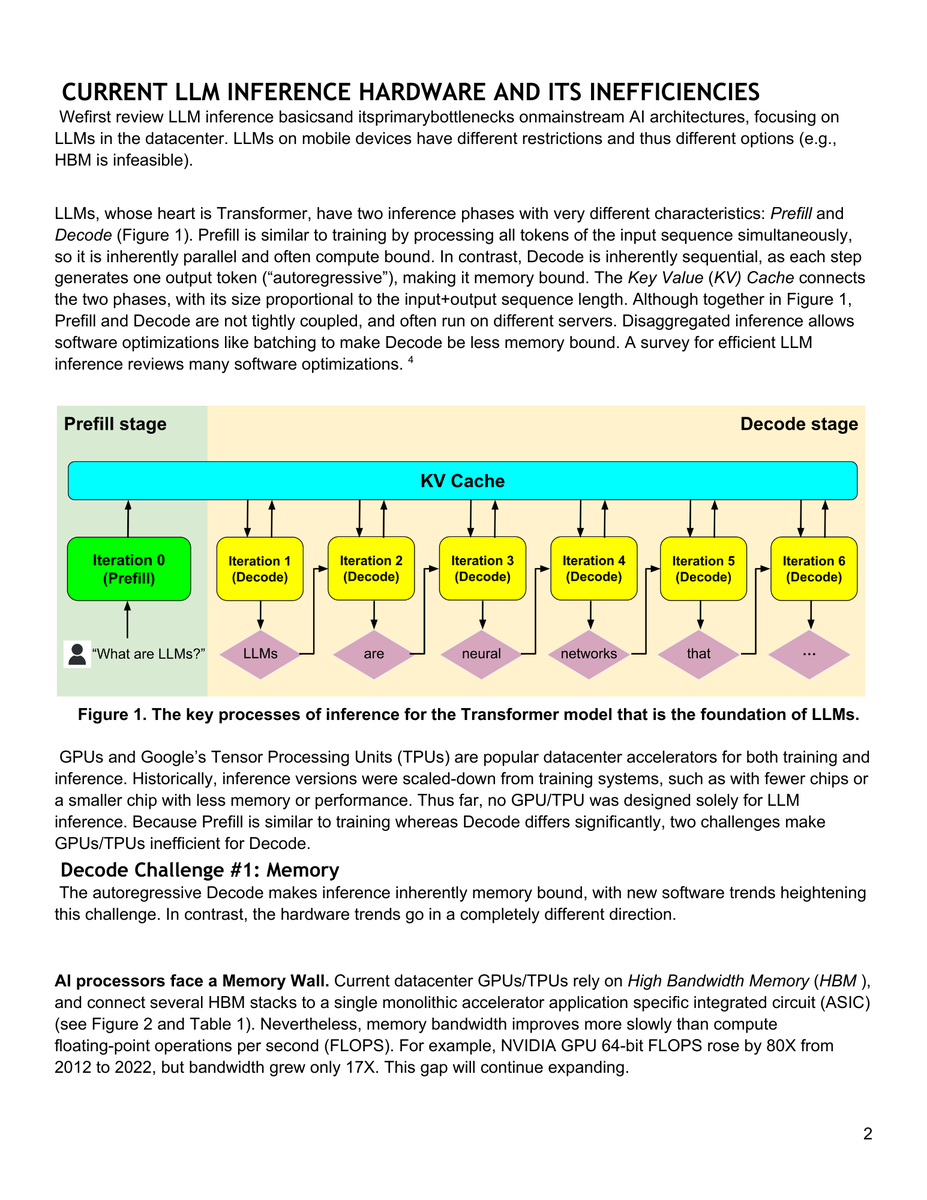
→ GPU FLOPS grew 80X from 2012 to 2022
→ Memory bandwidth grew only 17X in that same period
→ HBM costs per GB are going UP, not down
→ The Decode phase is memory-bound, not compute-bound
→ We're building inference on chips designed for training
Here's the wildest part:
OpenAI lost roughly $5B on $3.7B in revenue. The bottleneck isn't model quality. It's the cost of serving every single token to every single user. Inference is bleeding these companies dry.
And five trends are making it worse simultaneously:
→ MoE models like DeepSeek-V3 with 256 experts exploding memory
→ Reasoning models generating massive thought chains before answering
→ Multimodal inputs (image, audio, video) dwarfing text
→ Long-context windows straining KV caches
→ RAG pipelines injecting more context per request
Their four proposed hardware shifts:
→ High Bandwidth Flash: 512GB stacks at HBM-level bandwidth, 10X more memory per node
→ Processing-Near-Memory: logic dies placed next to memory, not on the same chip
→ 3D Memory-Logic Stacking: vertical connections delivering 2-3X lower power than HBM
→ Low-Latency Interconnect: fewer hops, in-network compute, SRAM packet buffers
Companies that tried SRAM-only chips like Cerebras and Groq already failed and had to add DRAM back.
This paper doesn't sell a product. It maps the entire hardware bottleneck and says: the industry is solving the wrong problem.
Paper dropped January 2026. Link in the first comment 👇
Copilot Cowork launched TODAY inside M365.
On the surface it looks like another AI assistant upgrade. It's not.
Here's what it actually does:
You describe an outcome.
Cowork turns it into a plan and executes it across your real work, grounded in your emails, meetings, files, and calendar through something called Work IQ.
It pulls signals from Outlook, Teams, and Excel simultaneously. While you focus on other things, it keeps moving.
The four things it can do today:
> clean up your entire calendar and reschedule conflicts
> build a full meeting packet including briefing doc, deck, and draft follow-up email,
> research a company across web and work sources and
> deliver an executive summary plus an Excel workbook with labeled tabs, and build a complete product launch plan including competitive analysis, value proposition doc, and pitch deck.
All from a single instruction.
That alone would be a significant product announcement but that's not the story.
The story is who they built it with.
They used Claude for execution.
Not because they had to.
Because when $3 trillion is on the line, you don't gamble on loyalty.
You pick the best tool for the job.
This is the moment enterprise AI stopped being about who has the best model.
It became about who has the best judgment about which model to use when.
The companies that figure this out in the next 6 months will run circles around the ones still debating GPT vs Claude vs Gemini.
The AI wars were always framed as a race to build the smartest model. That framing was wrong. The real race was always about who controls the orchestration layer. Who decides which AI does what. Who enterprises hand the keys to.
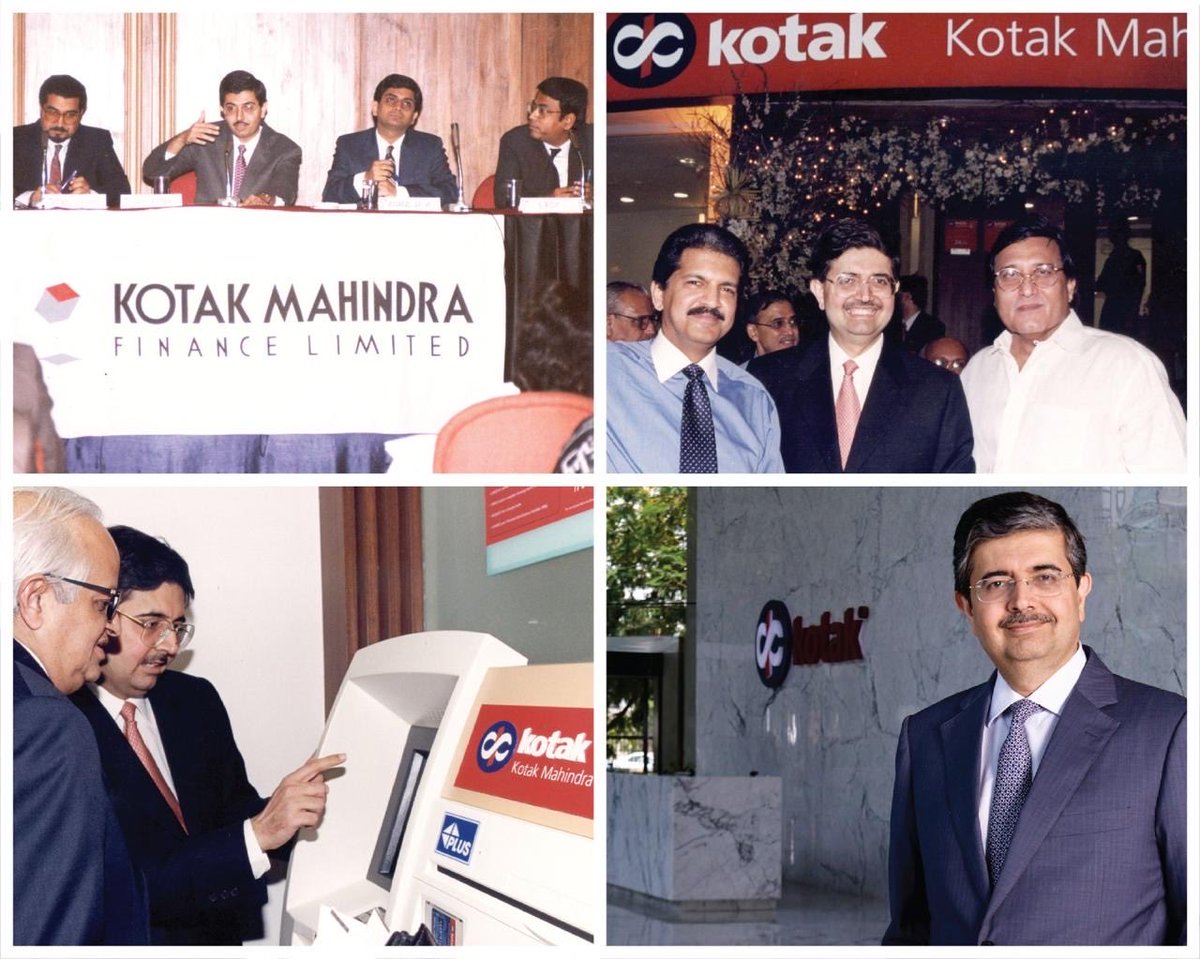
40 years ago today, I started a company with ₹30 lakh capital, in a 300 sq ft office in Fort, Mumbai. Today that company, which I ran for 38 years, is Kotak Mahindra Bank. As this Indian institution navigates changing times, may it prosper. Happy Birthday…tum jiyo hazaaro saal.
An engineer at @Blocks (formerly Square) has an AI agent watching his screen all day.
The engineer will discuss a feature with a colleague on Slack. A few hours later, the agent has already built the feature and opened a PR.
This isn't some distant AI future. It's happening now, thanks to the work Block has done building their own internal (and open-source) AI agent called "Goose."
I sat down with Dhanji Prasanna, CTO at Block, to understand how they're achieving what most companies are still trying to figure out. Engineers using Goose report saving 8-10 hours per week. Across the entire company—including support, legal, and risk teams—they're saving 20-25% of manual hours, which equates to over 100,000 hours per week (!!!).
The most surprising finding: non-technical teams are the ones seeing the most productivity gains. Their enterprise risk management team built an entire self-service system, compressing weeks of work into hours. No waiting for Q2 roadmaps or internal apps teams.
Dhanji walked me through their full transformation—from convincing Jack Dorsey with an "AI manifesto" to reorganizing from GMs to functional structure to shipping Goose as open source. The whole conversation is live now.
Link in comments.
✨ Scientific Research Finding Insights from Navratri with @Gurudev Sri Sri Ravi Shankar ji ✨ in @ArtofLiving@BangaloreAshram
Gurudev - Yes, Sumathi, you want to introduce the team?
Jai Gurudev. Gurudev, the scientists left, they had a flight, but they have given their studies. They have given their studies, if I can present.
@Gurudev: Yeah, yeah, go ahead then, Sumathi.
Sumathi heads our Department of Research and Science. Jai Gurudev.
So Gurudev was talking about the studies we have done during Navratri. I wanted to share a couple with you. Last year we did a study on the effect of Navratri on the mind, the body, and the chakras.
Normally when we do a study, we have an intervention before Sudarshan Kriya or after Sahaj Samadhi. But this time it was just being here for ten days. Gurudev’s presence, the pujas, meditating together, the food. We didn’t even check if you went to Bistro or Love for food, we just assumed.
We had two groups: one from eight countries, and another was our Gurukul boys. On Day 0 and Day 10, we did blood tests. We measured immunity, inflammation, cortisol (stress marker), and chakra alignment.
🌿 Key Findings:
In just 10 days, immunity doubled in the international group and quadrupled in the Gurukul boys. Immunity went up 396%! Nobody could miss class saying they weren’t well.
Interestingly, when asked in a questionnaire, people felt their immunity improved by only 17% , showing how much more is happening in the body than we realize.
Inflammation (linked to aging and disease) reduced by 40%. Ayurvedic doctors said this level usually takes 3 months with medicines!
Cortisol (stress hormone) dropped by 60% in most participants.
Chakra alignment: Normally only about 50% have >90% alignment. Before Navratri, Gurukul boys already had 70% alignment, but after Navratri it reached 100% alignment.
🌸 Antibacterial Effects of Homas
Another study by Divya Kanchigotla ji on homas in Dhyan Mandir showed:
From Day 1 to Day 7: 71% reduction in bacterial colonies.
By Day 9: 87% reduction.
Smoke analysis showed homa produces antibacterial compounds.
Ash from the homa reduced bacteria: 77% (surface bacteria), 63% (skin bacteria), and 98% (notorious hospital bacteria resistant to medicines).
🌿 Scientific Studies on Sudarshan Kriya
Brainwaves (Dr. Vaibhav Tripathi, IIT Gandhinagar & Harvard): Sudarshan Kriya increased alpha, theta, and delta waves.
Theta = deep relaxation, creativity, intuition.
Delta = deep rest, advanced meditation.
Alpha = from light relaxation to deep meditation.
Overall: brain activity lowered beyond even sleep — the state of Turiya.
Gene Expression (Dr. Vinoda Kochpillai):
Pro-inflammatory (bad) markers decreased.
Antioxidant (good) markers increased.
With Sudarshan Kriya + Advanced Meditation Program, benefits doubled.
Cancer Patients:
After 3 months of Sudarshan Kriya, patients reported less stress, better sleep, improved physical and emotional health - even after chemotherapy.
🌎 To date, over 230 scientific studies (200+ on Sudarshan Kriya alone) have been published, all available in a book and on our website.
🙏 Jai Gurudev. Isn’t it amazing?
On this auspicious day of Durgashtami we are excited to present Dhara - India's first homegrown AI powered search engine for Indic Knowledge, Culture and Heritage.
Every Indian must access our financial sector. 90% of India makes less than ₹25,000 a month. A ₹50,000 minimum balance implies a sum equal to ~94% of Indians monthly income is to be left with the bank at all times, else a fee!
Implication: physical cost to serve may be high. Digital first is the way. If banks don’t do it, fintechs will. Banking should be for all Indians.
Japanese bullet train Shinkansen was delayed by 35 seconds! The conductor apologised to all passengers and refunded their tickets! Japan is truly an amazing nation of discipline and commitment for all of us to learn from.
Kotak is the first financier for Tesla in India! Reminds me of 1989, the year I was born, when Kotak was amongst the first to offer car finance to Indians - later partnering with Ford.
History may not repeat but it rhymes!
https://t.co/pEomlRgfRm
We’ve officially launched our all-new co-branded credit cards – featuring Indigo BluChips, a lifetime-valid loyalty program. 💳 ✈️
The big reveal brought together leaders from both teams to unveil the IndiGo Kotak Credit cards – designed to turn everyday spends into flight tickets.
Swipe through highlights from this exciting collaboration!
Apply now: https://t.co/o5ivZ5Bl8D
@IndiGo6E
#KotakMahindraBank #IndiGo #BluChips #CreditCardLaunch #KotakXIndiGo #TravelSmarter #RewardsPartnership
India’s saver turns investor. Post Covid, mutual fund AUM share, mainly equity,has doubled to 31% of bank deposits. Reflects structural change in financial intermediation. It grows domestic risk capital and creates an equity culture. But let’s be alert about excessive exuberance.