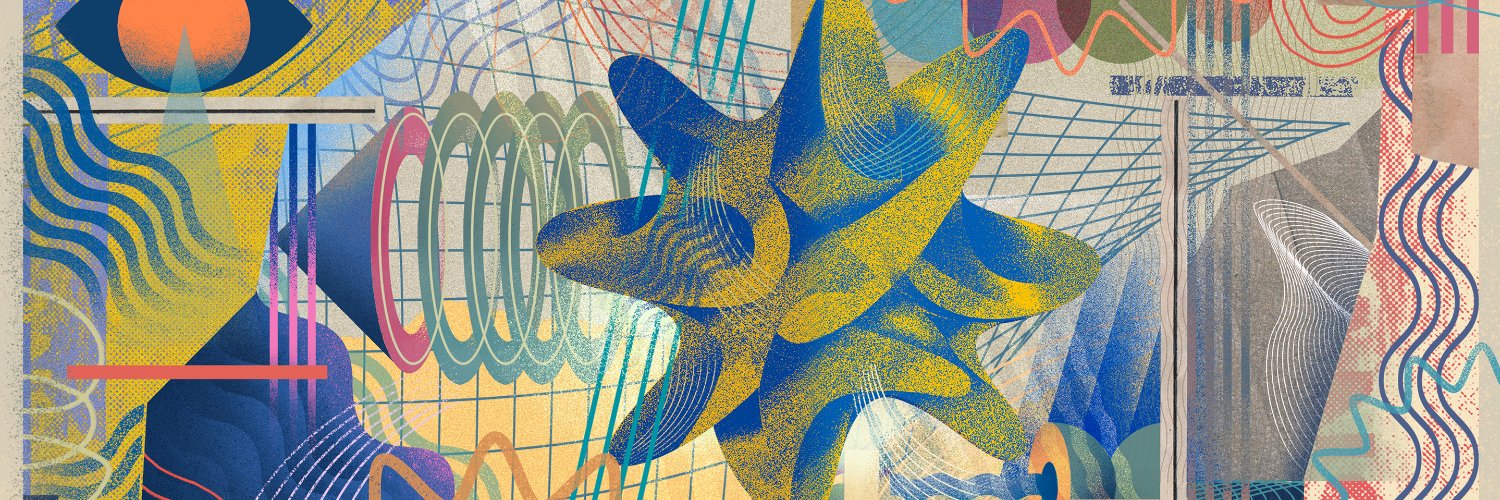
Recently, multiple teams of physicists identified how a quantum property known as “magic” makes space-time’s fabric bendy. Charles Cao, one of the researchers, calls it “the fabric softener of space.”
https://t.co/DoLuozu0Lu
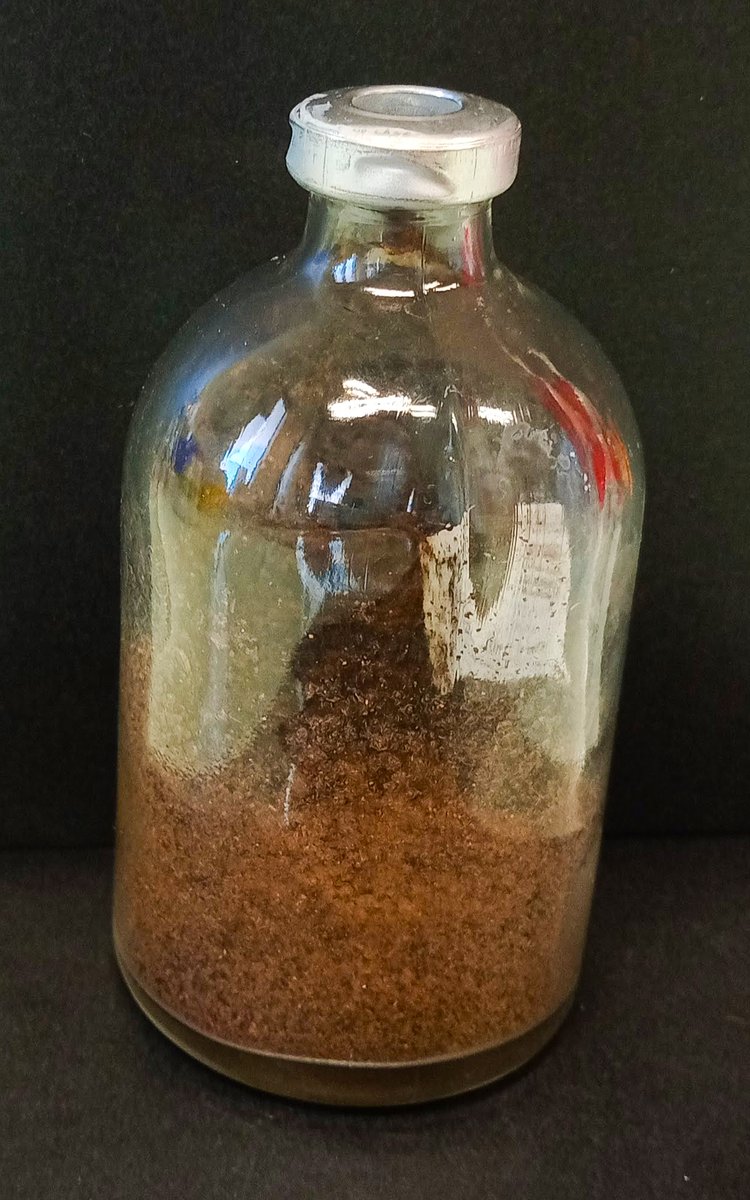
A team of French biochemists blasted this jar of dirt with sterilizing gamma radiation. For six years after, the soil showed no signs of life, but it continued to consume oxygen and emit carbon dioxide. Why wouldn’t it stop breathing? https://t.co/iPTsKu5FIh
Speciation isn’t clean-cut. Evolutionary biologists increasingly view it as a continuum, rather than a process with discrete steps. There is a gray area between species. That’s where ecotypes come into play.
https://t.co/tnQxMDvkpN
The evolutionary biologist Jordan Douglas recently used the evolutionary history of one of life’s essential enzymes to develop a mathematical framework for how quickly species evolve and change. https://t.co/iN9FqbmT7p
A team of scientists set out to kill a bunch of dirt. But it’s not such an easy thing to do. Their work is helping us understand how life may have begun. https://t.co/iPTsKu5FIh
When you smell a rose, more than 800 different odorants enter your nose and bind to olfactory receptors expressed in the cell membranes of various neurons, which fire to create a pattern interpreted by the brain.
https://t.co/YWrMfobxKv
While electricity plays a central role, lightning bolts are formed and shaped by the whole physics canon — from cosmic blasts to particle physics. In particular, triggering a bolt seems to require extreme events more typically associated with supernovas, black holes, and particle colliders than with fluffy clouds. 🧵
Solar Orbiter, a joint mission of the European Space Agency and NASA that launched in 2020, captured these two images in February 2021 and October 2023. As the sun approached its solar maximum (a year after the second image), observations revealed more explosions, dark sunspots, and swirls of super-hot gas.
https://t.co/rwLVvao0Mo
A years-long, obsessive side project in a French biochemistry lab offers new clues as to how life on Earth could have gotten started. https://t.co/iPTsKu5FIh
In early January, Garnet Chan and five other quantum chemists reached a key milestone in understanding the enzyme nitrogenase, which makes life on our planet possible. It was a major triumph for theoretical chemists, the outcome of decades of effort. But it also raised questions in the world of quantum computing.
https://t.co/GfwHq07gYP