I have decided to focus on “big bets”
I learnt the hard way that low allocation + high performance = low positive impact
Now at 5 holdings, my objective is twofold: high performance and high impact.
#capitalallocation
November marks 5Y since I launched QuantCompounding.
The objective was to outperform SPY over the 5Y period.
As it stands, portfolio is up +15% vs. 13% for the index.
It’s not over until the final whistle blows 👀
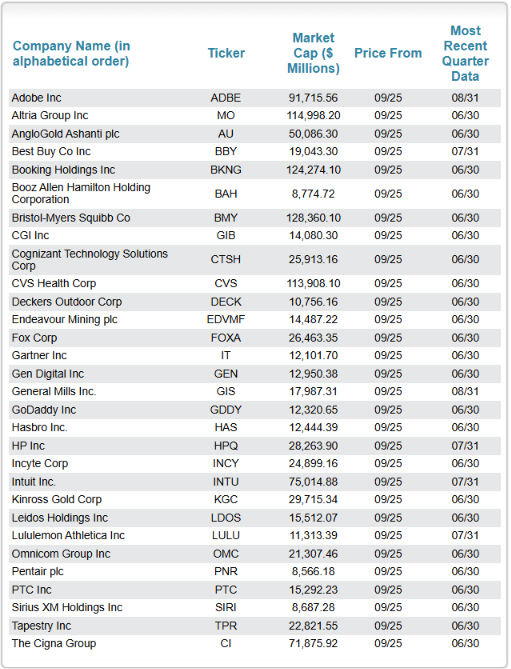
Joel Greenblatt's Magic Formula is a good place to hunt for investment idea because it systematically combines quality and value, helping investors buy great businesses only when they are trading at bargain prices.
Interesting candidates this week include:
Intuit $INTU
Adobe $ADBE
Booking Holdings $BKNG
Decker Outdoor Corp $DECK
General Mills $GIS
Gartner $IT
Lululemon $LULU
Godaddy $GDDY
Booz Allen Hamilton $BAH
$ITRN is one of my favourite names in the portfolio and I’d love to keep adding to if the opportunity presents itself again.
To clear my hurdle assuming similar historic rev growth we’d be looking at $45 or less to entertain adding, ideally closer to $40.
Any $HRB investors out there?
This one popped back on the radar recently.
At face level the thesis is compelling: huge buybacks, undemanding valuation, potential 1-2% growth upside.
Also interesting how Li Lu got in and out in quick succession.
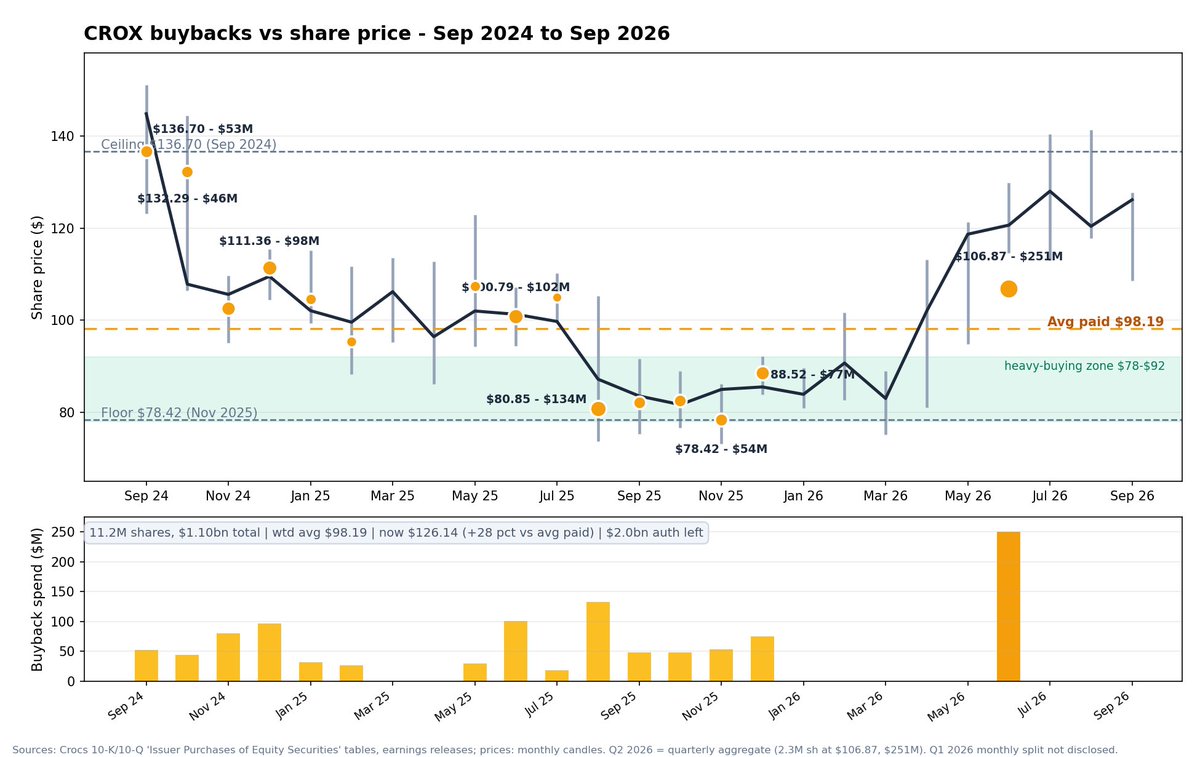
So while I’m unable to validate/invalidate Greenblatt’s Magic Formula, some of our best performing stocks (e.g. $CROX, $ITRN) have indeed come from his screener.
We launched QuantCompounding some 5 years ago in November 2019.
The original objective was to outperform the major indices over that timeframe using Joel Greenblatt’s Magic Formula method.
Well, we deviated from the original plan but I’m pleased to say that we are indeed outperforming the indices, up ~17% p.a. since inception (incl. dividends) vs. ~11% for SPY.
Interesting to see such opposing viewpoints on $PYPL following a 17% slide after Stripe bid fell through.
Bears call it a value trap with eroding margins and increasing competition.
Bulls cite an attractive earnings yield and a compelling buyback story and a renewed ad biz.
@blindspotvalue $AMR run up has been indeed been wild. That said, the structural supply-demand imbalance is arguably just getting started? Rapidly increasing steel consumption in emerging markets, huge infrastructure projects, data centre rollouts.
Common reasons to sell among investors: 1) broken thesis 2) exorbitant share price 3) better investment opportunity 4) need cash
These can be useful when evaluating if it’s time to re-evaluate positions
Any I’m missing?