Welcome to the most asymmetric trade in modern financial history.
The thread below lays out why. The opportunity exists because capital has chased the AI trade while ignoring the physical assets AI requires to run — assets that have quietly become the best-performing asset class of the decade. Since October 2020 when we first called for the commodity super cycle: QCI Total Return +217%, GSCI Total Return +205%, Gold +140%. NASDAQ trails at +130%. S&P 500 at +85%. The top three are all commodities. Yet oil cannot get out of its own way while copper and the broader atom complex prints fresh highs . That is the dislocation. That is the trade.
Get long. Buckle in. Hang on for the ride.
Forgive the longer posts in this thread — attempting to mimic my old 10-bullet commodity takes. On to it.
@AndreasSteno@Rory_Johnston@JoshYoung You’ve also been unfairly calling out @HFI_Research . His analysis has always been grounded in numbers, while you seem to have been operating on macro vibes and flows lol
We are witnessing a sharp rebound in the Yen, likely triggered by BOJ intervention, occurring simultaneously with a drop in oil prices—even in the absence of any specific bearish headlines.
Of course this is partly linked to several pods initiating their exit strategies ahead of the Brent June contract expiry.
However it is more plausible to approach this from the perspective of position unwinding and risk management mechanisms by macro funds and CTAs, rather than a shift in oil fundamentals.
In a vacuum, a drop in USD/JPY typically exerts upward pressure on dollar-denominated oil prices. But when a liquidity shock—like the unwinding of the Yen carry trade—hits, this textbook inverse correlation between the dollar and commodities temporarily breaks down.
The technical supply factor—forced liquidation by financial institutions—completely overwhelms any supply-demand or geopolitical fundamentals.
One might ask, "Doesn't the Yen carry trade usually flow into US assets? The capital flow into oil isn't that significant, is it?" It’s true that pure Yen to Oil carry trades aren't the primary driver, as oil doesn't provide a fixed yield like bonds or dividend stocks.
Furthermore it’s impossible to isolate the exact amount of Yen carry capital in the oil market, as COT reports only track position direction, not the funding currency.
However once the Yen sees a short squeeze style rally, the real value of Yen-denominated debt spikes, leading to massive mark-to-market losses and margin calls. To meet these margin calls and keep their funds afloat, traders must sell whatever they can liquidate immediately.
Selling illiquid OTC assets or assets with thin order books would result in massive slippage—and New York isn't even open yet.
Consequently the oil futures market—one of the most liquid markets in the world—is treated like a global ATM, taking the brunt of mechanical sell-offs as funds scramble for cash.
The commodity desks within these macro funds may have built large long positions based purely on the attractive roll yields from backwardation. But the backend funding that supports the entire fund's leverage included Yen short positions.
When the Yen surged due to BOJ intervention, the VaR limits at the total fund level were breached. Desperate for USD liquidity, fund managers are hitting the bid on their most liquid and (thanks to backwardation) most profitable positions—oil—to crystallize gains and raise cash.
Hedge funds typically operate with 4x-10x leverage. Since some of this massive liquidity is tied up as margin for commodity funds, the volume of oil being dumped during forced liquidations is powerful enough to completely bypass physical supply-demand fundamentals.
Ultimately this must be viewed through the lens of pooled book management. As a macro Yen carry tantrum erupts, oil is being sacrificed as a victim of mechanical liquidity hunting, regardless of its own merits or market structure.
#oott #iran $usdjpy
There’s a reason why the US has not attacked Iran’s oil infrastructure or Kharg.
The moment it does, it gives Iran the green light on all neighboring country’s oil infrastructure.
Then it’s not a question of if the Strait of Hormuz opens, it becomes a question of what the structural damages are.
After scarcity, comes glut. Always.
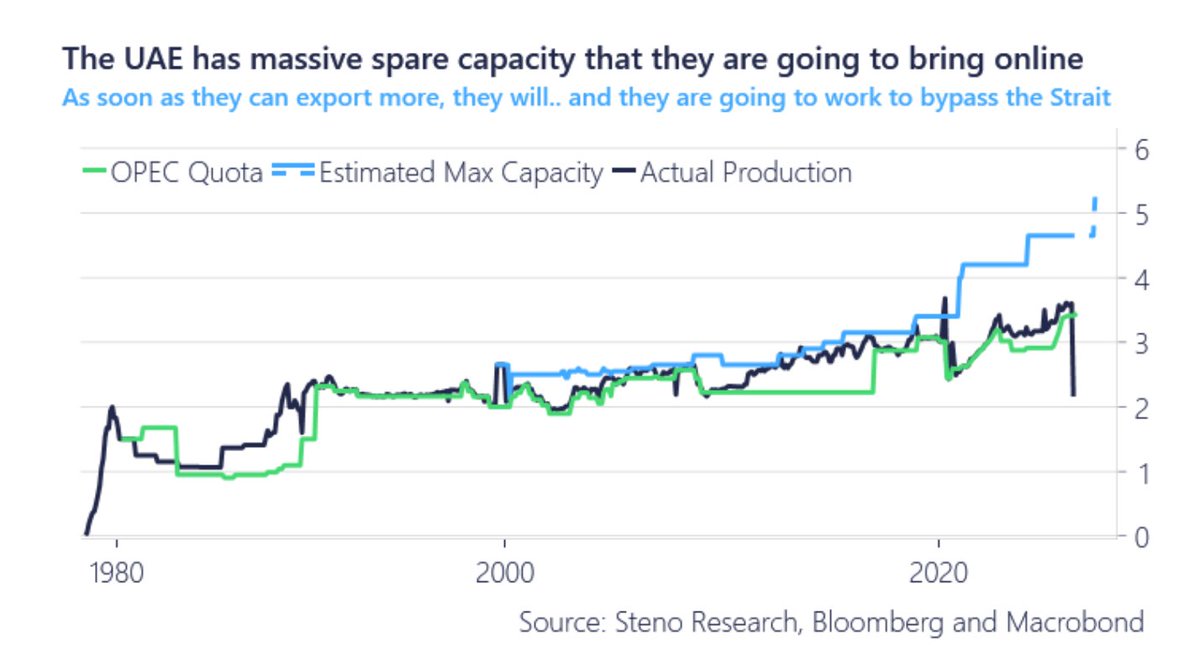
OPEC may, in practical terms, have died this week. More departures may follow.
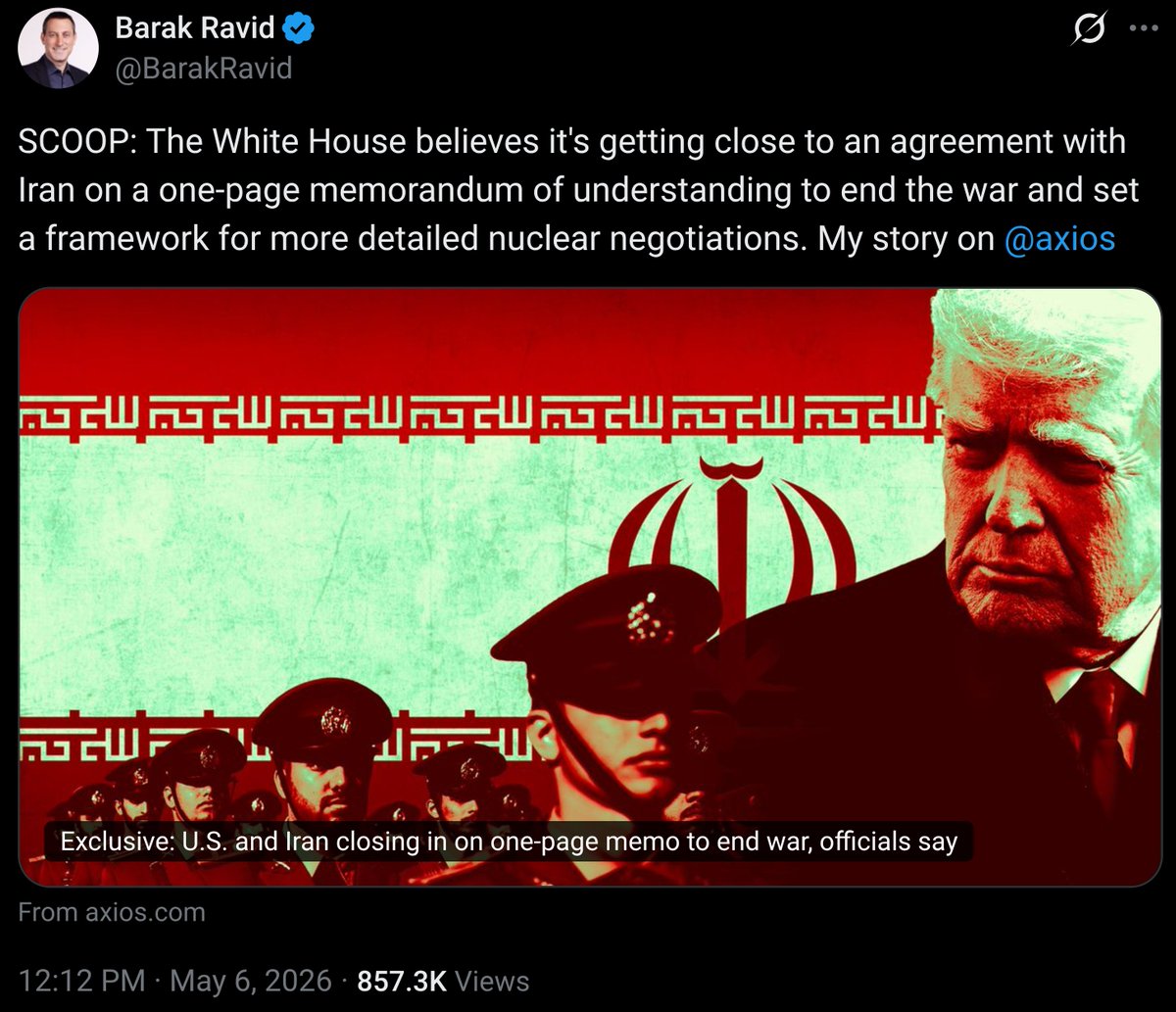
The UAE leaving OPEC could signal that we’re heading toward a phase where every possible barrel comes back online once the Iranian conflict eases. Consider a scenario where a peace deal is reached, Iranian oil returns to the market as sanctions are lifted, and OPEC members ramp up their spare capacity. Glut...
Full study out @RealVision and Nowcast IQ soon!
Crack spreads (refining margins) won’t go any higher than where we are today.
The shortage is in crude so refinery margins will be capped unlike 2022 when most of the upside was eaten by refined products.
From now, I expect ebbs and flow. Refining margins allow a $25+ move in crude. Once we get there, we need to see if refining margins can recover at those prices, if so, that means end user demand can handle higher prices.
This will rinse and repeat as we drawdown storage.
@Rory_Johnston As Brent loading dates nominations are made 30-days forward, June Brent effectively becomes Dated (physical) Brent and the two converge at the expiry of the contract, tomorrow.
But Dated Brent remains steeply backwardated to July futures that take over as the front month contract