Physics & Astronomy Instructor | Space Physicist | #ShockerProud Wichita State #UTAMaverick UT Arlington | Docendo discimus | Ad Astra | Views are my own
This is not just an issue in California. This happens all over Texas, ESPECIALLY in the early morning hours. On my short drive to work, police could follow me and easily issue 4-5 red light tickets per week. And these are not “just barely made it” red lights.
🚨#BreakingNews*Caught on Camera*
⚠️Viewer Discretion is Advised⚠️
#Fresno: A man and his Dog are dead following a completely avoidable crash this morning shortly before 6 A.M. near Friant and Shepard Avenues in North East Fresno. The streets in the area will remain closed as Police investigate.
On this day in 2013, astronaut Sally Ride was posthumously awarded the Presidential Medal of Freedom. Ride was the first American woman in space and was passionate about STEM education and gender equality. More on Ride's career: https://t.co/gR0B8m6Q3T
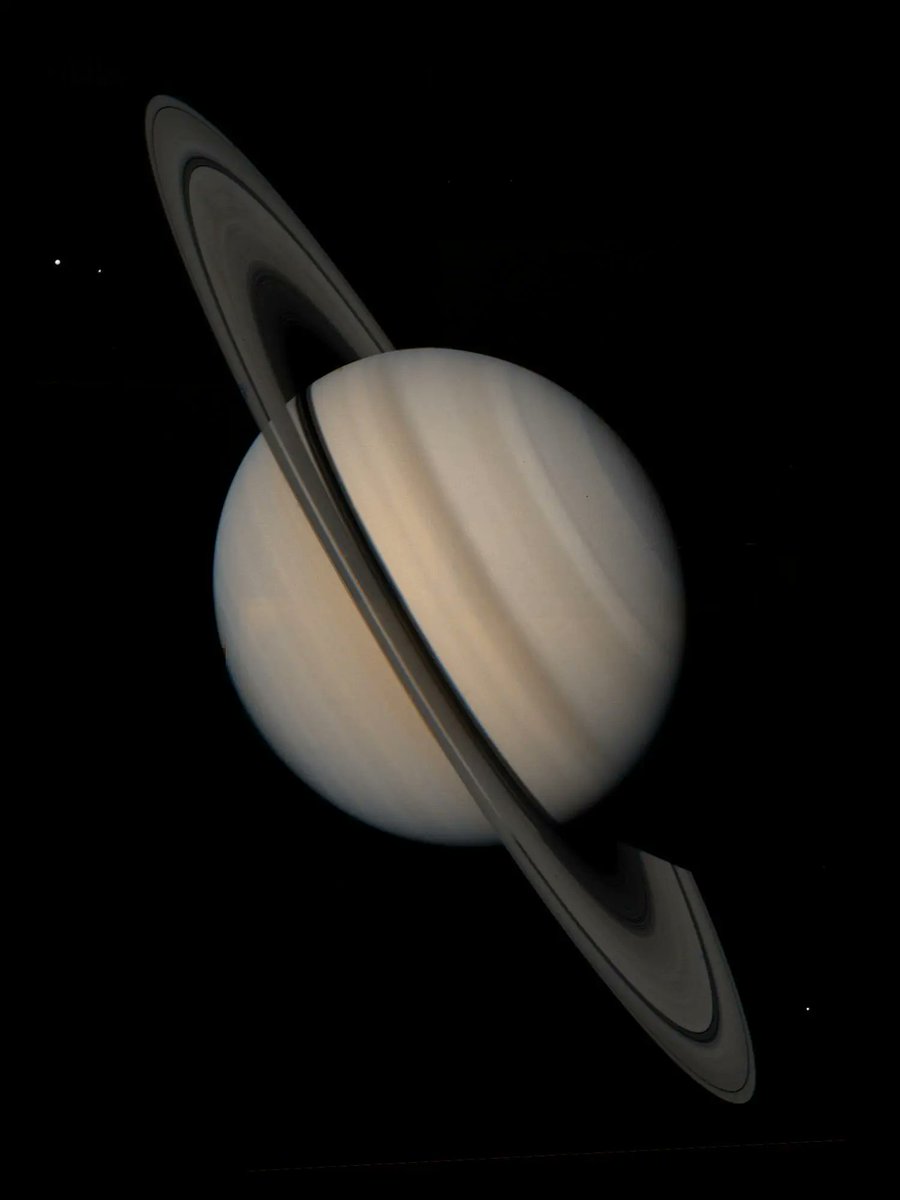
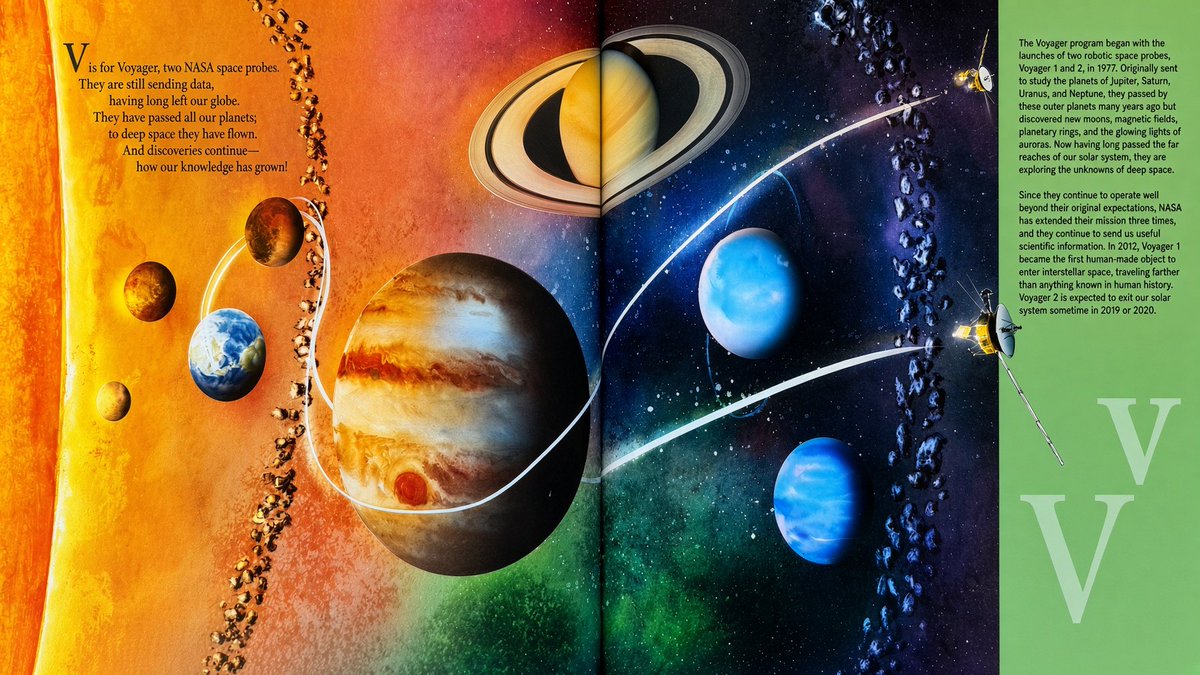
Voyager 1 is now one light-day from Earth!
Join @NASA scientists and mission leaders tomorrow, Nov. 19 at noon EST for a discussion about this historic milestone, the science Voyager 1 and 2 are still collecting in interstellar space, and the challenges of keeping these pioneering spacecraft operating.
📺: https://t.co/SL3B2oflwe
🐾Weird Animal Wednesday 🐾
Meet the Leaf Sheep (Costasiella kuroshimae) a 5mm sea slug that looks like a Pokémon and runs on solar power. 🌱🐑It eats algae, steals the chloroplasts and photosynthesizes making it one of the only animals on Earth that literally eats sunlight sun☀️
Voyager 1 hit a pretty distant milestone today ✨After nearly 50 years traveling through space, it is now one light-day—16 billion miles!—from Earth. Learn more about this milestone in a new article by curator Matt Shindell: https://t.co/H80GIbRtUo
For those of you watching and waiting, the time is NOW. Sister ship Voyager 1 reached one light-day distance from Earth at 10:16:07 UTC today, in 2026. V1 will be one light-day _from the Sun_ on February 4, 2027. Why the difference? Because Earth is currently orbiting on the near side of the Sun, and so is closer (for now).
Because Voyager 2 lost speed during the Neptune encounter, it will take longer to reach these milestones: one light-day from the Earth on November 1, 2035, and one light-day from the Sun on November 27, 2035.
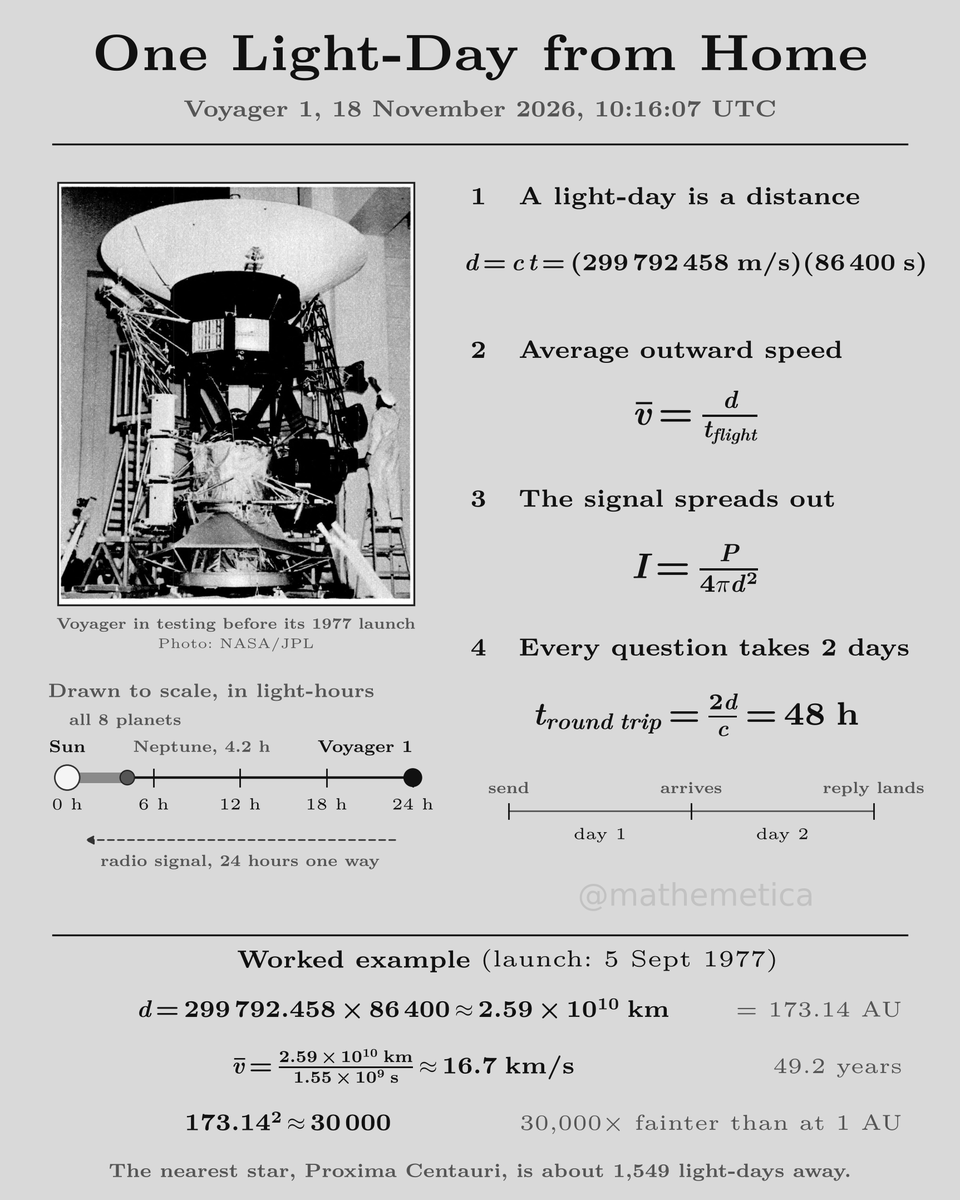
Voyager 1 is now one full light-day from Earth.
A light-day is simply distance = speed of light × one day: d = 299792458 m/s × 86400 s ≈ 2.59 × 10¹⁰ km, or 173.14 AU.
After 49.2 years of flight that average outward speed is only about 16.7 km/s. The same distance means any command we send today reaches the craft tomorrow and the reply returns the day after i.e 48 hours of pure waiting.
Signal strength falls as 1 over 4π d². At 173 AU the radio link is roughly 30,000 times fainter than it would be at Earth’s orbit.
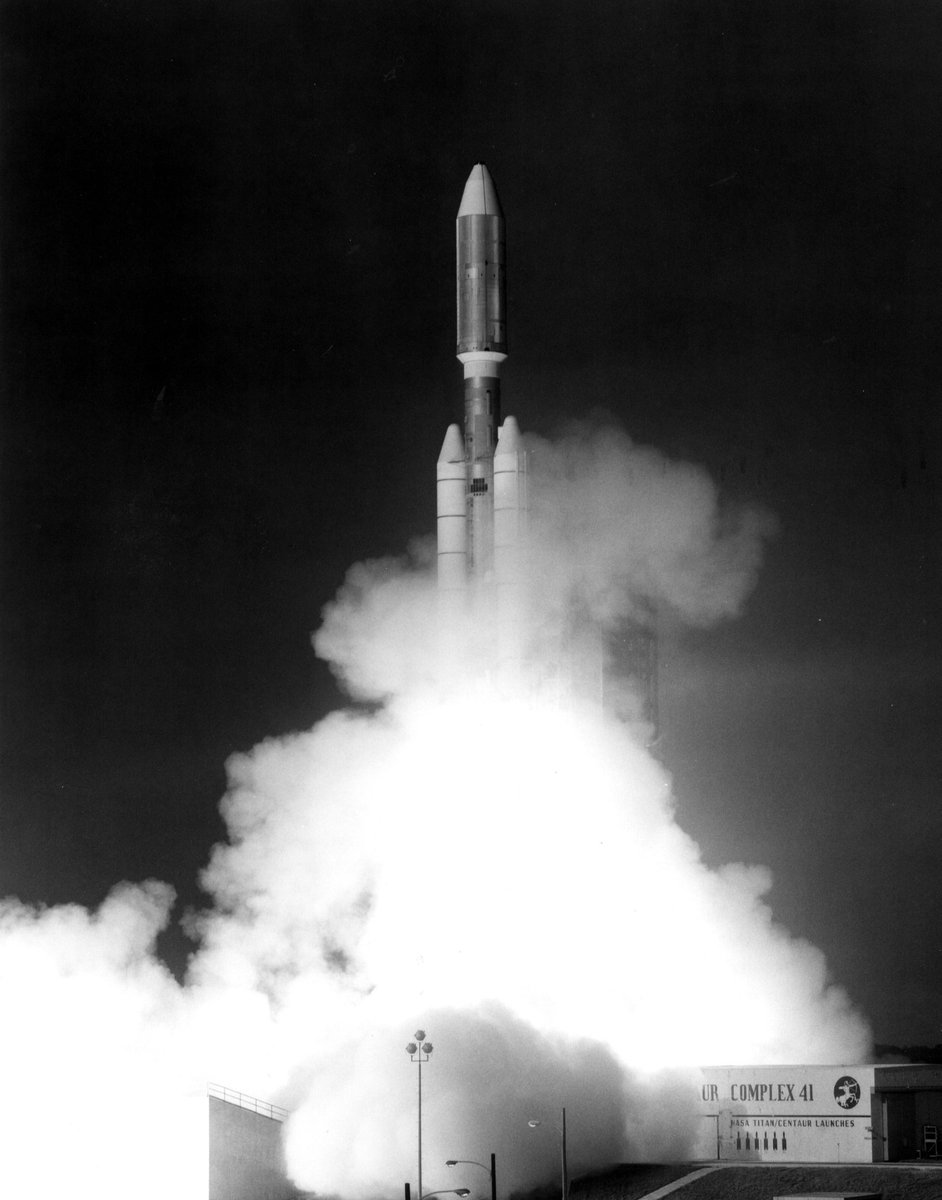
Voyager 1 is now one light-day from Earth, an extraordinary @NASA achievement for a spacecraft assembled by human hands and launched nearly 50 years ago. As we celebrate this milestone, with Voyager continuing her journey through interstellar space at nearly 38,000 mph, consider what those brilliant minds made possible with the technology of 1977 and how much farther we should aspire to go with the tools, resources, and ambition of our time.
A tiny bit of light can go a long way.
After sunset on Tuesday, Nov. 17, we invite you to “Shine Bright for Voyager’s Light-Day” by lighting a signal skyward, joining a worldwide celebration of this historic moment, nearly 50 years in the making.
Next week, for the first time in human history, a human-made object will reach a distance of one light-day from Earth.
We're inviting the world to celebrate Voyager 1's major milestone with us. https://t.co/0uAIREiUwZ