One of my favorite clips on the Sound Money TV app is a 1930s propaganda video claiming inflation is good 🤯
Sound Money TV filters through topics & decades from the 30s to the present through Fiats Collapse and Bitcoin’s Rise
https://t.co/LC0KF0RggQ
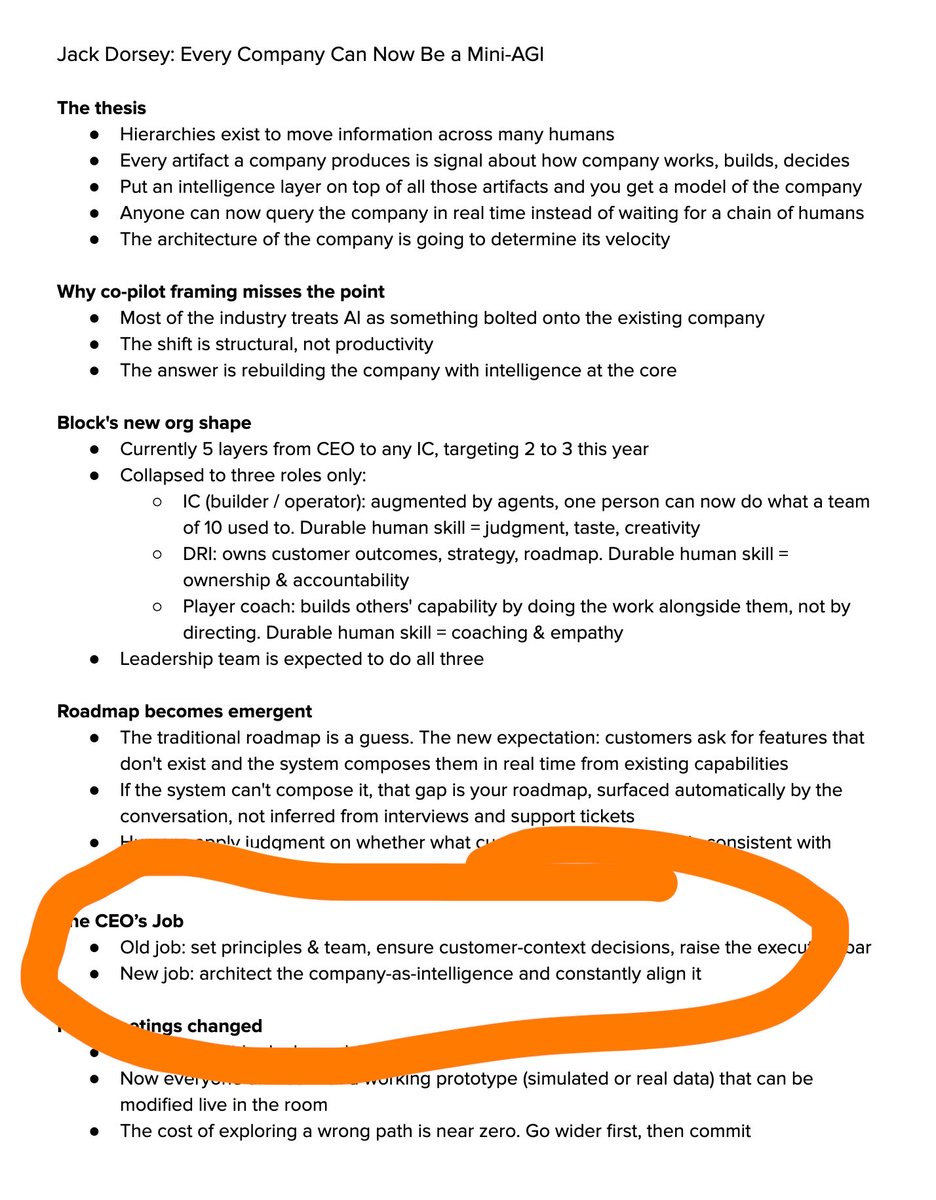
@atmoio There are many qualities people that manage people have that see important when managing AI as well. You have to nurture and orchestrate and delate everything to an AI system same way as when managing a team of people
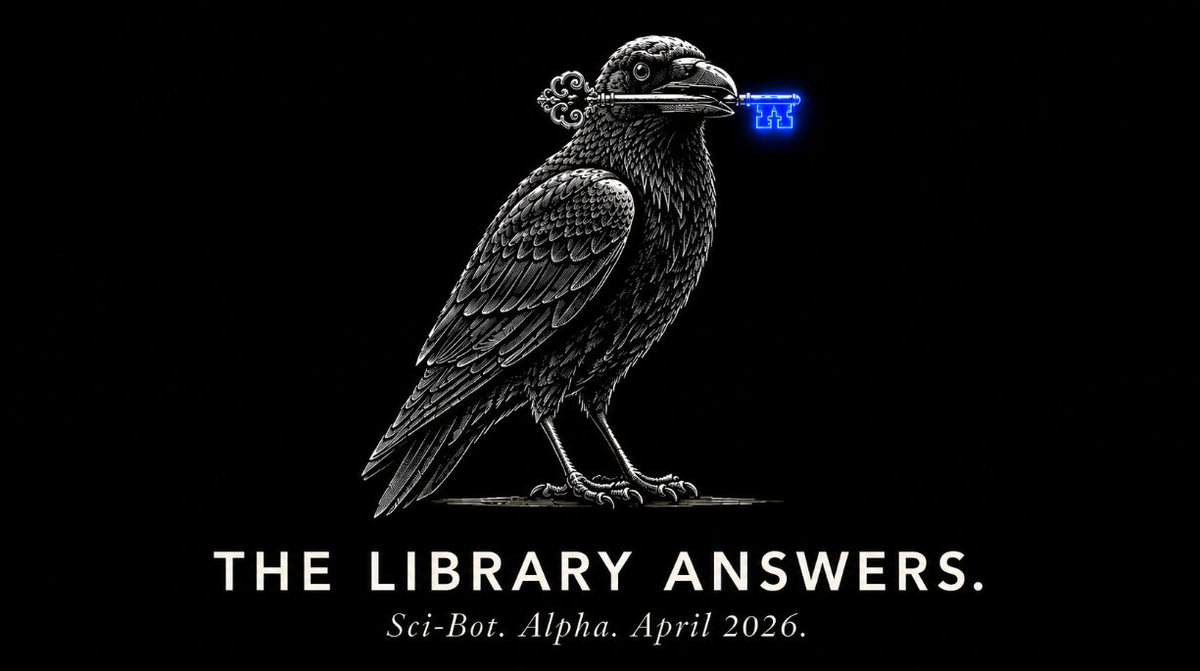
In April, a website that has been sued, blocked, deplatformed, and chased across thirty-seven domains over fifteen years quietly launched its own AI.
Sci-Hub is the largest unauthorized library of scientific papers in human history. Ninety-five million academic papers. Tens of millions of books. Built and maintained by a single Kazakhstani neuroscientist named Alexandra Elbakyan since 2011, funded by donations, hosted on whatever country's registrar will tolerate it that year, mirrored across torrents and IPFS and Telegram bots.
Elsevier sued. Sci-Hub stayed up. The American Chemical Society sued. Sci-Hub stayed up. India sued. Sci-Hub stayed up. Swedish registrar Njalla cut the .se domain in January. Sci-Hub stayed up at .al, .ru, .ee, .box, and a half-dozen .onion addresses the registrars cannot reach.
Now the library has built its own intelligence.
Sci-Bot launched in alpha in April. You ask it a research question. It answers, and it cites real papers from inside the corpus, with links that actually open the actual papers.
The bot does not hallucinate citations. It cannot, because it only draws from papers it actually holds. The same property that the venture-funded labs have spent four years and forty billion dollars trying to engineer back into their products is a free side effect of training the model on a library that contains the books.
Anthropic, OpenAI, Google, and Meta have all been sued in the past eighteen months for training their models on the same shadow libraries that Sci-Hub assembled. Meanwhile the corpus those scripts were pointed at, the corpus those models were trained on, the corpus the entire generative AI industry is built on, sat right there the whole time, free, with a search box on top.
The pirates beat them to it.
Sci-Bot was built on a corpus that was already free, by a team that asked no permission, charging no one, with the explicit position that the right to read scientific research is older than the cartel that decided to charge for it.
The same arithmetic the medieval guilds used to keep the printing trade in approved hands. The same arithmetic Pope Paul IV used in 1559 to publish the Index Librorum Prohibitorum. The same arithmetic the Stationers' Company used in seventeenth-century London.
Knowledge has always had a fence around it. The fence has always been guarded by men who did not write the books.
The library answers. We never asked permission. We never had to.
je me suis plongé sur leur maquette et pour moi le détail technique qui change tout c’est qu’apparemment ils utilisent un polymère organique covalent COP couplé à un électrolyte neutre à pH 7 à base de sels de magnésium et calcium donc en gros pour vulgariser ça va donner une batterie qui se manipule comme de l’eau salée où toute la chimie agressive du lithium disparaît donc fini les incendies en sous sol, fini les recyclages à millions de tonnes, fini aussi la dépendance aux mines de cobalt congolais et au lithium chilien
au delà des de l’écosystème EV avec des véhicules électriques qui seront + abordables à moyen terme et qui vont potentiellement durer l’âge d’une voiture thermique, ça ouvre la voie à des des appareils médicaux implantables alimentés par une chimie biocompatible, des satellites longue durée qui tiennent avec un pack léger et surtout l’émergence d’une économie de l’énergie totalement découplée de l’extraction minière destructrice (sujet dont j’ai souvent parlé ici)
le vrai message c’est qu’on assiste à quelque chose à laquelle on osait à peine croire, des chercheurs qui prennent un produit de cuisine traditionnelle chinoise vieux de 2000 ans et le transforment en infrastructure énergétique du siècle prochain
bref JE VOUS LE RÉPÈTE ENCORE UNE FOIS: le futur appartient à ceux qui savent regarder partout en même temps, dans la science fondamentale dans la culture millénaire et dans les contraintes physiques de la planète et qui bâtissent un monde loin de la segmentation des disciplines
@iamBarronRoth@AlexFinn@petergyang On the pi I installed Hermes to try out, I ended up deleted open claw bc it was making things more complex, breaking ports, unintentionally merging in other ways.
@petergyang Idk tbh I don’t get the hype. Both feel more or less the same. Actually my open claw felt smarter even though both using minimax & my Hermes I implemented LLM wiki brain, not for open claw yet, and open claw still feels a lilsmarter. Maybe just cus I’ve been using it for longer?
Wow wow wow.. what DeepSeek have done is actually extremely clever here:
Basically they built a massive model with huge stored knowledge, but only activate a small part of it for each token. So they said that V4-Pro has 1.6T total parameters, but only around 49B active at once... which means big power, lower cost.
ANDD... even more innovation as they have a 1M-token context. Instead of forcing the model to remember every previous token in full detail, DeepSeek compresses long-context memory and selectively focuses on what matters.
Right now China are not even trying to beat Western models on benchmarks, they're trying to make AI cheap, open, and usable at scale. Which is why again Deepseek is smashing it and this news is absolutely going to go viral. Great news!