🚀 Introducing the Super World Computer: Shaping the Future of Web3 🚀
QuarkChain unveils a next-gen Layer 2 built on OP Stack to tackle key Web3 challenges:
✅ Soul Gas Token for true mass Web2 user onboarding
✅ EthStorage as L3 for scalable storage
✅ web3:// for fully decentralized apps
✅ Parallel EVM for performance boosts
✅ Advanced fault-proof algorithms
We’ve also secured 4 Grants from Optimism, further accelerating our innovations!
Plus, check out updates on our roadmap, development progress, and exciting community events designed to get everyone involved!
Dive into the full details here 👉 https://t.co/Lu07zHzeRY
#SuperWorldComputer #QuarkChain #GalxeQuest #SWC #QKC #OPGrants
Our dev @qzhodl shares his take on the L1/L2 fee-sharing debate, and explains why getting Ethereum L1 a fair cut of L2 revenue is less about how much users pay, and more about whether L1 has any real mechanism to enforce that cut in the first place.
Read more below 👇
From Beam Chain to Lean Ethereum, Ethereum has chosen a path of radical research, conservative delivery.
As @VitalikButerin notes, gas limit increases will happen many times over the next few years — and each step depends on client optimization.
That's where our work on parallel EVM execution comes in.
This thread by QuarkChain's dev @qzhodl lays out the past two years of this evolution clearly 👇
pyquarkchain v1.7.0-beta is now available. Help us test! 🚀
This beta brings the QuarkChain mainnet client to Python 3.13, along with a modernized dependency stack, an upgraded native pyethash extension, a new Rocksdict storage backend, expanded test coverage, and AI-assisted code review.
The Docker image is now available, and we're inviting node operators and developers to test it ahead of the official v1.7.0 release.
If you run a node, we'd love to hear your feedback.
📖 Read the full release notes:
https://t.co/KBeRknxyGQ
Great insights from our team on @ethereum's evolving technical roadmap.
As Ethereum continues advancing scalability, verification, and execution architecture, these innovations bring us closer to realizing the vision of a Super World Computer.
QuarkChain was featured by @tokenpost, Korea's largest blockchain media.
The article highlights our vision of building the Super World Computer.
📰 Read more: https://t.co/jZaFvtaOZD
🔍@TokenPostkr — one of Korea's largest crypto media outlets — recently ran an in-depth feature on QuarkChain as part of their Token Watch Korea series. Worth a read if you're curious about where the project is headed.
🔗 https://t.co/6JEjymdDbq (Korean language)
4/
The clearest takeaway across all three: high-volume cross-chain operations need a distributed data path. L1-as-data-plane works for low-volume cases like staking but visibly fails for active rollup ecosystems — and we're watching the L2 world move past it in real time.
🔍 Full analysis → https://t.co/bTjwlnASdA
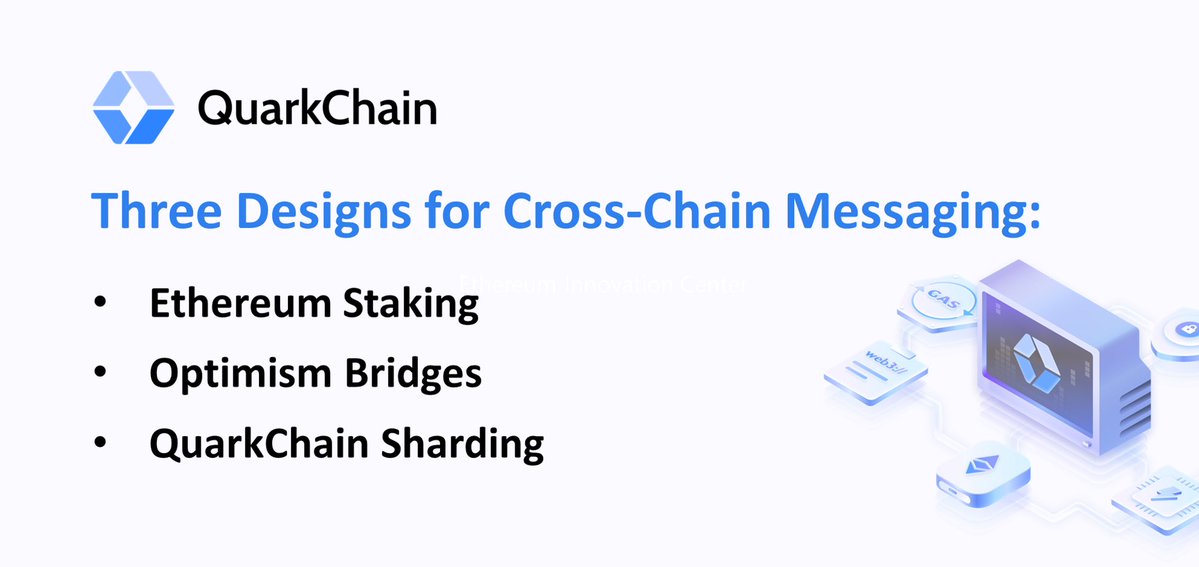
1/ Three systems — @ethereum (staking), @Optimism (rollup bridges), and @Quark_Chain (sharding) — all face the same problem: passing messages between chains that don't share execution state. Their answers are very different.
We walked through each, then compared them along the dimensions that actually differentiate:
3/
▶️ Push vs pull — does the destination chain apply messages on its own, or does someone have to trigger it? Push (Ethereum staking, QuarkChain xshard) gives exactly-once delivery: every committed message is eventually applied, no relayer required. Pull (Optimism L2→L1, Superchain interop) gives at-most-once: a message can sit unrelayed forever if no one pays destination gas to deliver it.
2/
▶️ Where the data flows — route everything through a central hub (Optimism's standard bridge → L1), or distribute directly between participants? Both QuarkChain's slave-to-slave broadcast (2018) and Optimism's Superchain interop (2024) chose distributed — independently arriving at the same structural answer years apart.
Last week, Ethereum core contributors gathered in Svalbard for the Soldøgn interop: a week long event focused on hardening Glamsterdam implementations to scale Ethereum securely ☀️
Read the full recap, including their candidate post-fork gas limit, below:
Our Korea team participated in multiple events during @buidl_conf week in Seoul 🇰🇷, connecting with builders and exploring opportunities to drive QuarkChain forward.
Great to be part of it.
#buidlweek
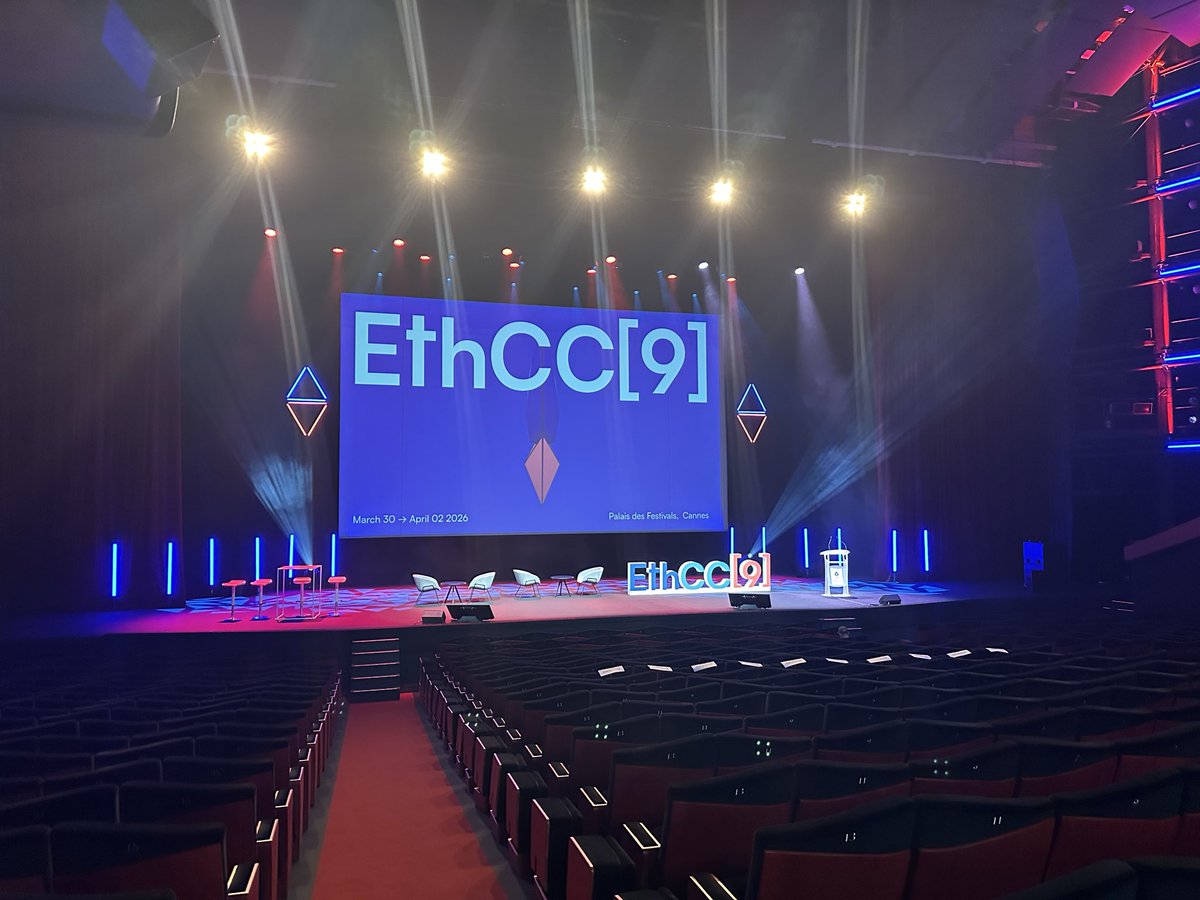
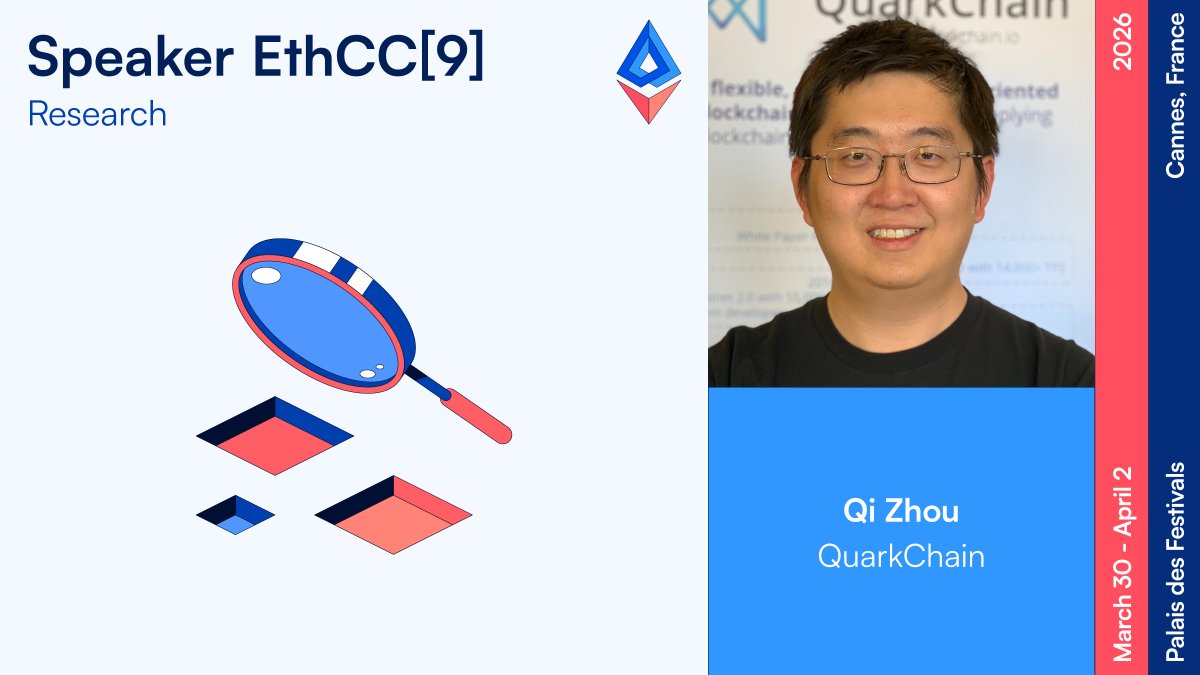
Qi Zhou (@qc_qizhou), Founder of QuarkChain, took the main stage at @EthCC to present:
“Achieving 10 GigaGas/s EVM Execution with BAL and Parallel Execution in the Post-Fusaka Era.”
In this talk, he explores Ethereum L1 scaling, the limits of increasing gas limits, and how BAL and parallel execution enable significantly higher throughput—exceeding 10 GigaGas/s under optimized conditions.
Watch the full talk below ↓
Ethereum has largely solved scaling — but at the cost of composability.
The fragmentation across L2s is becoming increasingly visible.
@etheconomiczone is exploring how to bring back a more unified, composable Ethereum.
As we explore the limits of EVM execution at QuarkChain, these questions are becoming increasingly relevant.
Still early — but directionally an important conversation.
.@EthCC is just around the corner.
QuarkChain will be speaking on the main stage:
“Scaling Ethereum L1: Achieving 10 GigaGas/s EVM Execution with Block-Level Access Lists”
As Ethereum’s roadmap brings L1 scaling back into focus, we’ll share what we’ve learned exploring the limits of EVM execution — and what it means for what’s next.
#Ethereum #EthCC #ScalingEthL1
QuarkChain has been invited to present on the main stage at @EthCC on April 2.
@qc_qizhou, founder of QuarkChain, will present:
“Scaling Ethereum L1: Achieving 10 GigaGas/s EVM Execution with Block-Level Access Lists”
We’ll share what we learned from exploring the limits of Ethereum execution — and what it could mean for the next phase of L1 scaling.
#EthCC #ScalingEthereum
Ethereum is no longer just building for today. It’s preparing for the next decade.
The launch of post-quantum efforts is a clear signal:
Ethereum is evolving into long-term infrastructure, built to withstand not just current challenges, but future ones.
This is what real infrastructure maturity looks like, and it’s exactly why building on Ethereum matters.
Today, several teams at the EF are launching https://t.co/MtJ95Ah4z6, a dedicated resource for Ethereum's post-quantum security effort.
What started with early STARK-based signature aggregation research in 2018 has grown into a coordinated, multi-team effort, all open source.
The Post-Quantum team and Cryptography teams, with help from the Protocol Architecture and Protocol Coordination teams, have been working on this body of work for 8+ years.
At https://t.co/MtJ95Ah4z6 you'll find:
- How PQ impacts each protocol layer
- The full PQ roadmap (https://t.co/gPl9StdPSp)
- Open resources: repos, specs, papers, EIPs
- FAQ: 14 questions across 5 categories, written by the PQ team
- A 6-part lean Ethereum interview series (@zeroknowledgefm)
- Interest form for the 2nd Annual PQ Research Retreat (Cambridge, UK, Oct 2026)
- 10+ client teams are already building and shipping devnets weekly through PQ Interop.
All the work is public and all of it is open.
https://t.co/MtJ95Ah4z6