Rappel : si demain on remplace tous les chauffages de France par des clims reversibles, qui chauffent en hiver et refroidissent en été, on fait BAISSER les émissions de gaz à effet de serre.
GTA 6 PRE-ORDER GIVEAWAY! 💸
How to enter:
• Follow @solcard
• Retweet & Tag a Friend
• Follow our Instagram (linked below)
Rolling on June 25th. Good Luck! 🍀
J'ai lancé un token : le $PREDI 😱
À la base, j’ai build PrediClub pour un besoin ultra simple : avec la commu du @smoltalk , on voulait un “Mon Petit Prono” version CT, avec un peu de SOL en jeu pour rendre la Coupe du Monde encore plus drôle.
J’ai commencé à vibe code le truc, puis je me suis dit : autant l’ouvrir à tout le monde.
(Lien en 1er commentaire)
Le principe est simple :
Tu pronostiques les matchs de la Coupe du Monde, tu gagnes des points selon tes prédictions, tu montes dans le leaderboard, et tu peux représenter ton pays.
Gratuit pour participer
Il y aura un leaderboard global gratuit, avec 10 SOL à gagner. Si la pool prévue dans les tokenomics n’est pas remplie à temps, je les mets de ma poche.
Et surtout, vous pouvez créer vos propres Clubs.
Tu crées une ligue privée, tu invites tes potes, chacun met la même mise, entre 0.1 et 10 SOL, et vous vous affrontez pendant la compétition.
Exemple simple : vous êtes 5, chacun met 2 SOL, ça fait 10 SOL dans la pool. À la fin, les meilleurs pronostiqueurs se partagent les gains.
Ça peut être un petit club entre potes, ou un énorme club de communauté.
Il y aura des leaderboards individuels, par club, par pays, des rewards, et un système de buyback sur le token.
Je sais que beaucoup de gens ont un avis très tranché dès qu’un token est lié à un produit, c'est pour ça j'ai mis cette phrase en Hook.. ça en tend certains. Moi, je vois surtout ça comme une expérimentation et un moyen de me rémunérer si j'fais kiffer le plus grand nombre.
Je suis dans le Web3 pour créer des trucs, tester des mécaniques, lancer des idées, voir ce que le marché en fait.
Là, le but principal, c’est de pousser l’app, l’usage, les clubs, les pronos, le fun autour de la Coupe du Monde. Le token ne sera pas mon focus. Mais si ça prend et que j'peux graille des creator fees pke @blknoiz06 specule dessus je dirais pas non mdr
Si ça prend, ça peut devenir un vrai produit plug sur plein de compétitions, avec des saisons, des jackpots, des compétitions entre communautés, pays, clubs, etc.
Si ça ne prend pas, tant pis, ça aura été fun, aucun drama.
Zéro promesse.
Zéro roadmap fake.
Juste un produit fun, un token, une expérience, et l’envie de faire un truc cool pour le CT.
Je vais faire mon max pour que ce soit propre, fun et utilisé.
Testez, créez vos clubs, invitez vos potes, et venez vous mesurer au reste du CT.
⚛️Post-Quantum Cryptography: The Migration No One Can Outsource
There is no quantum computer breaking Bitcoin today. None breaking Ethereum, your bank, or the internet. Anyone selling that headline has a product to sell.
The honest version is more uncomfortable. The timelines are pulling forward, the public record probably does not show the full frontier, and most of the ecosystem is still ordering caipirinhas at the bar while the water pulls back from the beach.
I was hesitant to put it in such direct terms. But this is a migration we collectively agreed to do, with a deadline, and we are late. So let me call it what it is.
1. Quantum is not a fast computer
Fix this in your head first. A quantum computer runs on qubits with superposition and entanglement, only holds its state near absolute zero, and does not do more of what classical computers do. It does different things. One of them is Shor's algorithm, which breaks the asymmetric cryptography (RSA, ECDSA) that protects almost everything you do online.
2. What changed in the last few weeks
(Wild) estimates of "Q-day" have moved from "10% by 2030" to "50% by 2032" in serious recent work. Then two things happened back to back.
Google published a paper showing Shor's algorithm breaks ECDSA, the signature scheme used by almost every blockchain, with far fewer logical qubits than previously assumed. They published the result without the construction, attaching a zero-knowledge proof instead. We now know this was the outcome of US government pressure to keep the details classified.
Then the open source community used Google's ZK verifier as a reward function in a reinforcement learning loop. An LLM generates candidate Shor circuits, the verifier scores them, the loop iterates. Two days in, the model matched Google. By the time we recorded the podcast, it was already 20% better, it's now 41%!! (cf. https://t.co/bYawK8RPU3)
Read that again. AI is now actively compressing the path to Q-day, using a verifier that exists because the result was classified.
3. "When" is the wrong question
Cryptography is a trust mechanism. It does not fail on Q-day. It fails the moment the trust is no longer credible, which is much earlier.
The threat splits into two pieces with very different deadlines:
Authentication. A quantum attacker recovers your private key from your public key and signs as you. As long as we migrate signatures before Q-day, this is contained.
Encryption. Harvest now, decrypt later. An attacker captures encrypted traffic today and decrypts it the day they get the machine. For anything that needs to stay confidential in ten or fifteen years, it is already late. Nothing you do tomorrow fixes 2026.
4. The migration is happening, unevenly
NIST standardized the first post-quantum algorithms in 2024 (ML-KEM, ML-DSA, Falcon, SPHINCS+). The deadline is 2030 for critical systems, 2035 for the long tail. Two years are already gone. Most of the industry has not started.
Centralized systems will get there. The path is painful but linear, and compliance forces it. PQC readiness is becoming an institutional due diligence requirement. The interesting drama is somewhere else.
5. Bitcoin's hard problem is not cryptography
Blockchain cryptography is simple. The cryptographers in this industry know exactly what to migrate to. The bottleneck is social consensus, on a system designed to make governance expensive. That is the property that keeps Bitcoin credibly neutral. It is also the property that makes a coordinated migration genuinely hard.
The trade-offs are real. Hash-based signatures (SPHINCS+, the Blockstream "SHRIMPS" line) are conservative and well understood, but roughly an order of magnitude larger than what Bitcoin uses today. They would push throughput from around 7 transactions per second to under 1 (without blocksize change). Lattice-based signatures (ML-DSA, Falcon) are smaller and faster, but have only ~25 years of public cryptanalysis. The world outside blockchain is converging on ML-DSA. Almost no blockchain wants to follow.
You also lose properties you have come to rely on. Threshold signatures and MPC, which underpin a meaningful slice of modern custody, are awkward or impossible on hash-based schemes and clunky on lattice ones. Call it what it is: post-quantum cryptography is resistant against quantum adversaries and worse on almost every other dimension we care about. There is no free-lunch version.
6. The Satoshi question
Migration must be one way. If users can move freely between legacy and PQ addresses, most will not move, and half a migration is no migration. A 50% migrated chain is still a chain a quantum attacker can drain to zero.
That leaves dormant coins. Satoshi's million BTC. Lost wallets. Dead keys. Three options, none of them comfortable:
Leave them. Honest to the original ethos, operationally suicidal.
Burn them. Honest accounting. The 21 million was always an upper bound. Politically explosive.
Freeze and redistribute as block reward over time. Rebuilds the long-term security budget that, mathematically, is going to struggle. Of the three, the least bad.
The uncomfortable part is admitting that "do nothing" is itself a choice with consequences.
7. Hard forks are the most likely path
Honest prediction. The community will not reach a single clean social consensus in time. Several opinionated groups will ship their own post-quantum forks, with different signature choices, different migration windows, different stances on dormant coins.
Then the market decides. Liquidity, miners, custodians, exchanges, ETFs. The "real" Bitcoin will be the chain people trust against a quantum threat. At that point cryptography becomes timing, marketing, and politics as much as math. That is the downside of the decentralization we asked for. Pretending otherwise is theater.
8. The glimmer
This ecosystem is resilient. We have the best (applied) cryptographers in the world working on this. The migration will be ugly. It will get done.
What we need is urgency, and the urgency is arriving. Not because Q-day arrived, but because the timeline is collapsing in public, in the papers, and in the AI loops chewing on classified results in real time.
The biggest risk is not quantum arriving early. The biggest risk is crypto starting late.
No panic. But no cappuccinos by the beach either. The water is pulling back. Serious people should start moving.
🎬 Video version below
Le gauchisme est une maladie mentale.
Elle ne veut pas d'enfants car elles les aime tellement qu'elle ne veut pas les mettre au monde "dans le monde actuel"
Le monde actuel n'a jamais été aussi prospère et aussi riche. La famine n'existe plus.
Mais comme on leur a vendu un apocalypse climatique, ils suicident leur descendance en pensant que c'est mieux pour eux
Ils sont fous
SORTEIO 🚨
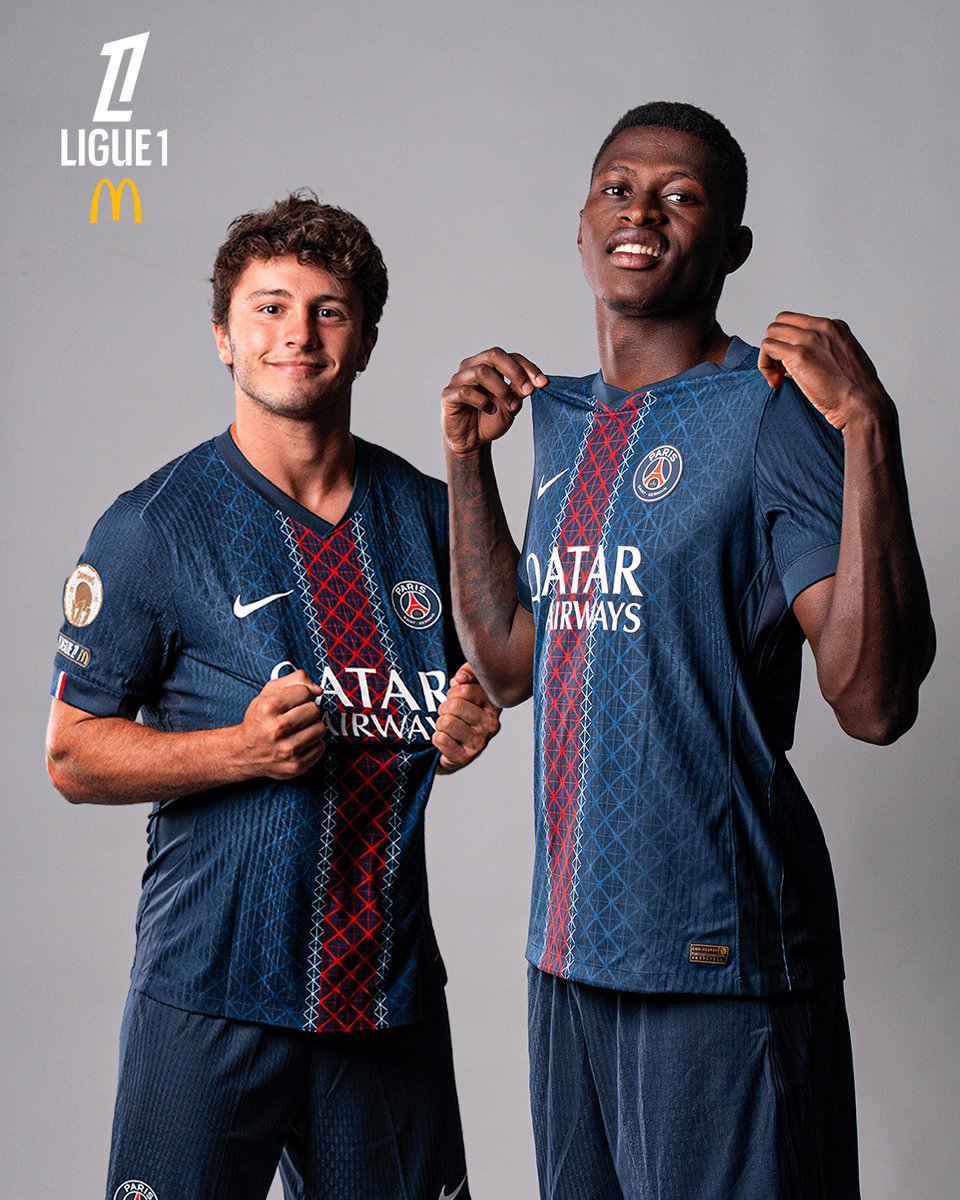
Vamos sortear duas camisas oficiais do PSG para comemorar a conquista da Champions League! Uma de João Neves e a outra de Nuno Mendes.
Para participar e concorrer é muito simples:
• Seguir a nossa página
• Curtir este post
• Marcar o @ de um amigo fã de futebol
Os vencedores serão anunciados no dia 04 de junho, próxima quinta-feira.