Threadguy reveals Hyperliquid was the only venue on earth that didn't break during the SpaceX IPO
"What Hyperliquid pulled off on the SpaceX pre-IPO was absolutely incredible. So much volume, so much OI, the market was so liquid, and it predicted the price almost perfectly. The last quote that came out was 150, and within 10 minutes of the IPO it was at 175. It was wild how accurate it was."
"And here's the crazy part. The moment the IPO went live, Robinhood was down, Coinbase was down, Bybit had to refund everybody that participated, Binance had to refund everybody that participated, and Hyperliquid was the only venue on the planet with absolutely no problems. Very impressive tech performance on the biggest IPO in history."
My honest thoughts on the SpaceX IPO (& its impact on the market):
• It's low float (only ~4%). We've seen this play out in crypto, and sometimes that actually leads to big expansions due to the combo of tiny supply and the additional compounder of index funds forced to buy from day 2. The setup for a squeeze is there, which makes this a risky short.
• For me, it's too risky to trade on day 1. There's no clearly defined downside here - and I only take trades where the downside and upside are clearly defined. Interested in momentum trades once a setup presents.
• Valuation-wise, it definitely feels inflated (once again, low float muddies the picture). $1.77T on $18.7B of revenue - roughly 95x sales, and they lost $4.2B last year. For reference, Morningstar's fair value is $63 a share. It is listed at ~$135.
• This was engineered for insiders to exit. 20% of their stock unlocks two days after the company's first earnings report, with additional 7% tranches unlocking at 70, 90, 105, 120, and 135 days. At some point in this period I'd be expecting weakness, even if it's met with a strong start. Interestingly, the Anthropic/OpenAI IPOs may be around this time too. I think the setup for some kind of local top over this period is there (as opposed to day 1), but obviously, there are many other variables at play. It's a watch.
• The narrative (that I've seen floating around) that this sucks liquidity out of crypto is nonsense. No serious crypto holder or trader is selling their $BTC for $SPCX stock. It's a completely different buyer imo. Will it suck liquidity out of other stocks? Probably. We've seen this pattern in crypto dozens of times - a hot new listing drains liquidity from the alts. Something to be aware of if you're exposed to individual majors on Nasdaq.
• Equities are no different, just slower and on a wider scale. Expect relative weakness in other majors as money rotates toward the shiny new thing.
And some of that rotation is forced as MSCI adds SPCX to its indices from day two (index funds don't have spare cash sitting around). To buy it, they mechanically trim everything else they hold. So effectively, every pension fund tracking those indices becomes a forced seller of the rest of the market and a forced buyer of SpaceX, at whatever price it's trading. (Worth noting: S&P 500 inclusion requires profitability, so that bid comes later, which may mute this effect slightly more than the narrative is suggesting).
• Longer term, I still think it's one of the most asymmetric plays in the world. Rockets, Starlink, and xAI under one roof. I am interested in being a holder over a multi-decade period. But I'm almost certain there's a more significant downturn in the near future that will give me a better entry point. I don't need to rush long-term positioning on a short-term whim. Any trade I make will be treated on its own R/R and individual merit, not as part of a long-term accumulation strategy.
Elon Musk criou, em um único dia, 4.400 novos milionários.
Quase 400 deles ultrapassaram os US$ 100 milhões.
Não são banqueiros nem investidores de risco. São funcionários da SpaceX: soldadores, técnicos, mecânicos e até funcionários da cantina. Durante vinte anos, a empresa pagou gente de todos os níveis com ações, não só com salário alto. Quem produziu colheu.
Juan Hernandez, imigrante mexicano, aceitou um emprego de soldador por US$ 28 a hora em 2015, sem nem saber direito o que era a SpaceX. Recebeu uma pequena participação de US$ 10 mil e pôde comprar mais por desconto em folha. Hoje sua fatia vale US$ 880 mil.
Trevor Hise ignorou os conselhos dos pais para pegar um emprego “seguro” na General Electric. Escolheu a SpaceX, ficou 12 anos e acumulou mais de 100 mil ações. Ao preço da listagem, são US$ 13,5 milhões. Aos 37 anos, ele já pode se aposentar. Palavras dele: “A magnitude disso é ridícula.”
O detalhe mais eloquente veio antes mesmo da abertura de capital: mais de 100 funcionários se uniram discretamente para contratar uma gestora de fortunas capaz de cuidar de até US$ 5 bilhões. Muitos nunca tinham precisado de wealth manager na vida.
Há décadas os IPOs de empresas de tecnologia enriquecem programadores. Desta vez, o dinheiro chegou ao chão de fábrica. Isso é capitalismo de verdade: quem arrisca, quem trabalha e quem entrega valor colhe frutos proporcionais.
A esquerda odeia esse tipo de história. Porque ela prova que a verdadeira ascensão social não vem de dividir a miséria alheia, mas de criar riqueza que eleva quem tem coragem de construir.
History Repeats: IPOs and Market Tops
SpaceX is set to launch at a $1.75T valuation, making it the largest IPO in history. The closest comparison is Saudi Aramco at $1.70T, which went public just 10 weeks before the COVID crash in 2020. And Aramco is far from the only mega IPO that appeared near a major market top. Always remember that the largest IPOs in history tend to arrive when optimism and euphoria is extreme, and investors are willing to pay almost any price. This is just one more indicator that we are at the Stock Market top.
I've already seen people discussing loans to buy SpaceX. I've seen people with zero experience talking about it. The mass is buying, and we always know how this ends. Will I buy SpaceX? Absolutely! But let the crowd buy first, let the price crash, and thats where I am going to buy, and I promise you, I will be buying lower than on launch day.
🚨🚨DURO GOLPE MORTAL a la presidenta del Banco Central Europeo, Christine Lagarde.
Suiza 🇨🇭 APRUEBA en referéndum garantizar el uso PERMANENTE del dinero en efectivo. 👏👏👏
Un 73% de los votantes respaldó una iniciativa para garantizar la disponibilidad permanente de dinero en efectivo en el país, que no podrá ser reemplazada por dinero virtual.
Con el dinero en efectivo la Agenda 2030 no se puede implementar. EL EFECTIVO ES VIDA Y LIBERTAD ⚔️🔥
This is the best AI stack for June 2026.
This is all you need to become an AI master.
You'll want to save this.
• Hermes Agent - Best personal assistant/AI CEO, better memory than Openclaw, runs tasks while you sleep
• Claude Opus 4.8 - Best for agentic workflows, creative work (design + writing)
• GPT 5.5 - Best for serious coding (Claude is also good), and image-gen
• Higgsfield - Best for anything video, supercomputer is the best for creative work and marketers (has all models in one)
• Perplexity - Best for research, recurring tasks using Computer
⚠️ATENCIÓN⚠️
MICHAEL BURRY, EL HOMBRE QUE PREDIJO LA CRISIS DE 2008, ACABA DE ALERTAR AL MUNDO:
¿QUÉ ESTÁ DENUNCIANDO BURRY⁉️
👉La historia empieza con una venta aparentemente normal. NVIDIA, la empresa de chips de IA más grande del mundo, vendió $5.400 millones en sus GPUs más avanzadas (los GB200, más de 100.000 unidades) a una empresa llamada VALOR.
¿Quién es Valor? Acá empieza lo raro. Valor NO es una empresa operativa real. Es un SPV (Special Purpose Vehicle). Fue creada específicamente para TENER esos chips y nada más. No tiene empleados operativos. No tiene clientes. No tiene producto. Solo tiene chips.
👀¿Y dónde están esos chips FÍSICAMENTE? Dentro del data center de xAI, la empresa de inteligencia artificial de Elon Musk (la que construye Grok). xAI está usando TODOS esos chips ahora mismo para correr sus modelos de IA.
👀Pero ni NVIDIA ni xAI figuran como dueños de esos chips. El dueño legal es Valor, la empresa FANTASMA del medio.
¿POR QUÉ ARMARON ESTA ESTRUCTURA?
👀Acá es donde Burry dice que la cosa se pone "fugazi" (preocupante). Porque esta estructura le permite a cada parte obtener un beneficio ENORME mientras el riesgo desaparece mágicamente:
▪️NVIDIA vende los $5.400 millones en chips y los registra como REVENUE (ingreso por venta completada).
▪️Esos chips desaparecen de su balance como inventario.
▪️Encima, NVIDIA puso $1.900 millones de su propia plata directamente en Valor. Es decir: vendió los chips, cobró, los sacó de sus libros contables, y encima invirtió en la empresa fantasma que los compró.
▪️xAI usa los 100.000+ chips para correr sus modelos de IA pero NO los tiene en su balance como activos. No figuran como propiedad de xAI. Legalmente, xAI no "posee" nada.
👉Los chips son "invisibles". $5.400 millones en activos de tecnología de punta que NO aparecen en el balance de NVIDIA (porque ya los "vendió") NI en el balance de xAI (porque no los "posee"). Están en el limbo contable de una empresa cáscara.
🎯Y ACÁ ENTRAN OTROS ACTORES
👉Valor necesitaba $3.500 millones en DEUDA para financiar esta estructura. ¿Quién puso la plata? Apollo.
🔻Apollo es uno de los gestores de activos más grandes del planeta con $1,03 TRILLONES bajo gestión y $834.000 millones específicamente en crédito privado. (anteriormente ya vimos los problemas que hay en el crédito privado)
🔻Apollo armó los $3.500 millones, los empaquetó en instrumentos de deuda, y se los vendió a... ATHENE. ¿Y quién es Athene? Es la propia compañía de SEGUROS de Apollo. Vende anualidades (productos de ahorro para la jubilación) a americanos comunes y corrientes.
🔻Cuando un jubilado compra una anualidad de Athene, CREE que su plata está en inversiones seguras y estables. Esa plata ahora está DENTRO de una estructura que financia el data center de IA de Elon Musk a través de una empresa fantasma.
🧨LOS NÚMEROS DENTRO DE ATHENE QUE DAN MIEDO:
👉Y acá es donde Burry se pone más duro con los datos:
▪️Athene tiene $74.200 millones en reservas.
▪️Movió $217.000 millones en activos a una aseguradora captiva en BERMUDA, lo que significa que esos activos están FUERA de la regulación normal de seguros de EE.UU.
▪️El 34,7% de todo el portafolio ($103.000 millones) está clasificado como activos de NIVEL 3.
¿Qué significa Nivel 3? Que NO existe un precio de mercado observable para esos activos. Ningún tercero puede verificar independientemente cuánto valen en realidad.
▪️El apalancamiento sobre esos activos sin precio es de 16 VECES.
👉Léelo de nuevo: $103.000 millones en activos que NADIE puede preciar, con apalancamiento de 16x, dentro de una estructura en Bermuda fuera de la regulación americana, financiando chips de IA para Elon Musk a través de una empresa fantasma. Y los que cargan el riesgo son los jubilados que compraron una anualidad pensando que era "segura".
🎯LO QUE BURRY CONCLUYE:
🔻Burry es claro: cada paso de esta estructura es técnicamente LEGAL y públicamente divulgado. Pero el conjunto fue deliberadamente diseñado en 8 a 12 pasos para mover el riesgo crediticio FUERA de los balances y LEJOS de cualquier precio de mercado.
🔻Si Burry tiene razón, esto NO es un caso aislado. Es un PATRÓN del crédito privado de $2 trillones que financia el boom de la IA.
📍Y ahora Burry está mostrando cómo se estructura. Cómo se esconde el riesgo. Cómo se empaqueta y se vende a los que menos entienden (jubilados comprando anualidades). Cómo $5.400 millones en chips desaparecen de todos los balances mientras el riesgo se acumula en una estructura que nadie puede preciar.
📍¿Te suena familiar? Debería. Es el MISMO mecanismo de los CDOs y las hipotecas subprime en 2007-2008.
📍Activos empaquetados en estructuras complejas, riesgo movido fuera de los balances, vendido a los que no entienden lo que compran, apalancado múltiples veces, y sin precio de mercado verificable.
📍El activo cambió (de hipotecas a chips de IA). La ingeniería financiera es la MISMA.
Citadel founder Ken Griffin is an animal
The youngest Managing Director in the firm's history reveals:
> how he makes decisions
> how he talks to traders
> what a normal Monday looks like
95% of people don't last a month at Citadel
ELON MUSK: “FOR THE NEXT FEW YEARS AMERICA IS LIKELY TO WIN THE RACE IN AI. THEN IT WILL BE A FUNCTION OF WHO CONTROLS THE AI CHIP FABRICATION. IF MORE OF THE FACTORIES ARE OWNED BY CHINA THEN CHINA WILL WIN."
"RIGHT NOW ALL THE CHIP FABS ARE IN TAIWAN. 100%."
"IF CHINA INVADES TAIWAN IN THE NEAR TERM THE WORLD WILL BE CUT OFF FROM ADVANCED AI CHIPS."
"I THINK IT'S ESSENTIAL FOR NATIONAL SECURITY THAT WE BEGIN MANUFACTURING OUR OWN CHIPS IN THE US.”
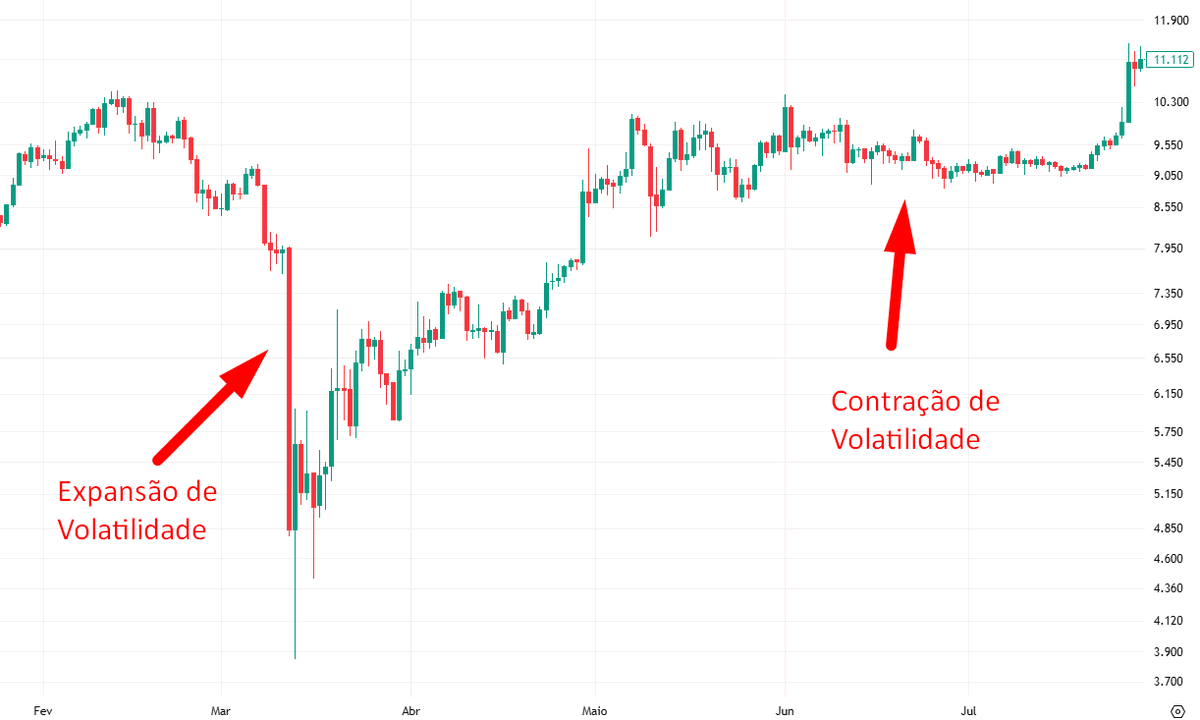
Em março de 2020, o BTC caiu 40% em 24h.
Em janeiro de 2023, o BTC ficou 11 dias seguidos sem mover mais que 1,5% por dia.
Mesmo ativo. Comportamentos opostos.
Muitos investidores acham que isso é aleatoriedade, mas estão ERRADOS. É um padrão matemático com nome.
THREAD🧵👇
Two Sigma manages over $60 billion
Their secret is in a 9-page PDF
Their own quant researchers published the exact machine learning framework behind their regime detection system and put it online for free
This is the statistical engine that decides which signals to combine and when - the same problem I solved in 11 steps in the article below
When the regime shifts, the signal weights shift
When the weights shift, the combined position shifts
That's the loop that has kept Two Sigma profitable since 2001
Read the 9 pages
Then read the article below on how to build the same combination framework on Polymarket