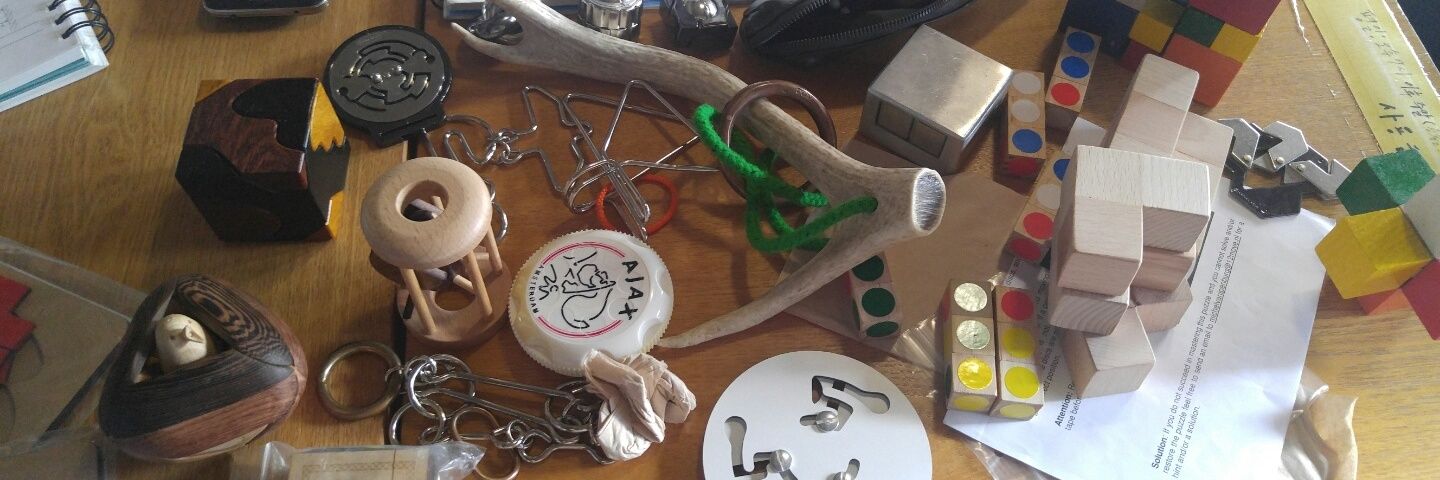
조정휘님과 제가 함께 디자인한 “Bedroom” 퍼즐이 곧 NothingYet Designs에서 판매를 시작합니다! (한국 시각 8월 9일 2 AM)
두 번째 사진은 제가 만든 프로토타입이고, 판매 버전은 색이 다르고 조각들을 담을 뚜껑도 있어요~
https://t.co/DrSIXip1X1
Like most mathematicians, I believed the Riemann Hypothesis to be completely out of reach at present (even with the best AI tools), because I expected it to require substantial theory-building, probably in arithmetic geometry. The kind of new theory-building that fills entire books, and that AI isn't so good at yet.
Mathematicians have a notion of how deep a problem is. A sufficiently deep problem is generally intractable until enough of the theory is in place. If difficult problems are like valuable mineral reserves buried miles underground, you first need to build the infrastructure to reach them.
What Levent's proof seems to have done instead is something completely different. It takes an incredibly complicated tour through the infrastructure built for a hundred other mineral reserves, situated far from the destination, and somehow create a wormhole to the original destination.
This is not theory-building in the usual sense. It is something much weirder and more alien. The best human mathematicians know how to build theory, painstakingly, to reach a goal. But no human brain, on its own, is capable of creating a wormhole that requires a 25,000 page long tour through existing infrastructure with no obvious or realistic connection to the goal. But huge credit to Levent here: I think no current AI, on its own, is capable of this either.
I had never worked on or thought too much about the Riemann Hypothesis: it seemed very far removed from my own area of number theory.
But the astonishing thing about Levent's claimed proof of RH (which I think has a very good chance of being correct) is that it uses a huge number of precisely the things that are central to my own corner of number theory:
- Theta functions and other automorphic forms on unitary groups
- Gan–Gross–Prasad period formulas
- Relative trace formulas
Etc., etc.
A problem that I had always assumed would require new theories in arithmetic geometry may instead turn out to be tractable through an inhuman chain of existing (deep) results in higher-rank automorphic forms (and a lot else).
[마력-235와 공간 테셀레이션]
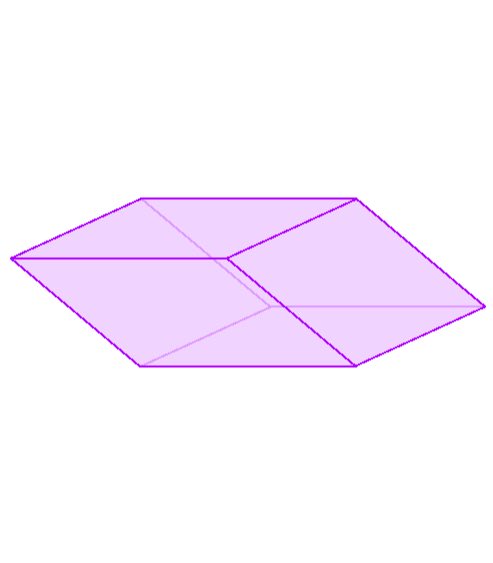
충명은 똑같은 마석들을 빈틈없이 쌓아 공간을 채워야 합니다. 마석은 육면체이고, 모든 면은 넓이 1인 정삼각형 두 개를 붙인 마름모입니다. 두 마석의 접촉면 넓이가 1을 넘으면 폭발합니다. 마석을 어떻게 쌓아야 할까요?
#Horizon퍼즐
https://t.co/28kuy6Pxux
Announcing three major scientific discoveries, one each in mathematics (harmonic analysis), computer science (complexity theory), and physics (quantum field theory).
AI starting to help us improve our understanding of the universe! https://t.co/VkfacopR2R
不想传播焦虑,但这次我无话可说。
今年科学界最大的新闻,没有之一。OpenAI 的内部 AI 模型自己做出了三个科学难题的成果。我用我自己的理解说一下。
第一,Kakeya 猜想。这个问题研究波聚焦时会怎样。原来的猜想我记得是说最极端的聚焦只会持续很短时间。人类以前只在低维度证明过,OpenAI 说它的模型证明了所有维度的情况,因此顺带解决了 Kakeya 猜想和 Stein 限制猜想。纯逆天。
第二,指数时间假说 ETH 被推翻。这个太难以置信了。ETH 好像是说有一类逻辑难题不可能被比暴力穷举快很多地解决。而之前学界普遍相信它成立,几百篇论文都以它为前提,现在 AI 却证明它是错的。
这个太他喵逆天了,因为我之前是研究过一段时间理论计算机的。这几十年ETH几乎被当成公理在用。很多论文的结论都写成假设 ETH 成立,那么某某问题不可能在多少时间内解决。现在地基没了,这些不可能,全都要打问号。
最让我感觉匪夷所思的是 AI 证明的方式。据 Lean 证明的说明文档,它给出的是一个确定性算法,应该是对固定宽度的 k-CNF 公式,它能在亚指数时间、多项式空间内精确数出所有满足的赋值。但是,懂行的人应该都知道“数出有多少个解”通常比“判断有没有解”难得多,它连更难的那个都做到了,所以 ETH 只是顺带被推翻。
第三,杨-米尔斯、量子色动力学。AI 应该是给出了一套严格的数学证明,证明描述强核力的理论在数学上确实成立,其中包括纯杨-米尔斯理论的存在性,这是千禧年七大难题之一的一部分。我不太了解,但是只是知道一些浅层的理论,就不评论了。
最让我恐惧和惊骇的是第二个。今天晚上我看了又看,感觉这是地震级别。如果最终确认无误,这会是 AI 第一次独立推翻一个被广泛相信的核心猜想。说它是一个时代的分界点,也毫不夸张。
如果这三个都核查通过,这代表 AI 第一次在多个顶尖领域独立解决了几十年没人能解决的难题,影响史无前例。
LLMs are good at finding exploits and bad at system design, which captures their general strengths/weaknesses: good at relentless repetition of bounded tasks; bad at holistic understanding. Good at producing working code (including exploits); bad at knowing what is "good".