I tested an AI tool on a simple Spanish question:
When do you use ‘por’ vs ‘para’?
It gave me 6 rules, 12 exceptions, and zero confidence.
Language isn’t a formula. It’s a weird mix of thoughts and feelings that you express over time — with context, culture, and a lot of mistakes
With AI, learning a language has become easy?
Well, learning still has a same process, like Dr Stephen Krashen said “You don’t learn, you acquire it”.
Finding and creating content has become super easy. We can make own tools, exercises & personalised materials and what not.
For teachers mentoring students in Spanish, this application can be your go-to resource for reading passages, speaking prompts, vocabulary quizzes and much more!
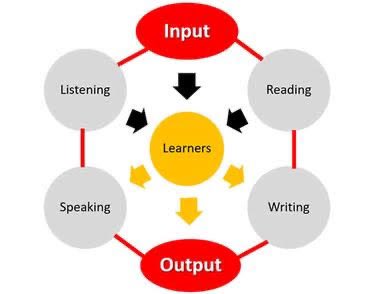
I started with Flashcards and then, introduced the INPUT and OUTPUT theory. And finally, after 2 years of consistent efforts and a lot of hit-and-trial, I can proudly say that I created a SYSTEM!
For example, students understand and use naturally the ‘ing forms’ (Gerund) before they start using from ‘go’ to third person ‘goes’ in English.
I got obsessed with making a resource worthwhile that helps the student acquire Spanish on their own, with or without guidance.
Language is not learnt but acquired. No one can ‘teach you’ the language but can guide and mentor you in your journey.
It is the student who acquires it but doing certain things consciously and subconsciously consistently.
There is a pattern to acquire in all the languages.
Learning a language is like assembling IKEA furniture. You start off with excitement, hit a confusing stage, and end up with something vaguely resembling your goal 🤓
If you have ever dreamt of learning a language, I am giving away my 7-day video course.
Get your Spanish kick-start course absolutely FREE.
↳ Effortlessly master the basics.
↳ Practice each day
↳ Celebrate small win by reaching 7th day milestone.
https://t.co/BALbHW4DRd
Input
- Listening
- Reading
Output
- Speaking
- Writing
Increase the input, the output increases automatically. The more comprensible input is, the more comprehensive output becomes.
4. Delay speaking until you are in a comfortable and in an appropriate environment.
5. Don’t translate to your native language while listening and reading.
6. Be patient.
Don’t complicate the process!
You don’t learn a language, you acquire it.
1. Get your first 30, 50, 100 words.
2. Listen to the language that is comprehensible to you in target language (70% is enough).
3. Extensive reading in your target language.
Ser Vs Estar is the easiest concept in Spanish if understood well enough.
Still after months of learning, people don’t get it.
Here is PPT that can help! You’ll never feel confused while using any of the two.
https://t.co/rKTp8705ju