@MichaelDrogalis@manchaary12 In Quickstrom, test data (actions, mostly) is generated from a combination of the spec and what's actually possible in the browser (which we can introspect and query at any given state). Not sure if that's relevant.
Quickstrom 0.6.0 released! Among many other things, support for Safari and Edge has been added.
Also support for remote webdriver, like @saucelabs and @browserstack .
https://t.co/Fd6NuC0bn0
📣🎉 Announcing: Squidler
This is what I've been working on for the last 6 months, and working towards for many years.
Autonomous web app testing by just entering a URL.
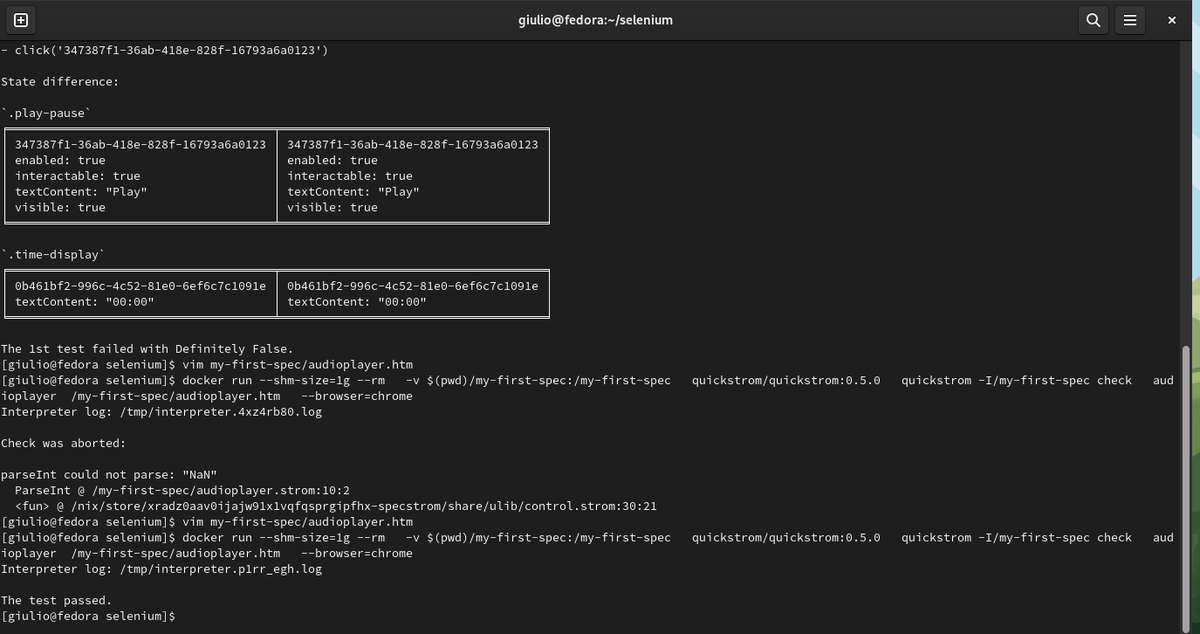
@owickstrom@elefthei @paul_snively @quickstrom_io Cool! My first spec running in docker while I'm following the first tutorial example!
I'm going to propose it to my devops team!
Finally, you can read about the underlying logic QuickLTL and our results from testing TodoMVC implementations in the following paper:
https://t.co/X6nMufX0qi
Quickstrom 0.5.0 is released! 🎉
It's an entirely new implementation, with a new specification language (Specstrom) and underlying logic (QuickLTL). Browser testing reimagined!
Docs: https://t.co/JA6BPkfDfM
Source: https://t.co/t8QbjELWXm
If you'd like to learn more about the new language, see https://t.co/5PMrjoMnWA. We've tried to keep its syntax relatable to web programmers, even if the semantics is very different.
I've finally started working on the release of the new @quickstrom_io (that we used in the paper.) Lots of docs and packaging stuff, but it'll be great to finally get it out.
There's a lot more fun stuff in the paper. Check it out if you're excited about what effective specification and testing of stateful systems could look like!
https://t.co/XZIXUHfwrV
"Quickstrom: Property-based Acceptance Testing with LTL Specifications"
PLDI 2022 paper not out yet, but preprint is available here: https://t.co/XZIXUHfwrV
Some highlights in this thread:
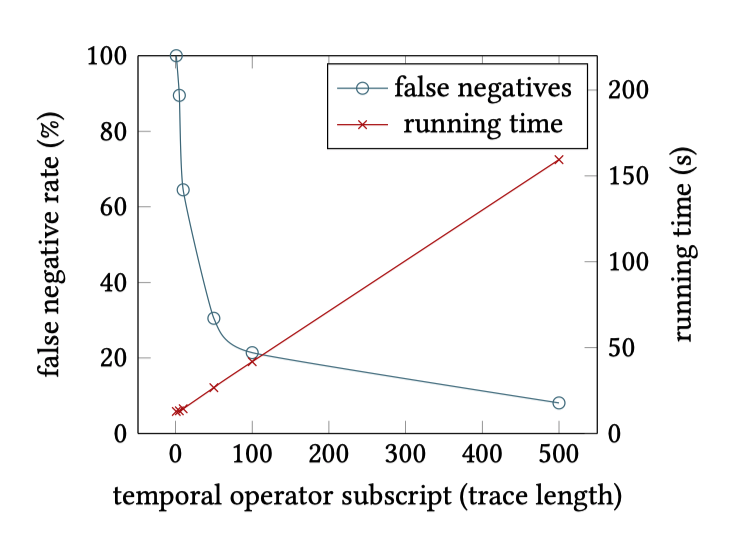
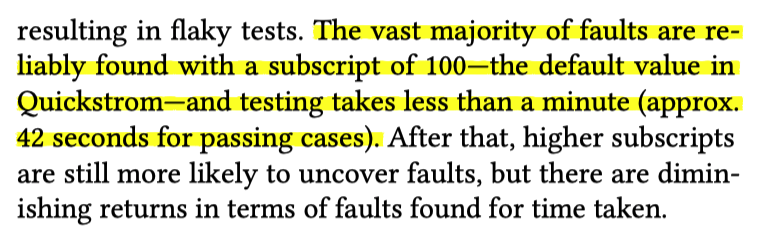
We also present measurements on false negatives vs running time from the TodoMVC benchmark. These suggest that the default subscript of 100 (trace length required by temporal operators) is good, and that we can find most problems pretty quickly.