😮💨Tired of writing the same math method multiple times for int, double, and decimal?
C# 11 introduced Generic Math — constrain T to INumber and the +, -, *, / operators just work.
One method. Any numeric type. Full type safety. 🚀
Master C#'s TimeProvider for ultimate time control!
Hardcoding https://t.co/lmdZdGquaB or DateTimeOffset.UtcNow makes your code impossible to test reliably.
.NET 8 introduced TimeProvider — an injectable abstraction for time that lets you freeze, advance, or mock time in tests without any hacks.
C# 14 introduces extension blocks — a cleaner way to add methods, properties, and operators to existing types.
They unify extension members, reduce boilerplate, and make type extension more expressive without modifying the original type.
C# 11's Raw String Literals simplify multi-line strings embedded in your code.
No more escaping quotes or special characters. Easy interpolation even with curly braces that you want to escape.
Visual Studio and the C# Dev Kit provide some validation and syntax highlighting when raw string literals contain JSON data or regular expressions. You can help this mechanism using a dedicated comment above the literal.
✨ C# 12 introduced Collection Expressions
It's a cleaner, more expressive syntax for initializing arrays, lists, spans, and even ImmutableArrays using simple square brackets `[ ]`.
The spread operator `..` lets you merge existing collections inline.
No more chaining `.Concat()`, `.Append()`, and `.ToArray()` just to combine two arrays.
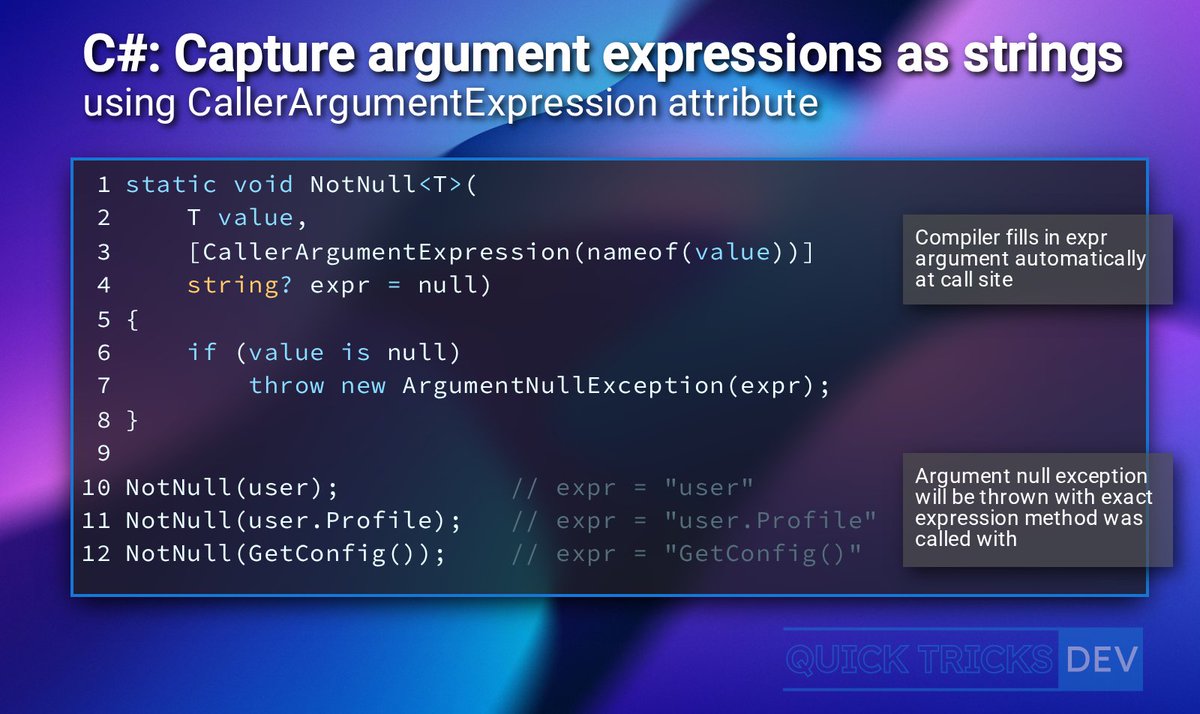
Did you know C# can automatically capture the text of an argument passed to a method?
No more "Value cannot be null" without knowing which value.
Perfect for validation and assertion utilities.
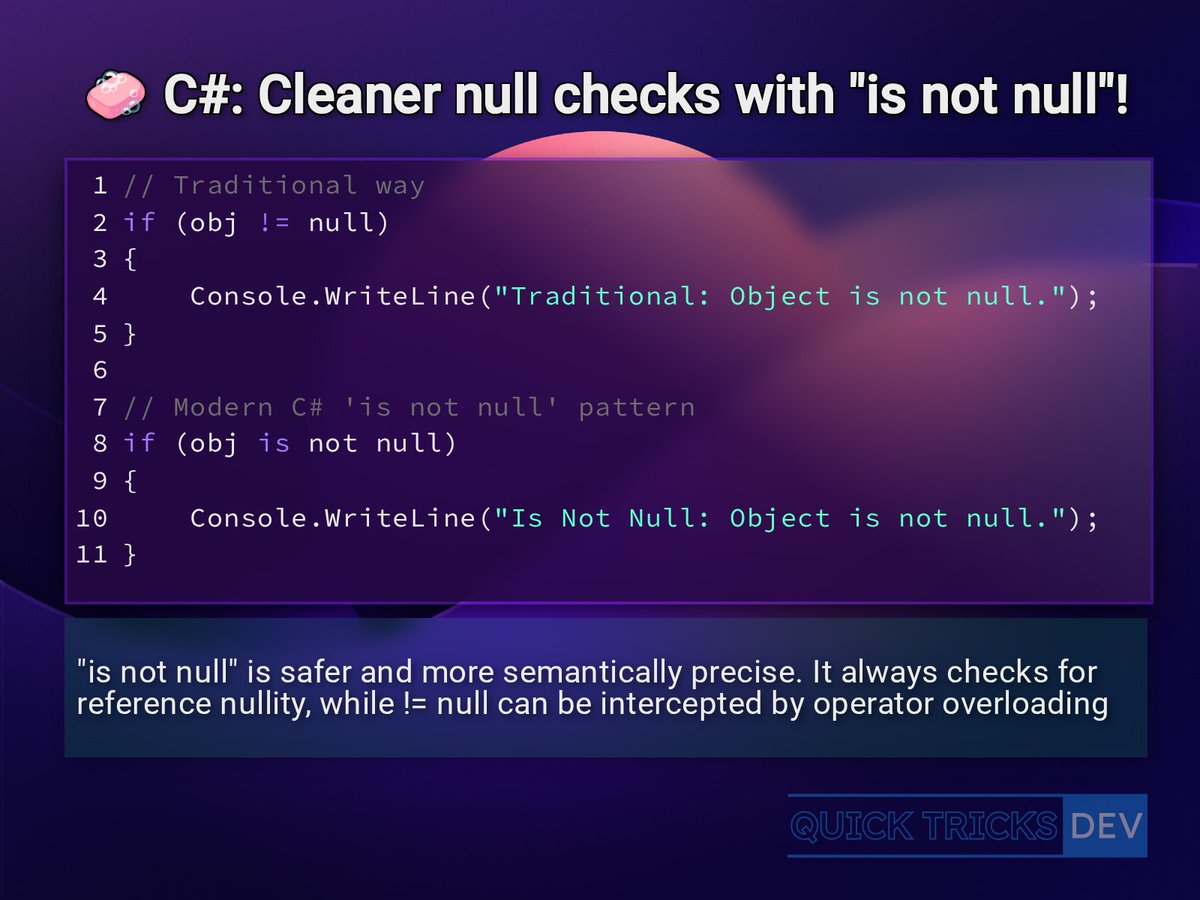
C# Tip: Ever had a null check that silently lied to you?
In C#, != null can be overloaded by a class to return whatever it wants. is not null bypasses that entirely.
It's a pattern match against the actual reference, not an operator call.
Small difference, big consequences.
🔥 C#: Add new interface members without breaking existing implementations!
With default interface implementations (C# 8+), you can add a method directly to an interface with a default body — classes that already implement the interface don't need to change a thing.
Perfect for evolving library APIs without forcing every consumer to update.
💬 Do you use default interface implementations in your projects, or do you prefer extension methods (or blocks) / abstract base classes for this?
🧠 JavaScript Proxies allow you to wrap an object and intercept operations like property access, assignment, deletion, and even function calls.
You define a handler with traps that customize behavior.
Perfect for logging and validation.
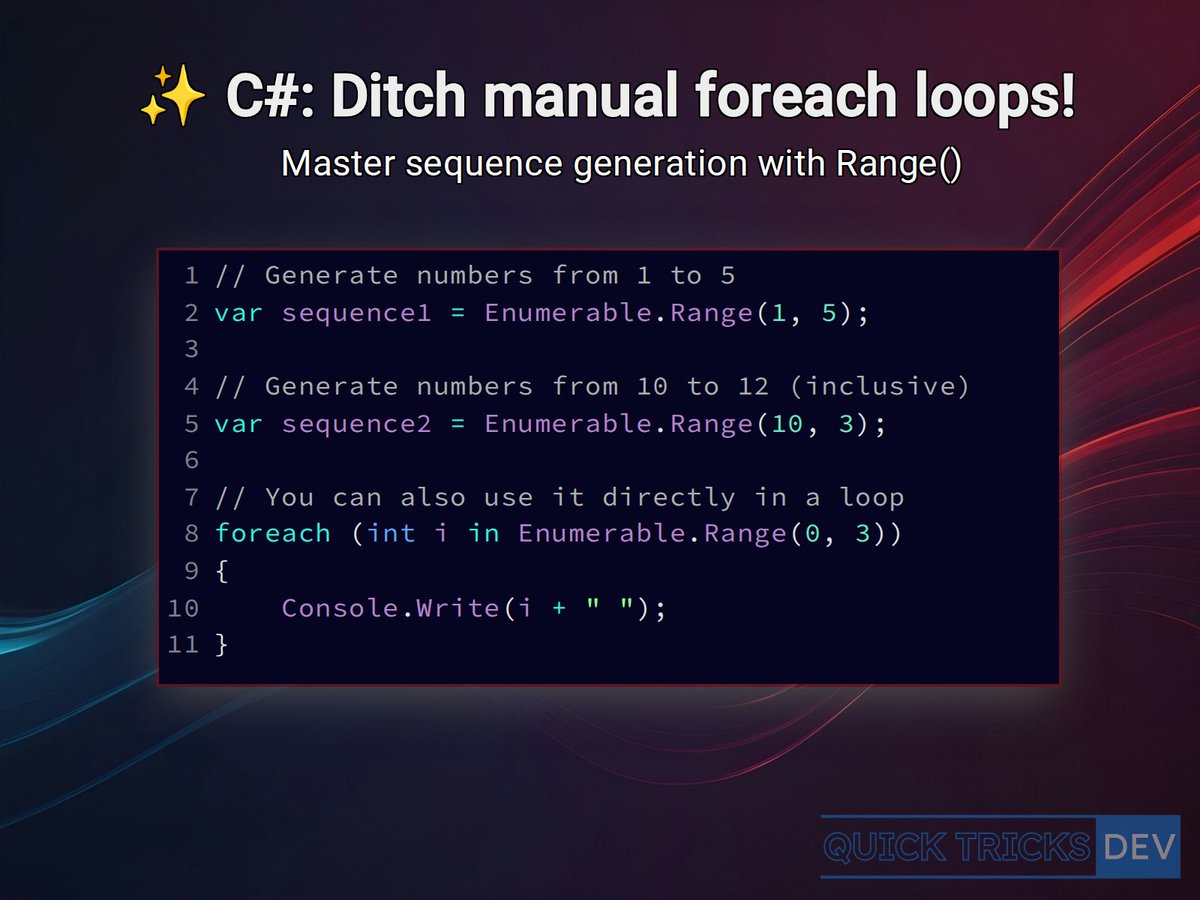
✨ C# Tip
Easily generate sequences of numbers within a specified range using Enumerable.Range().
Define your start & count to get exactly what you need for loops, arrays, or tests. Simplify your code!





![quicktricks_dev's tweet photo. ✨ C# 12 introduced Collection Expressions
It's a cleaner, more expressive syntax for initializing arrays, lists, spans, and even ImmutableArrays using simple square brackets `[ ]`.
The spread operator `..` lets you merge existing collections inline.
No more chaining `.Concat()`, `.Append()`, and `.ToArray()` just to combine two arrays.](https://pbs.twimg.com/media/HG-r3kRXkAAdV_-.jpg)