1/5 🧬 Introducing TOPO — a unified coarse-grained MD model for globular & disordered proteins, built on @openmm_toolkit.
One force field, one bead per residue, from folded domains to full IDPs.
📦 https://t.co/YgRQbL9Ix6
📖 https://t.co/z3sognbCrc 🧵👇
5/5 ⚡ A CG chain is far too small to fill a GPU — so pack many.
n_copies puts N independent chains in one System: same run, N trajectories.
360-res protein, A100: ~260 µs/day at 512 copies — up to ~58x more sampling per GPU-hour. 📈
⭐ Feedback welcome!
1/5 🧬 Introducing TOPO — a unified coarse-grained MD model for globular & disordered proteins, built on @openmm_toolkit.
One force field, one bead per residue, from folded domains to full IDPs.
📦 https://t.co/YgRQbL9Ix6
📖 https://t.co/z3sognbCrc 🧵👇
4/5 🔹 Co-translational synthesis
Grow the nascent chain N→C, one residue at a time, with codon-resolved kinetics — so it folds as it is made, emerging from the ribosome exit tunnel (analytic tunnel or explicit CG ribosome).
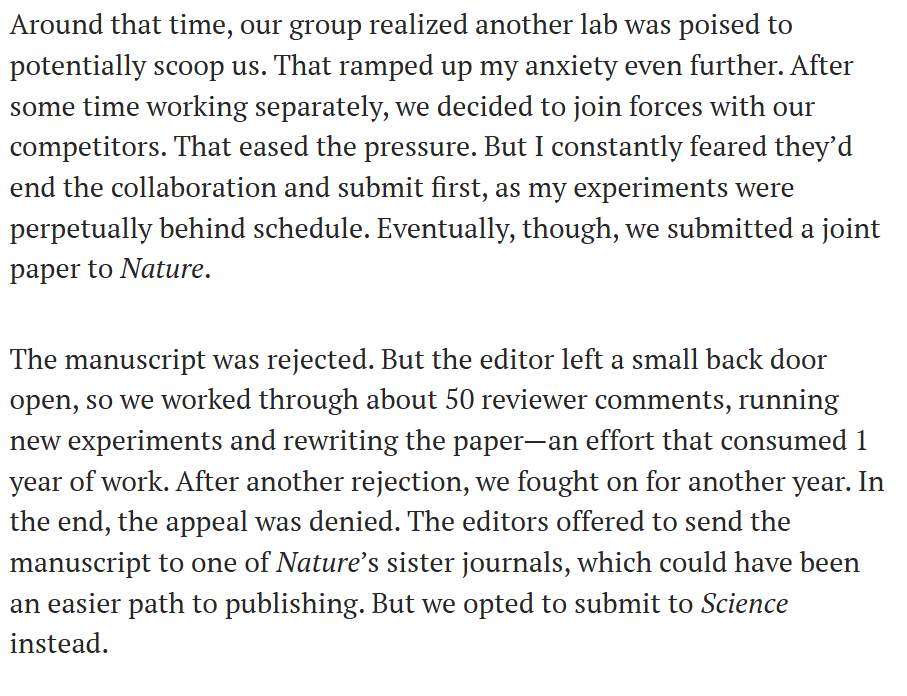
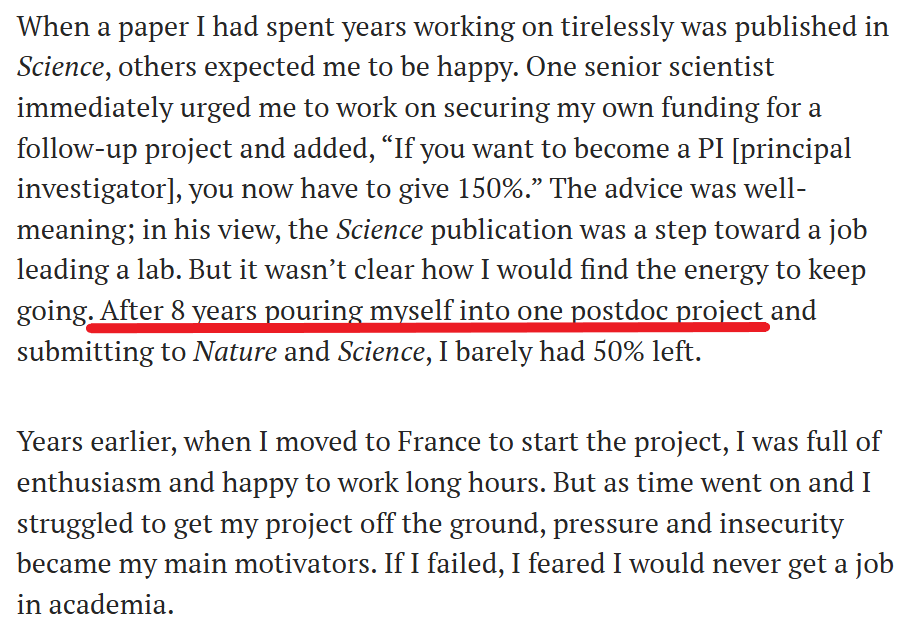
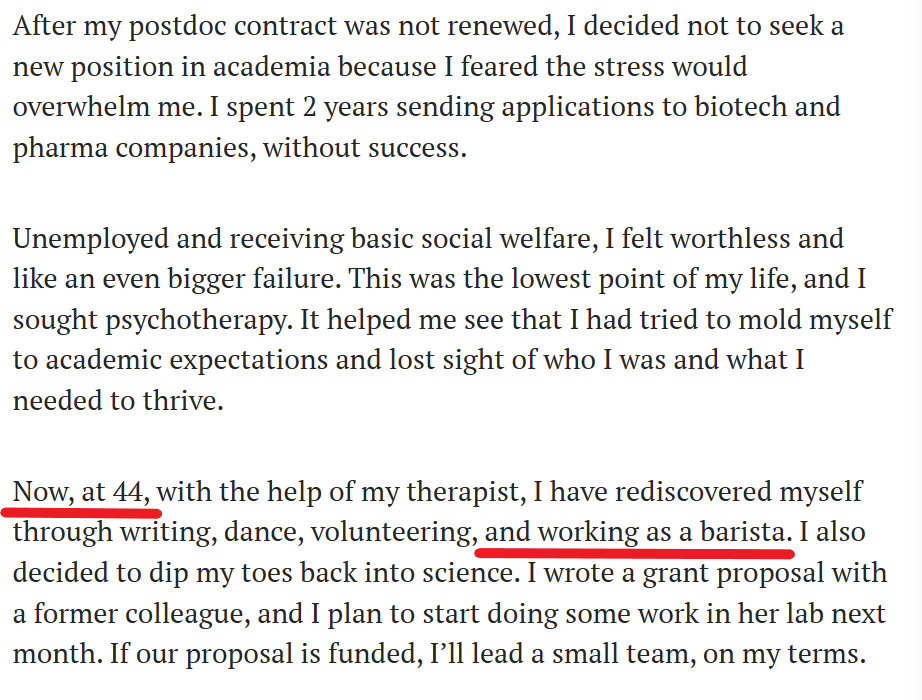
If you're doing (or thinking of doing) a PhD, read this:
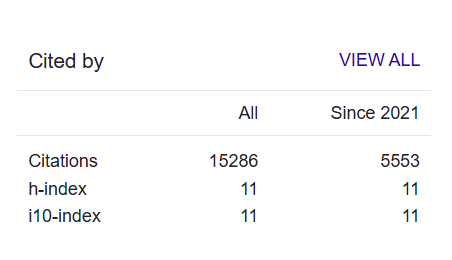
8-year long postdoc, paper in Science journal, 15,000+ citations.
Now works as a barista.
Academia doesn't care about you. You are totally on your own.
www. science. org/content/article/how-chasing-high-impact-publication-nearly-broke-me
MY FRIEND SUBMITTED 52+ JOB APPLICATIONS IN 2025. ZERO RESPONSES. ZERO INTERVIEWS.
Then I uploaded his resume to GROK and got 19 replies + 6 interviews in 12 days.
Use these prompts instead and see the magic:
Writing your SOP alone is risky.
Not because you’re incapable —
but because you don’t know what reviewers silently reject.
Most SOPs fail due to:
– weak research narrative
– unclear goals
– generic motivation
These don’t look like “mistakes” to students.
They look fine.
That’s why feedback + mentorship changes outcomes.
If you’re applying for funded Master’s/PhD programs this year,
comment “SOP” and I’ll share how I help applicants fix this.
🤔
“Here we present evidence that eukaryotic circular RNAs (circRNAs) can serve as templates for 3' to 5' backward translation (BT), yielding polypeptides with distinct sequence and structural features not found in canonical proteomes.”
https://t.co/0e8pUWPUh7
A reminder that the abundance of 'housekeeping' proteins varies significantly across cells and tissues.
GAPDH is often slandered as a 'housekeeping' protein, and its abundance varies significantly across human tissues.
How do you define a 'housekeeping' protein ?
𝐏𝐫𝐨𝐭𝐞𝐢𝐧 𝐟𝐨𝐥𝐝𝐢𝐧𝐠 𝐢𝐬 𝐧𝐨𝐭 𝐚 𝐬𝐨𝐥𝐯𝐞𝐝 𝐩𝐫𝐨𝐛𝐥𝐞𝐦.
1. Models fail on proteins with multiple stable folds (fold-switchers).
> AlphaFold 2 (AF2) captured one conformation but missed the alternative in ~94% of cases, often with high internal confidence showing AF2 selects a single dominant fold rather than modeling conformational heterogeneity.
2. Memorization vs. physics for some successes on switchers.
> Follow-up work shows AF2’s apparent wins on certain switchers can come from training-set memorization, not learning folding thermodynamics, evidence that AF2 has not internalized the full energetics of folding.
3. Not trained to predict mutation effects (stability/function).
> A systematic test concludes AF predictions cannot be used directly to estimate ΔΔG or functional impact of single variants; the task is orthogonal to AF’s training objective.
4. Fails to account for ligands and modifications
> AF models do not account for ligands, covalent modifications or other environmental factors, and accuracy varies: they’re valuable hypotheses, not final truth.
5. Limits around disorder and ensembles.
> Multiple analyses note that intrinsically disordered regions (IDRs) and proteins that require structural ensembles remain challenging; AF often assigns low confidence and cannot on its own recover the conformational distributions needed for biology.
Take-home: Deep learning models, such as AlphaFold, resulted in a major advance for predicting static single-state structures.
◼️ These predictions still fall short in multiple ways. What are your examples ?
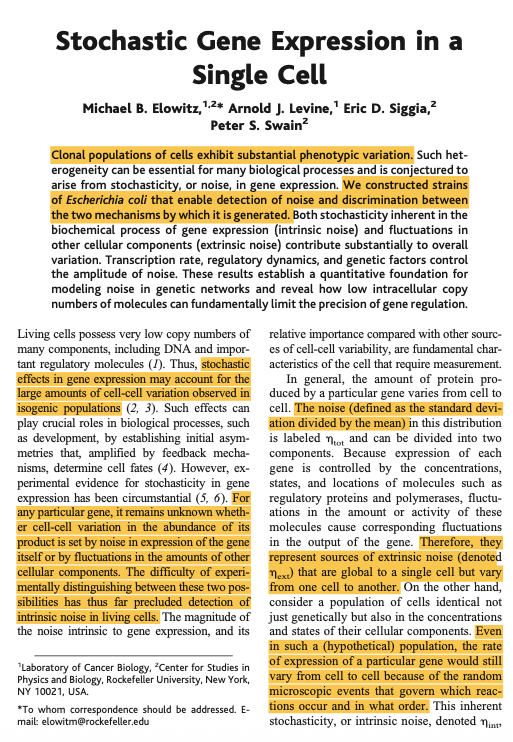
Take two cells and place them side by side. Both cells have the same genome. And yet, oddly enough, they behave in different ways. They divide at different times and their RNA levels are distinct.
Now let’s go one step further. Take those same two cells. But this time, imagine that they have not only the same genome, but completely identical molecules at identical concentrations. Will these two cells behave in the same way?
The answer is no.
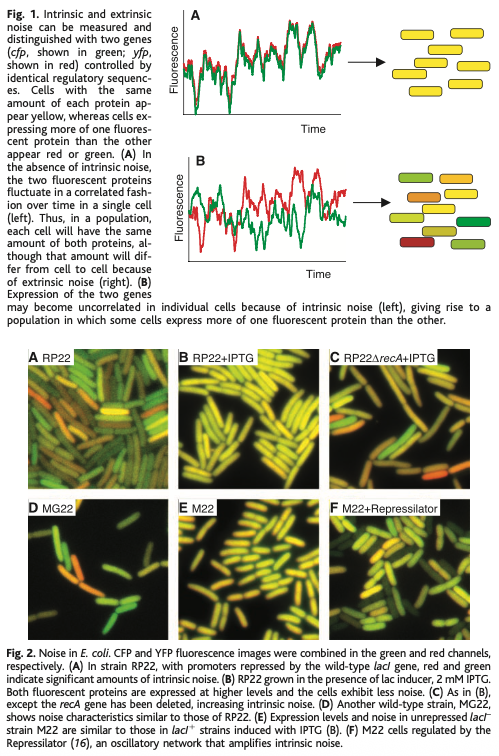
This is because there are two types of "noise" inside of living cells; intrinsic and extrinsic. In the first example, the two cells act differently because of subtle differences in their gene levels. Not all genes are expressed at the same time or in the same amount, and this leads to slight differences. This is extrinsic noise, because it is “global to a single cell” but varies “from one cell to another.”
In the second example, which is so statistically unlikely as to be basically impossible, the two cells would still have different gene expression patterns “because of the random microscopic events that govern which reactions occur and in what order.” This is intrinsic noise or stochasticity; it is an inalienable part of biology.
I’m pulling these quotes from one of my all-time favorite papers, called “Stochastic Gene Expression in a Single Cell.” The first author is @ElowitzLab (of synthetic biology fame) and it was published in August 2022. It’s worth reading.
For this paper, Elowitz & co. designed a simple experiment to separate intrinsic and extrinsic noise in a cell. Their goal was measure each source of noise to figure out which one dominates in different scenarios, like exposure to IPTG or the addition of a plasmid. So here’s what they did:
First, they took E. coli cells and inserted two genes into the genome; one encoding a fluorescent cyan protein, and another encoding a fluorescent yellow protein. Each gene had the same promoter, and was placed equidistant from the genome’s origin of replication (but on opposite sides.)
Next, they grew these cells in LB broth and photographed them using a microscope with color filters. The brightness of each color, in each cell, was quantified.
If the variability between different E. coli cells stems from shared cellular conditions (like ribosome levels or extrinsic noise), then both colors in a single cell would fluctuate together. If the variability instead arises from random molecular events (intrinsic noise), then even within the same cell, the cyan and yellow levels would differ.
If you plot these changes out on a scatterplot, then you can literally decode which “signals” or “triggers” are dominated by intrinsic or extrinsic noise, and by how much.
This is a “beautiful experiment” because the experiment is so simple, yet it retrieves a huge amount of information. All they did was put two genes into an E. coli cell at symmetrical locations in the genome! And from that alone, they deconvoluted noise and its origins.
We are looking for: PhD Student (starting as Research Assistant) and Postdoctoral Researcher in Stem Cell Biology and Mechanobiology. Please RT💕
🔗 About our lab: https://t.co/53gtr8qx68
🎓 PhD position: https://t.co/hL3Zfk7oII
🧪 Postdoc position: https://t.co/0mVS4ZaomG
Can you rejuvenate an old brain by giving it young immune cells? 🧠
My lab @calico put it to the test. In our new study, we replaced the brain's immune cells in old mice with young ones.
The result? The old brain environment forced the young cells to age RAPIDLY. A 🧵👇
Feeling proud of this milestone, and deeply grateful for the collaboration and guidance along the way.
"Non-native entanglement protein misfolding observed in all-atom simulations and supported by experimental structural ensembles" | Science Advances https://t.co/6JOg41XEqa
Very happy to share work led by @SoBuelow on prediction of phase separation propensities of disordered proteins from sequence
We combined active learning and coarse-grained simulations to develop a machine learning model for quantitative predictions of IDR phase separation
Title:
AlphaFold3, a secret sauce... 😇
Acknowledgments and Disclosure of Funding:
We thank our colleagues for submitting the test queries to the AlphaFold3 server...
When a long-term memory forms, some brain cells experience a rush of electrical activity so strong that it snaps their DNA.
Then, an inflammatory response kicks in, repairing this damage and helping to cement the memory, a study in mice shows https://t.co/630UwbkljL