I'm spending a good amount of time this year analysing grey publishers. In this little piece I re-analysed some great data from @neuroloJimmy and colleagues. It's not often I see work in this space showing Frontiers to be the more extreme of the two: https://t.co/FptuudOpS1
Another excellent and timely work by @AccountRes1989!
📄 Peer Reviewer Fatigue, or Peer Reviewer Refusal? by @beecher_kate (@UQ_CHSR @UQMedicine @UQ_News) & Joshua Wang (@QUT) explores the growing challenges in securing reviewers for academic manuscripts.
📌 ScienceGuardians' Note: Peer Reviewer Fatigue refers to the exhaustion and disengagement of reviewers due to an overwhelming number of review requests. This issue has been exacerbated by the relentless pressure from for-profit publishers on reviewers—who are generally expected to work for free—while these organizations generate massive revenues. The result? Delays, declining review quality, and compromised editorial decisions, all of which negatively impact academic publishing.
🔗 Read the paper here: https://t.co/d8R1iWGZMM
#PeerReview #ResearchIntegrity #AcademicPublishing
We're so thankful for the positive feedback we've received about the Research Handbook of Academic Mental Health!
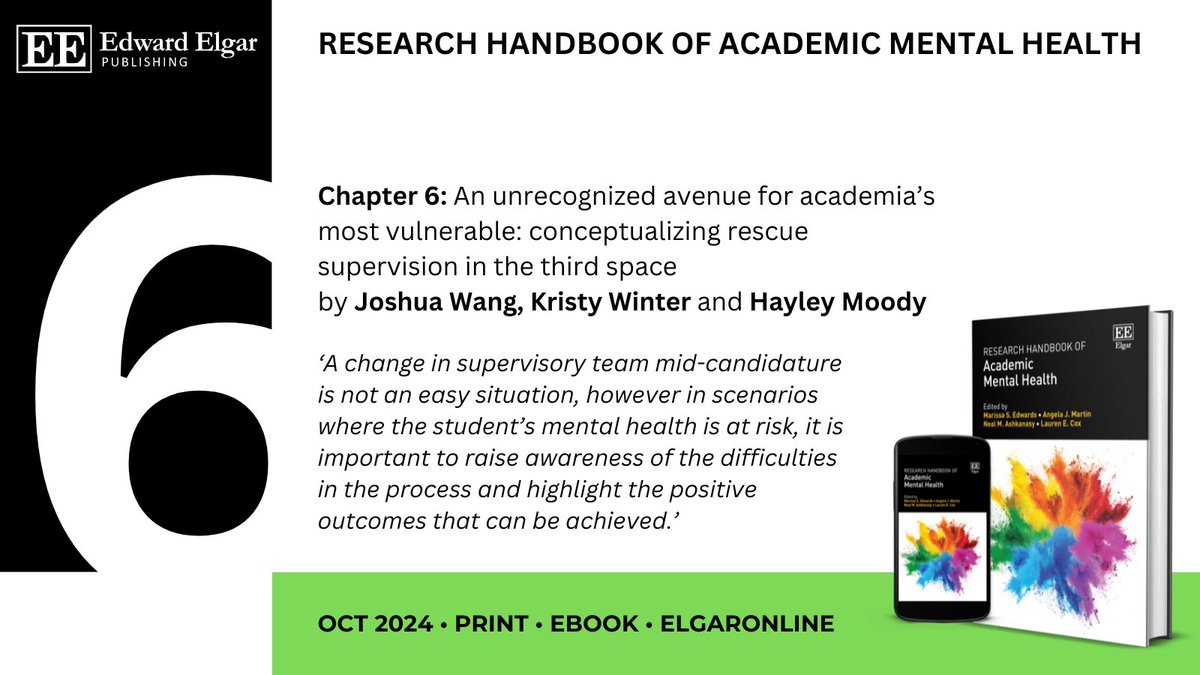
What happens when you're struggling and you need to find a new PhD supervisor?
In Chapter 6, Joshua Wang and colleagues explore the phenomenon of rescue supervision, and the experiences of PhD students who move to a new supervisor during their candidature. A really important read for anyone working with PhD students!
@ThePhDPlace
Purchase here: https://t.co/dEByBvZxXl
Sees shit writing and assumes its an early career researcher? That logic is floral without fragrance. I know a few full professors that haven't written any of the papers they've co-authored over many years - I'm sure they'd be rustier than their paper machine students
As a reviewer, it is obvious when something is written by a brand new grad student and very obvious when it is their first paper submission ever. Really heavy on the jargon and misuse of GRE words. The writing is floral without fragrance. (1/2)
- Nurse Author and Editor
A relatively new diamond OA journal that examines scholarly publishing as it relates to the nursing discipline
https://t.co/zBOUfoz60X
- Preprints!
I'm admittedly pretty naïve to preprints, but @JACoates has some great info on the value of this medium.
We can't advocate for diamond OA platforms if we don't use diamond OA platforms. Give one of them a go!
- Science Editing
A great diamond OA journal accepting many smaller and larger manuscript types. They publish on international issues, but also have many close analysis on topics within Asia.
https://t.co/D6gA14vRpi
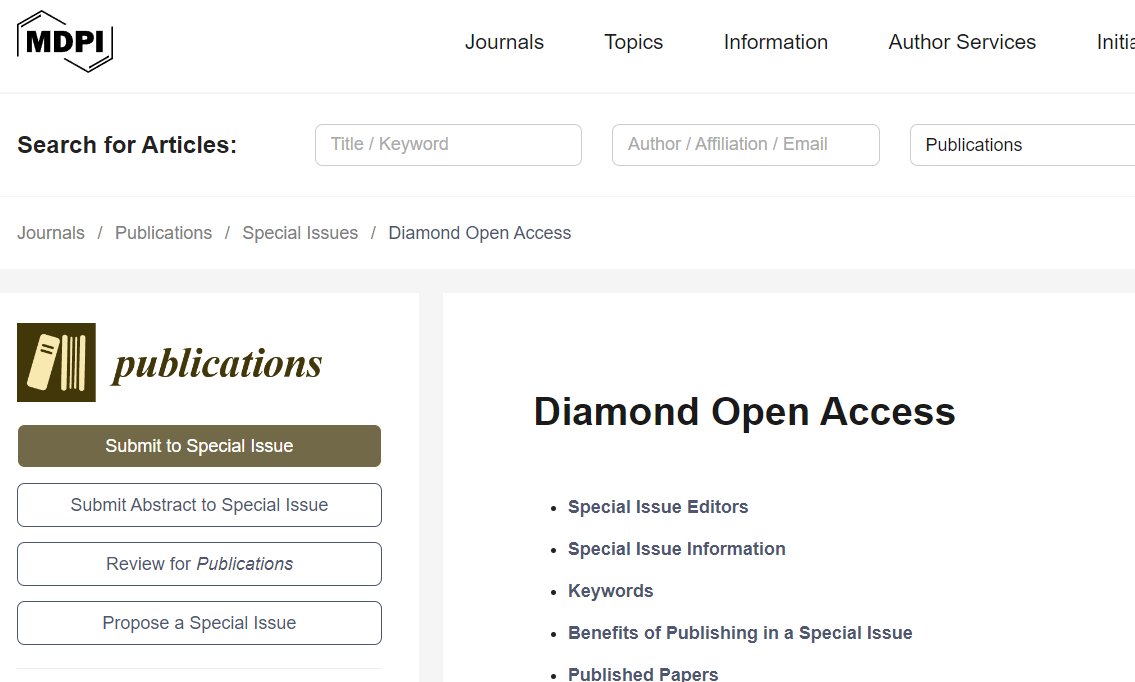
An MDPI Special Issue on Diamond #OpenAccess publishing? Mind-boggling and terrifying. Don't spend $1700 USD of taxpayer money to publish a piece about how we waste taxpayer money. Save some $$ and some face with these alternatives 🧵
- Journal of Korean Medical Science @JkmsOrg
Has an editor dedicated to scholarly publishing pieces, and there's no APC for correspondence/opinion pieces. They regularly publish on broader scholarly publishing trends outside of the medical discipline.
https://t.co/RP1I8weoMr
- European Science Editing @EASEeditors
A diamond OA journal that accepts a variety of manuscript types. From my experience, the editorial team are welcoming and do everything they can to maximise the visbility of your published article.
https://t.co/sg7zk28E2M
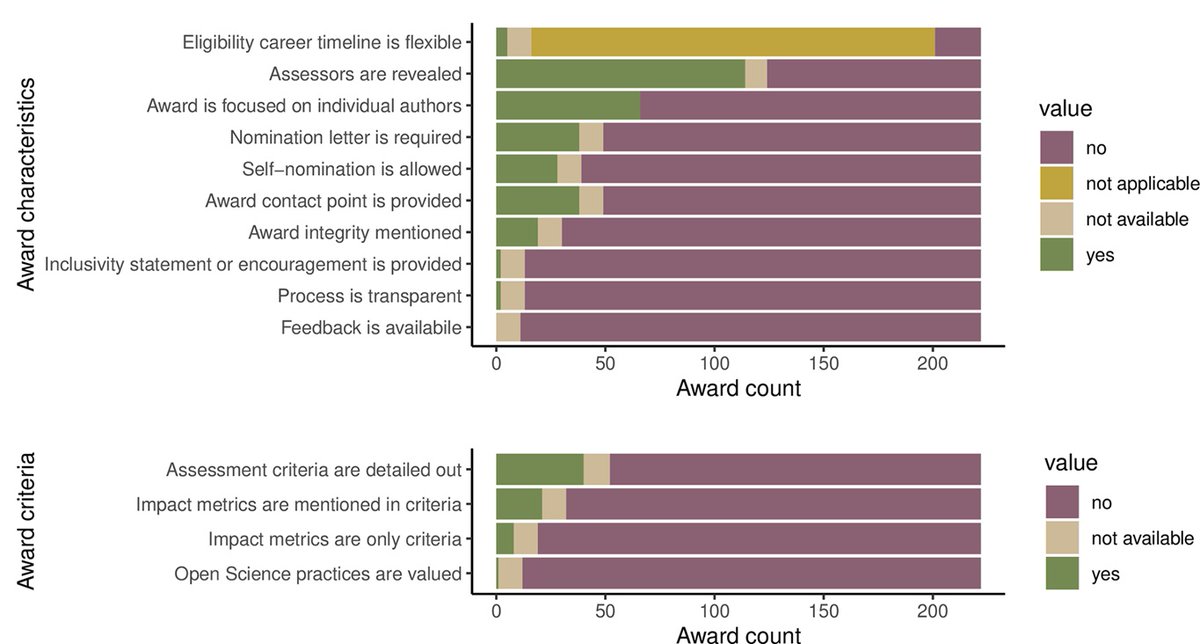
In a new paper led by Losia Lagisz, we find that 222 “Best Paper” awards across 27 subject areas lack transparency, inclusivity, and support for Open Science. Of particular concern, concepts that align with Open Science were almost absent from assessment criteria ☹️
How "open" are "best paper" awards? @itchyshin &co use cross-disciplinary data to explore the level of #transparency of publicly available awards, finding that they may propagate existing #reproducibility crises & inequities in science #PLOSBiology https://t.co/YPtn4s2JYm
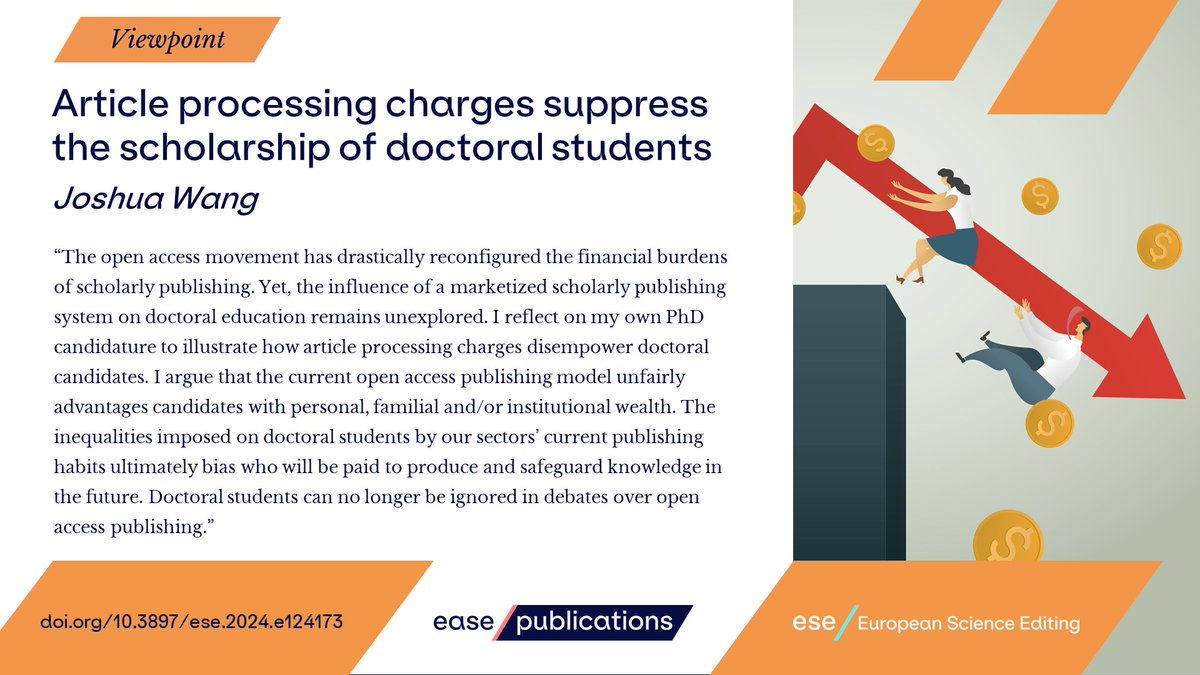
In this new Viewpoint in @Eur_Sci_Ed, Joshua Wang argues that the current open access publishing model unfairly advantages candidates with personal, familial and/or institutional wealth.
Read his paper for free in the journal now:
https://t.co/HKuRJWRRaT