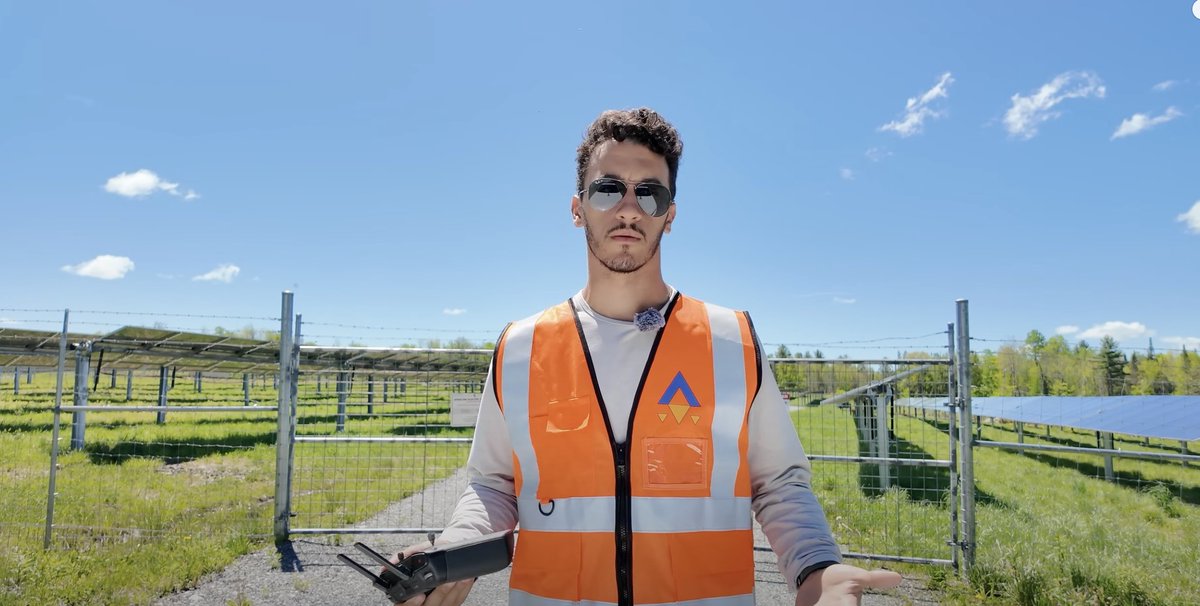
Microsoft says its $7.3 billion AI data center in Wisconsin is on track. We dispatched drones to investigate.
Ground Truth is a series we'll release every two weeks until Fairwater Wisconsin goes hot. Episode 1 is out now.
A ton remains fundamentally misunderstood about the physical footprint of the data center boom. A single drone tells the story of a single asset.
5000 drones tells the story of the sector. We monitor every hyper-scaler asset globally.
Tune in tomorrow for the first chapter
Thermal drone footage captured by Floodlight shows Elon Musk’s AI power plant flouting clean air regulations, with images confirming xAI is continuing to defy EPA rules in Mississippi to power its flagship data centers.
https://t.co/xMMETSMA8M
Huge uncertainty on Ford Glendale going forward. Will they make progress on transitioning from EV batteries to Data Center batteries? Will the retrofit be done in time to produce 20 GWh by late 2027?
Ford Glendale is one of many facilities we monitor on a monthly basis.
🦔 Ford's $5.8 billion battery plant in Glendale, Kentucky is sitting idle just four months after opening, with 1,600 workers laid off. The facility was designed to produce EV batteries but Ford is pivoting to energy storage systems for utilities and data centers instead.
Ford cited slowing EV demand and a shifting regulatory landscape. Projections that once had EVs at 45% of US auto sales by 2030 have been revised down to 9-18%. Kentucky's governor blamed federal policy changes for draining consumer interest just as billions were being invested in domestic battery plants.
My Take
There's a lot of political finger-pointing here, but underneath it is a familiar story about demand forecasts that didn't hold up. Ford made a massive capital bet on EV adoption hitting 45% by 2030. That number is now somewhere between 9 and 18 percent. The gap between those projections left 1,600 workers without jobs and a brand new facility with nothing to produce.
The pivot to energy storage for data centers is interesting. We've been covering how AI infrastructure is consuming everything from hard drives to electricians to generators. Now it's absorbing battery production capacity that was built for cars. Ford says a separate facility focused on energy storage could open in late 2026 and employ 2,100 workers. Whether that materializes remains to be seen. For now, workers who left stable careers for what they thought were long-term manufacturing jobs are facing uncertainty again. The projections changed, the policies shifted, and they're the ones left holding the bag.
Hedgie🤗
Sun Powered, Sky Verified ☀️
Glow is excited to announce its partnership with @raadlabs, a leading DePIN intelligence network.
Raad ensures every project is newly built solar, verified onchain, and has a real impact you can see from above.
Here’s why this matters 👇
1/8
@raadlabs has an enormous commercial opportunity for a drone pilot near Brisbane, Australia.
10 sq. km. of RGB and thermal mapping of solar farms.
If you know someone, dm me
Until today, the American drone industry has been strangled by regulation.
The future of infrastructure inspection, emergency response, surveillance, and delivery has always been autonomous.
But that future just got pulled forward five years...
An irreverent cohort of new DePIN entrepreneurs are ruffling feathers with a bold strategy: build revenue-generating businesses before launching tokens.
While many will take to the streets to protest this vile repudiation of the status quo, just stick with me.
Whereas DePIN 1.0 was defined primarily by token emissions, DePIN 2.0 will be defined by a return to real business fundamentals: product-market fit, unit economics, CAC, revenue, cash flows.
That “DePIN tokens are down” is actually not a valid incrimination of anything. Alts are down and DePIN has lost the sexy bid.
But this was always destined to happen. DePIN is actually the least sexy, and in the long run will be the most fundamentally priced sector. The most successful DePIN projects will feel unsexy because they’ll operate like infrastructure. They’ll deliver fundamental resources with the reliability of a utility.
But, in time, some DePIN tokens will rise from the ashes. And those tokens belong to the platforms that are good businesses today and will become great businesses due to their surgical deployment of a token and even more surgical accrual of value to that token.
I think DePIN 2.0 - The Business Generation - broadly looks like this:
1. Teams first figure out what works, and what doesn’t work before releasing the beast
2. They always generate substantial revenue before releasing the token
3. Rather than “order hardware and deploy anywhere”, incentivized build-out is a) phased b) tightly mapped against revenue scaling units (typically by geography)
4. The token’s purpose is simple and easy to understand for deployers, investors, and speculators
5. Token sinks are more abundant than token faucets
6. The primary token sink is revenue accrual
7. Emissions schedules are adaptive, not fixed from t=0
8. Apps are built without tokens, infrastructure to support the app is built with tokens
Decentralization enables key properties that truly global systems require: censorship resistance, capital formation, and the ability to permisionlessly build applications on top. We’ve spent too much time navel gazing about complex token incentives models and pursuing “decentralization” as if it’s some holy principle.
Nobody cares about decentralization in and of itself. What we need to care about is building generational companies, that grow every year, and generate a lot of cash.
A great overview of how Raad is positioning pilots to win.
Tune in to see drone creator Dylan Gorman source, plan, and dominate a thermal/RGB dual capture for one of Raad's commercial solar clients.
Link in comments
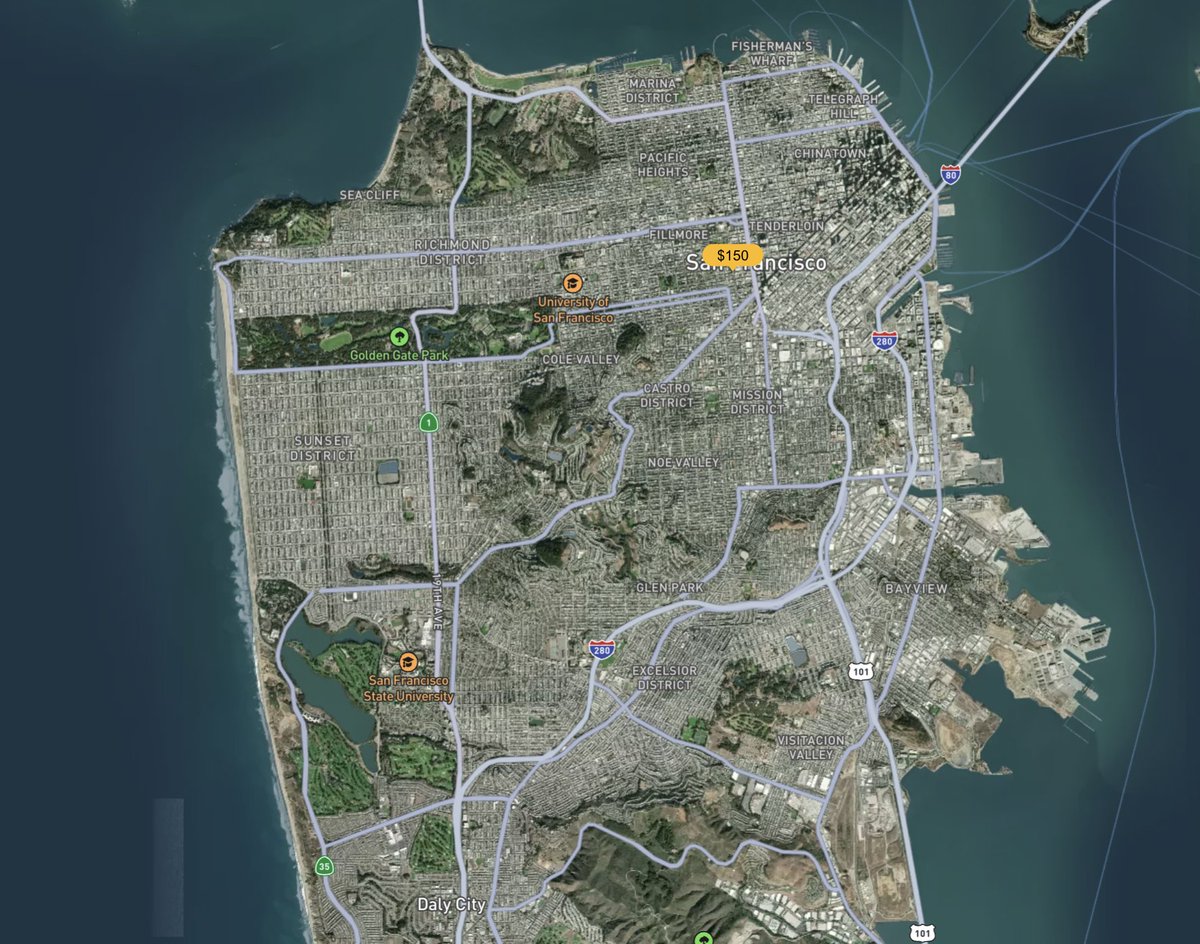
@raadlabs just posted a new mission for Part 107 drone pilots.
Survive 20 minutes, acquire some cinematic shots, and we’ll Venmo you $150 and a tetanus booster
Link to mission in comments
@raadlabs stands on the shoulders of gig economy giants. AirBnB, Uber, and DoorDash all tried in vain to share upside with their best vendors.
Tokens unleash meritocracy on labor markets, eroding the barrier between capital and labor.
Pilot-owned drone networks, let's get it
The gig economy has taught us that strong incentives help coordinate human behavior on a large scale
With the rise of Decentralized Physical Infrastructure Networks (DePINs), @raadlabs Co-Founder @Lempheter believes the most effective way to scale communities of niche labor is to use crypto to reward participants with upside in the network they help create
TJ joins Mined with CoinFund hosts David Pakman and Bobby Beniers to chat about human capital networks, DePIN tokenomics, and how Raad is onboarding drone pilots to crypto
They cover:
- Defining decentralized human capital networks (5:59)
- Building a drone pilot-owned community (12:15)
- Incentivizing with tokens (20:26)
- Coordinating niche labor (37:01)
Don’t miss the latest episode of Mined with CoinFund, available on Apple, Spotify, and YouTube
https://t.co/STginlIPgM
https://t.co/dxaoTnMCTn
Excited to head up @raadlabs as CEO and Co-Founder. At Raad, we rethink how weather and climate data is created and modeled.
A la DePIN, Raad mobilizes the community to do the sensor buildout, providing better ground truth data for businesses and government to act on.