There's a useful definition of gain-of-function in Dr. John Oxford's (leading UK virologist and vaccinologist) latest paper on the origins of the Spanish flu "Experimental studies designed to engineer mutations in a virus, studies which are known as ‘gain of function’..." see https://t.co/KRX3dzSaHd
Every person deserves to be remembered especially those who served during the First World War.
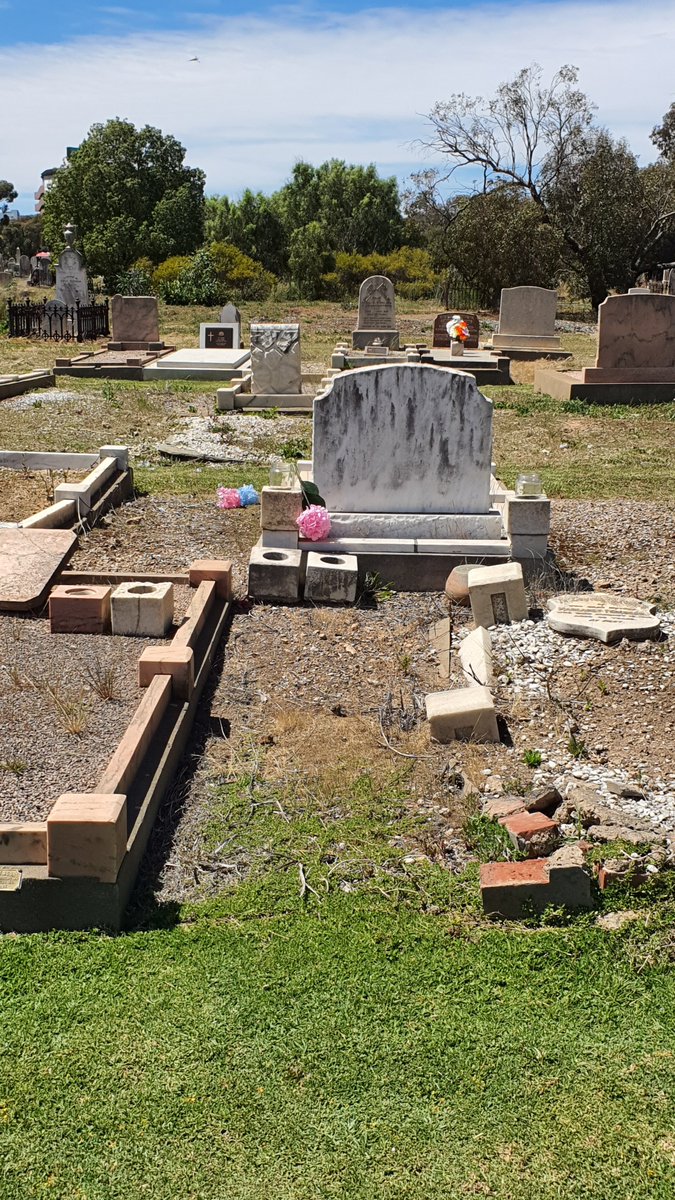
Yet across South Australia, there are thousands of graves with no markers—no names, no stories, no place for loved ones to come and grieve. These are mothers, fathers, sons, and daughters who, for many reasons, were laid to rest without a headstone.
The Headstone Project South Australia exists to change that.
We are a community-driven initiative dedicated to providing simple, respectful headstones for those who would otherwise remain forgotten. A headstone is more than stone—it is recognition, dignity, and a permanent place where memories can live on.
Without it, families are left without closure. Future generations lose connection to their history and people risk being forgotten entirely.
Your support will help us:
•Purchase and install headstones
•Engrave names and dates with care
•Work with cemeteries and families to identify those in need
•Ensure every person we help is remembered with dignity
Even a small donation can make a real difference:
•$25 contributes toward engraving
•$100 helps fund materials
•$500 can go toward a full headstone
•$1500 completes a full headstone and plaque
Together, we can give people back their names.
If you’re unable to donate, please consider sharing this post. Awareness is just as powerful.
Let’s make sure no one is forgotten.
They served. They deserve to be remembered.
https://t.co/alvPPP2Gpl?
This photograph from the Australian War Memorial's collections, taken on 12 June 1919, shows "a corner of the Australian cemetery" in the Tidworth Military Cemetery in south-east Wiltshire, England, where 48 members of the Australian Imperial Force who died in the Tidworth and Fargo Military Hospitals during the 1916-1917 influenza ( "purulent bronchitis") epidemic and 82 A.I.F. members who died during the Spanish influenza pandemic of 1918-1920 were buried. They include one of the earliest A.I.F. fatalities from the Spanish flu in England, Corporal William James Giles (Australian Tunnelling Corps) who died the first wave of the pandemic in mid-March 1918. The original grave markers were later replaced with the standard white marble military headstones by the Commonwealth War Graves Commission found throughout cemeteries under the care of the CWGC.
Another activity that's been keeping me busy is conducting investigations for The Headstone Project South Australia. When we identify a First World War veteran buried in an unmarked grave in this State, we thoroughly research their family background and military service and carry out an exhaustive search for living descendants. In this State, a memorial cannot be erected at a grave site for which there is an interment right in force unless the interment right holder or, if they have died, a person entitled under the Burial and Cremation Act 2013 to enforce or exercise the interment right, agrees to the placement of the memorial.
It's been a few months since I last posted, that's because I've been spending a lot of time on research for my next book 'War and Fever: The A.I.F. and the Fatal Flu of 1918-1920'. Having finished compiling a list of fatal casualties of the Spanish influenza pandemic in the A.I.F., I then decided to do the same for the 1916-1917 influenza epidemics with "purulent bronchitis" which affected the Allied armed forces between November 1916 and April 1917 in France and England. I was surprised to find how many deaths there were in the A.I.F. during that period, many more than I expected.
After the death of James Thomson from the the complications of the Spanish flu (i.e. broncho-pneumonia) in the Adelaide Hospital on 24 January 1919, the South Australian Government took over the Jubilee Exhibition Building on North Terrace and established an Influenza Isolation Hospital within it. The first influenza patients were moved there on this day, 2 February, in 1919.
James Thomson died from bronchopneumonia following influenza in the Adelaide Hospital on 24 January 1919. It was on this day, 25 January, 107 years ago. that he was buried unceremoniously in an unmarked grave in Adelaide's West Terrace Cemetery.
He was the first of hundreds of fatal victims of the flu pandemic that would be buried in that cemetery in the course of 1919, with most of the deaths taking place in May-June and August-September of that year.
To this day, Thomson's grave remains unmarked, despite an application for Full Commemoration having been lodged with the Office of Australian War Graves back in 2022 by The Headstone Project South Australia.
As Sir William Gladstone famously said, “show me the manner in which a nation cares for its dead, and I will measure with mathematical exactness the tender mercies of its people, their respect for the laws of the land, and their loyalty to high ideals”.
It was on this day, 18 January, in 1919 that the first notification of pneumonic influenza (i.e., the Spanish flu) took place in South Australia under the Public Health Act 1898. Hence it could be said that the pandemic began here on that day.
Three days after the notification of his influenza (21 January 1919), James Thomson, a 28-year old First World War veteran of the Gallipoli campaign who had survived a gunshot wound to his chest after the landing at Anzac Cove, was admitted to the Adelaide Hospital.
The photograph below, sourced from the State Library of South Australia, shows Flinders Ward of the Adelaide Hospital where Thomson and other influenza patients were accommodated before the State Government established an influenza isolation hospital.
I've been a bit remiss when it comes to posting here lately. I announced on other social media platforms a while ago that I have started working on a new book, War and Fever: The A.I.F. and the Fatal Flu of 1918-1920.
According to the Australian War Memorial, 1,238 members of the First Australian Imperial Force died of the Spanish flu (1918 H1N1 Influenza A), but I have identified well over 1,400.
There were also at least 19 deaths in the Royal Australian Navy and 10 among Australian Munition Workers.
At the moment my research is centering on identifying all fatal victims, including members of the A.I.F. who died after discharge in Australia and elsewhere and are not registered on the AWM Roll of Honour.
Labor-lite Liberals with Ley is not the answer. I suggest you look at your pathetic primary vote which will soon be overtaken by One Nation unless you change course. You have abandoned your natural constituency and until you acknowledge that, LNP will continue to lose support until you are consigned to political oblivion.
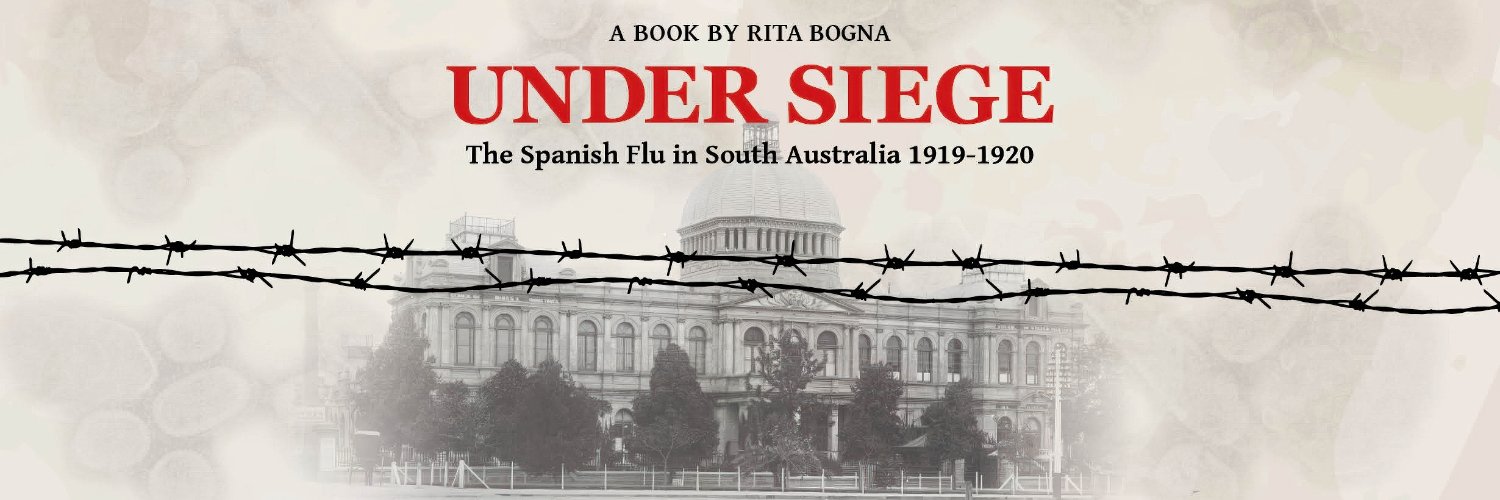
I am gratified that my book, Under Siege: The Spanish Flu in South Australia, 1919-1920, has been included in Professor Peter Stanley's latest book, Beyond The Broken Years: Australian military history in 1000 books (UNSW 2024).
I thank the Seaford Probus Club for their hospitality yesterday. My talk about The Headstone Project South Australia was well received. I had a small but receptive and attentive audience. After the talk I was sad to hear a tragic story. A member told me that his great-uncle enlisted in the British army at the age of 16 and fought in the terrible Battle of the Somme. He was wounded in action, and returned from the Great War a different person. He never recovered from his experiences and tragically ended his life by his own hand in his 20s. I also thank Seaford Probus for their kind and generous donation to The Headstone Project South Australia in lieu of a speaker's gift.
Looking forward to giving my talk to Seaford Probus Club tomorrow on the important work of The Headstone Project South Australia finding First World War veterans buried in unmarked graves in this State and giving them a headstone with a plaque commemorating their war service.