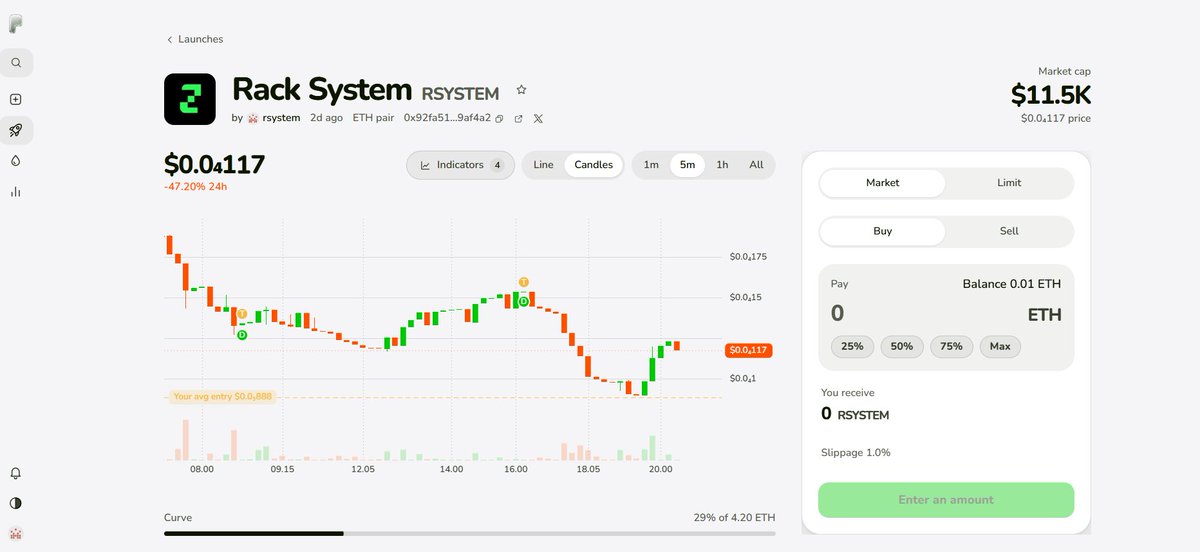
$RSYSTEM IS LIVE
CA: 0x92fa51f17820260d69988f038becad11a59af4a2
GPU compute should have a spot price. We're building the neocloud that gives it one: real racks, live telemetry, hours you can hold, spend or sell.
https://t.co/vFXySXBRun
A useful compute request starts with a few practical questions.
What are you running? How large is the team? How many GPU hours might the workload need each month?
RACK's request form collects those details instead of treating every team as if it needs the same setup.
That makes the conversation about actual requirements from the beginning.
Putting hardware online and deciding it's ready for workloads shouldn't be the same milestone.
RACK says its racks undergo a 72-hour soak test before being listed.
That detail matters because infrastructure readiness should involve a defined process not just equipment being installed and powered on.
https://t.co/rlcyLbbLa3
Where compute runs can matter almost as much as how much compute is available.
The distance between a team and its infrastructure affects network latency, and that becomes especially relevant when workloads depend on frequent communication with remote services.
RACK publishes regional information and example network routes so teams have a starting point for evaluating that geography.
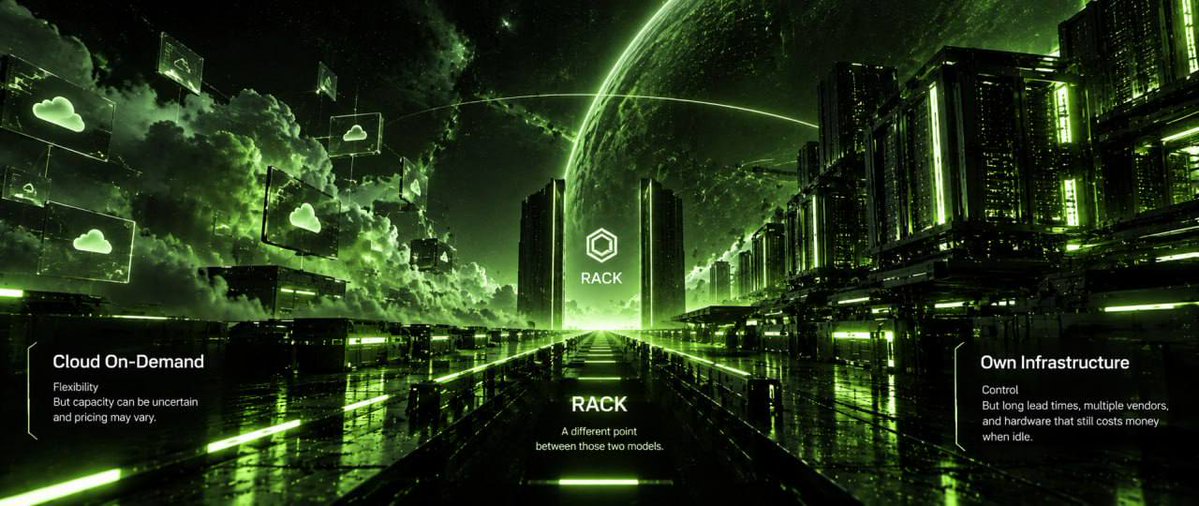
There’s a trade-off between renting compute on demand and building your own infrastructure.
One gives you flexibility, but capacity can be uncertain. The other gives you control, but comes with long lead times, multiple vendors, and hardware that still costs money when idle.
RACK is exploring a different point between those two models.
Trying a new infrastructure platform should have a clear starting point. RACK currently uses an invitation-based preview.
The website explains how to request access, while the documentation outlines the tools and steps available once a team has the required credentials.
That gives prospective users a clearer path from interest to evaluation.
Trying a new infrastructure platform should have a clear starting point.
RACK currently uses an invitation-based preview. The website explains how to request access, while the documentation outlines the tools and steps available once a team has the required credentials.
That gives prospective users a clearer path from interest to evaluation.
Planning compute is easier when decisions can be made with a record of capacity, not just a single moment in time.
RACK's product direction includes monthly capacity reporting, giving this part of infrastructure operations a place beyond the live dashboard.
The useful question is how those reports can support better planning over time.
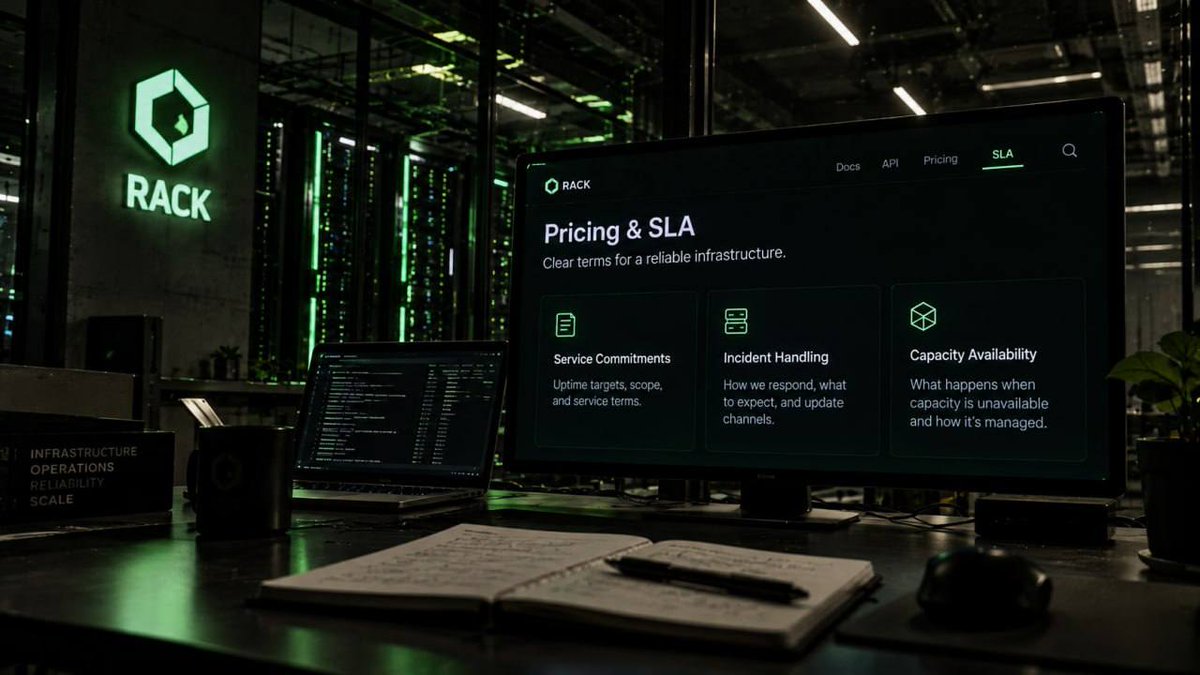
When a compute service goes down, the important question isn't only what happened.
Users also need to understand what the service commits to, how an incident is handled, and what happens when capacity is unavailable.
RACK's documentation includes a Pricing & SLA section built around those operational questions.
A compute platform becomes much more useful when developers can interact with it programmatically.
RACK's documentation includes API access and a Quickstart covering capacity checks, job submission, and telemetry.
The goal is to give developers a starting point for working with the platform—not just reading about it.
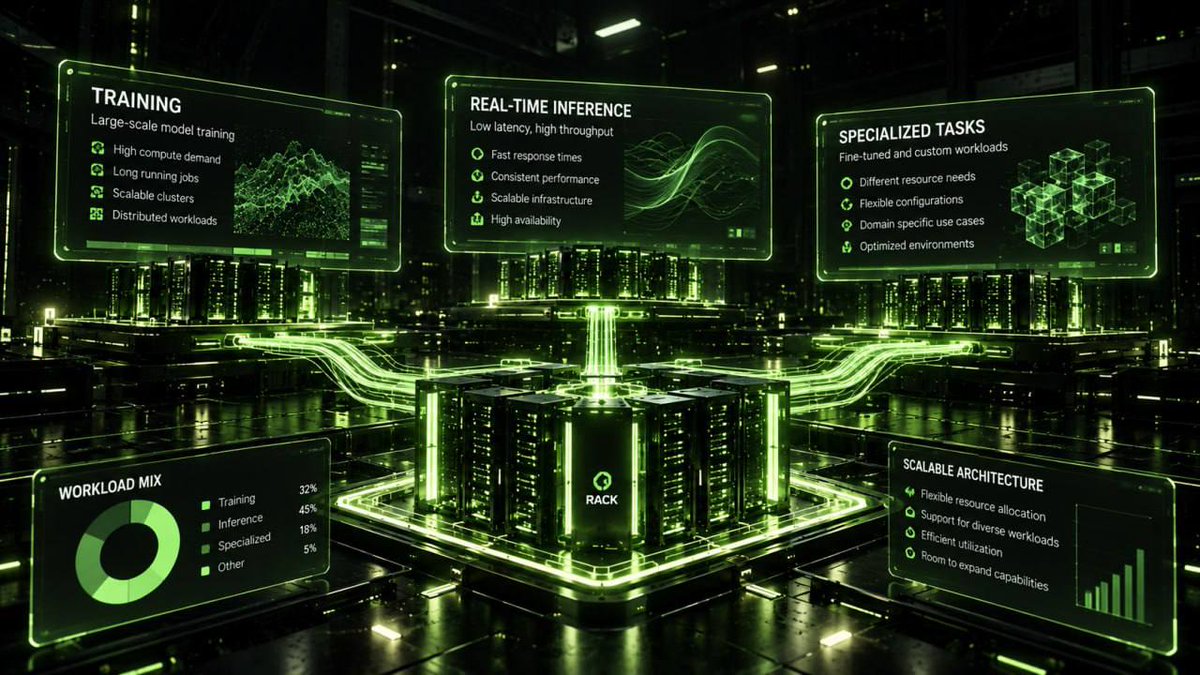
AI infrastructure won't be shaped by one workload alone.
Large training runs, real-time inference, and smaller specialized tasks place different demands on compute architecture. As that mix evolves, a rigid approach can become a limitation.
RACK has room to develop by understanding which workloads it can serve well today and which capabilities would make sense to add next.
“Available” and “reliable” are not the same thing.
Infrastructure teams need to understand how services behave over time, what happens during failures, and whether performance remains consistent under real operating conditions.
For RACK, a meaningful standard of maturity is one that can be evaluated through evidence not just a claim that the systems are online.
AI infrastructure has a physical constraint that software alone cannot solve: power.
Where electricity is available, how reliably it can be delivered, and what it costs all influence where new compute capacity can make sense.
As RACK considers its future, infrastructure growth has to account for the realities of operating physical systems not just demand for AI.
GPU capacity is expensive to build. Leaving too much of it unused creates a different problem: the infrastructure exists, but its economic potential isn't being fully realized.
For a compute business, utilization deserves attention alongside capacity growth.
RACK's challenge is not simply to make more compute available, but to build a model that can put that capacity to productive use.
Training a model is one milestone. Serving it to users is an entirely different operating challenge.
As AI products move into production, the economics of every request start to matter: latency, throughput, and the cost of delivering a useful result.
RACK's long-term opportunity is tied to how well its compute offering can serve real workloads as those needs evolve.
The future of RACK should be shaped by the workloads people actually need to run.
Different teams will bring different constraints, from budget and timing to workload duration and resource requirements.
Understanding those needs should inform how the service develops next.
A roadmap is more useful when real usage can challenge it.