A brand new podcast coming out of the @ImagingCDT at King's and Imperial College London. Tune in to hear all about biomedical engineering and imaging sciences.
Very proud to present my PhD data so far in the form of a poster at the recent @MithrasProject meeting and win a poster prize.
Thanks to @ImagingCDT and @KingsImaging as well as my supervisors Dr Tom Eykyn and @RickSouthworth for their support.
With the release of our latest episode - hosted by @Roykurtzbard and colleagues studying for Masters Degrees @KingsImaging, we have reached the milestone of 1500 downloads!
https://t.co/xPjFYGyyjz
Thanks to everyone for supporting us so far! Hoping to get more episodes out soon!
Listen to our first episode and subscribe to the @rad_pod ☢️ on iTunes https://t.co/rOgG2ulDQ2 to learn more about exciting research in science and medical imaging.
👉 #Episode on #Spotify: https://t.co/u6uWHVX3vr
👉 #Episode on #iTunes: https://t.co/tvDKuC64at
The conversation will include #datasafety, possible #biases and how to overcome #inequality in data representation in healthcare.
The link to the episode to follow!
We are a group of enthusiastic MEng/MSc students studying Healthcare Technologies at King’s College London. #RadioNuclearPodcast ☢️ has kindly agreed to host our episode featuring @AtoAndyKing about important ethical considerations in #ArtificialIntelligence
#RadioNuclearPodcast ☢️ will soon host our episode about important ethical considerations in #ArtificialIntelligence. Please follow the link below to participate in our one minute anonymous survey to establish the baseline for #publicawareness of #AI.👉 https://t.co/SCOlGwBl2x
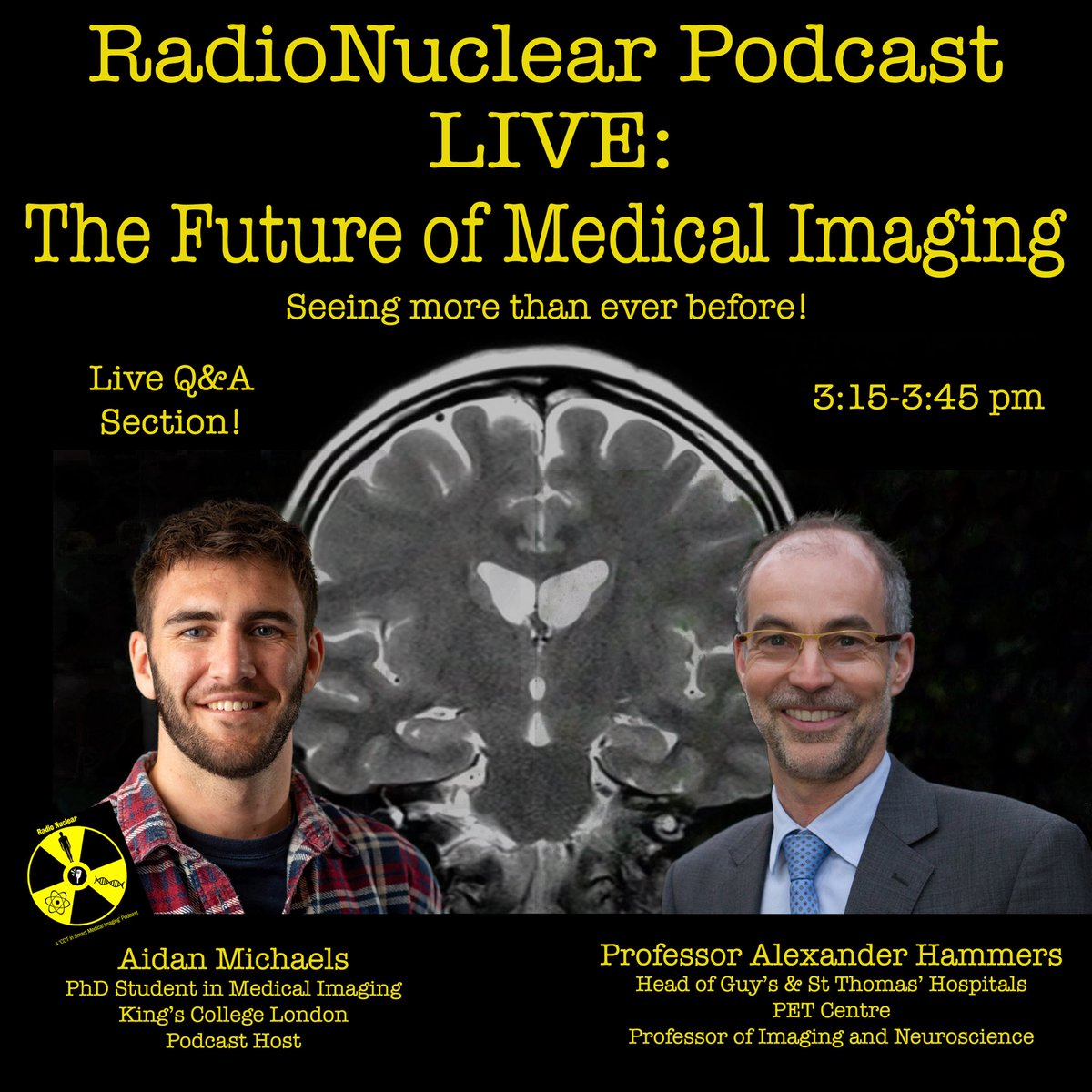
Here’s a little snippet from the latest episode with @Hammers_Alexand and @AMMichaels - here Prof Hammers describes how a targeted radiotracer is much like a key 🔑 with a torch 🔦 - very precise to a specific target/lock 🔒 and bright in a dark setting (our body)
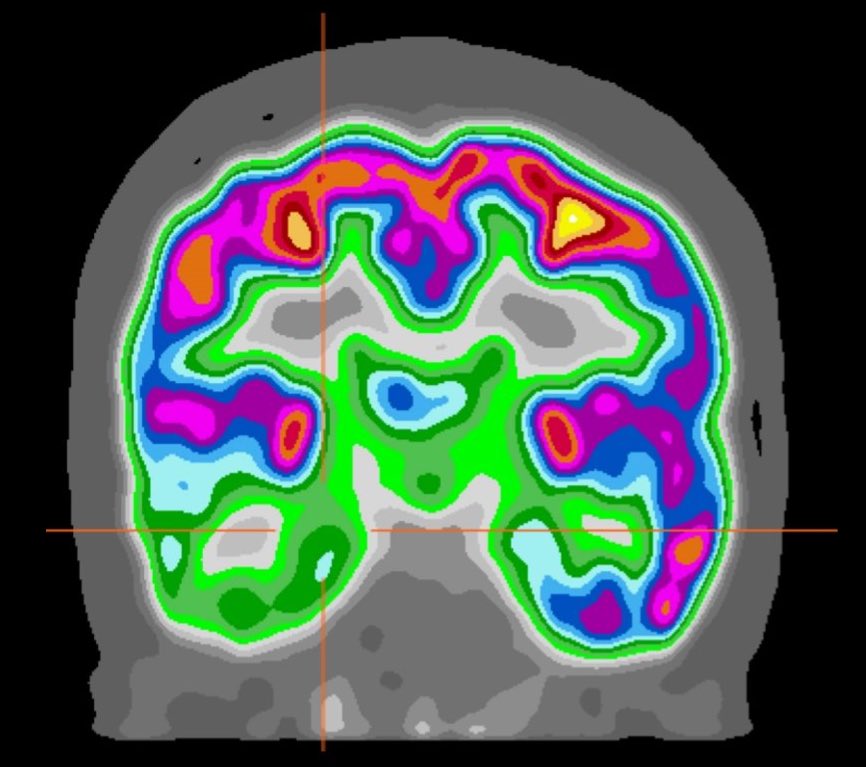
We then reference the resolution differences between magnetic resonance imaging (MRI, 1st image) at roughly 7:7000 and PET imaging (2nd image) at 7:7,000,000,000 (that’s 7 billion!!) - nanomolar sensitivity
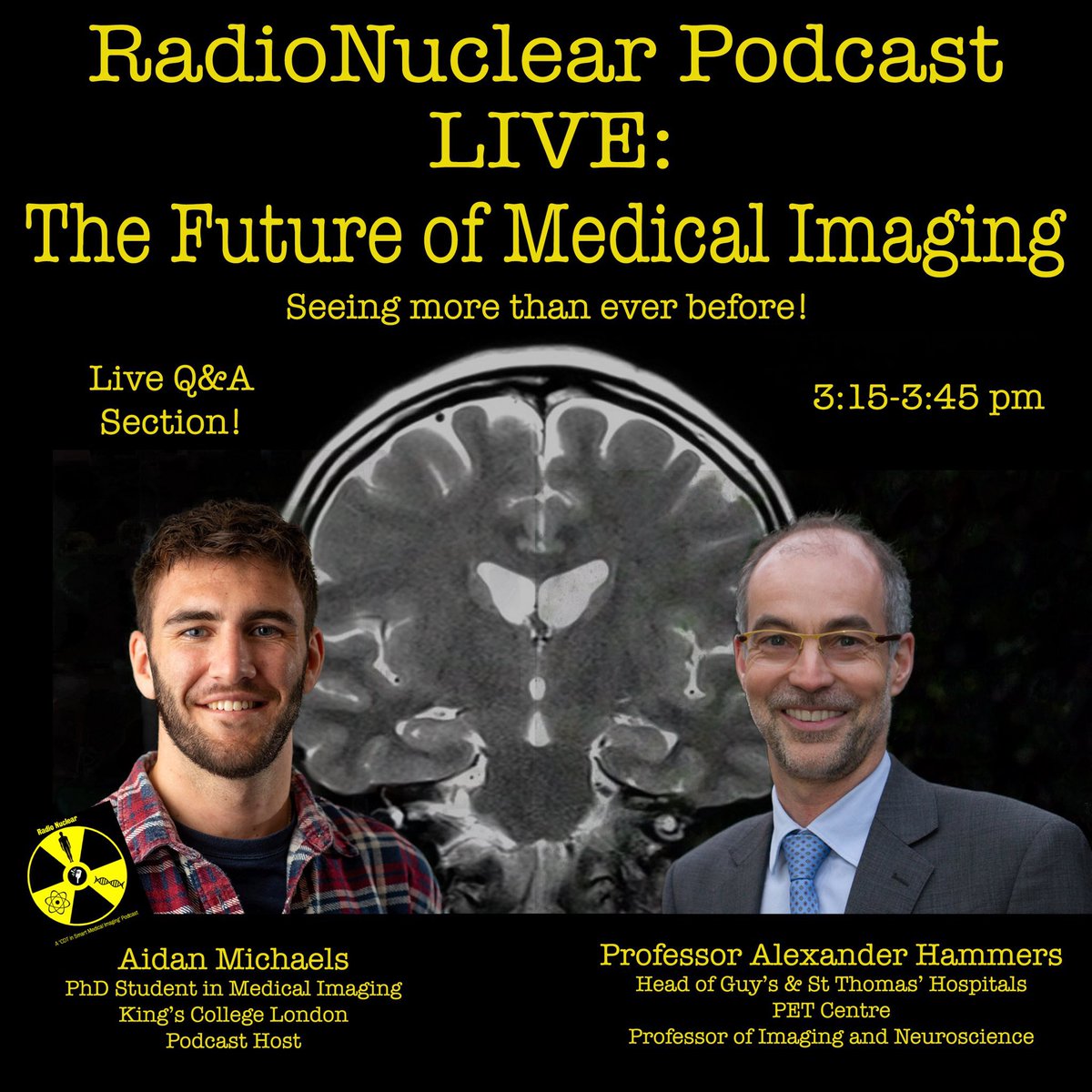
Our episode with Prof Alexander Hammers @Hammers_Alexand is out now! Please go and give it a listen!
It was a fantastic chat about positron emission tomography (PET), how it’s used in medicine and what the future looks like for PET in healthcare
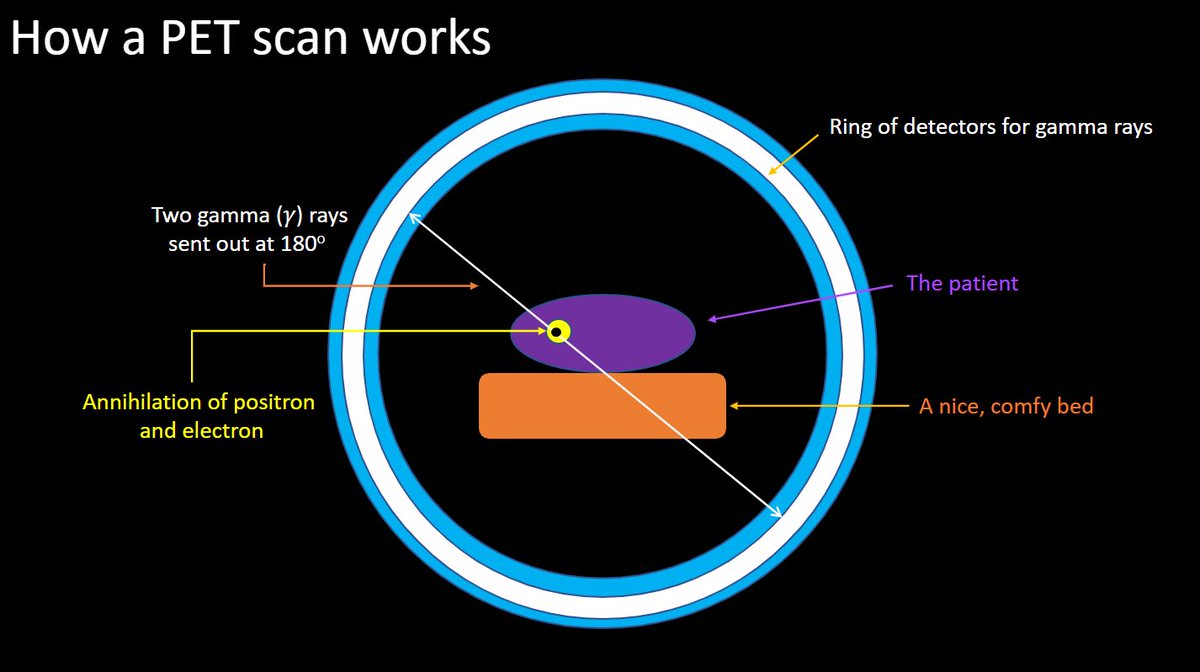
The first slide we refer to is this: how a PET scan works - note the annihilation of the positron and electron leads to the emission of two gamma rays sent out in directly opposite directions which is what is detected by the scanner ☢️
You can now listen to @rad_pod's interview with @Hammers_Alexand, recorded live at @newscientist earlier this year.
Listen in for an informative chat between @AMMichaels and Prof Hammers about #PET imaging 👇
https://t.co/N3oCR0dtA2
We had a really great question during our LIVE @newscievents podcast with @Hammers_Alexand
☢️“Are there any side effects to PET?” 🤔
⬇️ Find the answer(s) below! ⬇️
Yes. It does use ionising radiation which can be harmful.
A typical brain PET scan will give you a radiation dose of about 2-5mSv. That is about as much as the background radiation (from rocks, space etc) in 1-2 years in the UK.
It is estimated that the risk of developing cancer over one’s lifetime from such a dose is up to about 0.03%. This has to be compared to the standard (background) risk of developing any cancer during one’s lifetime which is ~50%.