"By curating immersive sound experiences that transcend genres and provoke contemplation, we have an incredible opportunity to elevate the artistic discourse"
What changes when a familiar path is heard rather than seen? Radio Lear’s first Weird Walks-inspired episode begins with a music-led journey through field sound, folk memory and the strange atmospheres of everyday places
https://t.co/rMAoldMDv7
Could a regular online space help community media practitioners share practical ideas on AI, storytelling, platform access and Foundational Media? Community Media Exchange starts Wed 17 June, 4.00pm BST, then fortnightly https://t.co/QCZVZdY1bH
What happens when a room is held open for people to speak, listen and try something aloud? Radio Lear shares voices from Word at Attenborough Arts: poetry, atmosphere and the practice of attention in an open-mic space https://t.co/K9TCs88K7V
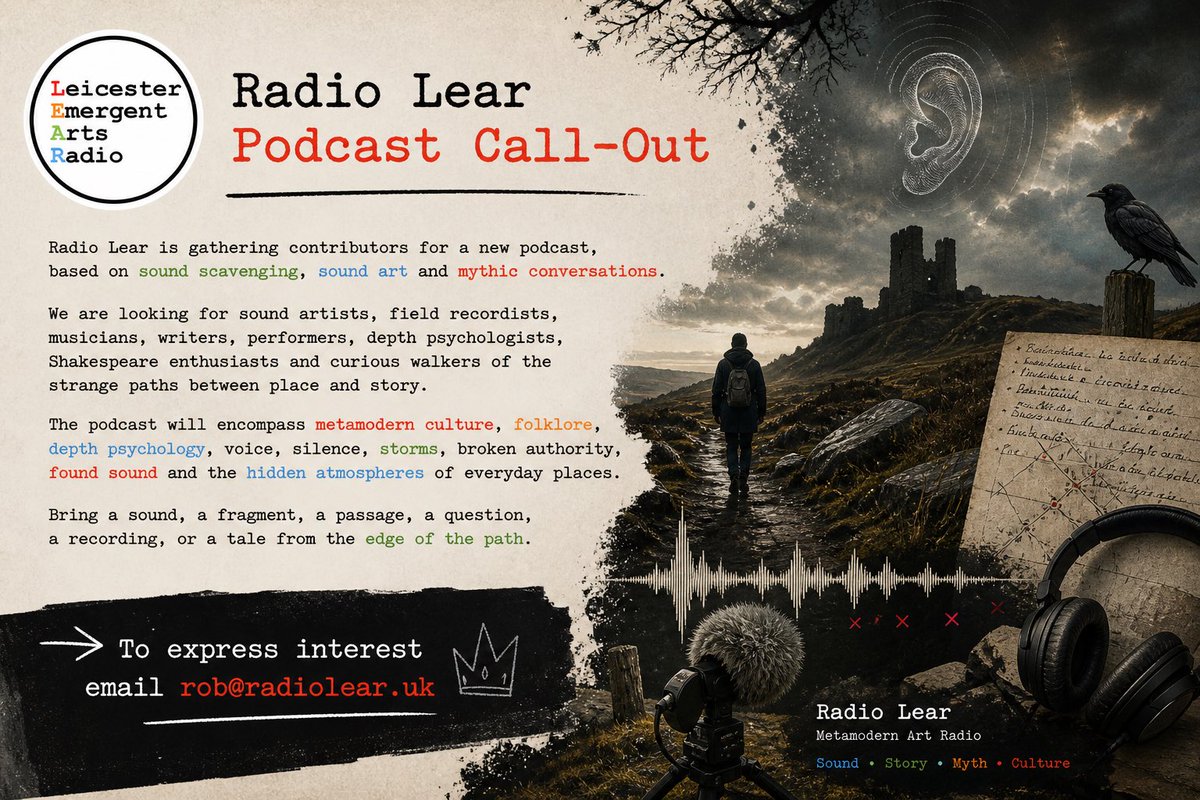
Radio Lear is seeking sound artists, musicians, writers and producers working with experimental sound, field recording, folklore, atmosphere and creative audio. Broadcast on DAB across Leicester, Loughborough and Rugby, and online https://t.co/PdR6mNnnEb
Could your skills in listening, writing, photography, events or community work help capture local voices at Riverside Festival with Evington Echo, Soar Sound and Decentered Media? https://t.co/CojMqaXhb0
Could you help tell the stories that matter in Evington? Evington Echo is looking for Community Reporters to write, interview, photograph and share local voices. No publishing experience needed. Transferable skills welcome https://t.co/sd41F6TPh2
Could your experience in community media, journalism, podcasting, oral history, events or public engagement help Soar Sound gather local voices at Riverside Festival? Experienced volunteers are invited to support our Castle Gardens presence https://t.co/quWh9U7Vw2
Could you build experience as a local community reporter while helping Soar Sound gather Leicester’s voices at Riverside Festival? Decentered Media is inviting experienced volunteers with skills in media, events, heritage or public engagement https://t.co/sKJJHz1ZL3
What kind of local media helps people feel heard, informed and connected? Thanks to everyone who joined the first Community Media Café at Bishop Street Chapel Café in Leicester. The conversation continues every Thursday, 10.30am–12pm https://t.co/oY26rTNIUq
W.B. YEATS ON MAGIC
‘I believe in the practice and philosophy of what we have agreed to call magic…in what I must call the evocation of spirits, though I do not know what they are, in the power of creating magical illusions, in the visions of truth in the depths of the mind when the eyes are closed; and I believe in three doctrines, which have, as I think, been handed down from early times, and been the foundations of nearly all magical practices. These doctrines are:
1. That the borders of our mind are ever shifting, and that many minds can flow into one another, as it were, and create or reveal a single mind, a single energy.
2. That the borders of our memories are as shifting, and that our memories are a part of one great memory, the memory of Nature herself.
3. That this great mind and great memory can be evoked by symbols.’
W.B. YEATS
In Magic, 1901 essay
Art: Yeats’ magical objects from his membership of the hermetic order of the Golden Dawn, personal photos
What emotional atmosphere links Japanese ambient pop, technopop, and cinematic melancholy? This new Distraction Therapy mixtape drifts through memory, neon cities, reflective solitude, and futures that still feel unfinished. Listen on most podcast platforms.
https://t.co/jZWNy37nVG
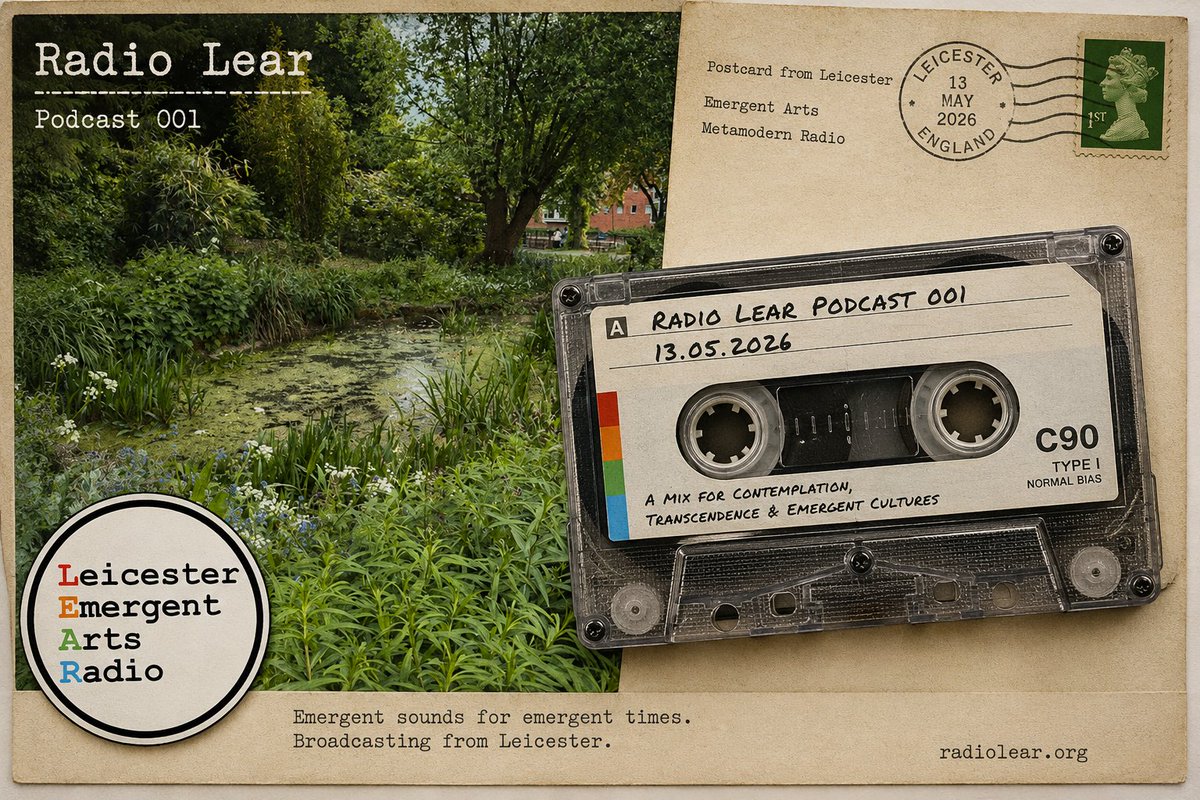
Why are we drawn to ambient drift, post-industrial memory, contemplative electronics & emergent sound cultures. This episode of the Radio Lear Podcast moves through Craven Faults, Laraaji, Floating Points, Kaitlyn Aurelia Smith and more https://t.co/CfFjDgNV3h
There are untold numbers of stories that date back into the ancient times. Can we learn from them as we engage with contemporary culture, arts and media?
Myth Bearers – Beyond Identity: What changes when we see people not only through identity, but as bearers of inherited stories, symbols and responsibilities? Could this offer a more grounded way to think about social cohesion, difference and shared civic life? https://t.co/39sRd8F1sy
What might change if we understood people not only through identity, but as bearers of inherited stories, symbols and responsibilities?
Identity matters. It helps us recognise difference, inequality, social position and lived experience. It gives language to forms of exclusion that might otherwise remain unnamed. But is identity enough to explain how people make meaning, form loyalties, inherit obligations, imagine futures, or participate in a shared civic life?
What happens when identity becomes the main lens through which we see one another? Does it help us understand people more fully, or can it sometimes reduce them to fixed categories, competing claims and hardened positions?
A myth-bearing view asks a different set of questions. What stories are people carrying? What family, cultural, religious, national or local narratives shape their sense of dignity and belonging? What inherited images of home, duty, honour, freedom, sacrifice, care or justice continue to guide behaviour, even when they are not openly named?
Could this offer a more grounded model of social cohesion?
A society cannot be held together by labels alone. Nor can it be sustained by pretending that difference does not matter. But perhaps cohesion becomes more possible when we ask how different inherited stories might meet around a shared civic hearth.
The image of the hearthkeeper is useful here. The hearthkeeper does not erase difference, dictate a path, or demand that every story become the same story. The hearthkeeper tends the centre. The work is to sustain warmth, conversation, memory and responsibility so that people can participate in a common life without being stripped of depth.
Could this be a better model for intercultural life than either forced assimilation or unmanaged fragmentation?
What would it mean to welcome difference while also expecting shared responsibility? How do we create civic spaces where people are not merely represented as identities, but invited to contribute as bearers of memory, imagination and obligation?
And what stories are we already living by without noticing them?
The myth of progress. The myth of decline. The myth of victimhood. The myth of purity. The myth of the stranger. The myth of the lost homeland. The myth of the common good. The myth of the hearth.
Which of these stories help us build trust, reciprocity and shared belonging? Which keep us trapped in suspicion, grievance or separation?
Perhaps the task is not to move beyond identity by denying it, but to place it within a deeper frame. People are not only what they are called. They are also what they carry, what they remember, what they serve, what they fear, and what they may yet become.
Could a more humane social critique begin there?
Could community media help more people in Leicester share local stories, skills and ideas? Join Decentered Media’s Community Media Café, Thursdays from 14th May, 10.30am–12pm at Bishop Street Chapel Café https://t.co/9Le4RTTDx1