NEW @SearchlightInst x @NiskanenCenter collab from @apmechan and me: A look-back at Trade Adjustment Assistance.
As concerns over AI-driven job disruptions grow, key lessons can be learned from the program meant to support workers hurt by trade deals.
@ChuckCBPP Thanks, Chuck! Wage insurance has definitely been front of mind! In large part, thanks to @ReviseNRetweet, Brian Kovak, and Adam Leive's paper:
https://t.co/QY5TuiRl3u
It was great talking with @ShiraOvide about ways to prepare for AI-driven job disruptions.
Modernizing the unemployment system (better benefits, better administrative funding, and better data) would go a long way!
.@ShiraOvide: Modernizing state unemployment programs and improving data collection — such as tracking job titles and hours worked — could also help pinpoint which occupations are picking up steam from AI, said Will Raderman (@RadWill_), senior policy adviser at the Searchlight Institute.
https://t.co/Ed22aSxZds
On better data:
State quarterly wage records typically lack job title, job location, and hours worked info. States generally only collect job separation details when workers submit claims, when it should really be after every unemployment event.
.@ShiraOvide: Modernizing state unemployment programs and improving data collection — such as tracking job titles and hours worked — could also help pinpoint which occupations are picking up steam from AI, said Will Raderman (@RadWill_), senior policy adviser at the Searchlight Institute.
https://t.co/Ed22aSxZds
Once you sort through demographic change & use a consistent deflator over time, the story becomes more interesting: periods of stagnation to real median wages (1973-95, 2000-14, maybe now), followed by bursts of growth when we're near full employment (1961-72, 1996-2000, 2015-22)
@RadWill_ One of the great insights from this is there were two levels of caseworkers: TAA investigators determining whether the displacement due to trade. WIOA caseworkers who determine if training is appropriate based on supply of programs. The latter relates to this from my AI paper:
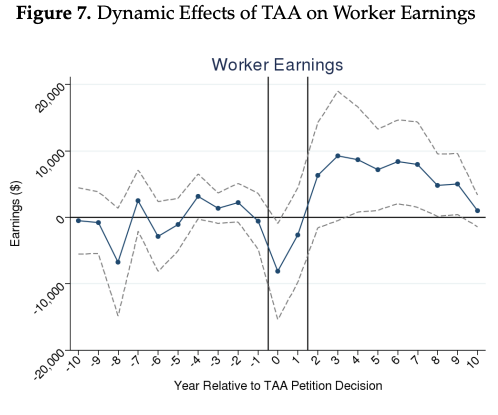
@alexolegimas@ho_ben@JulianDJacobs@GoogleDeepMind TAA worked much better than people think. Here's the main figure from my JMP using an examiner design (randomized judge IV). It was just underfunded in aggregate, and prior studies that folks index on had a treatment group released deeper into recession. https://t.co/ZbnwHO5CyE
The Work From Home revolution is still, years later, severely underrated as an economic shock. From a labor market & a business operations perspective of this era, it should be in the same conversations as AI. I'm glad more research is coming out on WFH. https://t.co/O2VW5nZhTV
In Searchlight’s polling, securing the border was seen as a “very important policy goal” for half of voters.
That includes 77% of Republicans and 47% of Independents.
But only 19% of Democrats.
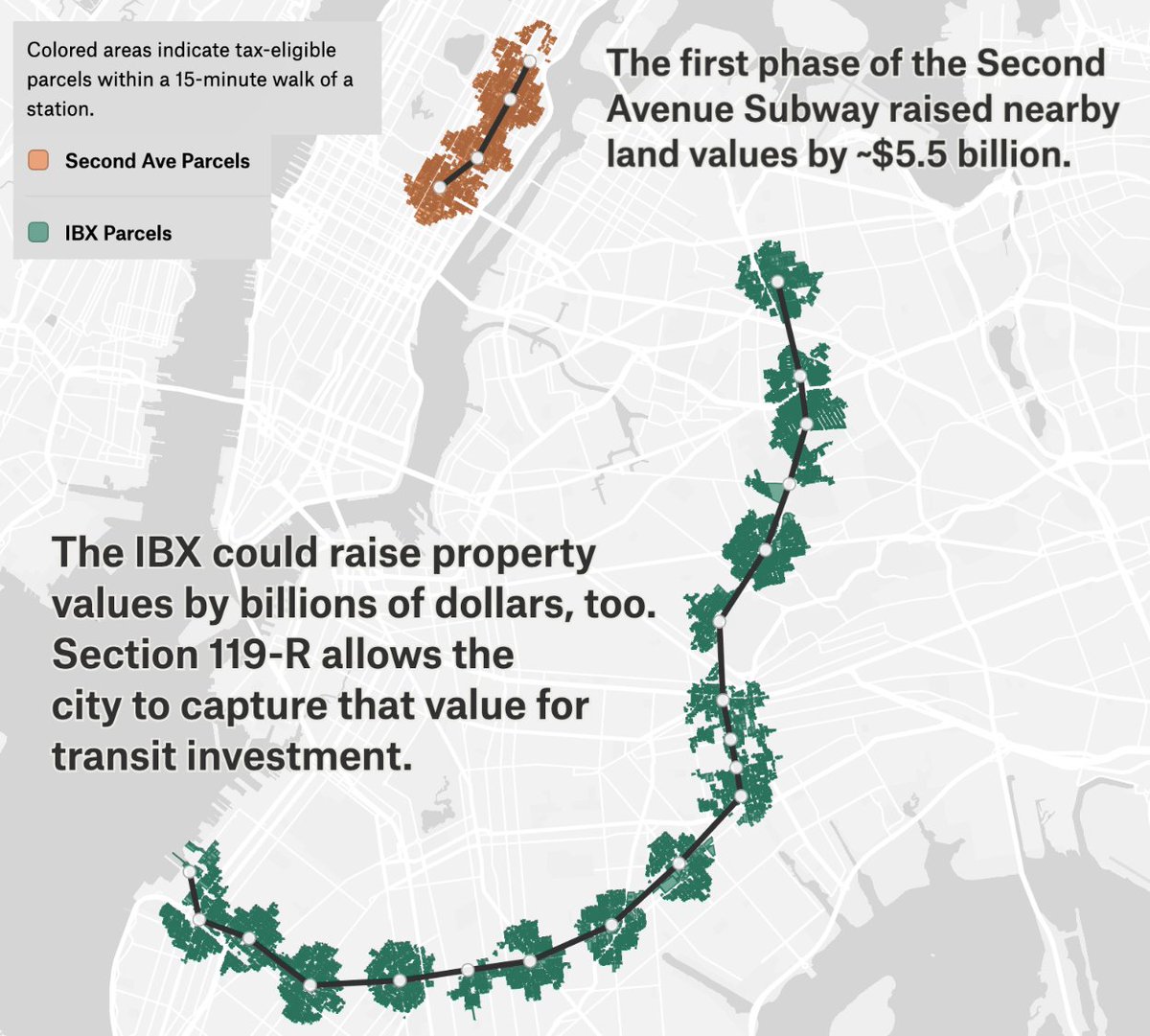
New York State just authorized a land value tax that could generate billions of dollars for new transit.
For the @NiskanenCenter, @aarmlovi and I wrote about how the renewal of § 119-r in the FY27 budget could unlock a virtuous cycle of infrastructure delivery in NYC.