Wilson’s phalaropes are a great example of a sex-role reversed species! In this species, males provide high levels of parental care, while females participate in extra-pair fertilization. #Behav338
Had the opportunity to see some Wilson's Phalaropes yesterday-- they're such weird and elegant birds!
Did you know that the brighter-colored individual is actually the female? So neat!
What a great example of intrasexual selection in the form of male-male competition! Because male reproductive success is typically limited by number of mates (due to a male-biased sex ratio), males often use weapons to engage in aggressive competition for females. #Behav338
What an interesting clip! Corvid birds will often pull on the tails of other animals to distract them from their food, so that the birds can step in and steal the food. This behavior appears to be innate, and it can occur individually or in groups. #Behav338
This spearing mechanism that the Anhinga uses for hunting is amazing! After piercing their prey, these birds toss their heads backward and engulf their prey head-first. #Behav338
Watching this Anhinga hunt for food was exciting but frustrating as he darted underwater in seemingly random directions. He was hard to follow, but after a while, he finally surfaced with this Mayan Chiclid. I could hardly believe I had captured the moment. #wildlifephotography
This is an amazing example of the way that animals use sensory systems such as chemoreception to assess their environments. These fire-prone lizards use their sense of smell to avoid and survive forest fires in the wild. #Behav338
In early spring, males of this common bee species swarm females in large groups called “mating balls.” From each of these clusters, only one male will be successful, and after mating, females will begin building nests. #Behav338
This is an excellent example of how anthropogenic noise is impacting animal communication. These bearded seals may need to alter the frequency or amplitude of their mating calls in order to be heard over this human-induced masking noise. #Behav338
During mating season male bearded seals can be heard far and wide 🦭 but as industrial noise in the #Arctic increases 🚢🔊 research shows they might not be loud enough. #underwaternoise#noisepollution https://t.co/pMtqL6ga9n
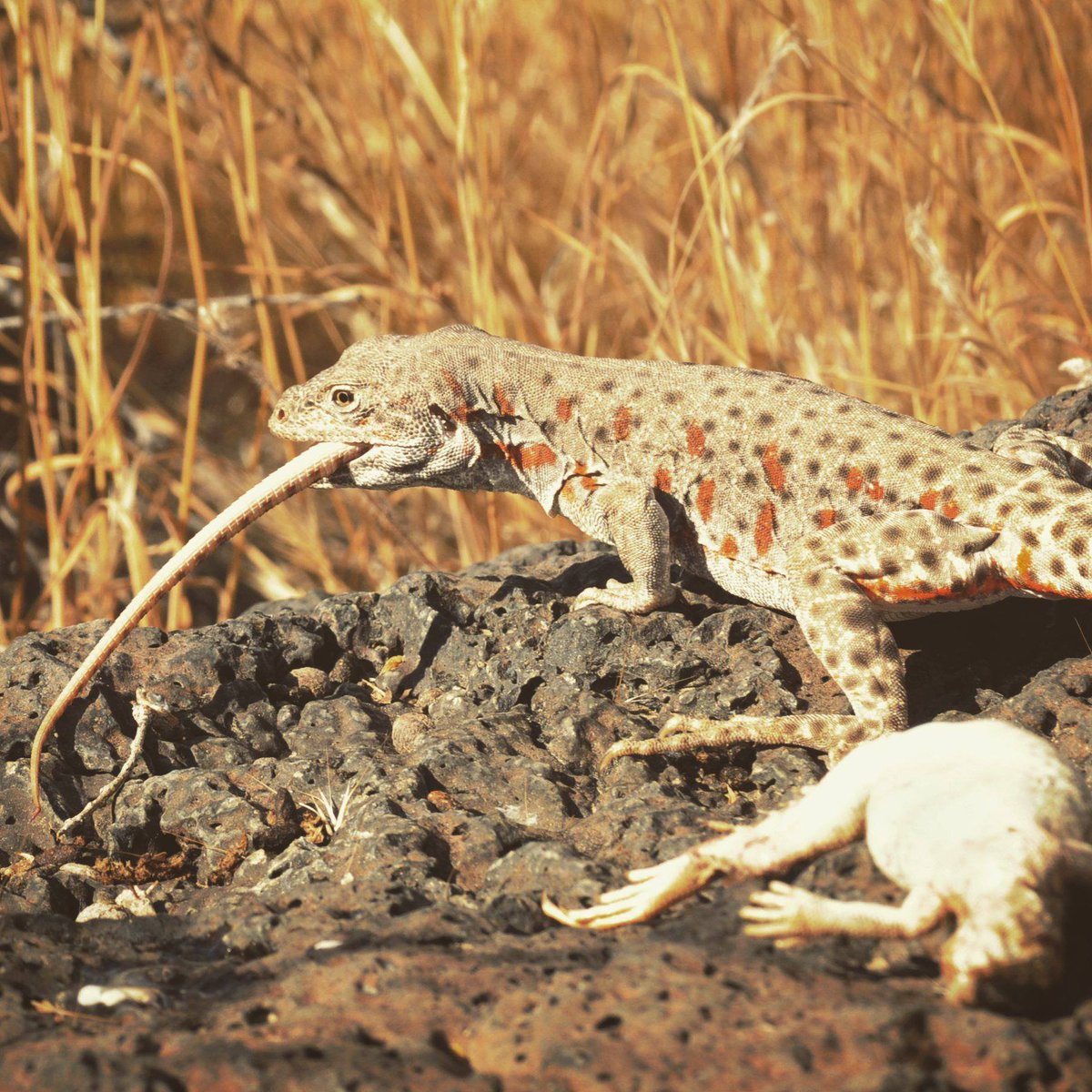
Gravid leopard lizards are very interesting creatures. They are omnivorous animals, feeding on a variety of invertebrates, along with vegetable matter as well. They have also even been observed eating smaller lizards of their own species! #Behav338
A gravid leopard lizard killed a desert iguana just to eat its tail. Video in next tweet. This was such a cool observation with @heart2herp and our herpetology class! 1/3
What a unique animal behavior! These sea slugs might use their regenerative capabilities to avoid predation or expel parasites. This seems like a very effective method. #Behav338
Because epaulette sharks typically reside in shallow water habitats, these organisms have developed an interesting locomotion behavior. Rather than swimming, epaulette sharks “walk” by wriggling their bodies and pushing with their fins. Very cool animals! #Behav338
I spent a blissful few minutes today watching a gorgeous Northern Flicker forage for bugs. You can tell this is a male because it has a black mustache. That gradient, those patterns... no words!
A fascinating parasitic animal behavior. These wasps control the behavior of ladybird beetle hosts after exiting their hosts’ bodies, most likely to aid in protection while wasp pupae are developing. #Behav338
Possible behaviour explanation from @NatGeo 'It is not completely understood why blue whales race each other, but it has been observed previously in different regions of the world. The most accepted hypothesis is that it is a form of male competition—trying to impress the ladies'
Beautiful animals! It’s possible that these male whales participate in this racing behavior as a form of mating competition to impress potential female mates. #Behav338
Absolutely stunning footage of synchronised breaching blue whales taken by Ada Karina onboard Silver Shark Adventures in the Gulf of California. #whales
@KHannam338 Sea turtles most likely participate in this stationary behavior when they get too cold in order to preserve as much body heat as possible. Unfortunately for them, this cold stunning can be dangerous for turtles and even prevent their ability to swim.
They ran out of space at the rescue center, so the local convention center opened its doors to turtle storage. This video was from yesterday afternoon. By the time my mom sent it to me, there were so many more that she said, “there is no empty floor space tonight.”
Texas Game Wardens assigned to Cameron county rescued 141 sea turtles from the frigid waters of the Brownsville Ship Channel and surrounding bays. The sea turtles were transported via the PV Murchison, operated by Sgt. Game Warden Duke and B/M Bowers-Vest.
The severe cold weather across the U.S. has left sea turtles “cold stunned”. Cold stun happens when a sea turtle's body temperature drops below a certain point and they can no longer function as normal, leaving them vulnerable, lethargic, and even unable to swim.
📷: NPS