In this article, I describe how Istio + mTLS + ClusterIP breaks the pod-to-pod within the #servicemesh and why we need to use #Kubernetes Services as Headless to correct it.
https://t.co/LlLsS8CHSX
@thenewstack You can call whatever you want. There is no "silver-bullet". Every team/project/company is different. The best is to discuss and understand what works best for what you need to deliver.
In this article, learn how to prevent network connectivity errors when a Pod run comands at startup and Istio is enabled.
https://t.co/MKq7sgrW01
#Kubernetes#istio#ServiceMesh
#Kubernetes Pods can be debugged in many forms. For example, you can attach an ephemeral container to a running Pod to interactive troubleshoot with the `kubectl exec` command.
kubectl debug -it ephemeral-demo --image=busybox:1.28 --target=ephemeral-demo
https://t.co/oZNgwBWQZG
When automating #Kubernetes resources creation/deployment, you want to make sure they are Running before proceed. Use `kubectl wait` to wait for a specific condition on one or many resources.
https://t.co/rrXb6jmrk9
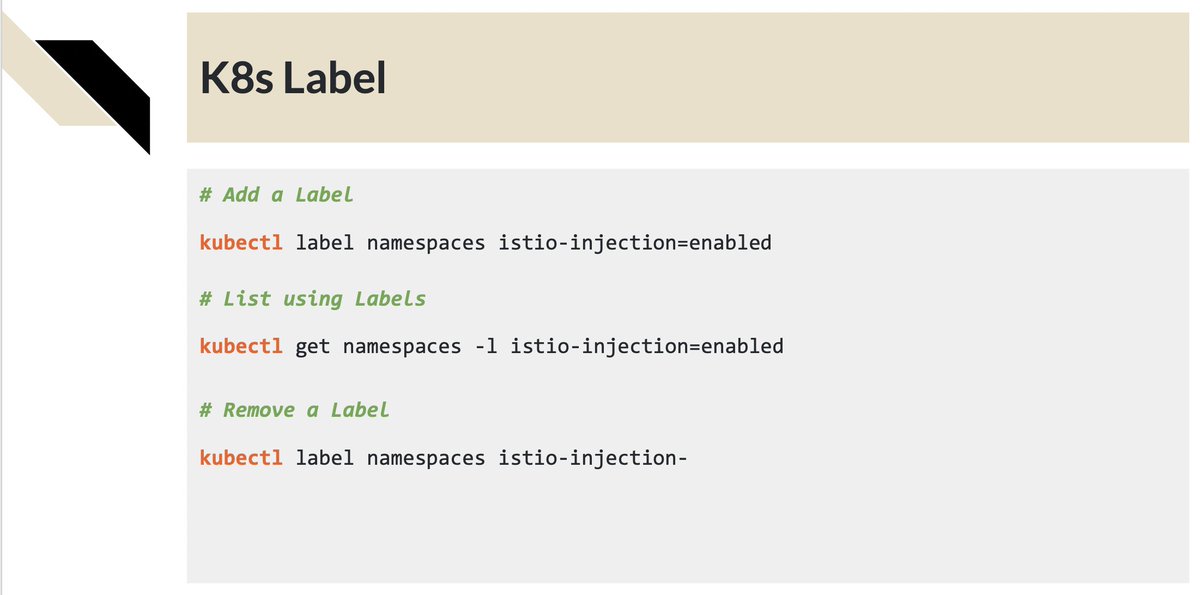
#Kubernetes Labels are key/value pairs that are attached to objects, such as pods. Labels are intended to be used to specify identifying attributes of objects that are meaningful and relevant to users.
https://t.co/3fa3AqYb8M
When deleting #Kubernetes resources, you can use:
`--ignore-not-found=false`
to treat "resource not found" as a successful delete. Useful to include in scripts and automation.
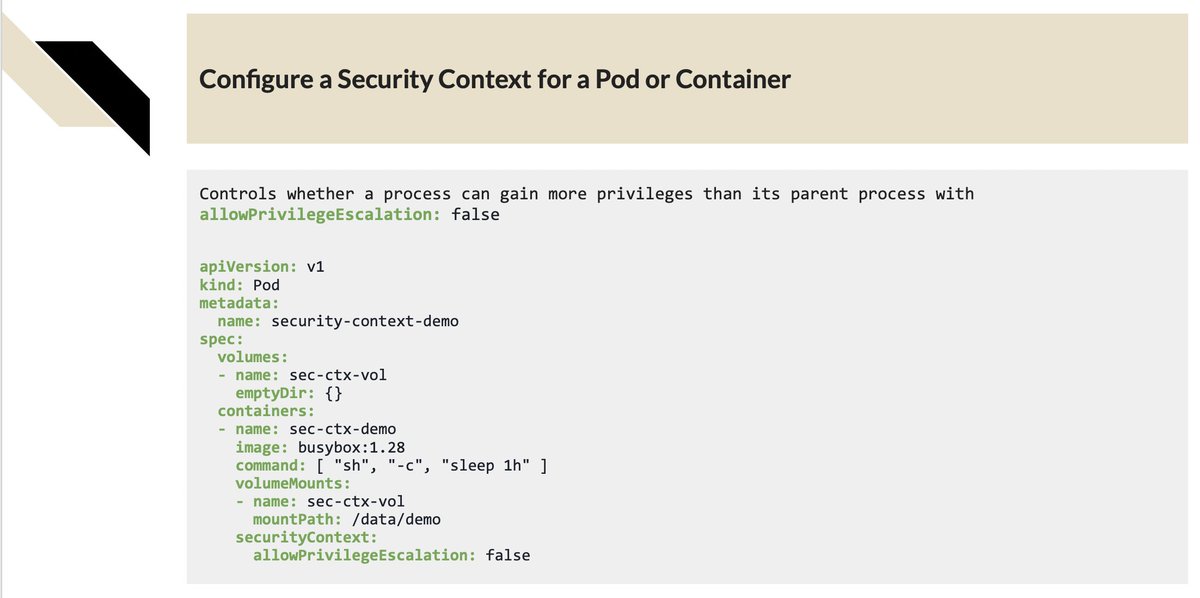
A #Kubernetes security context defines privilege and access control settings for a Pod or Container.
To specify security settings for a Pod, include the `securityContext` field in the Pod specification.
https://t.co/YuHyAYsKje
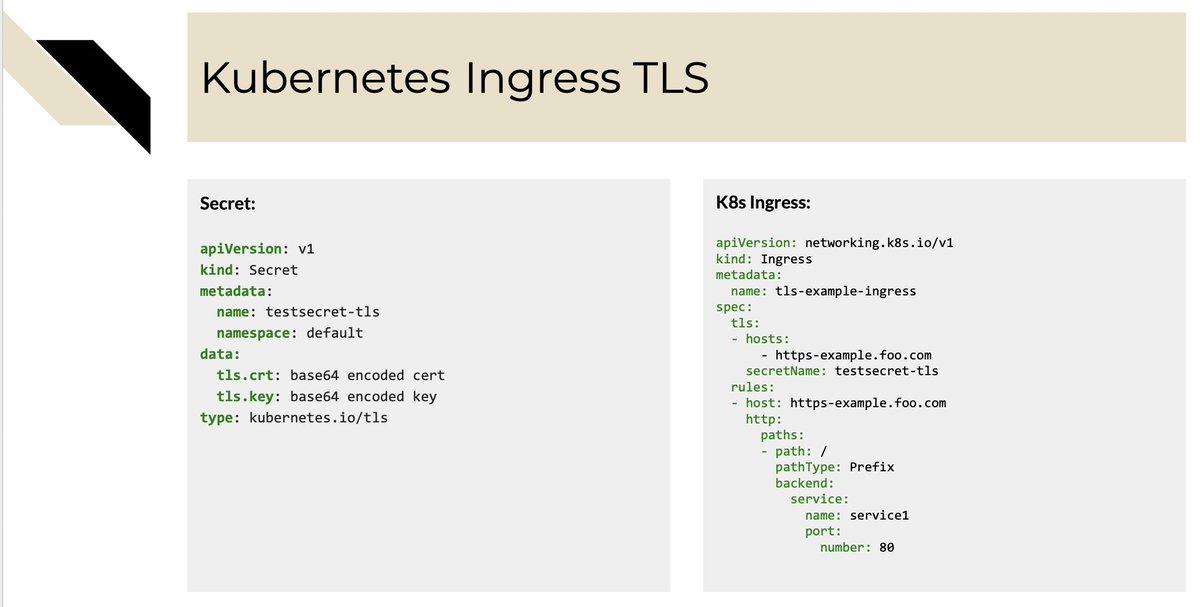
You can secure a #Kubernetes Ingress by specifying a Secret that contains a TLS private key and certificate. The Ingress resource only supports a single TLS port, 443, and assumes TLS termination at the ingress point.
https://t.co/mvec0waSfF