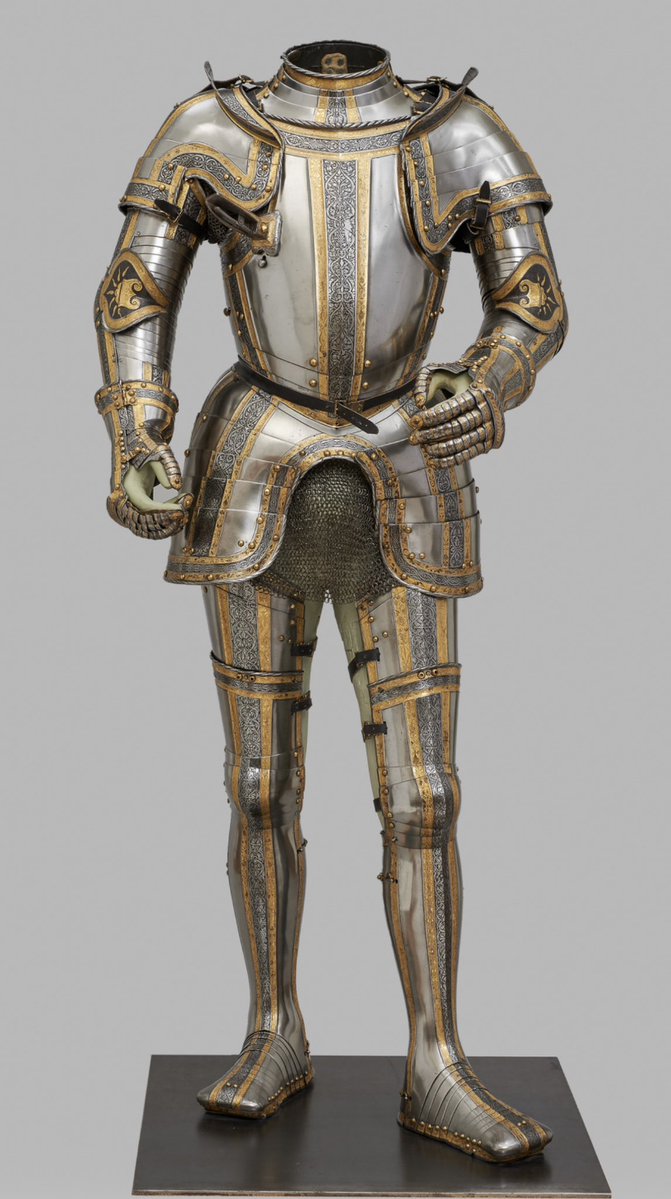
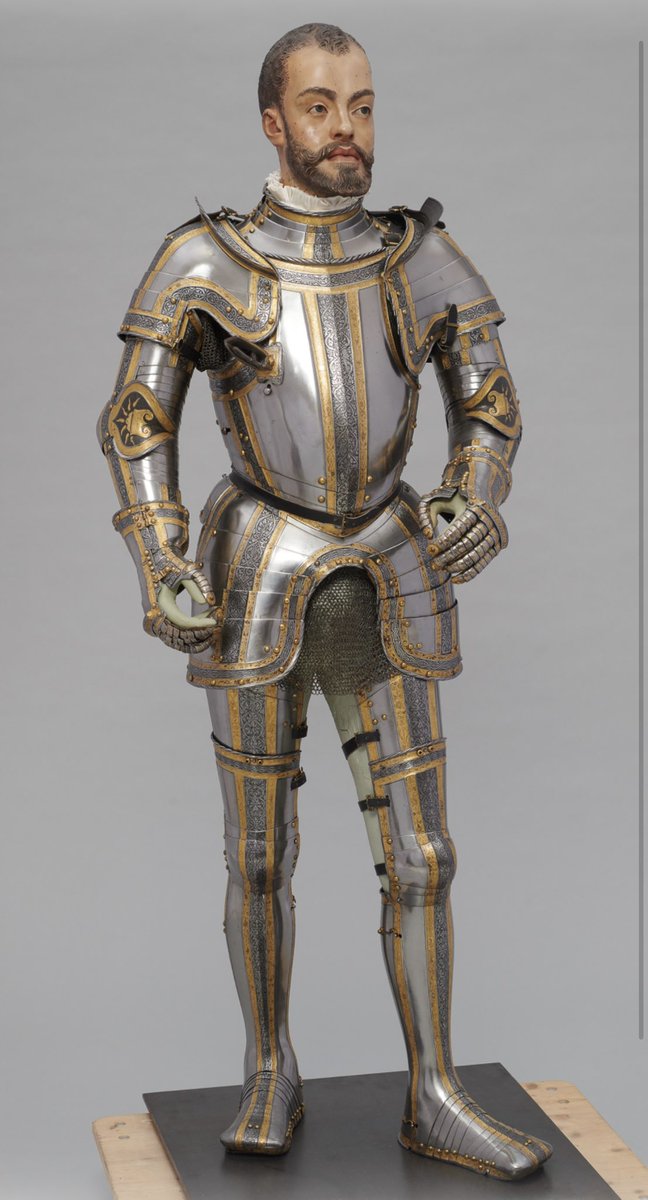
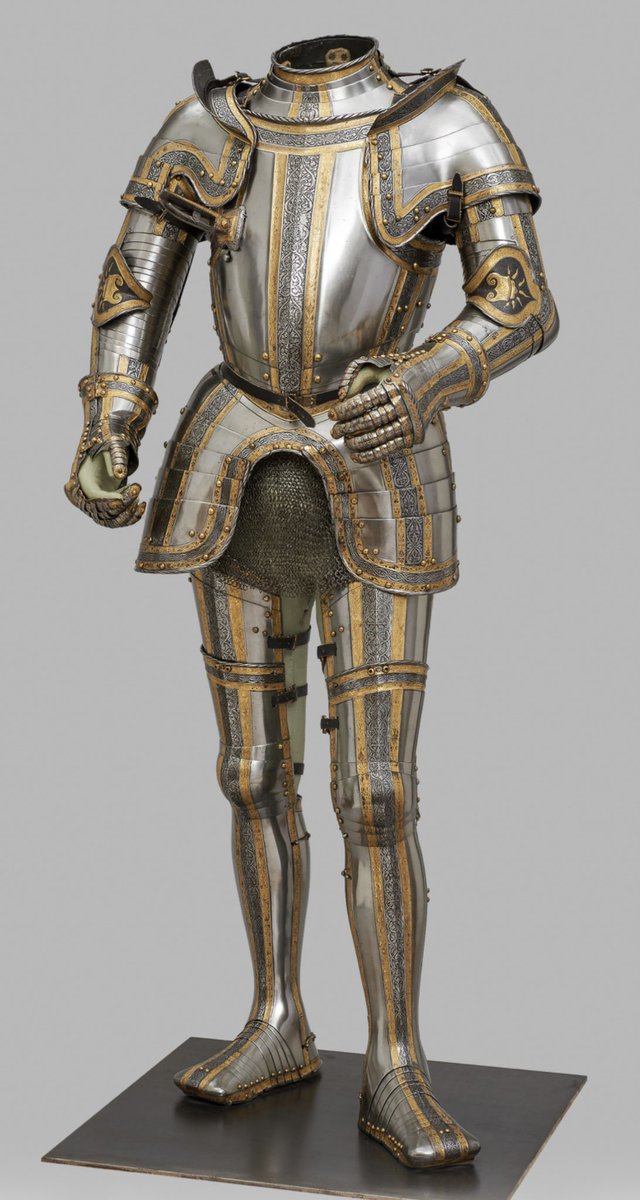
🇵🇹🇪🇸🇩🇪👑Etched & Gilt Field Armor for the (Future) King Philipp II Habsburg (1527-1598) ca. 1544.
Made in Augsburg by Desiderius Helmschmied (1513-1579)
Charles V commissioned this armor from his Augsburg court armourer Desiderius Helmschmid in 1544 for his then 17-year-old son Philipp. The armour was once part of a large garniture, additional pieces of which have survived in Madrid (Real Armería, invs. A 189 et al).
In 1571, the imperial diplomat Adam of Dietrichstein journeyed to Austria, bringing with him this armour and another one made for Emperor Charles V as gifts from Philip II, King of Spain, for Archduke Ferdinand II.
Dietrichstein was accompanying Archduke (later Emperor) Rudolf II and his younger brother Ernest, who were returning to Austria after a lengthy sojourn at the court of their uncle, Philip II.
Back in Austria there seems to have been some delay in transporting these two armours from Vienna to Innsbruck, because the following February we find Ferdinand impatiently enquiring about them.
He asked for them to be ‘carefully packed’ (gut verpackt) and to be dispatched to Innsbruck immediately. They seem to have arrived in the spring of 1572 and were installed in the Armoury of Heroes at Ambras Castle.
Philip’s armour was first listed in the 1583 inventory as ‘Philip II, King in Spain.
A white cuirass with gilt and etched bands’ (Phillipus der Ander, könig in Hispnia. Ain plankher khürisz mit verguldten und göczten reifen).
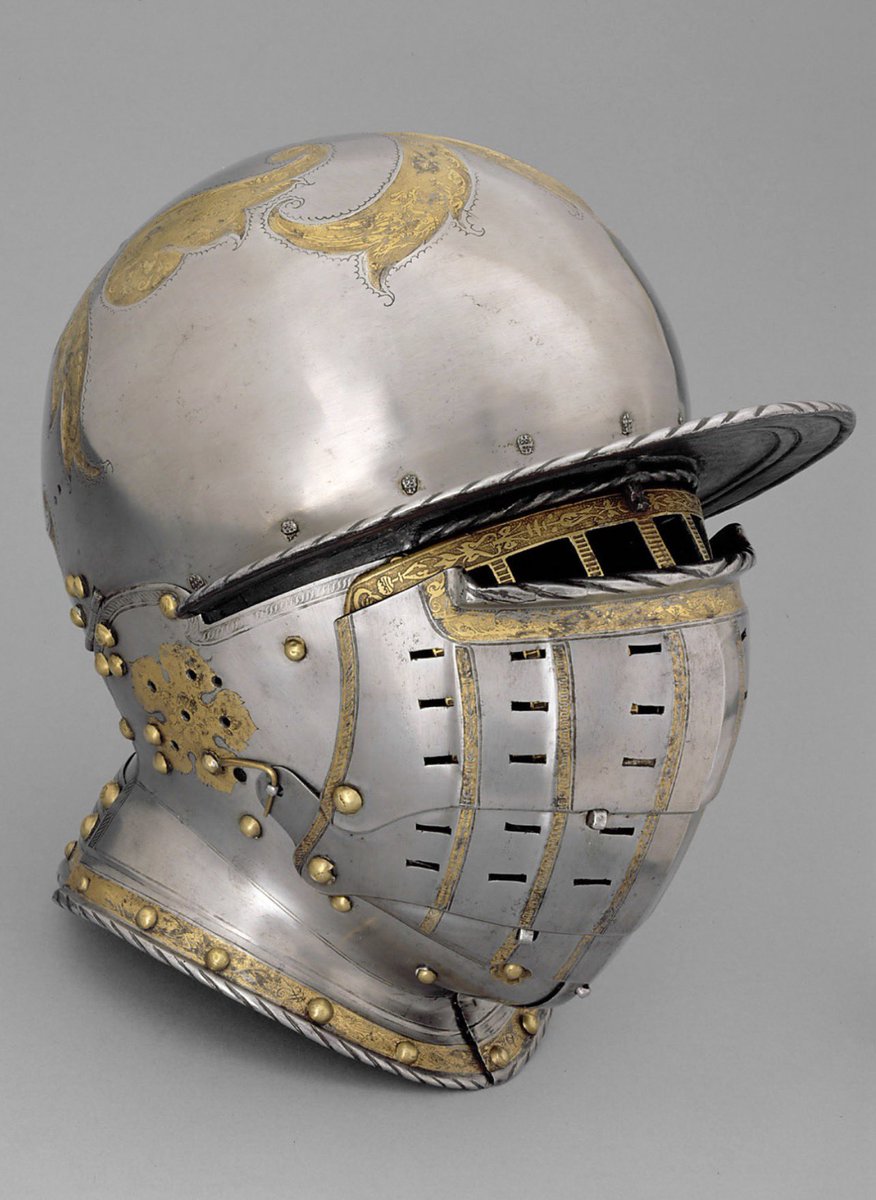
Today, Philip’s armour is displayed without a helmet because whoever packed the pieces in Madrid in 1571 packed the wrong helmet.
The helmet mistakenly dispatched to Vienna is a close burgonet (Kunsthistorisches Museum Vienna, Imperial Armoury, from the so-called Algiers Garniture made for Charles V around 1540 that also remains in Madrid.
Height: 167 cm Weight: 18 kg
When studying the Middle Ages, or any historical period, there is often a tendency to focus on determining exactly what happened on the battlefield; yet, what truly matters most? It is the version of events that took hold in the public imagination.
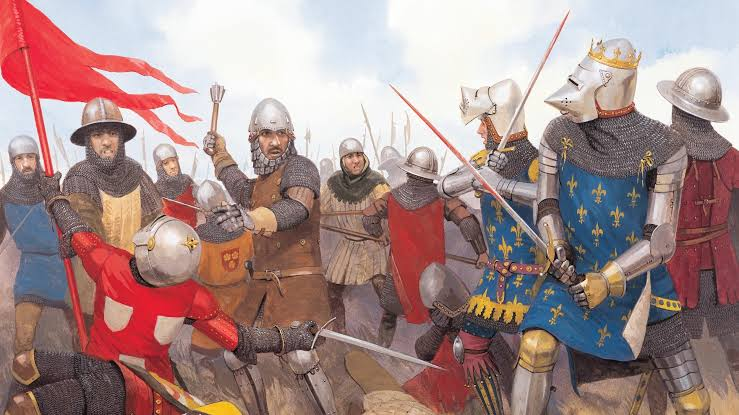
This is precisely what occurred regarding the Battle of Poitiers on September 19, 1356, as two conflicting accounts emerged. One was a heroic narrative in which King John II of France "the Good" fought valiantly alongside his son Philip, the future Duke of Burgundy, who shouted, "Father, to the right! Father, to the left!" while the King ordered his other son, Charles, the Dauphin and future king, to flee and retreat to Paris to safeguard the future of the realm. The other, far bleaker version held that the Dauphin Charles fled out of fear on his own initiative, triggering a chaotic scramble within the French army and causing confusion over whether to follow the King or the Dauphin.
Ultimately, it was the first version that prevailed in public opinion and spreaded in Europe; even the English army and knights acknowledged the great courage of the French chivalry, who had fought valiantly to cover the Dauphin Charles's retreat.
Despite the briefness of Hunnic rule,migration era Germanics seem to wholesale adopt steppe aesthetics as the language of prestige for the warrior elite.
@VaqueroDeGringo@Babygravy9 American urging people from another continent to start killing each other. Why am I not surprised? Bloodthirsty fanatics fester where you come from.