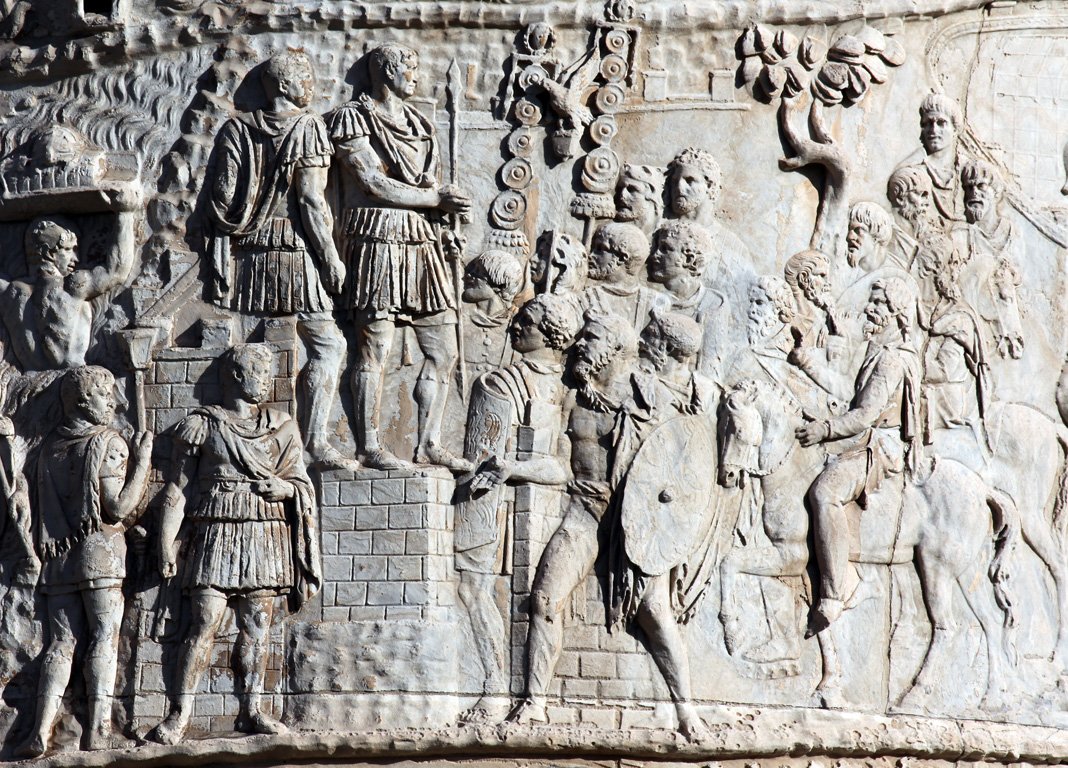
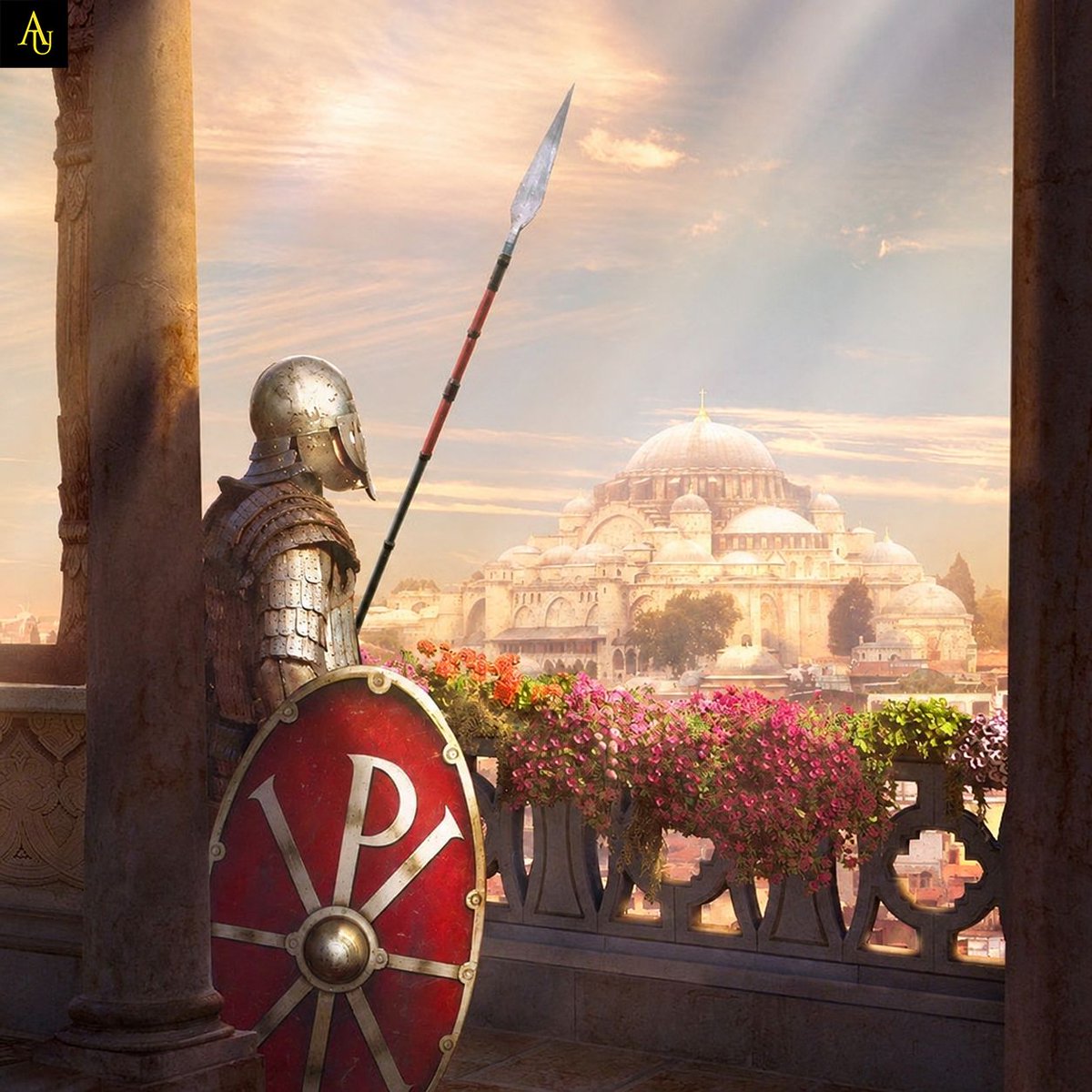
#Rom365, November 27, deaths,
395, Rufinus, Praetorian Prefect under Theodosius I, virtual regent to Arcadius after Theodosius died.
450, Galla Placidia, Roman empress, daughter of Theodosius I.
602, Roman Emperor Mavrikios and five of his six sons murdered by Phocas.
The BBC portrayed the 1,800-year-old Roman-era Beachy Head Woman as Black in its 2016 documentary Black and British: A Forgotten History, featuring a reconstruction depicting her with dark skin and African features.
However, a genetic study published in December 2025 found no evidence of recent sub-Saharan African ancestry.
Instead, DNA analysis indicated that she had blue eyes, blonde hair, and White skin, with ancestry closely matching local populations in Roman Britain.
#Rom365, November 23, 870, birth of emp. Alexander, son of Basil I, brother of Leo VI. When Leo died Alexander became senior emperor over Leo's son, co-emp Constantine VII. Alexander then banished Constantine's mother, Empress Zoe Karbonopsina, from the palace at #Constantinople.
Μετά τη μάχη της Ισσού, ο Αλέξανδρος είδε τις αιχμάλωτες Περσίδες της βασιλικής οικογένειας, που ήταν «κάλλει καὶ μεγέθει διαφερούσας» (εξαιρετικές σε ομορφιά και ανάστημα). Αστειευόμενος είπε ότι «εἰσὶν ἀλγηδόνες ὀμμάτων αἱ Περσίδες», δηλαδή «οι Περσίδες είναι βασανιστήρια για τα μάτια». [Πλούταρχος - Βίος Αλεξάνδρου 21.5]
2.300 χρόνια μετά, το βίντεο επιβεβαιώνει τον ισχυρισμό του Αλέξανδρου.
Μύστες, τα δέοντα για μια πανέμορφη Ιρανή!
Günlük hayatta bile sıkça duyduğumuz ama arkasındaki o müthiş Roma hukuku detayını pek az kişinin bildiği bir İncil sözü vardır: Biri seni bir mil yürümeye zorlarsa onunla iki mil yürü.
Matta 5:41’de geçen bu cümleyi bugün okuyan çoğu kişi, bunun pasif bir boyun eğme ya da ezilmeye sessizce razı olma öğüdü olduğunu sanır. Oysa birinci yüzyıl Roma askeri hukukunu bildiğinde, bu sözün aslında güç dengesini bir anda tersine çeviren dahice bir psikolojik hamle olduğunu görürsün!
O dönemde Roma İmparatorluğu, işgal altındaki Yahudiye gibi eyaletlerde angarya yasası uyguluyordu. Grekçe metinde kullanılan kelime de doğrudan bu yasayı ifade eder. Bu yasaya göre bir Romalı asker, yolda gördüğü herhangi bir sivili durdurup yaklaşık otuz kiloluk ağır askeri sırt çantasını tam bir Roma mili, yani yaklaşık bir buçuk kilometre boyunca taşıtma hakkına sahipti. Hatta Romalı askerlerin İsa’nın çarmıhını taşıması için yoldan geçen Kireneli Simun’u zorla çevirmeleri de tam olarak bu yasaya dayanıyordu.
Fakat Roma ordusu halkın ayaklanmasını önlemek için bu yetkiye çok katı bir sınır koymuştu. Bir asker, bir sivile yükünü bir milden tek bir adım bile fazla taşıtırsa ağır bir askeri disiplin suçu işlemiş sayılır, rütbesinden olur ya da kırbaçlanırdı.
Şimdi o sahneyi gözünüzde canlandırın! Bir Romalı asker yolda bir sivili çevirip sırtına ağır yükünü yüklüyor. Birinci milin sonuna geldiklerinde asker yükünü geri almak için elini uzatıyor, ama sivil adam çantayı bırakmak yerine gülümseyerek sorun değil, senin için bir mil daha taşıyacağım deyip yürümeye devam ediyor!
İşte o an bütün oyun bozulur. Az önce emir yağdıran mağrur Romalı asker, bir yüzbaşıya yakalanıp ağır ceza alma korkusuyla bir anda paniğe kapılır ve kendi çantasını geri alabilmek için sivile yalvarmak zorunda kalır. Sivil adam artık çaresiz bir kurban değil, kontrolü eline alan özgür bir bireydir.
İsa o gün dinleyicilerine ezilin ve boyun eğin demiyordu; şiddete başvurmadan, doğrudan Roma’nın kendi yasasını kullanarak zalimin elinden gücü nasıl alacağınızı gösteriyordu.
#Rom365 November 22, 1059, Isaac I Komnenos abdicated due to illness, agreed to Constantine X Doukas taking over & retired to a monastery. He was son of Manuel Erotikos Komnenos, the 1st historically known family member. Isaac was 1st of the Komnenos emperors, uncle of Alexios I.
In AD 527, Justinian became emperor of a Roman Empire that no longer controlled Rome.
The West had passed to others. The Vandals ruled Africa, the Ostrogoths held Italy, the Visigoths held Spain, and the Franks held Gaul.
Yet the eastern empire was no dying remnant. Constantinople was a wealthy capital, and Anatolia, Syria, and Egypt supplied revenue and manpower.
For generations, Roman emperors in Constantinople had watched their western provinces pass into the hands of other rulers. Justinian intended to take them back.
In 533, Belisarius sailed for North Africa with about 15,000 troops, by Procopius’s figures. The Vandals had ruled from Carthage since 439, and their armies had sacked Rome itself in 455.
It looked like a gamble against a kingdom that had humiliated Rome for a century. It was over in months. The Vandals were beaten at Ad Decimum, then again at Tricamarum, and by early 534 their king, Gelimer, had surrendered.
The prize went beyond prestige. Africa was among the richest provinces of the old western empire, with grain, tax revenue, and a position that mattered for Mediterranean shipping.
The campaign could hardly have gone better. It gave Justinian a reason to believe that restoration was genuinely possible.
So he turned to Italy. Belisarius invaded in 535, took Naples and Rome, and entered Ravenna in 540. For a moment it looked like Africa all over again.
It was not. The Ostrogoths recovered under Totila, who retook Rome in 546. The city changed hands repeatedly, its population diminished, and much of Italy suffered through sieges, famine, and devastation.
Narses finally broke Gothic power in the early 550s, although resistance continued. Justinian had recovered Italy, but the Italy he recovered had been devastated by the struggle.
Even before the Italian war was won, a new crisis had emerged in the East. In 540, the same year Belisarius entered Ravenna, Khosrow I of Persia invaded Roman territory and sacked Antioch, one of the empire's greatest eastern cities.
Even as Justinian recovered the old Roman West, the territories he already ruled were under attack.
In 542, a devastating outbreak of plague reached Constantinople. Its death toll remains unknown, but the epidemic placed further pressure on the empire's population, economy, and government. Meanwhile, raiders pressed on the Balkans in the north.
Justinian had to finance a western war while defending an empire that stretched across three continents. The same treasury had to support armies in Italy, garrisons on the Persian frontier, and fortifications in the Balkans.
Justinian's ambitions extended beyond the battlefield. He sought to strengthen Roman authority through law, religion, and imperial prestige.
His legal reforms culminated in the Corpus Juris Civilis, a compilation and reform of Roman law that would influence European legal traditions for centuries.
After the Nika revolt nearly toppled him in 532, he rebuilt Hagia Sophia, creating one of the great architectural monuments of the Roman world.
For Justinian, restoring Rome meant more than recovering its provinces. It meant strengthening the institutions and imperial authority that bound those provinces together.
When Justinian died in 565, Roman armies once again occupied Carthage, Rome, and Ravenna. His empire stretched across much of the Mediterranean, closer to the borders of the old Roman world than it had been for generations.
Yet the reconquests had come at an extraordinary cost. Italy had been devastated, the empire faced continued pressure on its frontiers, and its recovered territories required armies and resources to defend.
Three years after Justinian's death, the Lombards invaded Italy. Much of the peninsula would eventually slip from imperial control.
Africa, by contrast, would remain Roman for more than another century.
Justinian had demonstrated that the lost provinces of Rome could be conquered again.
Whether they could be restored to the prosperity and security they had once enjoyed was a much harder question.
L'une des preuves les plus fascinantes que le Nouveau Testament reflète un témoignage de première main ancré dans l'histoire réelle de l'Anatolie du premier siècle se trouve dans un épisode étrange survenu dans la cité antique de Lystre, située dans l'actuelle région de Konya en Turquie.
Quand on lit Actes 14, Paul et Barnabé arrivent à Lystre, en Lycaonie, et guérissent un homme infirme de naissance. En voyant ce miracle, la foule est prise de panique et se met à crier dans son dialecte local que les dieux ont pris forme humaine et sont descendus parmi eux. Aussitôt, les habitants appellent Barnabé Zeus et Paul Hermès, parce que c'est lui qui porte la parole. Le prêtre du temple de Zeus, situé aux portes de la ville, accourt immédiatement avec des taureaux et des guirlandes pour leur offrir un sacrifice.
On se pose forcément la question : Paul et Barnabé ont parcouru tout l'Empire romain et accompli de nombreux miracles dans des dizaines de villes, mais nulle part ailleurs la population ne les a pris pour des dieux grecs. Pourquoi les habitants de cette petite cité anatolienne ont-ils réagi avec une telle urgence en les identifiant précisément à Zeus et Hermès ?
Luc, l'auteur du livre des Actes, ne donne aucune explication culturelle ; il rapporte simplement la scène brute. Mais si l'on ferme la Bible pour ouvrir Les Métamorphoses du poète romain Ovide, le mystère s'éclaire instantanément !
Ovide rapporte en effet la célèbre légende locale de Philémon et Baucis, qui se déroule exactement dans cette région. Selon ce mythe, Zeus et Hermès étaient descendus un jour sur ces terres déguisés en simples mortels. Personne dans la région ne voulut leur ouvrir sa porte, à l'exception d'un vieux couple pauvre, Philémon et Baucis, qui les accueillit généreusement. Pour punir l'inhospitalité des habitants, les deux dieux détruisirent toute la région par un déluge, n'épargnant que le couple âgé.
Imaginez alors la terreur de la foule de Lystre ce jour-là ! S'ils se sont précipités avec des taureaux pour honorer Barnabé comme Zeus et Paul comme Hermès, ce n'était pas un hasard : ils étaient terrifiés à l'idée de répéter l'erreur de leurs ancêtres et de voir leur ville anéantie ! Mieux encore, les fouilles archéologiques menées autour de Lystre ont mis au jour des inscriptions et des autels antiques dédiés conjointement à Zeus et Hermès, confirmant ce culte très spécifique à la région.
Luc ne mentionne jamais Ovide ni la légende de Philémon et Baucis. Il décrit simplement une réaction locale déroutante. C'est uniquement en croisant son récit avec la littérature romaine et l'archéologie anatolienne que la précision historique absolue du texte éclate au grand jour.
Bonne soirée à tous, et surtout, ne manquez pas l'église demain !
Died today 284AD Emperor Numerian. He was the younger son of the Emperor Carus. During the campaign against the Persians he was declared co-emperor by his father, and after Carus' death led the Roman army back into Roman territory. Near Heraclea, Numerian was discovered murdered in his litter.
🎥 A newly surfaced video shows the underground networks under #HagiaSophia
• So far, 420 metres of tunnels have been cleared and nearly 3000 tonnes of soil removed, exposing ancient columns, water systems and structures from different historical periods
Στα 26 δισ. ευρώ έχουν εκτιναχθεί οι φοροαπαλλαγές, ποσό που ισοδυναμεί με το 36% των φορολογικών εσόδων. Πρόκειται για ένα τεράστιο ποσό, που επαναφέρει στο προσκήνιο το ερώτημα ποιες φοροαπαλλαγές είναι πραγματικά αναγκαίες, ποιους ωφελούν και κατά πόσον πετυχαίνουν τον σκοπό τους. https://t.co/PR8jhL2jiP