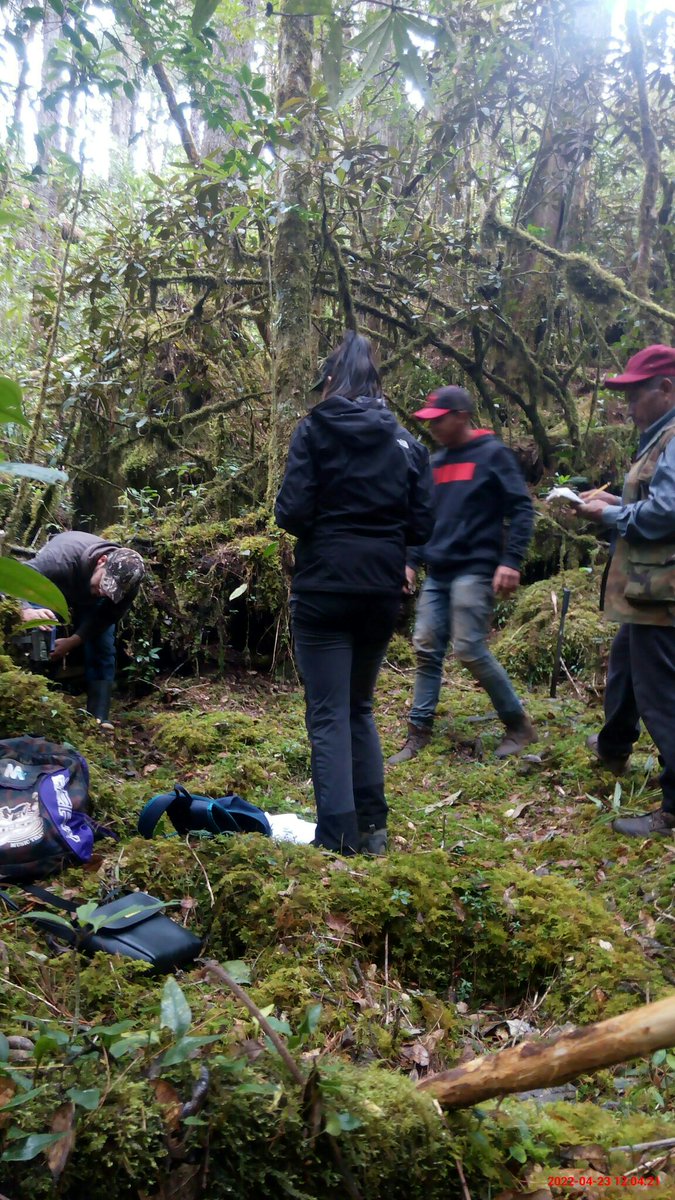
Today’s awesome gift to contribute to the knowledge of bats in #Guatemala🥰🦇 Novel records of three species of Nyctinomops, a rare and very cute species.Still more to do! 🍃Implications in #bats#conservation#windfarms#centralamerica#murciélagos
👇🏼🦇
https://t.co/0FzQLvd4xh
Our recent work led by @shilu_zheng showed that intraspecific trait change (ITC) in birds reshapes long-term trends in community functional structure,
highlighting the need to account for ITC for biodiversity change studies. https://t.co/tod0IZk6mD
Let's celebrate Pollinator Week with a win, shall we? Thanks to eDNA, hummingbird feeders, and community scientists, Mexican long-nosed bats have been discovered to migrate into Arizona! https://t.co/KDGOOLuoLe
How biodiverse are urban green spaces? This study compiles 1,688 terrestrial species from urban green spaces in Guatemala City, highlighting their biodiversity and conservation status. (1/2)
Nature-Based Solutions for climate adaptation (NBS) can play a vital role in helping people and biodiversity build resilience to climate risks.
Learn more about effective NBS and their practical application: https://t.co/iqEjqx3vIN
via @NbsPlatform
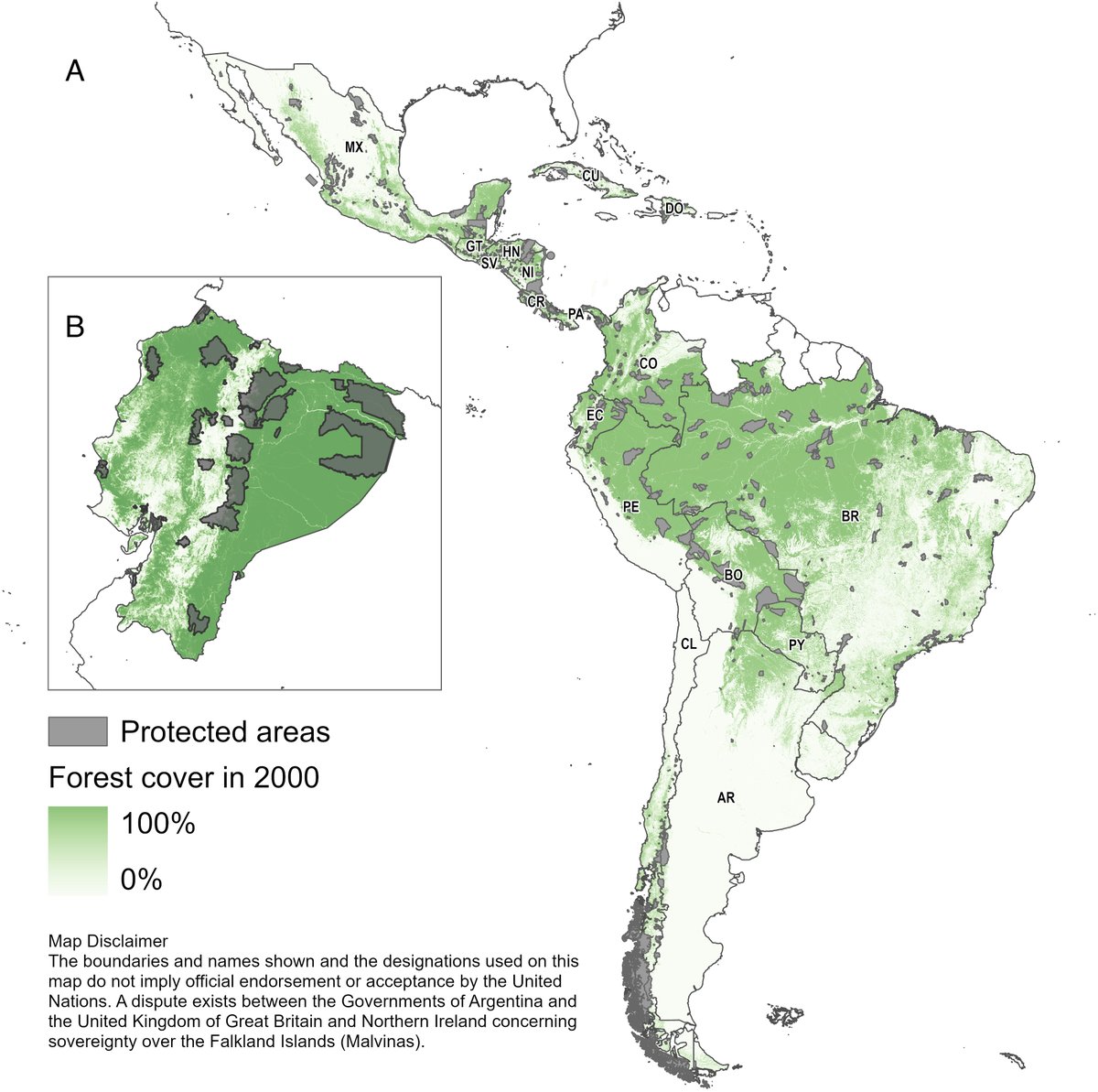
So so happy to see this paper led by @janethlessmann out in @PNASNews: https://t.co/S7DGJImv63. We use data on 💰 from most Latin American countries 🌎 to explore how funding deficits affect #Protectedareas' #impact on forest loss at the network and site level respectively
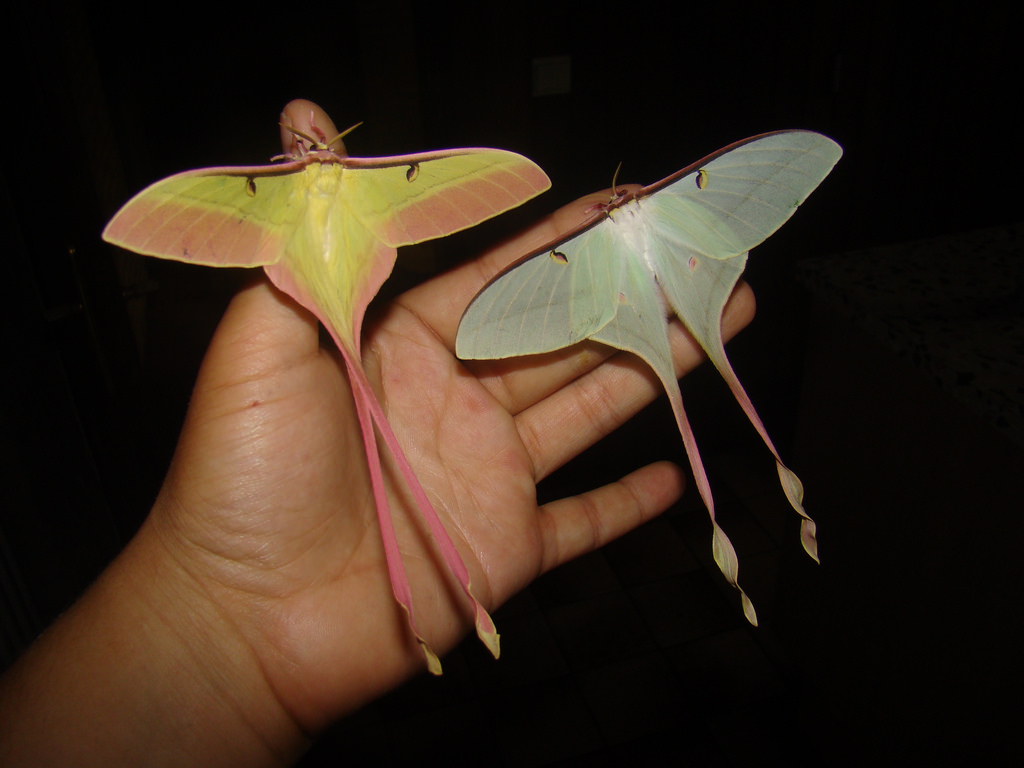
New study by Juliette Rubin and others showing that #MoonMoth tails are driven by #bat predation. Interestingly, seasonal temperature variation has exerted a nearly equally counterbalancing constraint on hindwing length. #LunaMoth#MoonMoth#evolution
https://t.co/UWIX7Ee2gV
Happy international 🦇 appreciation day!
To celebrate it, @UniofOxford is highlighting our study showing how insular #bats can be valuable allies for farmers, by feeding on important agricultural pests.
https://t.co/K3op27V1No
@BatConIntl@_BCT_@InsideNatGeo@ICCS_updates
🥳 My 1st first-author publication is out! Almost 4 years after finishing my PhD & couldn’t be prouder.
We suggest opportunities to augment foraging resources for endangered Mexican long-nosed bats in ways that are consistent with their foraging behavior.
https://t.co/5lBPoP9Uff
📢New paper! If you want to know more about this fantastic wrinkled-faced bat check it out on the tweet below...
https://t.co/96nWMPFTue
Love this collaborations, thanks to all colleagues 👏
Centurio senex es una enigmática especie que habita desde el centro de México hasta Colombia. A pesar de su amplia distribución, poco se conoce acerca de su ecología.
It’s International Dark Sky Week.🌃
Light pollution is a significant threat to nocturnal species. Our research on greater horseshoe bats shows that streetlights will significantly impact their movements and access to foraging habitat.🦇
Read more➡️https://t.co/5aMiZZnD8i