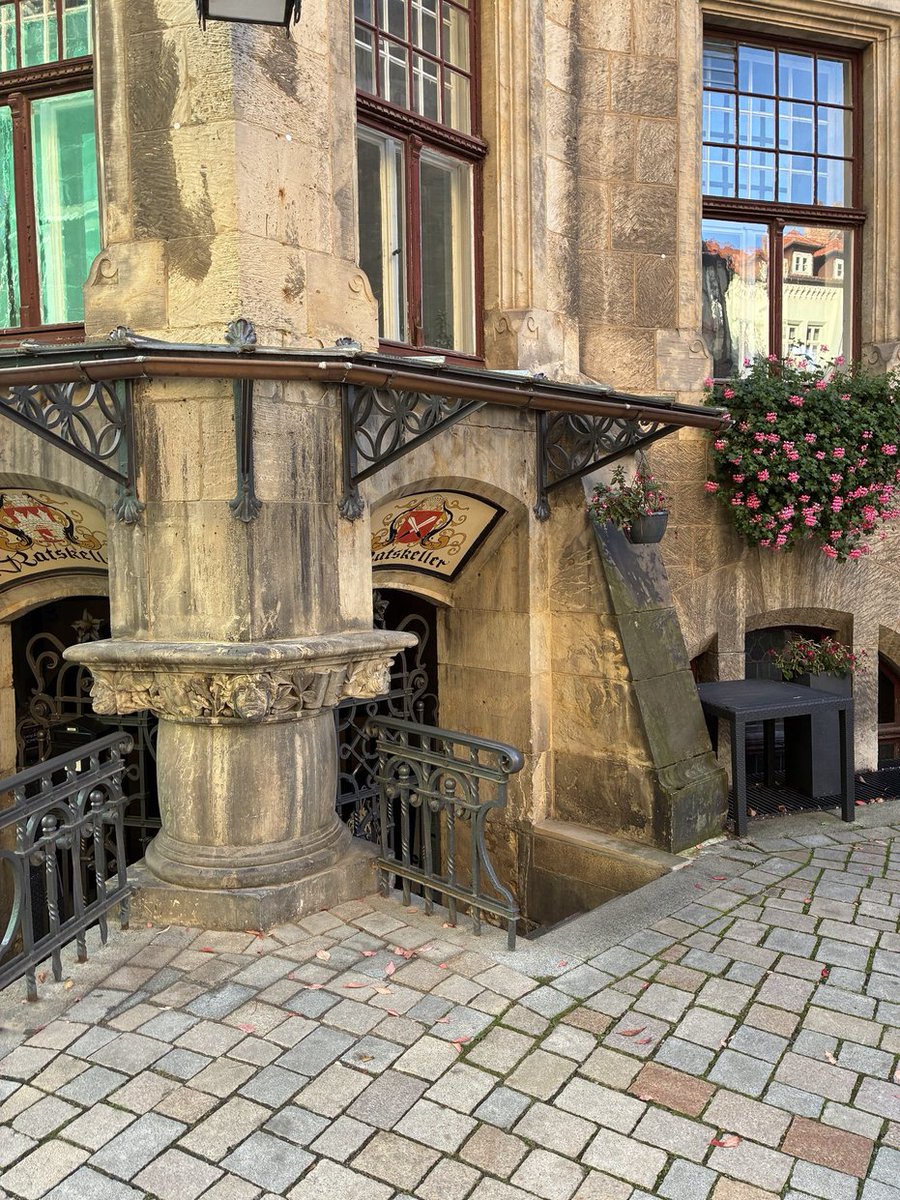
This quiet little corner is called the Finkenherd.
In 919, according to the story, Duke Henry of Saxony was here setting nets for finches when the messengers found him — and offered him the crown.
He never lost the nickname “the Fowler.”
Quedlinburg’s old town feels like a carefully preserved stage set — narrow lanes, leaning half-timbered houses in every shade of wood and plaster, and that soft northern light catching the facades.
With more than 1,300 timber-framed buildings, it has the densest collection of its kind in Germany and has been a UNESCO World Heritage site since 1994.
What makes the place even more interesting is its earlier role. In the 10th century Quedlinburg was one of the most important centres of the early German kingdom. King Henry I, the first Saxon ruler of East Francia, was buried here, and his widow Queen Mathilde founded a powerful abbey on the hill above the town. For a time this quiet place stood close to the heart of Ottonian power. Walking through the streets today, that weight of history is still somehow present beneath the charm.
Photos shot during our autumn vacation.
@TerenceMcCart14@InakiLonga@SCP_Hughes Calling Dresden Disneyland overlooks the fact that large parts were rebuilt with original material and traditional techniques – mostly after 1990. Pretty and authentic aren’t mutually exclusive.