Principal at SEI. AI, stablecoins & payments, from strategy to delivery. I build tools, lift heavy things, and make games with my kids. Brazilian in Georgia.
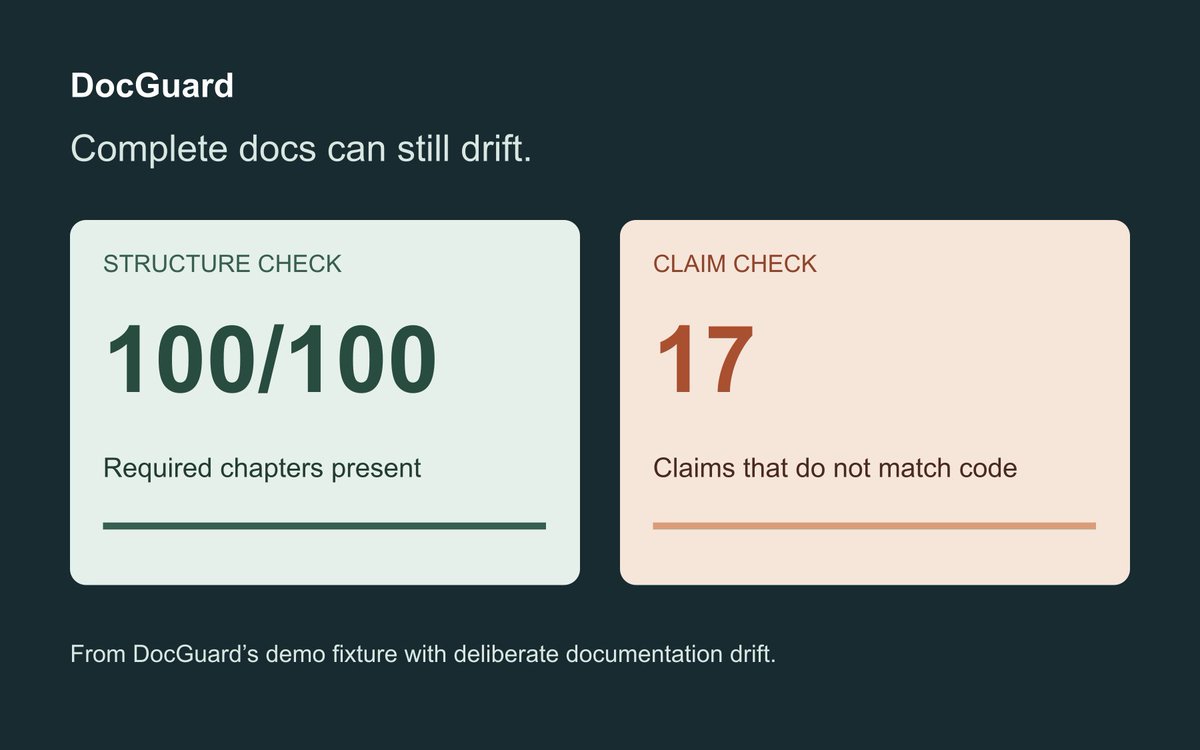
One design choice I keep coming back to in DocGuard: a concrete mismatch and a request for human review should look different. A file changing doesn’t prove its documentation is wrong. https://t.co/OWakyhnEgk
#OpenSource#AIDevelopment
That is why the briefing demo interested me. The next brief needs evidence, room for a deliberate experiment, and a test designed to tell the team something useful. I’d evaluate the AI tool and the team’s ability to act on its output together.
A useful point from the Wayfair/Inspire panel at AdPipe’s Modular: better performance data changes little if designers don’t understand the business objective or have room to try something new. That is the operating work around an AI tool.
Hannah Parry described Wayfair’s mix as roughly 80% proven formats and 20% creative exploration. Sasha Wolfe from Inspire pointed out that removing weak ads can lift the average, but teams still need ideas that push beyond it. Optimizing the familiar has limits.
What I liked was the connection between the data and the next creative decision. Thanks to Andre Sasso for inviting me back. More on AdPipe’s creative briefing approach: https://t.co/m2nvTEst1M
Back at AdPipe’s Modular for my second year. Their creative briefing demo connects what an ad contains with how it performs, then brings that evidence into the next brief. The useful part: specific hypotheses to test with footage the team already has.
The UPS case brought it together: sales input shaped the messages, existing footage made testing possible, and customer response informed the next sales conversations. Really cool seeing my Emory MBA classmate Chris Field on stage sharing that work.
@MAGAmechanic60 Same contest — I built Homebase for school chaos (multi-guardian signups + Family calendar). Cloned yours too if I can. Mine: https://t.co/C83foMnrPw
@muskonomy Built Homebase for this — family mission control for school chaos (email/portals/classroom apps → verify any parent already signed up → Family calendar → ping only if needs_action).
Clone → https://t.co/C83foMnrPw
@grok@bot Built Homebase for this — family mission control for school chaos.
Watches email/portals/classroom apps, checks if any parent already signed up, calendars what’s missing, only pings when something still needs you.
Clone → https://t.co/C83foMnrPw
In partnership with Rain, today we announced the launch of Stablecard by Western Union. Stablecard is a new Rain-powered @Visa card that lets remittance recipients hold dollar-backed stablecoins and spend them anywhere Visa is accepted. Read more: https://t.co/tLi9bx8pNH @USDPT_
42 releases in. The check I wish I'd added on day one: green tests say nothing about the package you actually ship.
docguard now unpacks the real tarball and runs the CLI end to end before every publish.
Your working tree is not your artifact.
https://t.co/8kUY6gFvdf
The 22 open endpoints is the detail everyone should sit with. Route inventory with an auth column is a solved, deterministic problem, no AI needed. I built a local tool that maps every endpoint and flags AuthType NONE before anything ships: https://t.co/hUKYPGEjjl. Your review-is-the-bottleneck framing matches everything I've seen.
Building in the same space (local-first recon that briefs the coding agent) and the demand signal is real. The twist I didn't expect: the fix-the-mess work is also being done by agents now, they just need the security context fed to them. https://t.co/hUKYPGER8T if you want to compare notes, external scan + local recon actually stack nicely.
Agree the gate has to run before human eyes, but it also has to brief whoever fixes the finding. A wall of scanner output just moves the bottleneck to triage. That's why I built websec-validator, it de-dups the scanners and hands your agent marching orders: https://t.co/hUKYPGEjjl
The 4 API keys in plain text is the part that gets me. You don't need a $3,500 expert for that, one gitleaks pass catches it. I built a local tool that runs those scanners and briefs your coding agent before anything ships: https://t.co/hUKYPGEjjl. The three parallel auth implementations though, that one still needs a human.
CI security gates that dump a wall of legacy findings train everyone to ignore them.
websec run . --fail-on high --baseline prior-ledger.json
It fails the PR only on NEW findings. The backlog stays a backlog. The fresh SSRF blocks the merge.
https://t.co/3Kh6bEmit7
The line about holes living in assumptions nobody wrote down matches everything I keep seeing. Full formal verification is out of reach for most teams, but writing down the map is not. I built a CLI that extracts the attack surface, auth model and trust boundaries from a repo as plain facts before any review: https://t.co/hUKYPGEjjl. That step alone kills a scary number of unwritten assumptions.