"Our study underscores the importance of Virutal Model Compound Approach and structure quality in bridging the gap between experimentally and theoretically calculated redox potentials of proteins with Fe2S2-Cys4 centers." Published in: @JCIM_JCTC https://t.co/su7xXqaUbV
Anonymous question
“A PhD student took help of three graduate students (including me) during her PhD project. It included help with simulations, preparation of experiment, data collection and data analysis. At the end of analysis, the graduate students got busy and could not help further. The PhD student then published a paper around a year later without listing the graduate students as authors. Was it correct? How do I respond? It has been over an year this incident has happened.”
#PhDVoice
Hi! I am starting a group at Stockholm University in AI for protein applications. Currently hiring a PhD student: https://t.co/iYVkAJ04DI and a postdoc: https://t.co/1zsjsvI0NB. Come work with me in beautiful Stockholm!
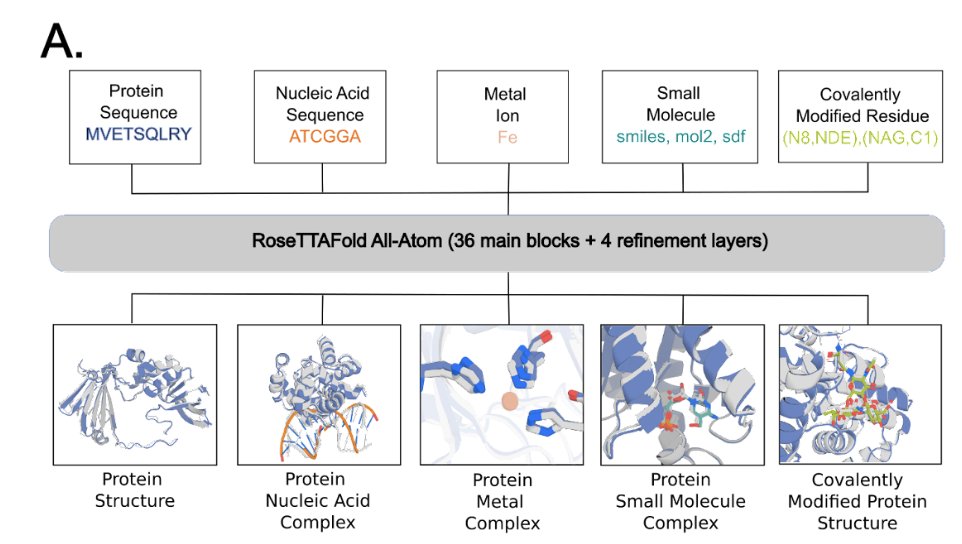
Very excited to share RoseTTAFold All-Atom and RFdiffusion All-Atom, methods for structure prediction and design of biomolecular assemblies! https://t.co/iG6rD0LHsi 1/n
We just released PyG 2.4 🎉, including PyTorch 2.1 support, model compilation, on-disk datasets, neighbor sampling improvements, and much more. Thanks to 62 contributors who have made this release possible. Full release notes 👇
https://t.co/S483b5xC9U
A thread 🧵 [1/5]
📢📢📢We are hiring: we are looking for a postdoctoral researcher to work in the field of
computational/theoretical photochemistry (1 year + 1 extra year upon mutual agreement). DM for details. Please retweet! Thanks #compchem#postdocposition
Integrating Explainability into Graph Neural Network Models for the Prediction of X-ray Absorption Spectra #machinelearning#compchem https://t.co/My8BvVNC1U
PubChemQC B3LYP/6-31G*//PM6 Data Set: The Electronic Structures of 86 Million Molecules Using B3LYP/6-31G* Calculations
https://t.co/o7YPafUuct
@NakataMaho#JCIM Vol63 Issue18 #MachineLearning#DeepLearning
#compchem Good read: Hydrogen bond energy estimation (H-BEE) in large molecular clusters: A Python program for quantum chemical investigations https://t.co/t1mq4cXmzG
SMLQC 2023 (the 2nd International Symposium on Machine Learning in Quantum Chemistry) is approaching! So is the deadline for early bird registration and poster abstract submissions.
https://t.co/89HFpLPAir
Few weeks for application to this exciting CECAM workshop in Lausanne 29/11-01/12 2023.
As all cecam workshop there are no registration fees and we have a great "parterre" of invited speakers!
@cecamEvents @KarenPalacioR
https://t.co/Of52ouz2AM
Here’s an interesting PCR method for working with extremely low concentrations of DNA: “Booster PCR”.
It looks like a rarely used and now obsolete method for most research, but it may be worth a try to give a PCR a boost if you can't access other more sensitive amplification or detection methods.
Source article:
Ruano et al. (1989). Biphasic amplification of very dilute DNA samples via 'booster' PCR. Nucleic Acids Research, 17(13), 5407.
https://t.co/nSULtibFi6
Booster PCR was developed to allow amplification of DNA over a very large number of cycles without an increased occurrence of primer dimers.
It does this by splitting the amplification into two steps:
1) An initial PCR where the primers are diluted to an estimated 10^7x concentration compared to that of the template DNA, or more simply a 1/10th dilution of standard primer concentrations in some versions.
In this step, some template amplification should occur, but primer dimers are much less likely to occur because the primers are also low in concentration.
2) A second standard PCR that uses the PCR product of the first PCR as a DNA template.
In this step, the small amount of target amplicons are further amplified to detectable levels.
Modifications include a) adding more primer to the PCR tubes after the first 20 cycles and then continuing for another full set of cycles, b) also using a lower concentration of dNTPs in the first PCR (presumably to minimise any additional non-specific amplification), and c) various variations in primer concentration. But the principle of these is essentially the same - an initial boost to the target DNA before the main PCR.
It's been reported to be up to 10 to 20x as sensitive as a single PCR, and able to detect a single colony-forming unit of Salmonella in a gram of chicken droppings:
Cohen et al. (1994). Detection of Salmonella enteritidis in feces from poultry using booster polymerase chain reaction and oligonucleotide primers specific for all members of the genus Salmonella. Poultry Science, 73(2), 354-357.
https://t.co/TgDvaGIBtS
And it's also been modified into a reverse transcription booster PCR where it was found to be up to 100x as sensitive as a single RT-PCR:
De Medici et al. (2004). Reverse transcription-booster PCR for detection of noroviruses in shellfish. Applied and Environmental Microbiology, 70(10), 6329-6332.
https://t.co/utnR1Car4H
So if you're having trouble amplifying an important specimen, and you think it's due to a low concentration of DNA, why not give it a boost with an initial PCR with a 1/10th dilution of primers, then run a normal PCR using the PCR product as a template, and see what happens!
If it does work, please let us know!
Disclaimer: we haven't tried Booster PCR ourselves yet, but we may give it a go soon on some extremely tiny specimens that are proving difficult to amplify from using other methods...
Excited to share our latest work at the intersection of machine learning and computational chemistry; Path Integral Stochastic Optimal Control for Sampling Transition Paths between molecular conformations. With @YuanqiD*, @priyankjaini, Ferry Hooft, @BerndEnsing and @wellingmax
I’ve added two new Jupyter notebooks to the SAR Analysis section of the Practical Cheminformatics Tutorials.
- Matched Molecular Pairs
- Matched Molecular Series
This brings the collection to 21 notebooks, with more on the way.
https://t.co/NEii9bK6lf
A Postdoc position in Montpellier (France) is open for two years to work on Quantum algorithms for
Kohn-Sham Density Functional Theory.
The postdoc can start soon or around January 2024.
Please spread the news ;) !
More details here: https://t.co/898rEM0LE7
Looking for two highly motivated postdocs to work on accelerated molecular simulations and AI-driven drug discovery. Please feel free to submit application to one of the following postings & retweet:
https://t.co/Icq0INjyIg
https://t.co/ceHpMLISVb