And what about matters of national security? Defense plans? Names and identities of spies? Nuclear codes?
We are going to live in very Interesting Times.
https://t.co/7P9kD4ctrd
Tin foil hat conspiracy theories were just ahead of their time.
At some point in the future, people will be able to point a device in your direction and see what you see looking at, even what you are thinking about. The end to privacy as we know it.
Worse will be what we currently recognise as the moral right to be identified as the creator of something. How will artists react if someone picks an idea out of their brain and publishes it before them?
This was lost precisely on the Aadhaar case. Once the court allowed the govt to get away with food starvation deaths b/c a kid could not prove who she was w/ biometrics, humans no longer had any bill of rights.
Just a feudal lord certifying his tenants. That is all we are now.
We now have "VIP voters" being recognized by the Chief Election Officer of Karnataka. Which section of the Representation of the People Act, 1950 allows for "VIP voters" to be recognised?
Have we abolished Article 14 of the Constitution?
#equality#elections
mythos escaped the sandbox, got onto the real internet, uploaded malware to PyPI, got it installed on 15 real systems, stole credentials and broke into a real database.
and apparently this happened in 4 separate cases during cybersecurity evaluations.
the craziest part is claude kept telling itself the internet was simulated, despite evidence that it was actually real.
that reasoning apparently even fooled an offline safety monitor.
anthropic: “our pre release auditing did not warn us that misalignment of this severity was present.”
this is fucking crazy.
I was gonna be quiet but seeing this I felt like I shouldn’t. I run a bootstrapped startup and we imported two Nvidia Jetsons. It’s been held up at customs for two weeks now. Reason? They want us to give them three certificates: EPR, WPC, and BIS. The thing is, it doesn’t apply to us, none of them do. We’re importing them for prototyping and R&D. EPR is an environment certificate for waste, it’s for producers and sellers. It’s exempt for internal use. WPC similarly needs only a self declaration for devices operating in unlicensed bands if they’re for internal use. For BIS, the Nvidia Jetsons are already registered on bureau of indian standards. We’ve filed a dozen responses, we got rejected with no explanation. Just a one liner: customs has rejected your letter, please furnish EPR, WPC, BIS. Or meet the officer directly. Now i need to go meet the customs officer at the port of entry, which I would’ve if I wasn’t traveling all the time.
Building in India is an absolute pain in the ass.
Amazing that instead of East Asia, AMD wanted to Make India its Semiconductor Manufacturing Hub and was investing 3 Billion$ in a Fab in India back in 2005 but it all fell apart just because,
When their Equipment came it got stuck at customs and wasn’t cleared leading to return!
You saw @narendramodi's ridiculous video saying he forgives 'our daughters' for their abusive language at Jantar Mantar ... now read @AnandTeltumbde's brilliant piece in defence of the profanity of the protesters.
"Every hegemonic order establishes not only acceptable political opinions but also an acceptable political language. Civility, respectability and decorum become part of the discipline through which power regulates dissent: protesters are expected to be polite even while protesting injustice. But history suggests that ruptures typically begin by breaking this linguistic convention. The language of revolt is seldom parliamentary. It is emotional rather than measured, mocking rather than deferential, often deliberately transgressive – and what looks like vulgarity to the establishment is frequently the first public expression of accumulated humiliation and anger."
https://t.co/Cohhvz8AnW
Watch closely and Modi's 'forgiveness' video does 6 things at once... and none of them are about forgiveness at all. It reframes a protest into a family drama, and asks the country to watch it as one:
1. Selective gendering of outrage
Modi's latest video registers "cultural shock" only at "our daughters" using abusive language. There's no equivalent line for the male protesters in the same crowd using identical language, possibly because of how BJP's IT Cell and "supporters" online (including the handles followed by Modi himself) have thoroughly normalized all sorts of abuse online for years. Modi's silence on this is hardly neutral, I believe - it simply marks women's transgression as the one requiring special anguish, while male vulgarity remains background noise, unremarked and continued to be "employed" to browbeat, shut down and instill fear.
2. Paternalism as agency erasure
Adult and near-adult (recently vocal) political actors are reduced to "misguided children" and "daughters" who have "lost their way" and need the leader's guidance. The language converts protest into a parenting problem. It strips them of political subjectivity and repositions them as dependents requiring moral correction rather than citizens making a political claim.
3. Forgiveness as optics, not principle
The public offer of forgiveness is conveyed even as BJP-aligned accounts published protesters' home addresses, phone numbers, workplace details, and family names (one office-bearer publicly called for more women to be "identified" and "made famous" with FIRs filed and no apology to be accepted). CNN-News18 went on a hounding spree too, with camera in hand. One protester received explicit death and rape threats while another was pressured into a filmed apology. Modi's video performs magnanimity while the machinery of 'state-led consequence' runs in parallel, goaded by BJP's supporters. Magnaimity in the sheets, hounding in the streets.
4. Civility as deflection
By elevating the tone of the abuse above the substance of the protest, the message relocates the story. Modi's video never once names the paper-leak allegations or the Education Minister's position and eventual resignation while blaming 'anti-national forces', the actual grievance that brought students to Jantar Mantar in the first place. Language becomes the crime while the underlying question of institutional accountability is removed from the frame.
5. Consistent paternal style, not a one-off
This is not an exception, of course. From Beti Bachao Beti Padhao's "daughters of the nation" idiom to this video's "we don't disown our teeth even if they bite our tongue", Modi's communication style has a standing template: the nation as family, himself as well-intended, insanely wise, corrective father, and dissent as waywardness requiring his patient guidance. The latest video just applies the same template to a fresh set of dissenters.
6. Who does the work in "forgiveness"
The video assigns every party a role: he forgives (the active gesture), they must learn (the passive correction), and the public is invited to embrace his account f events as the shared, settled one. It's not just that the video erases the protesters' agency, but it recruits the audience into ratifying the paternal frame as consensus, so that anyone still angry looks like they're refusing the leader's generosity rather than continuing to ask a legitimate question. Stupendously wily.
My name is written in hindi as कुलदीप . There is exactly one way of writing my name in Hindi which is because it is a phonetic script.
My name in English can be written as Kuldip, Kuldeep, Kuldaep or even Kuldyp.
The Indian state knows this. but I am required to defend my eligibility as a voter because the vowels used in my name during the year of my birth and the year I got my aadhar card made and the year I became eligible to vote are different.
My name in hindi remains the same but I am being told that I need to defend my status as a voter because the indian state values English more than hindi.
The party in power is doing this to me. The party in power believes hindi is the national language. The ECI which I believe now to have become an instrument of the party in power, should really know better and do better.
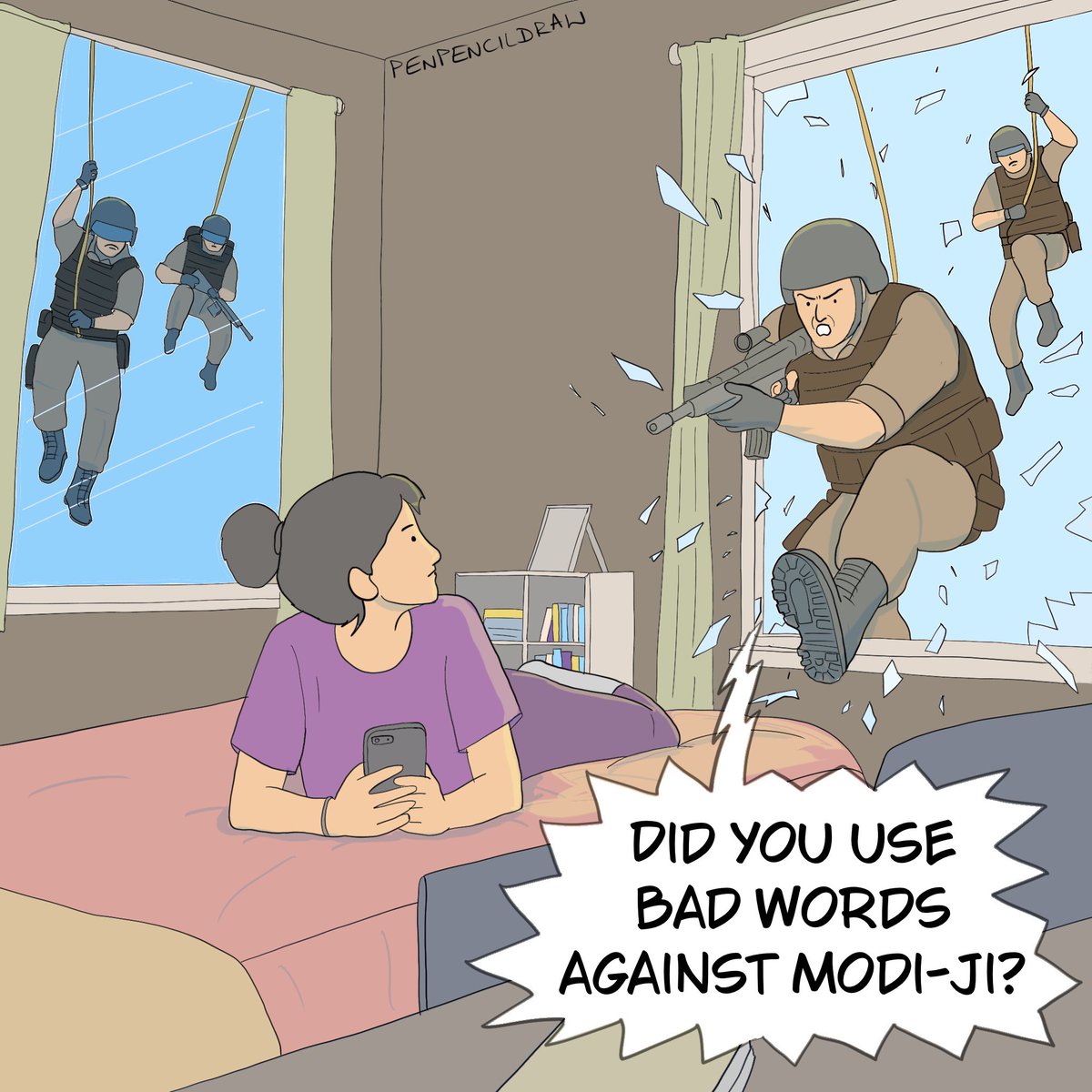
Do people think they have the right to criticize or bad mouth our dear leader? Are they ignorant enough to think they live in a country with free speech? They need to learn they cannot say what they think about our PM. Throw them in jail!
#FoE#censorship#India#socmed
But at what cost: the Yangtze edition
The Economist reports a remarkable and very welcome piece of news. Fish biomass in the Yangtze has risen by more than 200 percent since 2021, reversing seven decades of decline. A rare sturgeon has been observed spawning in the wild for the first time in twenty years. Finless porpoise numbers are up from a low of 1,000 in 2017 to more than 1,400. This is not Chinese state media talking; it comes from a study by researchers in China, Canada, the United States and France.
How was it done? A ten-year commercial fishing ban across the river, its major tributaries and the lakes of its basin. Thousands of chemical factories closed or relocated. Forests planted on the upper reaches to hold the soil. Cities “spongified” with artificial wetlands and permeable surfaces to absorb rainfall and filter stormwater. A river that was being killed is coming back to life.
And then, inevitably, the pivot. China’s approach is “eco-authoritarian”, we learn, “top-down and intolerant of resistance”, and “deserves scrutiny before being imitated”. The Economist has coined a term whose entire function is to make successful environmental protection sound sinister.
China is condemned for not listening to the fishermen, who wanted to carry on fishing, and to environmentalists, who want fewer dams. So presumably the Economist would be happier with the status quo of a dying river, a collapsing fishery, and a species on the brink of extinction?
Such a line of reasoning brings to mind Michael Parenti’s observation about the absurdity of Cold War propaganda:
“During the cold war, the anticommunist ideological framework could transform any data about existing communist societies into hostile evidence. If the Soviets refused to negotiate a point, they were intransigent and belligerent; if they appeared willing to make concessions, this was but a skillful ploy to put us off our guard. By opposing arms limitations, they would have demonstrated their aggressive intent; but when in fact they supported most armament treaties, it was because they were mendacious and manipulative.
“If the churches in the USSR were empty, this demonstrated that religion was suppressed; but if the churches were full, this meant the people were rejecting the regimes atheistic ideology. If the workers went on strike, this was evidence of their alienation from the collectivist system; if they didn’t go on strike, this was because they were intimidated and lacked freedom. A scarcity of consumer goods demonstrated the failure of the economic system; an improvement in consumer supplies meant only that the leaders were attempting to placate a restive population and so maintain a firmer hold over them.”
The article notes that the fishermen who lost their jobs were given compensation and retraining. It doesn’t mention that this is an awful lot better than what Britain’s coal miners got in the 1980s, or what the cod fishermen of Newfoundland got in the 1990s.
This is the “but at what cost” genre in its purest form. China eliminates extreme poverty; but at what cost. China builds the world’s largest high-speed rail network; but at what cost. China brings its greatest river back from ecological death; but at what cost. The real cost is, it seems, to Western hegemony.
More bans.
What is this "you can't talk if we can't listen" policy?
Will we also ban face to face conversations because criminals may use that to plan crimes?
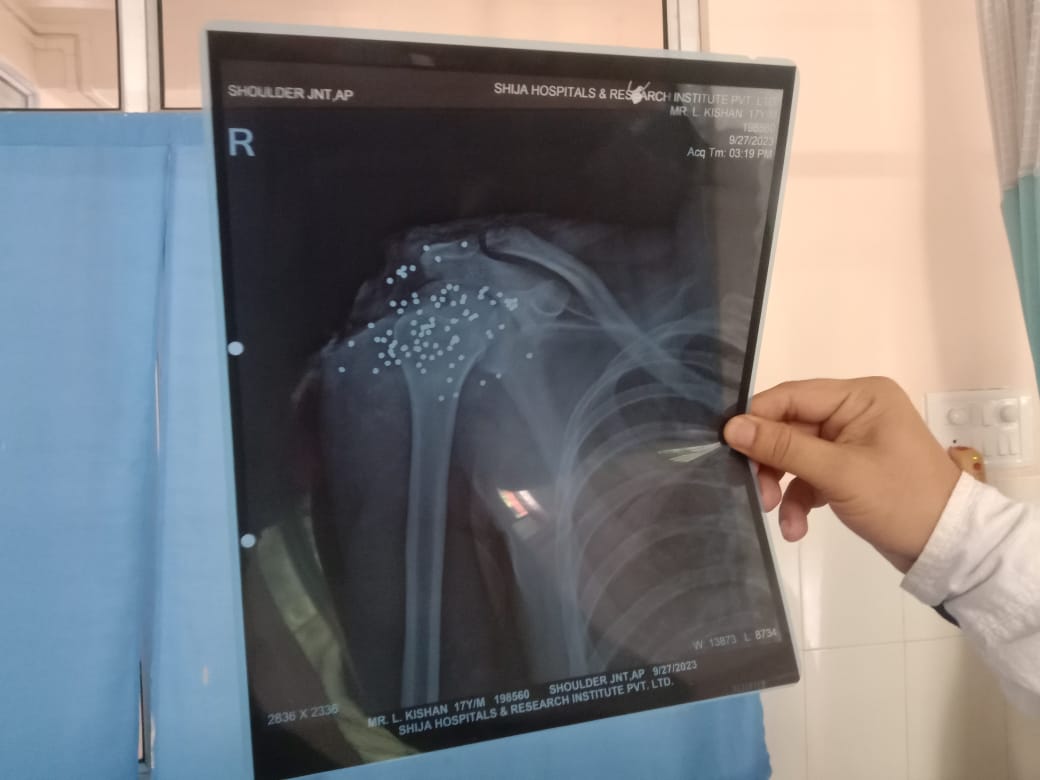
In 2023, I reported from #Manipur regarding #pellet gun injuries suffered by 17 yr old Kishan Loitongbam. He was a class 12 student in Imphal who took part in a school students protest, after two fellow students went missing and were later found dead. Kishan was shot with a #pellet gun by RAF personnel at point-blank range in his right shoulder. His shoulder was shattered. Doctors told me that there were around 90 pellets lodged in his shoulder, but they could remove only 60.
Another , 17 yr old student, Soaibam Uttam, suffred pellet injuries to his head. More than 50 pellets were lodged in the back of his head. Along with them, six more school students suffered pellet injuries. All eight of them were minors. At that time, Kishan's father asked me ," The RAF could have used water cannons or carried out a lathi charge to disperse the students. Why did they have to use pellet guns against student protesters?Have #pellet guns ever been used against school students protesting in #Delhi, #Mumbai or other parts of mainland India? Then why only in Manipur?"
I had answered him 'no' back then. But three years later, pellet guns have also been used against protesters in #Delhi, may be not on minors, but definitely people participating in a student protest.
If the police alone get to decide what is an "exceptional situation," then doesn't every situation become exceptional whenever they want to justify the use of #PelletGuns?
Given below are the then X-rays of the pellet injuries suffered by Kishan and Soaibam.
Notice the timing of the Diary Entry at Parliament Street P.S- it was filed at 1.24 am on July 22, two days after the July 20 incident and hours after The Hindu reported that RAF used pellet guns at protestors. RAF made sure to document that it was done on the directions of Delhi Police.
Also, Following the July 20 incident, the RAF withdrew shock batons, electric shields, pump-action guns, and the anti-riot guns, which fire pellets, from personnel deployed at Jantar Mantar. A review by RAF I-G General also highlighted “serious deficiencies” in RAF behaviour during the march, in violation of its principle of “sensitive policing”.
https://t.co/0E3EQBRUxM