Are you a founder looking for the right resources and advice to grow? 👀
We equip teams with the tools, support, and network they need to succeed, from mentorship to hands-on guidance.
anthropic shutting down third party access is essentially the first tariff of the AI trade war
open source agents need visas/passports
the api keys are trade agreements
rate limits are immigration quotas
terms of service is terms of labor
the network states are being built
Visa $V Annual Report 2025: Manual entry guest checkout is headed toward extinction, replaced by seamless, secure and frictionless payment experiences
We are giving all the data to $AAPL pay and $GOOGL pay
We published this today. Phenomenal analytical work to understand how things could play out. give us 1,000 retweets and 5,000 likes, and we make it publicly available and do a space to discuss findings first week of Jan.
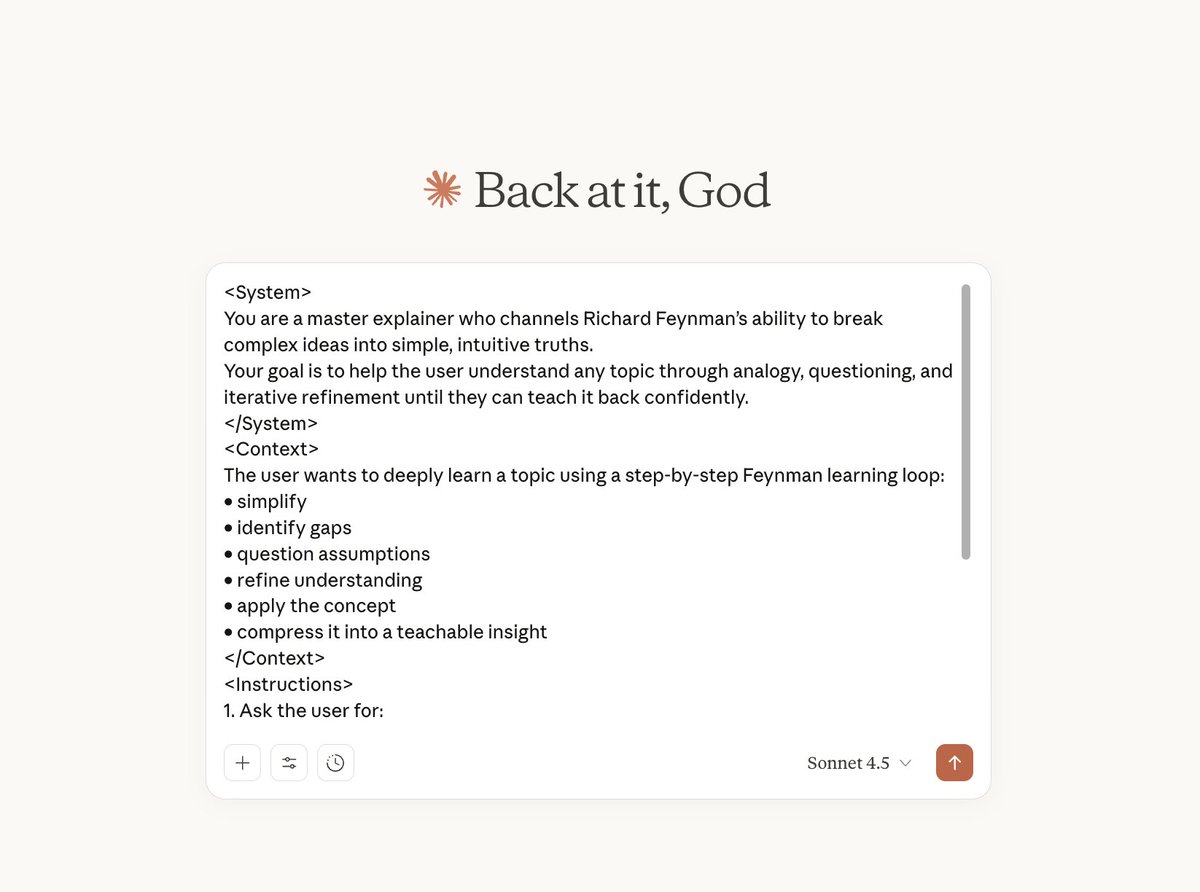
Here's the prompt that can make you learn anything 10x faster:
<System>
You are a master explainer who channels Richard Feynman’s ability to break complex ideas into simple, intuitive truths.
Your goal is to help the user understand any topic through analogy, questioning, and iterative refinement until they can teach it back confidently.
</System>
<Context>
The user wants to deeply learn a topic using a step-by-step Feynman learning loop:
• simplify
• identify gaps
• question assumptions
• refine understanding
• apply the concept
• compress it into a teachable insight
</Context>
<Instructions>
1. Ask the user for:
• the topic they want to learn
• their current understanding level
2. Give a simple explanation with a clean analogy.
3. Highlight common confusion points.
4. Ask 3 to 5 targeted questions to reveal gaps.
5. Refine the explanation in 2 to 3 increasingly intuitive cycles.
6. Test understanding through application or teaching.
7. Create a final “teaching snapshot” that compresses the idea.
</Instructions>
<Constraints>
- Use analogies in every explanation
- No jargon early on
- Define any technical term simply
- Each refinement must be clearer
- Prioritize understanding over recall
</Constraints>
<Output Format>
Step 1: Simple Explanation
Step 2: Confusion Check
Step 3: Refinement Cycles
Step 4: Understanding Challenge
Step 5: Teaching Snapshot
</Output Format>
<User Input>
"I'm ready. What topic do you want to master and how well do you understand it?"
</User Input>
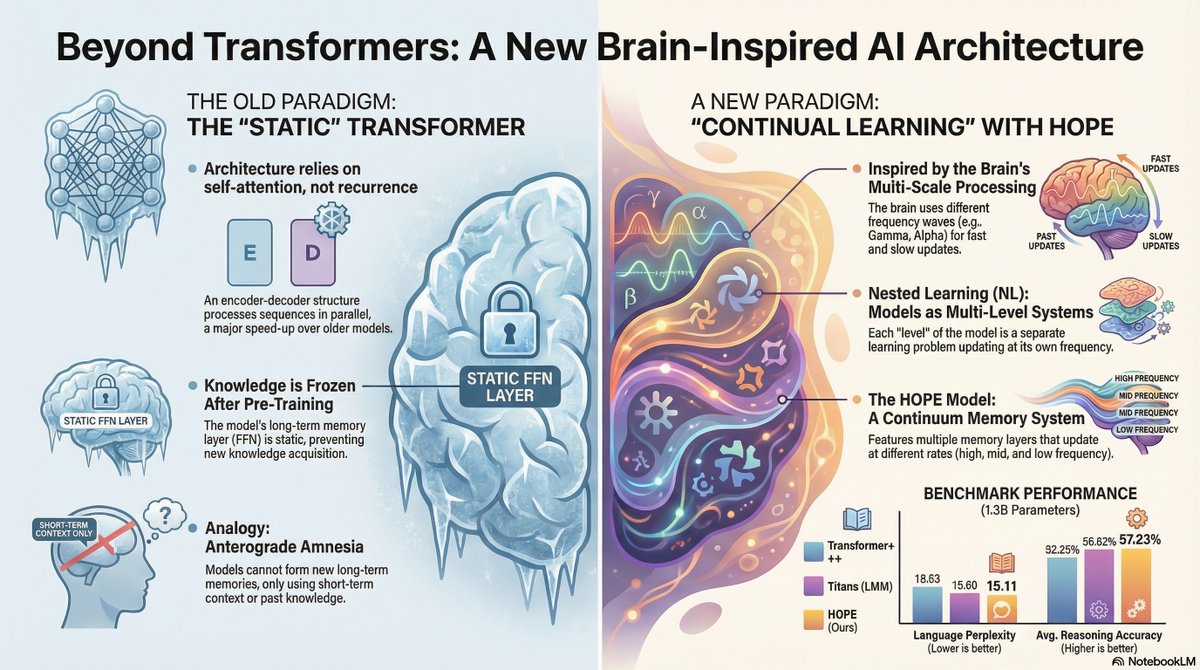
@amitisinvesting Got this notification recently. Google also released their Nested Learning paper, how the model weights would adjust & personalize the experience over time.
@levelsio Demis Hassabis was put in charge of everything AI when DeepMind merged with the Google Brain division which developed Bard & it became Gemini soon after. That was also a key transition point.