I am a #KashmiriHindu , a victim of Islamic terrorism in India. I was thrown out of my home in 1990 by the people who didn’t have 4G service for 550 days. And I am still waiting for justice for more than 30 years. Fast internet matters more to woke liberals. Let that sink in!
🚨 EXCLUSIVE! Remember Khanani from Dhurandhar smuggling fake currency through Nepal?
- It was TRUE. Cong Govt ACCEPTED it in the Parliament in 2012🤯
RJD MP questions how Pakistan prints fake Indian currency with the same INK, PAPER & INTAGLIO tech, smuggling via Nepal.
Chidambaram (then FM) casually replies: "How can we stop them? The source is in another country. We can only try to prevent entry through borders" 😳
This was India’s Law & Order admitting defeat inside Parliament🤡
Before 2014, we were completely COOKED. Fake currency flooded in while the government shrugged.
Next time someone calls Dhurandhar "propaganda", show them this – their own regime was openly HELPLESS against Pakistan’s terror economy.
Thirty-six years ago, they tried to blow out the flame of the Kashmiri Pandit. Forced from their ancestral homes, they were cast into the unknown, scattered across cities they never chose, into lives they hadn't imagined. The world looked at them and saw people in "exile." Some believed that, away from the valley of Kashmir, they would simply dissolve. They thought that without the soil of their ancestors, the Pandits would forget who they were. They thought silence and distance would do what swords couldn't, erase them.
But they forgot one thing. A Kashmiri Pandit doesn't just live in Kashmir; Kashmir lives inside the Pandit. Every year, as the Herath (Mahashivratri) approaches, a pulse begins to beat through the diaspora. It starts at airport terminals, where students and families stand in line, traveling toward "home", wherever that home may be now.
The Resistance of the Mother: It is in the way she carries the traditions in her heart, refusing to let the recipes of her grandmother fade into the smog of a new city.
The Resistance of the Father: It is in his hands as he lights the diya. He was forced to leave behind his house, his land, and everything he ever loved, but he refused to leave behind his Dharma.
Herath is no longer just a festival. After 36 years, it has become the ultimate proof of existence. It is the proof that they did not die. It is the proof that they will never disappear. By celebrating Herath year after year, they are sending a message to the world and to history: "We are still here."
Dedicated to all our Kashmiri Hindu brothers who endured every storm but never let go of their Dharma. May your walnuts always be soaked in the water of faith, and may the road home always live within your heart until the day it rises to meet your feet.
Har Har Mahadeva.
Befitting ending to get Sanjay Suri as the survivor of the Sapru family in Baramulla. His real life story is similar. Sanjay's father was murdered by Kashmiri terrorists in the 90s. As a teen, we often walked past the Suri Mills in Mandir Bagh on the way to Barbarshah, our maatamaal (mother's home). The Suri Mills were finally destroyed by the September 2014 floods in Srinagar.
Elders often told us about the gruesome beheading with downcast eyes, never knowing that years later when Sanjay Suri's first movie for us, Filhaal, was featured in film magazines, the nation would know how he had rebuilt his life after the tragedy at age 19.
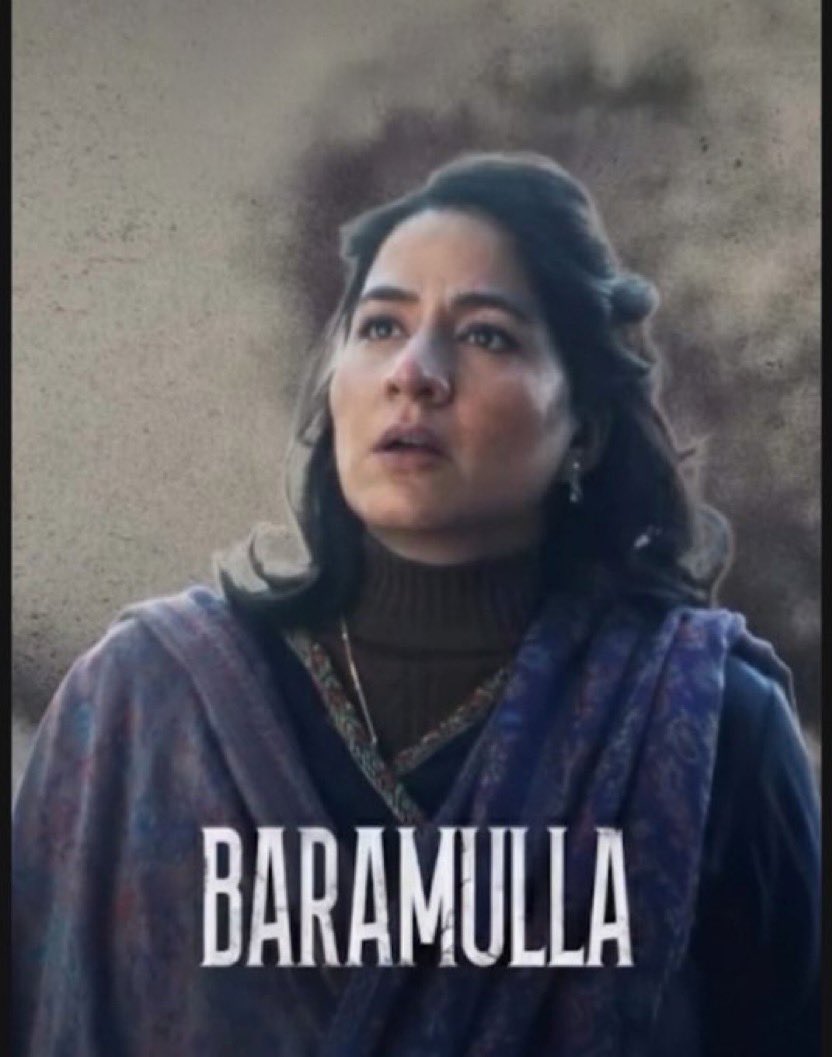
Befitting end credits to the resilience of the Kashmiri Pandit community, and a masterpiece, weaving the horror genre with the history of the place. Very sensitively portrayed, not dehumanising the Muslim population either, showing how they too are helpless in the face of terror with their own sons and daughters radicalised by the ISI terrorists as well as the broader Wahhabi/Salafi radicalism which engulfed the subcontinent post 1979.
I'd say Bollywood has come of age. I watched it despite my son's concerns about it triggering my trauma. Yet holding me in the last few minutes as instinctively I started telling them about Pitthi Koul's murder, the lady who had come with her daughter to retrieve luggage from their ancestral home and was gunned down by Bangroo (later eliminated in an anti-terror operation), even as the Sapru family murder was being depicted on screen.
These stories need to be told to the future generations so Ela Sapru's determination matches ours - dobaar ne, dobaar ne, never again, never again.
Take a bow team Baramulla, all credit to the entire cast. The Shiva Sankhara is added to my playlist.
Not a review of Baramulla:
For years I wondered what would be the best genre to tell our story on screen most effectively. What should be the cinematic language that can be used to show a continual Genocide on screen? What can be both subtle and effective? What can be both truthful and healing? How can you show the horror of Genocide and resilience of survivors? How can you show the unvarnished truth without relying on ‘balancing’ for the sake of balancing. I think #Baramulla has finally checked all these boxes. There couldn’t be a better genre than horror and paranormal activity to depict our story. After all what has happened to Hindus of Kashmir over last 700 years does seem like a horror and paranormal activity to any outsider. Almost unbelievable. ‘Who gets killed in their own homes?’ ‘Why did you not fight back?’ ‘Are you cowards because you left your homes of 5000 years?’ And my favorite - ‘You don’t look like refugees and genocide victims, it is hard to believe this happened to you’. Never mind those who ask these questions have no understanding of what a genocide truly is and have never met a true genocide victim.
Kashmir known for its breathtaking beauty and tulip gardens as depicted in numerous Hindi films of yore hides a deep secret in its bosom. The white Tulip in the film Baramulla is not a symbol of beauty. It spells doom, it looks unusual and out of place. @AdityaSJambhale’s Kashmir is not pretty. It is dark, gloomy, foreboding and it is a place where children disappear and old creaky homes are infested by ghosts. Walls scream ‘kafir’ in red- perhaps wanting to ask ‘what happened to infidels’? This sign is immediately erased but the hands that erase it are themselves colored in red- color of blood. How do you erase ‘kafirs’ without becoming part of erasure yourselves? How do you live in Kafir homes without becoming party to guilt yourself? How do you solve crime in a land where primal crime remains unsolved and unresolved?
Baramulla will sear you. It will torture you and it will unsettle you. And if you are a Kashmiri Pandit it will break your heart into million pieces once again.
Baramulla should be a mandatory watch for every Indian. Baramulla is our land. It is Varmul for us and Varahamula for our ancestors. Sanskrit term meaning "boar's molar". Land of Shiva where Vishnu, in his boar incarnation, struck the mountain at this location to drain the waters of the ancient lake that once formed the Kashmir Valley. In this abode of Shiva, unspeakable sins have been committed. Just as the mystery of missing children cannot be solved without the mystery of haunted home being resolved , present crimes cannot be be solved unless those who live there now don’t confront what their forefathers have done to the aboriginals of the valley. Until that happens, Kashmir will remain cursed, gloomy, and haunted. As terrific @bhashasumbli in the climax lets out a primal cry and says ‘ No more’. Unless people there like Gulnar don’t say ‘No more’ they will keep living in haunted homes and their children will get swallowed by invisible evil.
I want to congratulate director @AdityaSJambhale and writer @monalthaakar for this brutally honest and heart breaking film. May your craft always remain pure.
@monalthaakar@SrinagarGirl Take a bow! You have done a splendid job. As a Kashmiri Pandit living in exile, my sincere thanks and gratitude for portraying our pain 🙏
@authoramish The Shiva trilogy stands out for me. I have not only read it multiple times but recommended it to all my friends.I had to force myself to finish the Rama Chandra series. I don’t think anything can compare to the Shiva Trilogy.. Har Har Mahadev 🙏@authoramish
To those attempting to distort history: We Kashmiri Pandits, the indigenous people of the Kashmir, faced four major exoduses under Islamic regimes:
Sultan Sikandar (1389–1413) – Nicknamed Butshikan (“temple destroyer”), he imposed Sharia law, banned Hindu practices, razed temples, and issued an ultimatum: convert, flee, or die. Thousands of Pandits were forced to abandon their homeland.
Chak Dynasty (1550s–1580s) – Sectarian Shia rulers who targeted both Sunnis and Pandits. Hindu officials were purged, temples desecrated, and the Pandit community endured systemic repression and expulsion.
Afghan Durrani Rule (1752–1819) – Arguably the darkest era. Afghan governors treated Pandits as second-class citizens, imposed heavy jizya (non-Muslim tax), and sanctioned abductions and forced conversions. Public executions were not uncommon.
Islamist Insurgency (1989–1990) – Armed militants chanted: “Raliv, Galiv ya Chaliv” (“Convert, Die, or Flee”). Assassinations, temple burnings, and open threats forced over 100,000 Pandits to flee overnight, leaving behind homes, temples, and ancestral graves.
This was not “peaceful demographic change.” It was centuries of fear, blood, and exile.
We are alive. We survived. We remember!
Kashmir was Hindu. Then came Mir Sayyid Ali Hamadani with Islam, Sikandar ‘Butshikan’- The Butcher of Kashmir with temple destruction, and centuries later, 1990- when the Kashmiri Pandits like us were driven out at gunpoint. It wasn’t a “free will” conversion. It was a takeover!