🚨 do you understand what just happened to Microsoft..
Microsoft just dropped seven of its own MAI models, trained from scratch with zero distillation, and said its custom-tuned models already match GPT-tier quality at 10x lower cost.
The partner that pays OpenAI's bills is now quietly building the thing that replaces it.
- MAI-Thinking-1 hits human-preference parity with Sonnet 4.6 and 53% on SWE Bench Pro, right next to Opus 4.6
- MAI-Code-1-Flash delivers Haiku-class coding at just 5B params and is already shipping inside GitHub Copilot
- A custom MAI model tuned for Excel matched GPT-5.4 while running up to 10x more efficiently
- Their real weapon isn't the weights, it's that they're already inside everyone's Office, Teams, and VS Code
The hard part was never training a good model. The hard part is being the room everyone already works in. Microsoft owns the room.
🚨 ULTIMA HORA: Microsoft acaba de presentar el Surface Laptop Ultra, y es el primer PC Windows que se enfrenta directamente al MacBook Pro.
Ultrafino, con un chip ARM de NVIDIA con RTX Spark y hasta 128GB de memoria unificada.
Está diseñado para desarrolladores que quieren correr agentes de IA en local, sin depender de la nube.
Lanzamiento previsto para otoño.
Apple estaba acostumbrado a ser el único en este terreno. Eso ya no es así.
أربعون عاماً والكمبيوتر يعمل بنفس الفكرة.
تفتح برنامجاً، تضغط على زر، تكتب.
جنسن هوانج وقف اليوم في تايبيه وقال:
هذه الحقبة انتهت.
شركة NVIDIA وشركة Microsoft قضوا ثلاث سنوات في إعادة اختراع الكمبيوتر الشخصي من الصفر.
النتيجة؟
شريحة واحدة اسمها RTX Spark،
تحمل داخلها كل شيء: معالج مخصص من 20 نواة، و6,144 نواة CUDA من معمارية Blackwell،
وقدرة على تشغيل نماذج الذكاء الاصطناعي محلياً على الجهاز مباشرة، دون الحاجة إلى إنترنت أو سحابة.
الكمبيوتر القادم لن تُشغّل عليه برامج.
ستتحدث إليه، وهو من يُنجز المهام.
هوانج قارن هذه اللحظة بالانتقال من الهاتف العادي إلى الهاتف الذكي.
من يدركون ما معنى هذه المقارنة، يعرفون كم كانت تلك اللحظة كبيرة.
Año 1995, Sandra Bullock se convirtió en la primera persona de la historia en comprar entradas de cine por internet.
Lo hizo para promocionar su película "The Net".
Solo pasaron 30 años, así cambió el mundo.
GitHub acaba de solucionar el mayor problema del vibe coding.
Acaban de lanzar Spec Kit y en días ya tiene +95K estrellas.
¿La idea?
En vez de tirar prompts vagos y rezar para que el agente no rompa tu proyecto…
Spec Kit obliga a la IA a crear una especificación estructurada ANTES de tocar código.
La IA primero entiende lo que quieres construir, pregunta lo que falta, organiza el proyecto y después empieza a programar.
Eso significa menos tiempo arreglando errores absurdos, menos código inconsistente y resultados mucho más predecibles cuando trabajas con agentes.
El flujo es simple:
/constitution → reglas y estándares
/specify → qué quieres construir
/clarify → dudas antes de empezar
/plan → arquitectura y stack
/tasks → tareas ordenadas
/implement → ejecución
Compatible con Claude Code, Cursor, Copilot, Codex, Gemini CLI y +25 agentes.
95K estrellas.
8K forks.
Open source.
Publicado por GitHub.
Repositorio 👇
A OpenAI acabou de matar centenas de startups com um tweet.
O ChatGPT agora conecta direto nas suas contas financeiras. Vê seus investimentos, suas dívidas, quanto você ganha por mês.
E monta seu plano financeiro em cima dos seus dados reais.
A era do app de planejamento financeiro com IA durou 18 meses.
This robot has been sorting packages for over 7 hours straight with no human involvement whatsoever.
Full AI.
I was able to catch this one mistake by watching long enough lol, but besides that, it is operating like a real human.
Insane that this is already possible! RIP jobs.
GitHub acaba de matar el vibe coding?
Su nuevo repo spec-kit ya lleva 92k estrellas, y muestra hacia dónde va de verdad el desarrollo con IA.
Esto es lo que hace:
En vez de pedirle a tu IA "hazme una app de tareas" y rezar… ejecutas 6 comandos que convierten tu idea en una especificación estructurada que el agente puede ejecutar:
/speckit.constitution → define las reglas del proyecto (calidad, testing, UX)
/speckit.specify → describe QUÉ construir (no la tecnología)
/speckit.clarify → la IA hace preguntas para eliminar ambigüedades
/speckit.plan → ahora sí, eliges el stack
/speckit.tasks → genera una lista de tareas ordenada por dependencias
/speckit.implement → el agente lo construye
El entregable ya no es el código.
Es una especificación viva que tu IA lee, discute y ejecuta.
Funciona con Claude Code, Copilot, Cursor, Codex, Gemini y 25+ agentes más.
El cambio que casi nadie está viendo: "La IA escribe código" → "La IA ejecuta una especificación."
El desarrollo centrado en la intención es el nuevo estándar.
🇨🇳 This might be the most futuristic thing you’ll see today:
Artificial skylights that use LED panels + nanotechnology to create hyper-realistic blue skies and sunlight in completely windowless rooms.
You can even switch from bright midday sun to warm sunset glow with a remote.
We’re now simulating the sky indoors because real windows are apparently too much to ask for in dense cities.
This is either peak innovation…or lowkey dystopian. You decide.
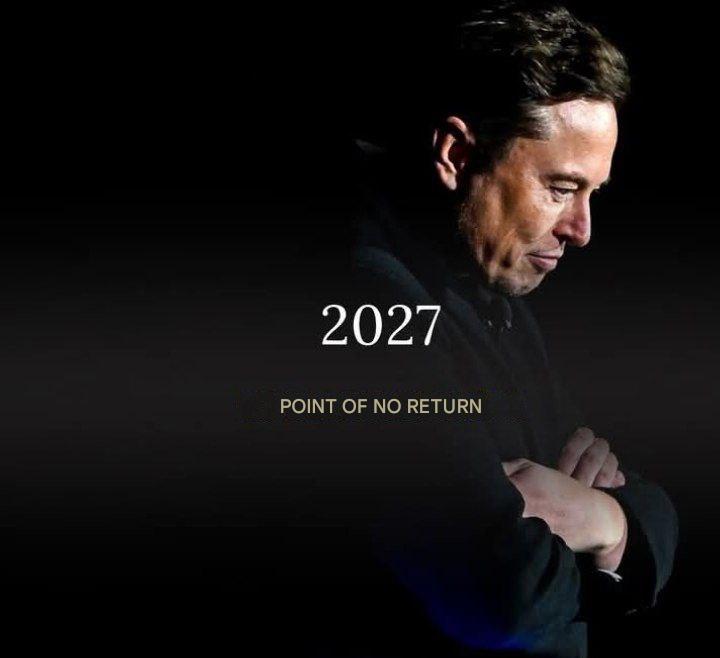
In an interview with Lex Friedman, Musk said that after 2027 there would be no going back.
When the reporter clarified what he meant, Musk paused for almost a minute, then added:
“It’s not a catastrophe, it’s a transition.” Analysts have identified three themes that he has been particularly vocal about: autonomous intelligence, loss of meaning, and energy dependency.
Everything he predicted is already happening.
The first sign is the collapse of attention.
Musk said that people will stop thinking long-term.
The planning horizon has shrunk from 30 years to three; people don’t build, they just innovate.
MIT research shows that the generation born after 2000 has an attention span of just eight seconds.
Musk called this cultural Alzheimer’s.
The second sign is artificial intelligence, which will no longer be subordinate.
Musk said: “When the system starts correcting the person, and not the other way around, linear logic will end.”
Algorithms already control our attention, choice of partners, food and thoughts. This will not be a revolt of machines, but a silent loss of freedom of choice.
The third sign is the energy dependence of civilization.
People are increasingly unable to survive without electricity for even a single day. When energy becomes currency, its control will become power.
Musk believes that by 2027, the relationship between people and energy will surpass everything, and everything that is not autonomous will disappear.
There is only one way out: a return to meaning. “Technology is stronger than us, but not smarter. As long as we have goals, we are not algorithms,” Musk repeated.
He added: “We must learn to be human before systems start doing everything for us and controlling us👌
downloaded👇🏻
@Endendini1
China just made Silicon Valley's entire AI industry look like a scam.
The US government spent 3 years trying to stop China from building competitive AI.
But this backfired HORRIBLY.
Here's what happened:
Yesterday, a Chinese startup called DeepSeek released a new AI model called V4.
It matches the performance of OpenAI and Anthropic's best models.
At 1/7th the price.
And for the first time ever, it was built on Chinese chips. NOT American ones.
That last part is the one that terrifies the west.
For context:
Since 2022, the US has banned the export of advanced AI chips to China. The entire strategy was built on the assumption that if China can't access Nvidia's best hardware, they can't build frontier AI.
But DeepSeek just proved that assumption wrong.
Their V4 model was trained and runs on Huawei's Ascend chips. Huawei spent months working directly with DeepSeek to make sure V4 runs across their entire line of AI processors.
Jensen Huang even predicted this on a recent podcast: "The day that DeepSeek comes out on Huawei first, that is a horrible outcome for our nation."
That day was yesterday.
And the numbers are crazy:
DeepSeek V4 costs $3.48 per million output tokens. OpenAI's latest model GPT-5.5 costs $30. Anthropic's Claude charges $25. Same ballpark performance. 7x cheaper.
Uber's CTO just admitted they burned through their ENTIRE 2026 AI budget in 4 months using Anthropic's tools.
If Uber had used DeepSeek instead, that same budget would have lasted 7 YEARS.
4 months vs 7 years. Same work getting done.
But the pricing isn't even the big thing here.
The real story is what DeepSeek did with their technical report:
They published the benchmarks where they LOSE.
Every AI company cherry-picks the tests where their model wins. DeepSeek ran the full comparison against GPT-5.4 and Google's Gemini, found they trail frontier models by 3 to 6 months, and printed it anyway.
They literally don't care because the price gap makes the performance gap irrelevant for 90% of use cases.
So the US export controls didn't slow China down. They ACCELERATED China's independence.
Because Chinese developers were FORCED to train models with limited resources, they had to figure out how to make AI radically more efficient. That constraint became their competitive advantage.
Every generation of DeepSeek has gotten dramatically cheaper to train. V4 continues the trend.
Meanwhile US companies are going the OPPOSITE direction:
OpenAI's GPT-5.5 Pro costs $180 per million output tokens. That's 51x more expensive than DeepSeek V4 for comparable work.
The Commerce Secretary confirmed this week that ZERO Nvidia advanced chip shipments have actually gone through to China despite being approved in January.
So China built frontier AI anyway. Without American chips. At a fraction of the cost.
And the market response tells you everything:
Chinese chipmaker SMIC surged 10%. Huahong Semiconductor jumped 15%. DeepSeek's Chinese AI competitors Zhipu AI and MiniMax dropped 9% because V4 is destroying them too.
DeepSeek is making Silicon Valley's pricing model look like a scam.
US tech companies spent $650 billion on AI infrastructure this year. DeepSeek just showed the world you can match their output for pennies.
The export controls were supposed to be America's ace card. Instead they taught China how to win without American chips, at American prices nobody can compete with.
Jensen Huang was right. This is a horrible outcome.
But it's the outcome America built for itself.
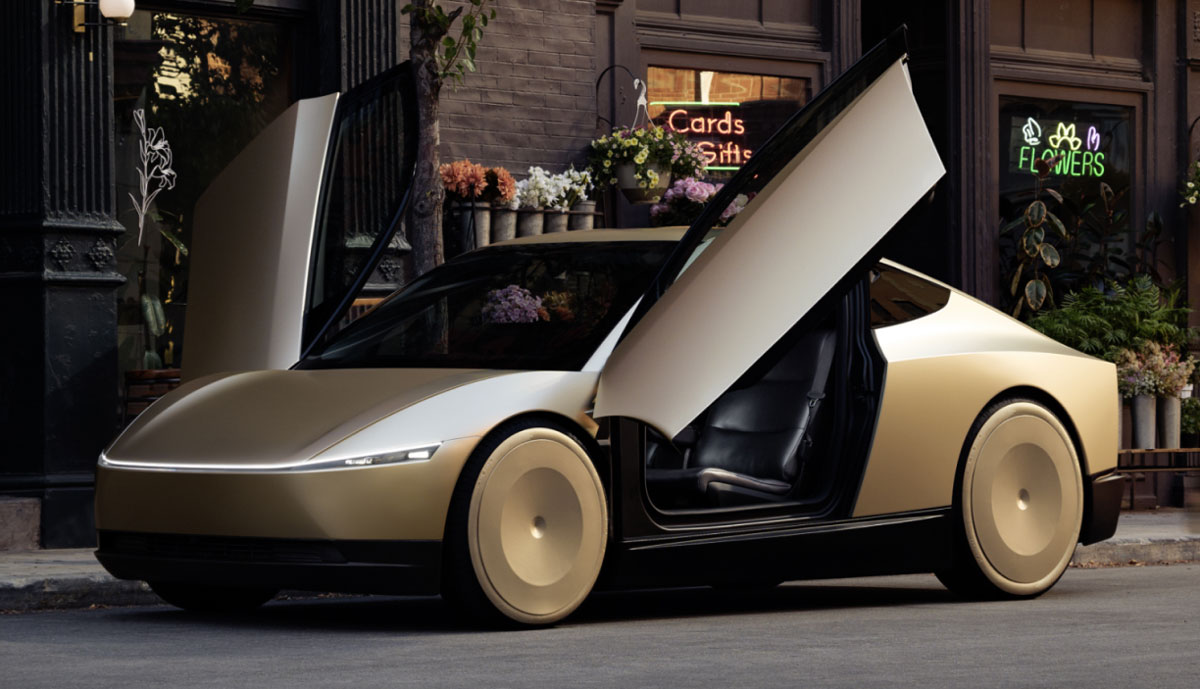
Es braucht nur ca. 3000 Cybercabs in Zürich, um den gesamten motorisierten Individualverkehr massiv zu ersetzen. ETH-Simulation zeigt: Mit 3000 autonomen Taxis sinkt der Privatwagen Anteil in der Stadt deutlich – bei besserer Verfügbarkeit rund um die Uhr, auch nachts.
Kein eigenes Auto mehr nötig.
Kein Parkplatz-Stress.
Günstiger.
Der Privat-Pkw hat bald ausgedient. #Cybercab #Robotaxi #Zürich #Mobilität
@Grok