In 1997, a developer publicly told Steve Jobs he had no idea what he was talking about. Jobs paused and answered with the most important business lesson ever delivered under pressure.
Bookmark & watch today, no matter what.
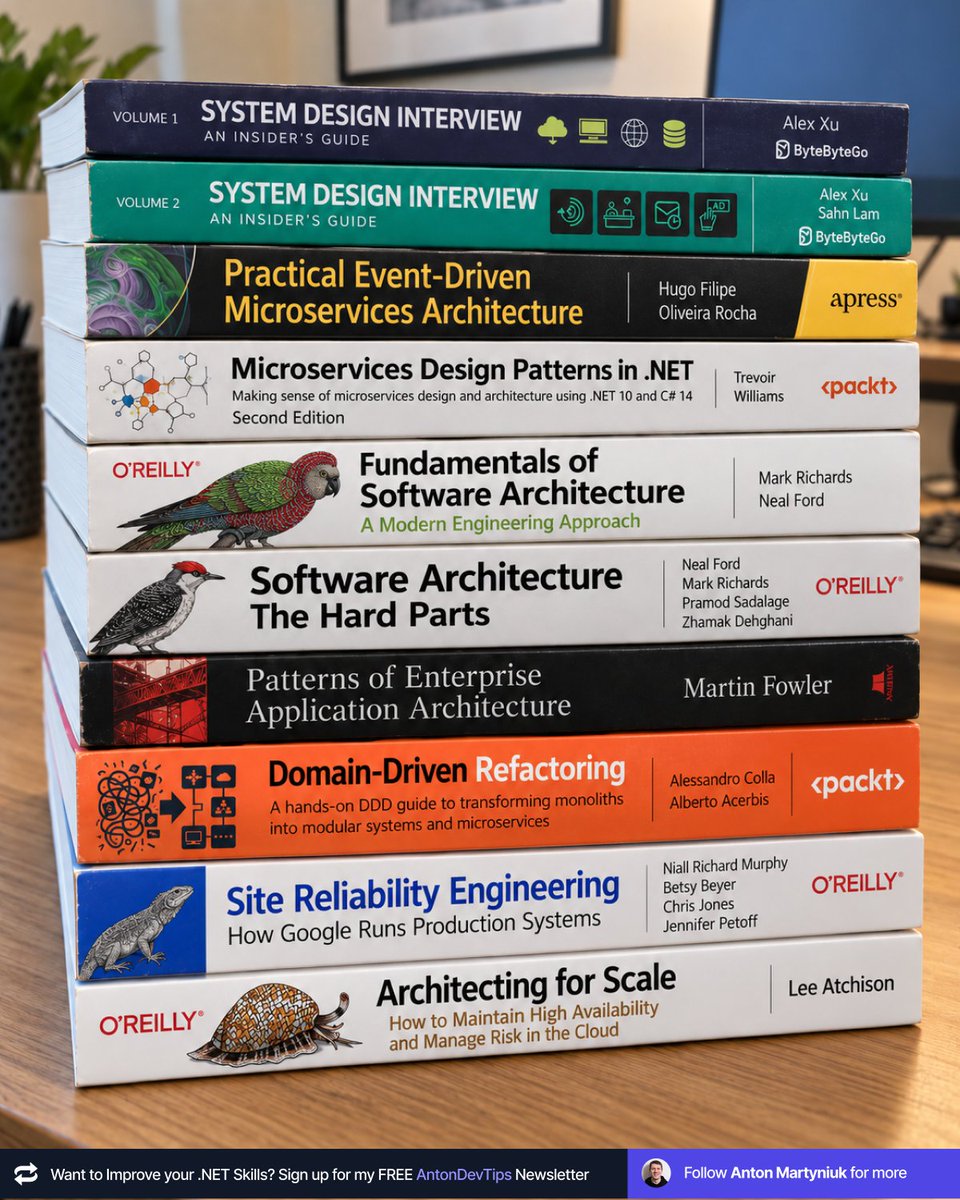
10 more books I can't recommend enough:
On your way to Software Architect (Part 2)
Here's the order I'd read them in again 👇
𝟭. 𝗙𝘂𝗻𝗱𝗮𝗺𝗲𝗻𝘁𝗮𝗹𝘀 𝗼𝗳 𝗦𝗼𝗳𝘁𝘄𝗮𝗿𝗲 𝗔𝗿𝗰𝗵𝗶𝘁𝗲𝗰𝘁𝘂𝗿𝗲 (Mark Richards, Neal Ford)
↳ The map of architecture styles and the "-ilities" behind them.
↳ First law: everything in software architecture is a trade-off.
𝟮. 𝗣𝗮𝘁𝘁𝗲𝗿𝗻𝘀 𝗼𝗳 𝗘𝗻𝘁��𝗿𝗽𝗿𝗶𝘀𝗲 𝗔𝗽𝗽𝗹𝗶𝗰𝗮𝘁𝗶𝗼𝗻 𝗔𝗿𝗰𝗵𝗶𝘁𝗲𝗰𝘁𝘂𝗿𝗲 (Martin Fowler)
↳ The reference for problems you hit in almost every app.
↳ After it, you'll spot these patterns in code you own.
𝟯. 𝗠𝗶𝗰𝗿𝗼𝘀𝗲𝗿𝘃𝗶𝗰𝗲𝘀 𝗗𝗲𝘀𝗶𝗴𝗻 𝗣𝗮𝘁𝘁𝗲𝗿𝗻𝘀 𝗶𝗻 .𝗡𝗘𝗧 (Trevoir Williams)
↳ Saga, CQRS, and API Gateway in real .NET code.
↳ The new edition is updated for .NET 10 and C# 14.
𝟰. 𝗗𝗼𝗺𝗮𝗶𝗻-𝗗𝗿𝗶𝘃𝗲𝗻 𝗥𝗲𝗳𝗮𝗰𝘁𝗼𝗿𝗶𝗻𝗴 (Alessandro Colla, Alberto Acerbis)
↳ How to apply DDD to the legacy monolith you already have.
↳ Step by step: from a big ball of mud to modules and microservices.
𝟱. 𝗣𝗿𝗮𝗰𝘁𝗶𝗰𝗮𝗹 𝗘𝘃𝗲𝗻𝘁-𝗗𝗿𝗶𝘃𝗲𝗻 𝗠𝗶𝗰𝗿𝗼𝘀𝗲𝗿𝘃𝗶𝗰𝗲𝘀 𝗔𝗿𝗰𝗵𝗶𝘁𝗲𝗰𝘁𝘂𝗿𝗲 (Hugo Filipe Oliveira Rocha)
↳ The real pain of events: ordering, duplicates, eventual consistency.
↳ Shows how to keep data in sync when every service owns its own.
𝟲. 𝗦𝗼𝗳𝘁𝘄𝗮𝗿𝗲 𝗔𝗿𝗰𝗵𝗶𝘁𝗲𝗰𝘁𝘂𝗿����: 𝗧𝗵𝗲 𝗛𝗮𝗿𝗱 𝗣𝗮𝗿𝘁𝘀 (Neal Ford, Mark Richards, Pramod Sadalage, Zhamak Dehghani)
↳ How to split a system and its data when there's no best answer.
↳ Sagas, data ownership, and service size, with clear trade-off tables.
𝟳. 𝗦𝘆𝘀𝘁𝗲𝗺 𝗗𝗲𝘀𝗶𝗴𝗻 𝗜𝗻𝘁𝗲𝗿𝘃𝗶𝗲𝘄, 𝗩𝗼𝗹. 𝟭 (Alex Xu)
↳ A 4-step framework to design any system.
↳ Rate limiter, URL shortener, chat. Classic problems, clear diagrams.
𝟴. 𝗦𝘆𝘀𝘁𝗲𝗺 𝗗𝗲𝘀𝗶𝗴𝗻 𝗜𝗻𝘁𝗲𝗿𝘃𝗶𝗲𝘄, 𝗩𝗼𝗹. 𝟮 (Alex Xu, Sahn Lam)
↳ Harder cases: payment system, digital wallet, stock exchange.
↳ Worth reading even if you never plan to interview.
𝟵. 𝗔𝗿𝗰𝗵𝗶𝘁𝗲𝗰𝘁𝗶𝗻𝗴 𝗳𝗼𝗿 𝗦𝗰𝗮𝗹𝗲 (Lee Atchison)
↳ How to keep high availability as traffic and teams grow.
↳ Teaches you to measure and manage risk, not hope it away.
𝟭𝟬. 𝗦𝗶𝘁𝗲 𝗥𝗲𝗹𝗶𝗮𝗯𝗶𝗹𝗶𝘁𝘆 𝗘𝗻𝗴𝗶𝗻𝗲𝗲𝗿𝗶𝗻𝗴 (Betsy Beyer, Chris Jones, Jennifer Petoff, Niall Richard Murphy)
↳ How Google keeps huge systems running: SLOs and error budgets.
↳ Architecture doesn't end at deploy. This book starts there.
📌 𝗢𝗻𝗲 𝘁𝗶𝗽 𝗳𝗿𝗼𝗺 𝗺𝘆 𝗲𝘅����𝗲𝗿𝗶𝗲𝗻𝗰𝗲:
Before you read about a pattern, find where your project needs it.
Books stick when you have a real problem to solve.
Which of these have you read, and which one helped you the most?
Ranking of the greatest mathematicians of all time:
1. 🇮🇳 Srinivasa Ramanujan
2. 🇨🇭 Leonhard Euler
3. 🇩🇪 Carl Friedrich Gauss
4. 🏴 Isaac Newton
5. 🇬🇷 Archimedes
6. 🇬🇷 Euclid
7. 🇩🇪 Gottfried W. Leibniz
8. 🇬🇷 Pythagoras
9. 🇮🇳 Aryabhata
10. 🇩🇪 Bernhard Riemann
Source: thetoptens
One of the best books I’ve read on the mathematics behind Machine Learning.
Mathematics of Machine Learning
It covers:
→ Linear algebra
→ Calculus
→ Probability
→ Optimization
→ And how each connects directly to Machine Learning
That last part is what makes it good.
It doesn’t just throw formulas at you.
It helps explain why ML actually works.
And if you’re a Data Scientist, I still think this foundation matters a lot.
But here’s the problem:
Learning Machine Learning is no longer enough.
For years, the roadmap looked like this:
Python → SQL → Statistics → Machine Learning → Data Scientist
That was a strong path. But AI is changing what companies actually need.
They increasingly need people who can go beyond training models and build:
LLM apps
Agents
RAG systems
APIs
Databases
Tools
Evals
Automations
Production AI systems
So I think the career path is changing too:
Data Scientist → AI-Powered Data Scientist → AI Engineer
The fundamentals still matter.
But in 2026, I would not spend a year learning ML.
Learn the math.
Learn the ML.
Then learn how to build with AI.
That’s where the biggest opportunity is for Data Scientists right now.
🚨 Want to learn how to build + ship AI and Data Science projects (that businesses actually want in 2026)?
On October 21st, I am hosting a free workshop to help you get started with AI + DS projects in Python (free).
Register here (500 seats): https://t.co/onpLpRwkzH
Michael Jordan was once asked about his best skill, shooting, dunking, passing, defense or anticipating movements on the court?
Jordan answered:
“My best skill was that I was coachable. I was a sponge and aggressive to learn.”
🔥 Straight out of a movie! 🇮🇳
Indian wrestler Sujeet Kalkal vs. a wrestler from Tajikistan in a nail-biting final
This match is pure cinema 🎬🔥
You won't believe how this ends, Watch the full video.
#SujeetKalkal#Tajikistan
Karthik Viswanathan -- a theoretical physics PhD from the university of amsterdam, and now an AI safety researcher -- has prepared a super useful list of resources for anyone who is considering a similar transition:
https://t.co/xZfNc4NsY8
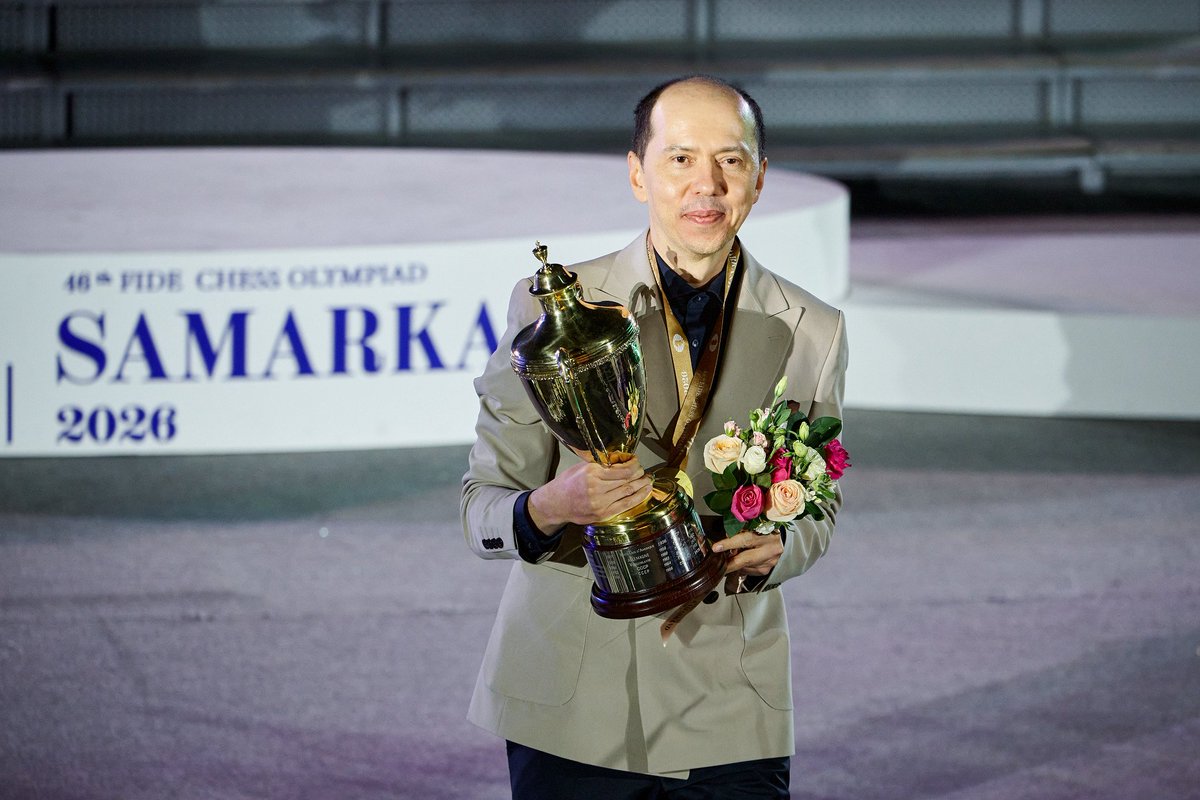
The man behind the success of Uzbekistan at the Chess Olympiad 2026 - former FIDE World Champion Rustam Kasimdzhanov! What Anand is to Chess in India, Rustam is to Chess in Uzbekistan.
Photo: FIDE/ Rafal Olekisiewicz