Introducing Kelsey AI: the agent for ranking in AI search.
Right now it helps:
➤ Finds the prompts your customers are asking AI
➤ Tracks your visibility with an AI Score over time
➤ Suggest content you should be creating to rank in AI search
➤ Scores which opportunities are worth going after
➤ Pulls Reddit posts and real questions behind those prompts
People aren’t just Googling anymore.
They’re asking ChatGPT, Perplexity, and other AI tools what to buy, use, and trust.
If you’re trying to win in AI search before everyone catches on, waitlist is open. 👇
https://t.co/sGQn1swjKt
When Kelsey was trying to compete with AI visibility apps and focused mostly on prompt tracking, I struggled with the concept.
I couldn’t sell what I don’t believe. And it’s a verifiable fact that the answer behind a buyer question in LLMs changes all the time.
Now that we focus more on evidence and how to build stronger recommendations within AI, I feel confident selling the product.
But I just didn’t feel that before when it was another AI search tracking platform.
SaaS is not dead.
Indie hackers buying products online is what’s dead.
The people who were vibe coding before vibe coding was a thing can now build anything they want.. Why would they buy your random vibe coded product when they can build their own?
The market you’ve been selling to is dead so it’s time to pick another.
This is exactly why I'm building Kelsey. We aren't focused on obsessing over whether you “ranked” for one prompt on Tuesday by running it 5 times!
Companies are charging you an arm and a leg for prompt tracking but it's not very valuable. It changes all the time and it's not stable. There's no 'We rank #2 for this prompt!" in AI search that you can report in your monthly team meeting.
Kelsey is for B2B/B2C SaaS companies who want to know how they show up and how they are mentioned. And how they can get mentioned more by looking at the data instead at your fake 'AI visibility score.'
We're focused more on the technical side than other AI visibility tracking platforms. We want to show you how AI positions your company when a buyer is comparing options, what AI thinks about your product, which competitors get recommended instead of you and what criteria they are winning on?
Those are things you can actually control in AI search that make sense to track.
This is exactly why I'm building Kelsey. We aren't focused on obsessing over whether you “ranked” for one prompt on Tuesday by running it 5 times!
Companies are charging you an arm and a leg for prompt tracking but it's not very valuable. It changes all the time and it's not stable. There's no 'We rank #2 for this prompt!" in AI search that you can report in your monthly team meeting.
Kelsey is for B2B/B2C SaaS companies who want to know how they show up and how they are mentioned. And how they can get mentioned more by looking at the data instead at your fake 'AI visibility score.'
We're focused more on the technical side than other AI visibility tracking platforms. We want to show you how AI positions your company when a buyer is comparing options, what AI thinks about your product, which competitors get recommended instead of you and what criteria they are winning on?
Those are things you can actually control in AI search that make sense to track.
We looked at every commercial content type our clients had and correlated it against AI traffic at the domain level.
"Versus" pages had the highest Spearman correlation. Not "best X". Not "X alternatives."
GEO phase one was focused on visibility. Phase two will be monitoring how AI compares us to the competition.
AI recommendations do not behave like stable Google rankings. A buyer can ask the same question several times and receive different products, descriptions, and sources in every answer. Your company can be in one response, have inaccurate info in the next or not show up at all.
Most AI tracking tools treat every mentions as a durable result. As the 'AI visibility score' that you can measure.
But it's a made up score and it's not stable. You're paying an arm and a leg for useless information!
The more interesting info is found across repeated answers. It's far more interesting to know the market narrative that AI assigns to each product, the advantages it assigns your competitors, what criteria it uses when making recommendations, what product claims it gets wrong and the sources that repeatedly influence what buyers are told.
Kelsey will compare AI descriptions with company-approved Product Facts, trace important findings back to the answers and sources supporting them, investigate how clearly the website communicates those facts, and help teams measure whether an improvement changed the resulting position.
That is the direction I am now taking Kelsey.
Kelsey is becoming a deeper product-research platform. It still tracks AI answers but the tracking provides the source material for a far more useful investigation.
I think this gives Kelsey a much stronger reason to exist than another dashboard counting mentions. It connects AI Search research to competitive positioning, product accuracy, website evidence, and work a team can actually act on.
That is what I am building at Kelsey and our first plan starts at $59 so we won't charge an arm and a leg to track your 'AI visibility' score.
AI recommendations do not behave like stable Google rankings. A buyer can ask the same question several times and receive different products, descriptions, and sources in every answer. Your company can be in one response, have inaccurate info in the next or not show up at all.
Most AI tracking tools treat every mentions as a durable result. As the 'AI visibility score' that you can measure.
But it's a made up score and it's not stable. You're paying an arm and a leg for useless information!
The more interesting info is found across repeated answers. It's far more interesting to know the market narrative that AI assigns to each product, the advantages it assigns your competitors, what criteria it uses when making recommendations, what product claims it gets wrong and the sources that repeatedly influence what buyers are told.
Kelsey will compare AI descriptions with company-approved Product Facts, trace important findings back to the answers and sources supporting them, investigate how clearly the website communicates those facts, and help teams measure whether an improvement changed the resulting position.
That is the direction I am now taking Kelsey.
Kelsey is becoming a deeper product-research platform. It still tracks AI answers but the tracking provides the source material for a far more useful investigation.
I think this gives Kelsey a much stronger reason to exist than another dashboard counting mentions. It connects AI Search research to competitive positioning, product accuracy, website evidence, and work a team can actually act on.
That is what I am building at Kelsey and our first plan starts at $59 so we won't charge an arm and a leg to track your 'AI visibility' score.
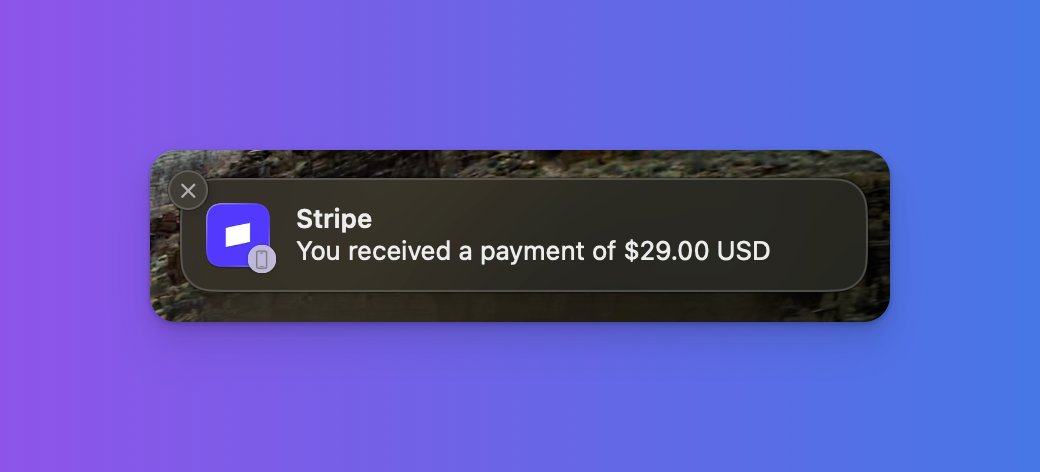
First paying customer for one of these explainer vids already 🎉
I don't even have a product name, landing page or domain yet
Pre-selling achievement unlocked
https://t.co/qS2q8M085R
Ok best perk of being an O’Reilly author is you get to access to the entire O’Reilly platform for free. It’s like Christmas picking out a new technical book to read.
i'm launching Chatable today 💬
a beautiful database client for macOS you can talk to in plain English.
no more writing SQL or jumping between AI chat windows.
pay once.pwn it forever. no subscription.
pre-order now for $49.
link in the replies ↓
No, not pitbulls/bully breeds. That’s the real risk. Shepherds! Herding breed. I’ve seen my 1 and 3 year old take food/toys from this dog and zero reaction. Kids have ran up to her and pulled her tail or grabbed her ears and no reaction. She has a great temperament and we got really lucky. I’ve walked in Oakland with my dog at night and nobody will approach you. People will cross the street to get away from a large shepherd. I will never get a different dog breed again 🥹