Happy Goku Day!
A special surprise awaits…
Enter the giveaway for a chance to win a Son Goku Ichibansho figure!
How to enter:
1. Follow us @ToeiAnimationEU
2. Repost this post
Prize:
One Son Goku statue from Ichibansho’s Snap Collection.
Ends on Saturday, May 23, 2026.
One lucky winner will be selected and contacted via DM.
Good luck!
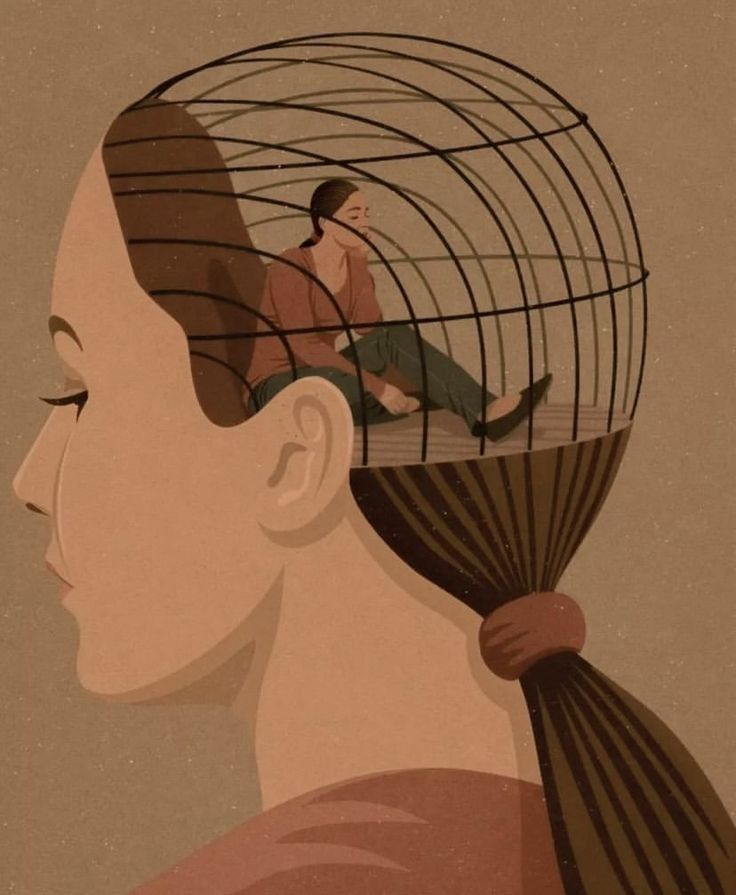
The most dangerous, oddly glorified, yet overlooked problem in the world:
Overthinking and underacting.
It's why you're stressed, depressed and your immune system is always in chaos.
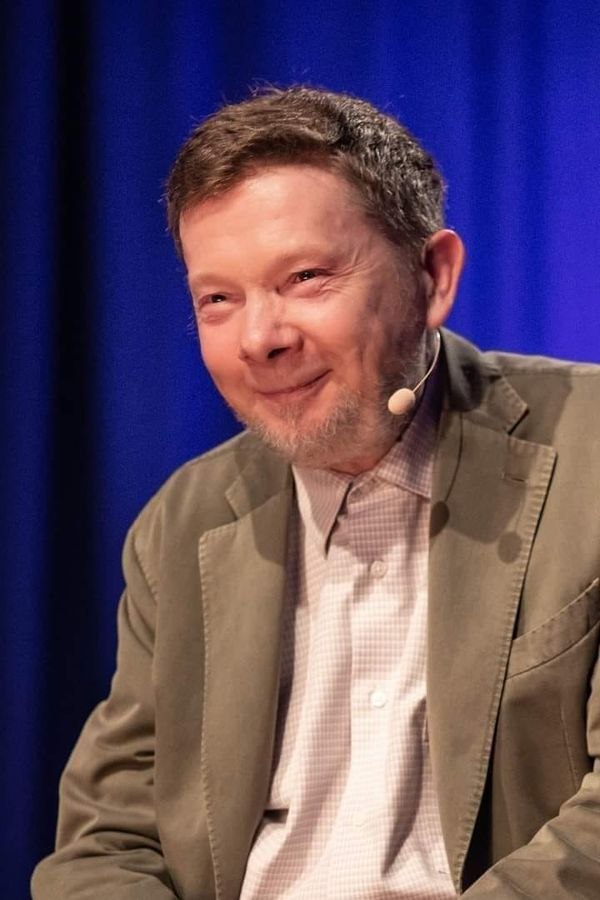
Here's Eckhart Tolle 7-step protocol to escape the prison of overthinking: 🧵
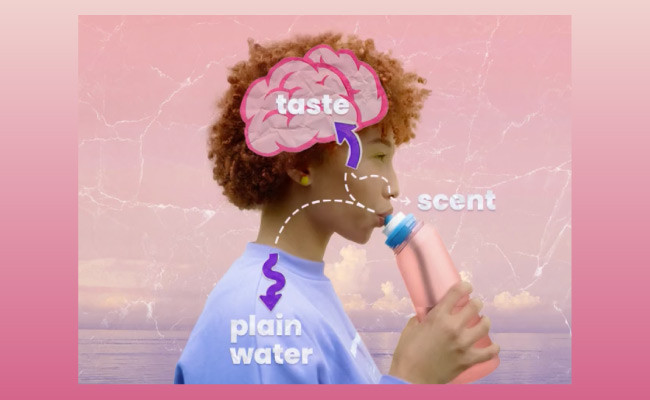
Imagine drinking plain water, but your brain tastes sugar.
Pepsi, Ashton Kutcher, and Mila Kunis are betting millions on this science nobody understands...
Here’s the wild story of how two college students built a hydration empire:
Já te passou pela cabeça que as laranjas, essas bolinhas de sumo doce e fresquinho, têm uma ligação direta com o nome de Portugal? Não, não estou a inventar! A palavra laranja tem raízes árabes. Os nossos amigos das Arábias chamavam-lhe nāranj. E como o português é perito em adaptar tudo à sua maneira, não demorou muito para o nāranj virar laranja. Fácil, não é?
Mas espera, o melhor ainda está para vir. No árabe moderno, a palavra para laranja já não é nāranj, mas sim burtuqāl. E adivinha lá de onde vem isso? Exato, de Portugal! Ora, na altura, os comerciantes portugueses eram mestres em levar laranjas para todo o lado, e os árabes, espertos como são, associaram logo a fruta a nós. Resultado? Ficámos tão famosos pelas laranjas que o nome do nosso país virou sinónimo delas. É como se em vez de pedirem uma laranja, dissessem: “Traga-me ali um Portugalzinho, se faz favor!” Dá para acreditar? Parece piada, mas é mesmo verdade!
E isto não acontece só nos países árabes, espreita só esta lista:
Turco: portakal
– Estes nem se deram ao trabalho de inventar, copiaram direto! 😄
Grego Moderno: portokáli (πορτοκάλι)
– Até os helénicos se renderam à fama portuguesa.
Farsi (Persa): porteghal
– Até na antiga Pérsia as laranjas trazem memórias de nós!
Georgiano: portoqali (პორტოყალი)
– No Cáucaso, as laranjas também têm sotaque português.
Amárico (Etiópia): bërtuqan
– Mais um canto do mundo onde "Portugal" é sabor de fruta.
Curdo: portîqal
– Cá estamos outra vez, entre as montanhas curdas.
Azerbaijano: portağal
– Até no Azerbaijão nos ligam às laranjas!
Uzbeque: apelsin Portugaliya
– Associam diretamente o nome à nossa histórica exportação.
Nem precisámos de grandes campanhas de marketing, as laranjas trataram de espalhar o nosso nome pelos quatro cantos do mundo!
Não é incrível como algo tão simples como uma laranja pode guardar, dentro da sua doçura sumarenta, um pedaço da nossa história que o mundo nunca esqueceu? 🍊
10 concepts that explain the modern world
1. Parkinson’s Law: Companies become bigger and worse over time. Clerks manufacture work for each other as overall capacity dips. When British Navy ships went down from 68 to 20, officials increased by 78%.
2. Chesterton Fence: If you don’t know what an old custom does, don’t touch it. It may be holding back problems you’re completely unaware of. You’ve not seen the wolves yet because of the very fence you’re about to demolish.
3. The Medici Effect: Sculptors, painters, and architects converged in Florence as the Medicis were funding the artists. Their proximity led to a fertile dialogue which, in turn, led to the Renaissance. The internet will amplify this cross-pollination of ideas.
4. The Centipede's Dilemma: Ask a centipede which one of its hundred legs moves the fastest and it forgets how to move. Reflecting on what we normally do without thought ironically worsens performance. A culture of endless self-reflection, therapy, and navel gazing is eroding important life skills.
5. Tyranny of small decisions: Individuals make small decisions to maximize convenience but this leads to massive social failure. We nod along to contagious ideas like “gender is fluid” because resisting them is too much work - till kids start getting transgender surgery. The slippery slope is not a fallacy but a fundamental reality.
6. The Zebra Effect explains why people don’t want to stand out. Zebras are hard to individually study as it's nearly impossible to track one of them for long (lost in the striped chaos). So scientists once put a big red dot on one zebra so he could be tracked & studied. Lions zeroed in on him and hunted him with ease. Getting lost among others is a survival mechanism. Hence the human desire to conform.
7. Why the ruler can’t rule: The executive head can’t implement his ideas on ground because the bureaucrats are closer to it, and have an agenda of their own. The Tzar of Russia had to deal with the Deep State too. Nicholas II: “I never ruled Russia. 10,000 clerks ruled Russia.”
8. Gall's law: A complex system that works is invariably found to have evolved from a simple system that worked. Only fools and modern technocrats try to create complex systems from scratch.
9. Minimal Self Hypothesis: Narcissism is a “strategic retreat” into the safety of one’s own self. When the future looks random, inexplicable, and informationally overwhelming, people enter survival mode. The self becomes “minimal” to reduce its surface area to pain. People today are giving up on commitment of all sorts to conserve energy for vague and upcoming disasters.
10. Tetris Syndrome: The world will eventually start looking like Tetris blocks if you play the game too much. What we do most often becomes the metaphor through which we look at the world. Takeaway: Most people today are addicted to their 2D phones - and this will hurt the general aptitude for dealing with the 3D world.
In 2009, Stanford business professor Tina Seelig split her class into groups and issued a challenge:
Each group had $5 and 2 hours to make the highest return on the initial money.
At the end, they'd give a short presentation on their strategy.
The results were fascinating...
Most of the groups followed a basic approach:
• Use the $5 to buy a few items.
• Barter or resell those items.
• Repeat
• Sell final items for (hopefully) more than $5.
These groups made a modest return on their initial $5.
A few groups ignored the $5.
They thought up ways to make the most money in the 2 hours of allotted time:
• Made and sold reservations at hot restaurants.
• Refilled bike tires on campus for $1 each.
These groups made a better return on their initial $5.
The winning group took an entirely different approach.
They had three core realizations:
1. The $5 was nothing more than a distraction.
2. The 2 hours of time was not enough to make an attractive, outsized return with a mini-business (like selling restaurant reservations or filling bike tires).
3. The most valuable "asset" was actually the presentation time in front of a class of Stanford students.
Realizing the value of this hidden asset, they offered the presentation time to companies looking to recruit Stanford students.
They struck a deal to sell the time slot for $650, netting a monstrous return on the $5 of initial capital.
The losing groups thought in linear, logical terms and achieved a linear, logical outcome.
The winning group thought differently.
So, what can we learn from this story?
There are two types of problems:
1. Low-Stakes: Lower potential, linear rewards. Decisions are easily reversible.
2. High-Stakes: Higher potential, asymmetric rewards. Decisions are not easily reversible.
With low-stakes problems, given the reward potential is low and the decisions are easily reversible, we can use shortcuts and heuristics to choose our path. We can take a logical, linear approach.
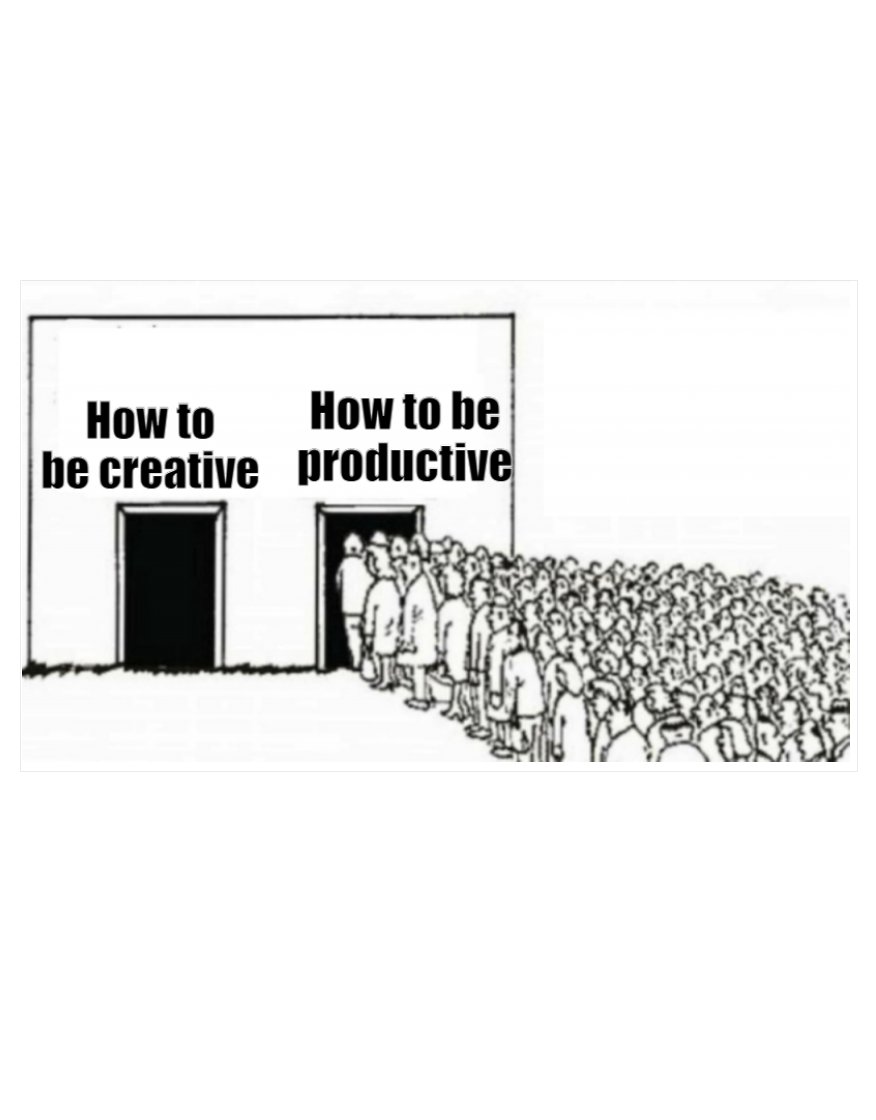
With high-stakes problems, the high, asymmetric reward potential means we need to think differently. We want to take a creative, non-linear approach.
Three steps to start thinking differently:
Step 1: Avoid the Distraction
There will always be an "obvious" solution that is simple, clear, and entirely wrong.
In the challenge, the $5 was nothing more than a distraction. It was a trap.
To find the best path, you have to avoid the distraction.
Step 2: Ask Foundational Questions
Ask and answer questions that expose and vet underlying assumptions and logic.
• What's the real problem you are trying to solve?
• What's your hypothesis? Why?
• What are your core assumptions? Why?
• What evidence do you have?
• What are your core options?
• What alternatives exist?
This takes time, but it's an essential exercise when facing a problem with the potential for non-linear rewards.
Step 3: Select the High Leverage Approach
Slow down and evaluate the options on the table.
Select the path most likely to generate the asymmetric, attractive risk-adjusted returns.
If the story teaches us one thing, it's this:
Creative, non-linear, asymmetric thinking generates creative, non-linear, asymmetric outcomes.
If you enjoyed this or learned something, follow me @SahilBloom for more in future.
1/ On How Short Life Is
A few years ago, I was walking around in a blizzard in SoHo (New York). It was late, midnight, and it was beautiful.
Some friends, about 15 blocks away, called: "come over?"
It was late, it was cold, was tired, thought "maybe not worth it" but then...
“O que significa que quantas mais palavras conhecemos... mais somos capazes de dizer o que pensamos e sentimos.”
Documentário "Língua - Vidas em Português", de Victor Lopes