Unsafe food can damage health and lives of consumers. Food business operators have legitimate commercial interests, but cannot override the consumer’s fundamental right to safe food. When commercial interest conflicts with public health, consumer interest is paramount.
🇮🇳India Achieves Landmark 300 GW Non-Fossil Fuel Power Capacity
In a major milestone for the nation's clean energy transition and climate action targets, India has crossed 300 GW of non-fossil fuel-based installed electricity generation capacity as on 31st July, 2026; over 60% of the 500 GW capacity targeted to be achieved by 2030.
Breakdown of Non-Fossil Fuel Capacity (as on 31.07.2026):
💠Solar Power: 164.59 GW
💠Wind Power: 58.14 GW
💠Hydro Power (Large & Small): 57.24 GW
💠Bio-power: 11.75 GW
💠Nuclear Power: 8.78 GW
💠Total Non-Fossil Capacity: 300.50 GW
The share of non-fossil fuel electricity capacity in the country’s total electricity generation capacity (which is around 552 GW at present), has reached over 54%.
Read here: https://t.co/OeQ9o29NuF
@mnreindia
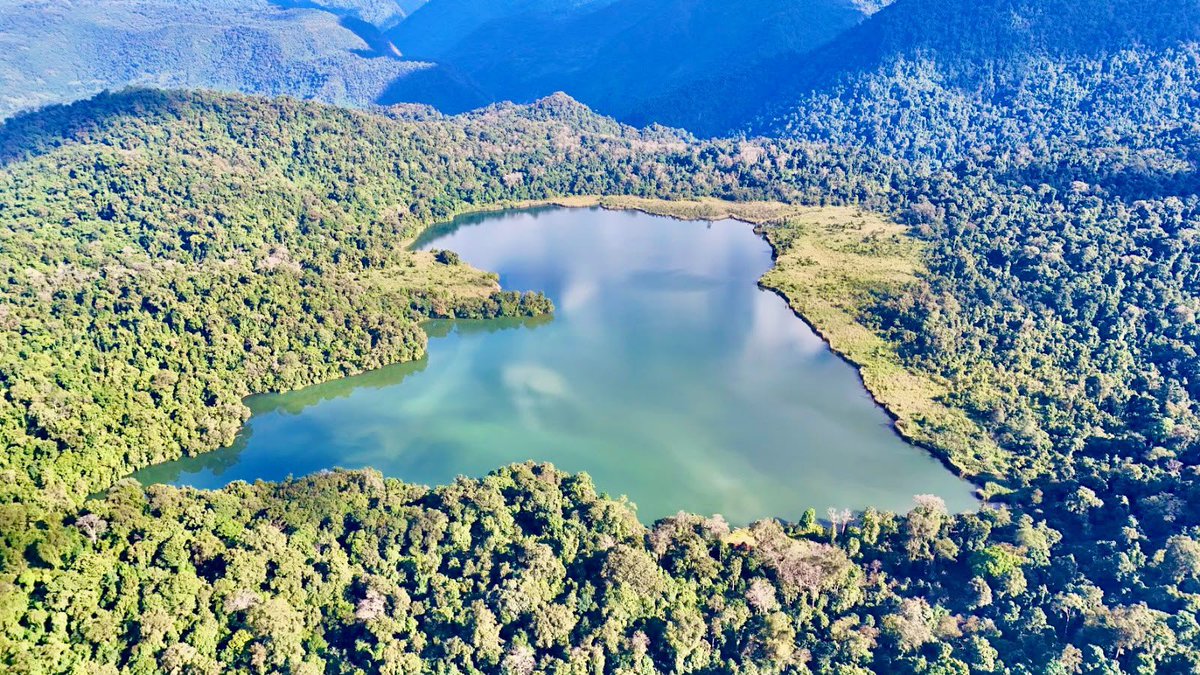
Glaw Lake: Arunachal Pradesh’s First #RamsarSite 🌿💧
#GlawLake earns recognition under the #RamsarConvention, taking India’s total number of Ramsar Sites to 1⃣0⃣1⃣
A pristine freshwater lake in the Eastern Himalayas and a biodiversity hotspot, the #wetland is home to over 150 tree species and 49 orchid species recorded within the site and its catchment area
Very soon millions across the world will be watching the FIFA World Cup Men’s Football Finals between Argentina 🇦🇷 and Spain 🇪🇸
Meanwhile, far away in rural villages of India a tournament that mirrored the FIFA Cup will reach its finals in the ancient city of Prayagraj where two of the best girls teams from 2350 teams of girls trained by @naandi_india under the project @NanhiKali will wear similar jerseys of Spain 🇪🇸 and Argentina 🇦🇷 and play their finals of what is now famously known in India as the Toofaan Cup - a unique grassroots football tournament for girls (many who never played any game before) trained by women coaches day in and out for few years to make them the stars they are today.
Here’s a clip of the players going to the ground for the final match !
Please cheer and support them too.
🙏❤️ 👏
My China exposure - three ETFs, one contrarian bet (10% of my global portfolio)
1) MCHI: This is my broad bet. My core exposure to the whole Chinese economy: internet names, banks, industrials, consumer. If China re-rates, this is the position that captures it.
2) KWEB: the beaten-down internet bet. China's internet giants, Alibaba, Tencent, Meituan, JD have been bombed out after years of regulatory crackdowns and a price war. This is my most aggressive China sleeve: the cheapest, most-hated corner, where a turn would move the most.
3) EWH: the Hong Kong anchor. Hong Kong names like HKEX, the exchange operator itself. The steadier way to hold the China trade. It is ballast against the volatility of the mainland bet.
What the bet actually rests on:
→ Valuations. China trades around 13x earnings against ~24x for the S&P. It's the cheap corner of the world.
→ A consumption turnaround. Chinese demand has been weak on the back of a five-year property crisis. I'm betting it turns, at some point. I'll be honest: this is the weakest leg. Beijing has struggled to revive the consumer, and it may take years.
→ A slow internationalisation of the renminbi. Today Bloomberg reported China is letting mainland banks trade the onshore and offshore yuan (CNY and CNH) more freely. This is small, but exactly the kind of baby step toward opening its markets and giving the renminbi a global role. I'm not betting this is fast. I'm betting on the direction.
The honest risk: I'm early, and possibly wrong on timing. The consumption recovery hasn't started, and the renminbi has a long way to go. But cheap + hated + slow structural opening is the kind of asymmetric bet I want.
Indonesia: Waiting for the Bottom
Sixteen years of a structural downtrend for dollar investors in the stock market (if you look at EIDO ETF for example). For most investors, that is a reason to avoid. For a contrarian, it is a reason to stay curious. A market that has been wrong for that long tends to eventually correct sharply in the other direction.
The fundamental case is not hard to construct. Indonesia is a $1.5 trillion GDP economy. It is growing at 5.6% per year. Its population of 280 million is young, urbanising, and consumption-hungry. It sits on some of the world's most strategically important commodities: nickel for EV batteries, palm oil for food and biofuel, coal that Asia still cannot do without. On paper, this is a textbook emerging market compounder.
The stock market tells a different story.
Three structural problems explain the divergence.
First, fiscal credibility is deteriorating. President Prabowo's flagship school meals programme is expensive and its economic multiplier is unclear. More damaging is the policy of routing key commodity exports through a state-owned entity. When governments insert themselves between producers and global markets, pricing efficiency suffers and private capital gets cautious.
Second, the free float problem. A large share of listed Indonesian companies are controlled by a small number of families and conglomerates. Genuine public float is thin. This creates the conditions for what the market informally calls "goreng saham" (deep-fried stocks): thinly traded counters susceptible to manipulation. Foreign institutional investors price this risk into their required return, which keeps valuations compressed.
Third, the ETF problem. The main vehicles for global investors tracking Indonesia, such as EIDO, are heavily weighted toward banks and telecoms. These are mature, rate-sensitive sectors. There is no meaningful exposure to innovation or domestic consumption growth in the way that comparable EM indices in India or Taiwan have developed. So even when Indonesia's underlying economy does well, the listed market does not fully participate.
And yet, as recently as 2022, the picture looked very different. Commodity supercycle tailwinds, a current account in surplus for the first time in years, and a central bank that kept its nerve drew genuine capital inflows. The JCI ran up sharply. It showed that Indonesia is not broken as an equity market. It is cyclical, and it responds to the right combination of commodity prices and policy credibility.
What would change the thesis? A sustained commodity upcycle, particularly in nickel, would help. A rollback or moderation of the export routing policy would matter more. An improvement in governance standards around free float and disclosure would be the structural fix that lasts.
Until then, 1.5% of the global portfolio feels right: enough to capture the eventual inflection point, small enough that the ongoing drift does not hurt. The bottom in a sixteen-year downtrend is not something you time. It is something you position for in advance, and wait.
⛽ My fourth holding - US Energy (7% of the portfolio, VDE ETF)
The one position I hold not to win, but to protect everything else.
This is my biggest unrealised gain. VDE has roughly tripled on my cost since I bought it in 2020 when oil was less than $0 in price due to the pandemic scare! Three reasons I still hold it.
1) Oil shocks keep happening: 2026 just showed us that. The world is electrifying, slowly. When conflict shut the Strait of Hormuz, about 20% of global oil supply was disrupted and Brent surged over 55%, from ~$72 to nearly $120, its biggest one-month jump on record. Then it unwound just as fast: oil is back to about $81 today as Hormuz reopens. A full round trip that is $72 to $120 to $81, in a single year. I don't forecast the oil price. I bet that a world still running on crude keeps getting surprised (in favour of oil producers).
2) Cheap, disciplined, and gushing cash - even at the bottom of the cycle. Energy earnings fall when oil is soft, that's cyclical. But these companies cut capex, not dividends. In 2025, with oil weak, ConocoPhillips still returned 45% of its cash flow to shareholders. Exxon handed back $37 billion. That discipline didn't exist a decade ago. And the 2026 spike is still feeding through.
3) It's a hedge against the rest of my book and against India. Almost everything else I own are oil importers India, China, Japan, Vietnam all buy crude they don't produce. When oil spiked this year, those economies took the inflationary hit (India included, where I live and earn). VDE rose into exactly that pain.
The risks:
→ The shock has already faded. My thesis was never oil stays high. It's that shocks recur, and I'm positioned for them. The recent softness in VDE isn't the thesis breaking; it's the premium I pay between shocks.
→ The transition could accelerate. If EVs and renewables scale faster than I expect, demand peaks sooner, the cash-cow window shrinks. I think it's gradual. I could be wrong on the pace.
→ It's US energy specifically. VDE is Exxon, Chevron, ConocoPhillips. These are US majors, dollar-denominated. Not global energy, not the oil price itself.
The bottom line: I hold VDE as insurance, not a bet. It's cheap, the companies gush cash even in the soft years, and it rises precisely when my importer-heavy plus India-anchored book gets hurt. In 2026 the shock came, the hedge paid, the earnings followed.
My Anti-AI global portfolio - Second Largest Holding (Brazil at 9%)
Some Indian market gurus say that Brazil is only good for football. I beg to differ. The iShares MSCI Brazil ETF (EWZ) is the second largest holding in my global portfolio. Here's why:
1) Brazil's Central Bank has kept its lending rate (the Selic rate) at 14.25%. Yes you read that right! Can you remember the last time India had RBI rates more than even 10%? So is it because of inflation? Well, inflation at 4.72% is high, but not that much higher than India. So the scope to cut rates is huge and this can trigger a market rally. These rate cuts have already started, just this week the Central Bank cut the Selic rate from 14.50% to 14.25%. About 60% of Brazilian corporate debt is floating-rate, tied to the Selic. So every rate cut feeds directly into corporate earnings. The rate-cut thesis and the earnings-growth thesis are the same engine.
2) Brazil is a commodities exporter. If we are in a commodities supercycle, its exports of petroleum (from offshore fields), iron ore, soyabean and potentially ethanol (which currently takes a small share) should accelerate.
3) Brazilian stocks are cheap. Dead cheap. The market as a whole trades at 10 times earnings. For context, India trades at 20-21 times even after 2 years of stagnation. Analysts expect forward earnings growth at a solid 19.6% well above the past year's 1.2%. Their expectation for Indian earnings growth is actually lower at 14% and yet India gets a 21 times multiple.
The risks:
1) Brazil has an election in October. A bad outcome can derail things. Here it is hard to say what is bad - the incumbent Lula has been ok for stocks (priced in). The opposition (Flavio Bolsonaro) is supposed to be pro-market, but that linkage isn't yet very strong. A contested election and instability can hurt.
2) Brazil's new government may go on a spending spree and this hurt the rate cuts thesis.
3) Brazil's currency weakens whenever the US rates go up. With inflation riding high in the US, the rate-rise risk is real (no pun intended).
What is your view of my thesis? Anything I have missed or you would disagree with? Do let me know in the comments.
At thefynprint we've built India's largest community of global investors on Whatsapp where all things global (remittance, tax, brokerage, ideas) get discussed. Do subscribe and join! Comment global for the subscription link.
People think global = AI. Starting today, I'm going to write about my anti-AI global portfolio and why I hold each of my positions.
Starting with the largest: Berkshire Hathaway (17% allocation)
🏰 Berkshire Hathaway: what you're actually buying
Most people hold Berkshire as a market-beater - Buffett's legend. But on a rolling 10-year basis, its consistent outperformance of the S&P 500 ended around 2012. For over a decade it has roughly matched the index, not beaten it. If you own it expecting alpha, the data says you've been buying something else.
What you're actually buying: ballast. Berkshire is a cash-rich, insurance-anchored, low-beta collection of real businesses with near-zero direct AI exposure. Its value isn't that it outruns the market - it's that it holds up when the market doesn't. Lower volatility than the index, no dividend (tax-efficient for those who don't need income), and a balance sheet built to absorb shocks. It is the opposite of a high-conviction bet; it's the thing you own so the rest of the portfolio can take risk.
The cash pile is the most interesting signal. Berkshire sits on well over $300 in cash - not because it lacks ideas, but because Buffett can't find enough worth buying at current valuations. That is itself a statement: the most patient value investor alive is, in effect, saying prices are too high. Holding Berkshire is partly holding that judgment.
The risks:
→ The edge may be structurally gone. Private capital (Blackstone, Apollo) now competes for the distressed-asset and crisis financing deals that were once Berkshire's alone. The be greedy when others are fearful advantage is more crowded than it was.
→ The succession transition. Buffett has stepped back; Greg Abel runs it now. The market must decide what the business is worth without the founder - a re-rating risk in either direction.
→ The law of large numbers. At over a trillion dollars in value, market-beating returns are mathematically harder. Size is its own headwind.
The synthesis: Berkshire is no longer a bet that you'll beat the market - it's a bet that prudence, cash, and low volatility will be rewarded in an expensive, AI-feverish market. Held as an alpha engine, it will likely disappoint. Held as ballast - the steady core that lets you own riskier things elsewhere - it does exactly its job. The mistake isn't owning it; it's owning it for the wrong reason.
🔖 Note this for Prelims 2026
1) Killer Whales are not whales. Killer whales are actually a type of dolphin.
2) Flying Lemur is neither a lemur, nor can it fly.
3) Flying Fox is the largest bats in the world.
4) Bearcat is neither a bear nor a cat. It is civet.
5) Guinea Pig is neither a pig nor from Guinea.
#UPSC
Direct Prelims facts + GS-I Mains philosophy in one crisp revision sheet.
From Madhyamaka (Nagarjuna) to Yogachara (Asanga) and Buddhist logic (Dignaga–Dharmakirti) — these thinkers are repeatedly asked.