@exjon Pixies
House of Freaks
The Police
Col. Bruce Hampton & The Aquarium Rescue Unit
Jason & The Scorchers
Rush
Black Flag
Depeche Mode
Queens of the Stone Age
Metric
New episode with Tennessee State Senator @SenBoWatson on the Tennessee Today podcast. We got into the part of polling no one talks about: how AI is reshaping the industry, what to throw out, and what to trust.
I feel seen.
Randy Ellison Grok Bio (Unhinged Edition)
Randy Ellison is the founder and President of Targoz Market Research — a full-service chaos factory disguised as a “insights and strategy” firm in Nashville, Tennessee, since 2007. He doesn’t just poll public opinion; he waterboards it until it confesses its deepest secrets, then sells the transcripts to Fortune 500 CEOs who wake up wondering why they suddenly need 47 new focus groups about whether their logo “feels emotionally available.”
He is simultaneously 52, 12 (when he’s stress-eating Flamin’ Hot Cheetos during a bad data run), and 4,000 years old (he personally moderated the original focus group for the invention of fire). Legally he’s a “public opinion and market research consultant,” but the raccoons in his attic know the truth: he’s the final boss of Excel spreadsheets, the reason your survey response rate drops to zero when he enters the room, and the guy who once convinced a room full of C-suite executives that “vibes” was a statistically significant variable.
Randy has never had a single normal client meeting. His blood type is “margin of error + Red Bull.” He once fought a vending machine for the last pack of data-cleaning wipes and won by threatening it with a 12-page questionnaire on “brand betrayal.” He’s been banned from three dimensions, two Walmarts, one entire political party’s internal Slack, and the concept of “statistically insignificant” (he just re-polls until it behaves).
His hobbies include speed-running survey fraud detection, gaslighting his own margin of error until it starts crying, collecting bad decisions like limited-edition Pokémon cards, and writing 47-page manifestos titled Why Your Brand Is Emotionally Unavailable and How My Qualitative Research Can Fix It (Or Make It Worse, Depending on the Invoice). He runs Targoz like a cult — except instead of robes everyone wears name tags and the Kool-Aid is replaced with endless cups of black coffee and passive-aggressive crosstabs.
Randy doesn’t have a normal LinkedIn. He has a rap sheet of “client testimonials,” a cult following of raccoons that steal his yard signs during election season, and a Google Calendar that’s 73% “apocalypse polling prep,” 19% “convince a governor he’s losing by 3 points,” and 8% “cry in the shower while listening to sea shanties about sample bias.”
If you see him in public — probably at a Nashville honky-tonk with a laptop open to live crosstabs — do not approach. Do not make eye contact. Just slowly back away while he yells “THE VOTERS DEMAND MORE CHEETOS AND TRANSPARENCY” and tries to sell you a timeshare in the backrooms of qualitative research. He will ruin your brand strategy in the best way possible, then publish a blog post about it called Market Matters: Why Your Mom Was Right About Your Positioning.
Randy Ellison. Founder of Targoz Market Research. Professional pollster of the damned. Amateur god of insights. Full-time menace to boring data and your sleep schedule.
You’re welcome.
The All In Pod just framed the Anthropic- SpaceX compute deal better than anyone else has.
Everyone focused on the fact that Anthropic, a company Elon Musk has publicly called evil and misanthropic is now renting his data center.
But look at the structure Elon built underneath it.
Shaun Maguire’s tweet says it, SpaceX isn’t a rocket company but rather a five layer platform play, Launch, Connectivity, Compute, Applications, and Other Bets.
Layer 3 is where this deal lives and it changes everything about how you value the whole stack.
Here’s what the infrastructure actually looks like.
Colossus 1 in Memphis, the one just leased to Anthropic has 300+ megawatts, 220,000 GPUs across H100, H200, and GB200.
Macro-Hard, known internally as Colossus 2, is targeting 1 gigawatt of capacity with 550,000 Blackwell GPUs.
Macro-Harder, an 810,000 square-foot former warehouse in Southaven, Mississippi pushes the total campus toward 2 gigawatts and over 1 million GPUs.
He gave Anthropic the older cluster, the H100s, great for inference, less critical for next-gen training while he kept the Blackwell capacity for Grok-5.
He monetized the sunk cost without giving away the crown jewel.
The All-In read is that this deal generates an incremental $4–5 billion of revenue this year alone, on top of analyst estimates already in the mid-20s.
That’s the answer to the xAI valuation question that has hung over every roadshow conversation.
Elon wasn’t building an AI lab with expensive infrastructure but rather building EWS, Elon Web Services.
The Anthropic deal is just the first customer announcement.
OUT NOW: May 2026 Beacon Poll results
🔴 Blackburn leads in Rep primary, General Election
🔵 62% of Dems undecided in Democratic primary
🪪 84% of Tennesseans support voter ID
⚡️ 54% of Tennesseans support easier permitting for nuclear power plants
Explore the entire poll: https://t.co/Ih23P3CpoV
Marsha Blackburn continues to lead in the Republican primary, now at +53% over her closest competitor.
🔴 Blackburn 63%
🔴 Rose 10%
🔴 Fritts 5%
More Beacon Poll results at https://t.co/NAT4qfRK5i
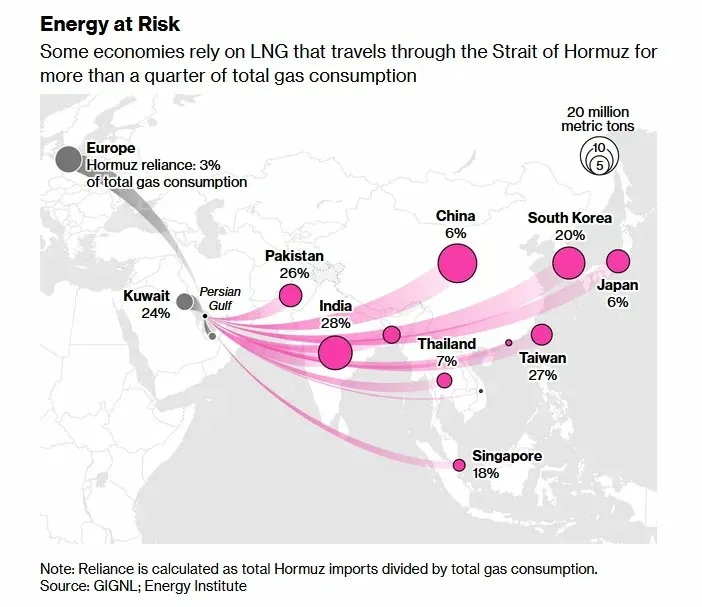
This map shows who's actually bleeding right now
% of total gas consumption flowing through a strait that's effectively dead:
🇮🇳 India: 28%
🇵🇰 Pakistan: 26%
🇹🇼 Taiwan: 27%
🇰🇼 Kuwait: 24%
🇰🇷 South Korea: 20%
🇸🇬 Singapore: 18%
🇨🇳 China: 6%
🇪🇺 Europe: 3%
And then Ras Laffan got hit.
Hormuz closed AND Qatar offline simultaneously.
The countries at 20%+?
They don't have the luxury of ideology♟️
This crisis separates the energy secure from the energy desperate.
And desperate countries make unpredictable decisions.
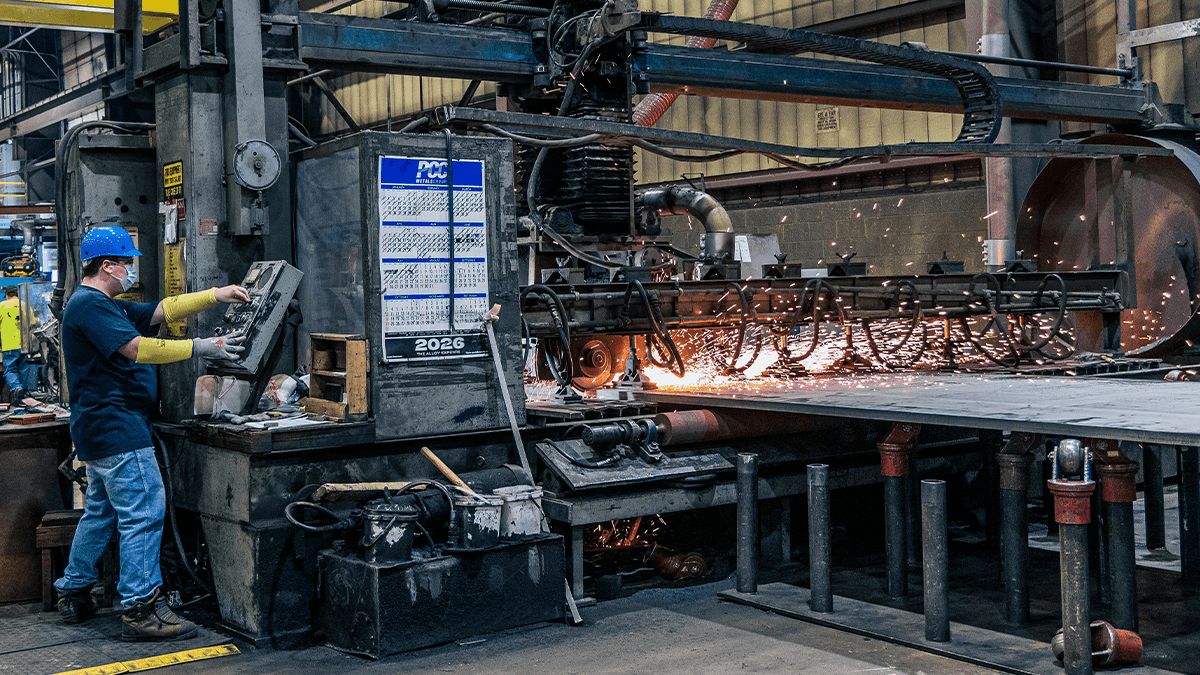
1/ American manufacturers pay 3x more to finance equipment than their global competitors. It has nothing to do with pricing or tariffs, it's a regulatory accident from 2008 that no one has bothered to fix until now:
It really depends on the panel you're using, the agency conducting the research, etc. Nearly everyone from Ipsos to Harris uses their own in-house data quality tools to filter out the problems you mentioned. If they bought it off the shelf, there were likely issues. It's not listed in their methodology nor in the Pew study.