Exciting Announcement!
We are preparing to launch the second volume in our series on the most recent advances of Artificial Intelligence in Neurology. This follows the strong reception of our first volume, Exploring the Future of Neurology: How AI is Revolutionizing Diagnoses, Treatments, and Beyond, which drew remarkable attention across the field.
Artificial intelligence continues to evolve at an extraordinary pace, while medicine, by tradition, integrates such innovation more gradually within a complex landscape of academic and venture incentives. This new volume aims to support that transition by highlighting high quality, rigorously vetted work that brings AI closer to everyday clinical practice.
We are delighted to partner again with Frontiers in Neurology and to collaborate with a truly stellar international editorial team. In the coming weeks, we will reach out to a select group of authors with established expertise. Submissions will also be open to the broader community for colleagues interested in contributing to the academic advancement of AI in neurology.
More details and a formal announcement will follow. We are genuinely excited for this next chapter and look forward to seeing where it leads.
Warm wishes for a joyful holiday season to all. Stay tuned. @UPMC@PittNeurology@PittEpilepsy
🎉 Congratulations to Dr. Cigdem Isitan Alkawadri on receiving the 2026–2027 AAN Director Mentorship Leadership Program Award!!!
A well‑deserved recognition of outstanding leadership, mentorship, and dedication to neurology. 👏✨
Happy Pythagorean Triple Square Day!
Today’s date is made of 3 perfect squares and they form a Pythagorean triple: 3² + 4² = 5²
This only happens once a century.
Historical times for Syria. On many fronts—led by visionaries—ready in sync with what’s ahead, not for homelands only, but for science and the frontier of the human brain.
Smooth seas do not make skillful sailors: SPEP/CcEPs Variability May Reflect Epileptogenicity. Stimulation-Induced Seizures Mirror Spontaneous Seizures More in LFS Than HFS. Evoked High-Frequency Oscillations (HFOs) Mirror Spontaneous HFOs.
Traditional biostatistics, which focus on hypothesis testing and p-values, are often mistakenly conflated with AI frameworks. AI operates on complex, multidimensional feature sets rather than simple correlations, combining weak individual features into robust predictive signals. However, emphasizing accuracy as the sole metric is problematic in medicine, where many diseases are rare. This challenge is especially true for imbalanced datasets and is known as the “accuracy paradox;” it necessitates the use of alternative metrics, such as precision, recall, F1-score, and area under the curve (AUC) for both training and validation. Addressing class imbalance is critical to improving model performance and clinical relevance. Techniques such as oversampling minority classes (e.g., Synthetic Minority Oversampling Technique; SMOTE) or adjusting class weights can significantly enhance the robustness and applicability of AI models in clinical settings. Temporal forecasts in neurology present additional challenges, especially as patient outcomes are influenced by multifaceted factors, including behavioral and social determinants. Time-series often exhibit “fat-tail” distributions, further complicating traditional statistical approaches
Our Editorial: Exploring the future of neurology: how AI is revolutionizing diagnoses, treatments, and beyond is our many thanks to the authors, reviews and co-guest editors https://t.co/3itGcr63yR
Partnerships with industry or venture capital could accelerate adoption, though such involvement must balance agility with adherence to regulatory and ethical standards.
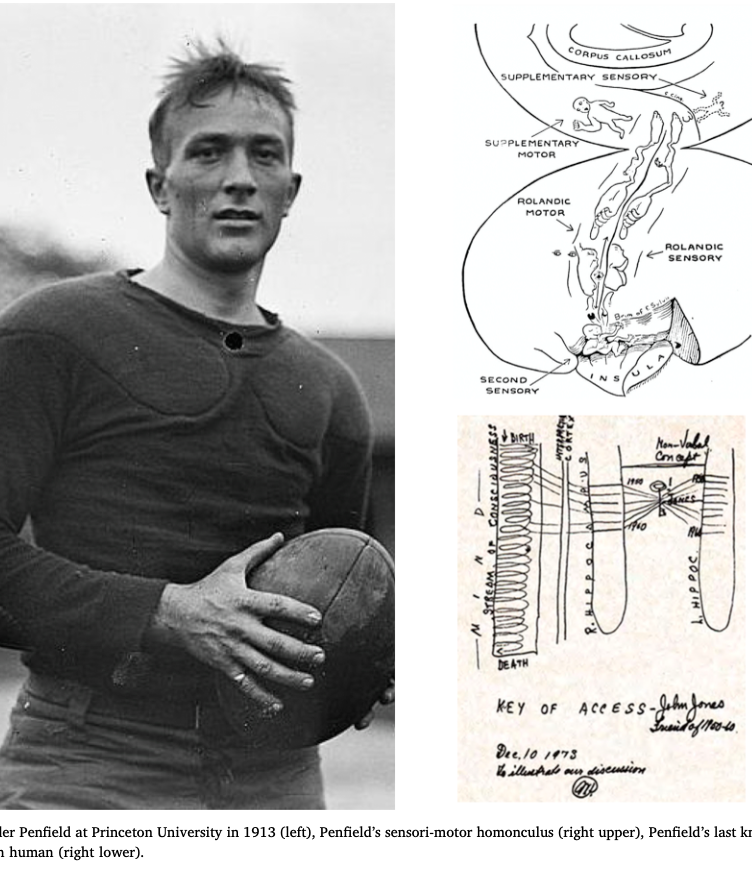
The most exciting discoveries happen at the intersections of disciplines. Today's standards are built on audacity, persistence, and hard lessons learned in the face of obsolete mainstream. (then!). Brief history of electrical cortical stimulation: A journey in time from Volta to Penfield. https://t.co/810XgTXlFb
Depth vs. subdural electrodes: Same setup, different signals. 🧠 Our study reveals band-specific EEG differences, shaped by implantation, size, and neural proximity. Reinforces the need for tailored tools in epilepsy care. @PittNeurology@YNeurosurgery 🔗 https://t.co/xcHbk3Dcre