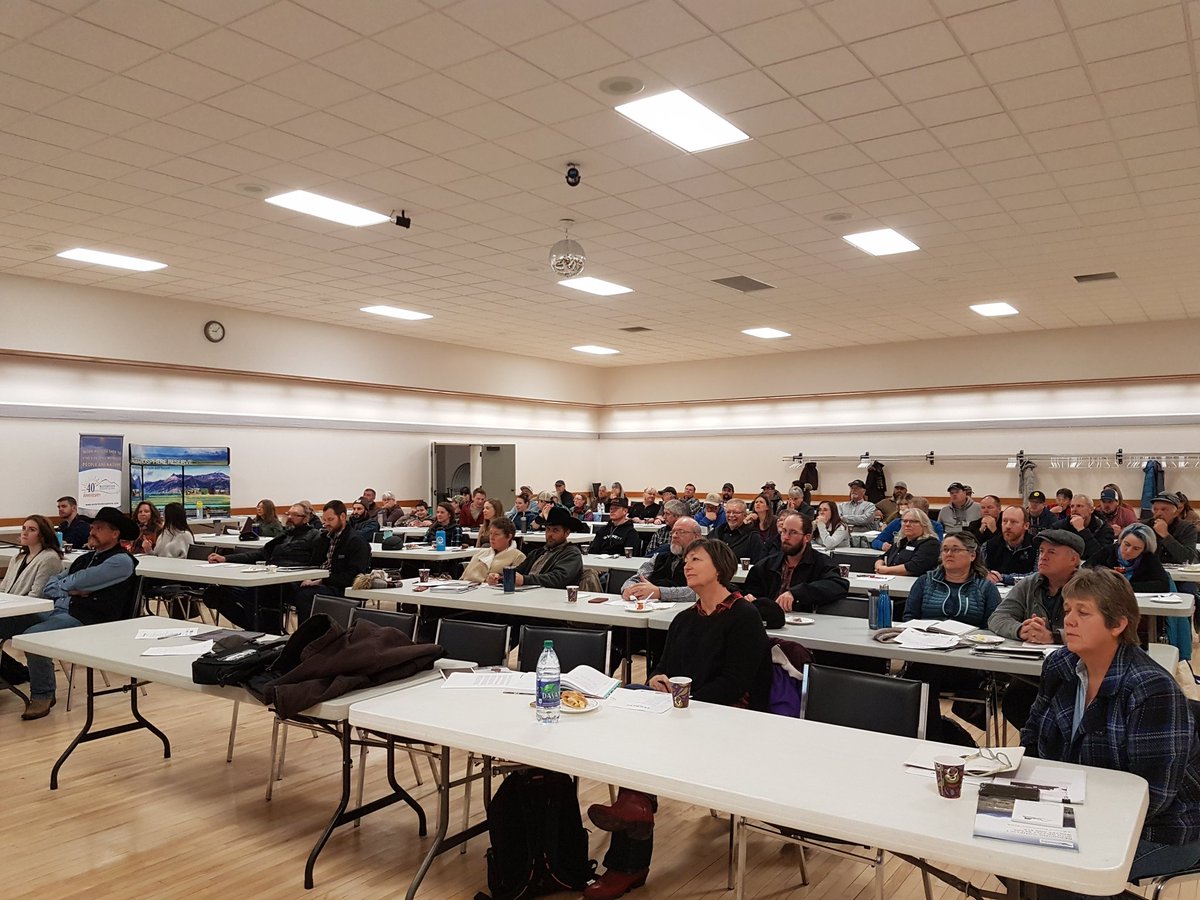
Sheep, goat and cattle grazing can be an effective way to control some weed species. The "If You Can't Beat It, Eat It" workshop in Fort Macleod has begun with a quick update from @AB_Enviro on rules around public lands grazing and guardian dogs.
How do you train your cattle to eat weeds?! 1) Know your weeds 2) Choose your trainees and 3) Make the unfamiliar seem familiar ~ Kathy Voth is sharing her tips on how she trains cows to graze weeds #ranching#grazing#weeds#cattle
As we move into the #grazing season remember to monitor utilization. Grazing at higher than 50% use depletes root reserves and requires a longer recovery time between grazing periods. Long term over use can result in decreased #forage production and #ecosystem health.
On invasive species: “Our Rangelands are incredibly resilient. We still have time, we just need to act now”. -Jeremy Maestas @SageGrouseInit @westgov#WorkingLands19
Here is the link to the NZXT BLD Giveaway! If you already entered then you are good. We will continue with this giveaway regardless of YouTube taking down our links! https://t.co/tHzhtWg6aP
European water chestnut is a floating-leaved plant that has spread across the northeastern United States. In Ontario, it has only been observed in a handful of locations. Check out what we're doing to thwart this invader! https://t.co/MAI78doVsO #InvSpWk#invasives
I heard Ricky Linex encourage folks to learn a new plant every week and yesterday I found a RARE one!
Prunus minutiflora or small flower peach brush or Texas almond is a native shrub where it’s RARELY found in the Edwards Plateau. Decent wildlife value.
#rangelands#rarefind
It's National Invasive Species Awareness Week! Here's a picture of Russian Thistle and it's classic purple striped stem- a commom invasive weed in West Texas. You can find it rolling across the landscape- it turns into a mean tumbleweed, which is how it spreads seed. #NISAW